
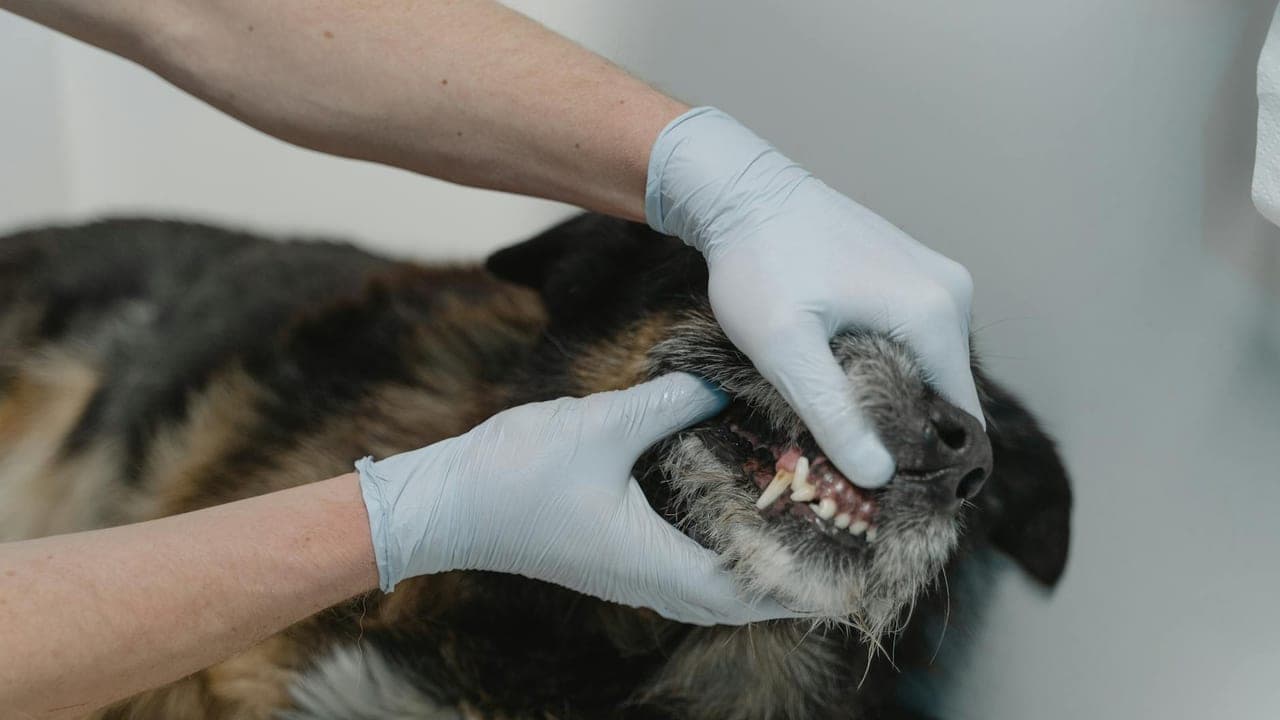
Senior Dog Dental Disease: The Anesthesia Trade-Off Owners Fear
By the time a dog is seven, the disease is usually already there: the American Veterinary Dental College (AVDC) and the American Animal Hospital Association (AAHA) both describe periodontal disease as
Reading Time
📖 16 min read
Guide Type
📋 General
Last Updated
📅 Sep 9, 2026
Breed
🐶 All Pets
In This Guide
Overview
By the time a dog is seven, the disease is usually already there: the American Veterinary Dental College (AVDC) and the American Animal Hospital Association (AAHA) both describe periodontal disease as the most common clinical condition in adult dogs, affecting the large majority by middle age — and it does not pause for old age, it accelerates. What stops most owners from acting on it is a single fear, almost always phrased the same way: "I do not want to put my old dog under anesthesia." That fear is reasonable. It is also the reason this article exists, because the way it is usually resolved — by deferring care, or by paying for an "anesthesia-free cleaning" — leaves the actual disease untreated under a cosmetically cleaner tooth.
The stakes are not cosmetic. Periodontal disease is a chronic bacterial infection of the structures holding the tooth in the socket. The inflamed, ulcerated pocket around an affected tooth is a portal: AVDC and the World Small Animal Veterinary Association (WSAVA) Global Dental Guidelines describe an association between chronic periodontal inflammation and added burden on the heart, kidneys, and liver. The link to specific cardiac disease such as endocarditis is best described carefully — it is a reported association in the literature, not a proven one-to-one cause in every dog — but the local picture is not ambiguous at all: a mouth full of grade 3-4 periodontal disease is painful, infected, and a continuous inflammatory load on an aging body. Dogs hide oral pain extremely well; "he is just slowing down because he is old" is, in a meaningful number of seniors, an undiagnosed mouth.
This guide is built around the decision that fear forces: anesthesia risk for a treatment versus the systemic and local cost of leaving a chronic infection in place. Modern pre-anesthetic bloodwork and tailored protocols change that math for most senior dogs — and the central mistake to avoid, the one this article will keep returning to, is treating "anesthesia-free dentistry" as the safe middle option. It is not a middle option. It is a cosmetic procedure that cannot clean the part of the tooth where the disease actually lives. If you do nothing else from this article: have a veterinarian stage your senior dog's mouth, ask about the pre-anesthetic workup rather than assuming anesthesia is off the table, and do not buy a non-anesthetic cleaning believing it treats the disease.
Daily Care
Home care is prevention and slowing — it does not reverse disease that is already below the gumline. The honest framing for a senior dog already at the vet's office: home care manages the future of the healthy teeth; the COHAT (Comprehensive Oral Health Assessment and Treatment) addresses the disease that is already there. Both, not one or the other.
The single most useful thing an owner of a senior dog can do is learn to stage what they are looking at, because the right action is completely different at grade 1 than at grade 4. The grading below follows the AVDC periodontal disease staging framework in plain language; it is a triage aid for deciding urgency, not a substitute for the probing and dental radiographs that only happen under anesthesia.
| Stage | What you can see at home | The action it calls for | |---|---|---| | Stage 1 — Gingivitis | Red or slightly puffy gum margin, mild plaque, no bone loss; reversible | Start or intensify daily brushing now — this stage is the one home care actually reverses | | Stage 2 — Early periodontitis | More tartar, gum bleeds on contact, mild recession; early (<25%) attachment loss | Book a COHAT; brushing alone no longer keeps pace once attachment is lost | | Stage 3 — Moderate periodontitis | Visible tartar, gum recession, possible pocketing or slight tooth mobility; 25-50% attachment loss | COHAT with probing + dental radiographs; some teeth may need treatment or extraction | | Stage 4 — Advanced periodontitis | Heavy calculus, pus at the gumline, loose teeth, foul odor, sometimes a swelling under the eye; >50% attachment loss | This is an infected mouth in pain — treat it as urgent, not elective; extractions are likely |
Use the table to set urgency, not to self-treat. A swelling below the eye, a tooth that wobbles, blood in the water bowl, dropping kibble or chewing on one side, pawing at the face, or a smell that genuinely turns your stomach are all stage 3-4 signals — those mean call this week, not "watch it for a few months," because at that point you are managing an active infection, not a hygiene problem.
The first conversation, not the first cleaning
For a senior dog, the first step is not a procedure — it is a staging exam plus the question owners most often skip: "Given my dog's age and health, what does the pre-anesthetic workup look like, and what is the actual risk for this dog?" Age is not a disease, and "too old for anesthesia" is a generalization, not a diagnosis. The decision is made per dog, on bloodwork and an exam, by a veterinarian — which is the entire point of the workup described in the health section below.
Nutrition
Diet is a slowing tool, not a treatment, and the distinction matters for a senior dog because owners reach for a dental diet instead of a COHAT far more often than they should. A therapeutic dental diet works mechanically: a larger kibble with a fiber matrix that scrubs the tooth surface as the dog bites through it rather than shattering, plus in some formulas a coating that binds salivary calcium so plaque mineralizes into tartar more slowly. It reduces plaque and tartar accumulation on the crown; it does nothing for disease already below the gumline, and it cannot un-infect a stage 3 pocket.
The practical filter is the Veterinary Oral Health Council (VOHC) Seal. The VOHC awards its seal only to dental diets, chews, and additives that have met a defined plaque-or-tartar reduction standard in trials — so "reduces tartar" on a bag with no VOHC seal is a marketing claim, while the seal is an evidenced one. Choose VOHC-accepted products and treat them as adjuncts that buy time for the healthy teeth between professional cleanings, not as a reason to delay one.
Two senior-specific cautions, because age changes the calculus: a dog that has lost teeth or has painful stage 3-4 disease may physically struggle with a hard dental kibble — feeding a hard diet to a painful mouth can suppress appetite and is not a substitute for treating the pain. And many senior dogs are on therapeutic diets for kidney or other conditions; do not switch a dog off a prescribed renal or weight diet onto a dental diet without your veterinarian weighing the trade-off, since the systemic condition usually outranks dental mechanics in priority.
Exercise
Dental disease is not an exercise topic, but the connection seniors' owners miss is real and worth one paragraph: oral pain quietly reduces activity. A dog with a painful grade 3-4 mouth often eats less, plays less, and is labeled "just old and slowing down" when part of what is slowing it down is treatable infection. Keep a senior dog moving with low-impact daily activity appropriate to its joints — this guide does not change that — but if a dog's energy drops alongside any of the oral signs in the staging table (one-sided chewing, dropping food, face-pawing, odor), treat the mouth as a candidate cause rather than assuming age alone. Owners frequently report a measurable return of energy and appetite after a senior dog's painful teeth are finally addressed; the lethargy was not the years, it was the molar.
Grooming
Toothbrushing is the one home intervention with the strongest evidence behind it, and for a senior dog the rule is start slow or you will fail. Daily mechanical disruption of plaque before it mineralizes (mineralization into tartar takes only a couple of days) is what AVDC and WSAVA point to as the home-care gold standard — but a brush jammed into the mouth of an eight-year-old who has never had it done produces one bad experience and a dog that guards its face for good.
The protocol that works, built deliberately so each step removes a reason the dog says no:
- Days 1-3: taste only. Let the dog lick a small amount of pet enzymatic toothpaste (poultry or malt flavored) off your finger. Pet toothpaste is swallowed safely and is what makes the next steps tolerable; human toothpaste contains fluoride and sometimes xylitol and is not safe for dogs.
- Days 4-7: finger contact. Toothpaste on a finger, briefly touch the outer surface of the canine and a few cheek teeth, then stop and praise. You are conditioning, not cleaning, yet.
- Week 2: introduce the brush. A soft canine brush or finger brush with the now-familiar paste; do a few teeth, build up over days. Only the outer (cheek-facing) surfaces matter for owner brushing — the tongue does meaningful work on the inner surfaces, and reaching them risks a bite and a quit.
- Ongoing: aim for daily, settle for most days. Frequency beats duration. Thirty seconds of outer surfaces every day outperforms a thorough scrub once a week, because plaque mineralizes faster than a weekly cadence catches it.
If at any point the dog shows pain — flinching, pulling away hard, a yelp — stop and have the mouth examined rather than pushing through. Pain on brushing is itself a clinical sign, not an obedience problem; it usually means stage 2+ disease that needs the vet, not more brushing.
Health
This is the section the anesthesia fear lives in, so it is the longest. Three things drive the decision: what the pre-anesthetic workup actually is, why "anesthesia-free dentistry" cannot treat the disease, and what real treatment (including extractions) involves.
The pre-anesthetic workup — what makes age a managed risk, not a disqualifier. AAHA's anesthesia guidelines frame general anesthesia for healthy and stable senior patients as a managed risk, not an automatic contraindication, when it is worked up properly. For a senior dog that typically means: a full physical exam, a complete blood count and chemistry panel (to assess kidney, liver, and metabolic status before drugs are metabolized through those organs), often a urinalysis, and depending on findings and breed an assessment of cardiac status — chest radiographs, sometimes an echocardiogram or cardiology referral if a murmur is present. The point of this workup is precisely to convert "old dog, scary" into "this specific dog's organs and heart, characterized, with a drug protocol and monitoring chosen to match." Modern protocols use pre-oxygenation, IV fluids, balanced multimodal drugs, dedicated patient monitoring (ECG, blood pressure, capnography, pulse oximetry, temperature) and active warming. The honest framing for owners is a comparison, not a dismissal: anesthesia carries real, non-zero risk, and that risk is weighed against the cost of leaving a chronic, painful, systemically active infection in place indefinitely. For most healthy or well-managed senior dogs, veterinary dental and anesthesia bodies place the balance on the side of treating the disease — but that judgment is made per dog by the veterinarian on the workup, not as a blanket rule, and a dog with significant uncontrolled cardiac or renal disease may genuinely change the calculus.
Why anesthesia-free dentistry is the mistake, not the safe option. This is the central error to prevent. AVDC has a formal position statement against non-anesthetic ("anesthesia-free") dental scaling performed without anesthesia, and the mechanical reason is simple and decisive: periodontal disease is a subgingival (below-the-gumline) disease. The plaque and infection that destroy the attachment and bone are in the pocket, where you cannot see and a conscious dog will not tolerate an instrument. Anesthesia-free scaling removes visible tartar from the crown — the part you see — and leaves the disease-causing deposits under the gum entirely untouched. The result is the worst possible outcome: a tooth that looks clean, an owner who believes the problem is handled, and an infection progressing silently beneath a cosmetically improved surface. It also cannot include the two things that make a real cleaning diagnostic — periodontal probing of every tooth and full-mouth dental radiographs — because both require an unconscious patient. Roughly a large share of clinically significant dental pathology in dogs is below the gumline and invisible without radiographs; a procedure that skips them is not a cheaper version of a COHAT, it is a different thing that does not treat the disease. Spending money on it is worse than spending nothing, because it manufactures false reassurance.
What a real COHAT and extractions involve. Under anesthesia a veterinarian charts and probes every tooth, takes full-mouth dental radiographs, performs scaling above and below the gumline plus polishing, and then treats what the radiographs reveal. For a senior dog that often includes extractions — and owners flinch at this, so it deserves a plain account. A tooth with >50% attachment loss, exposed root, a slab fracture into the pulp, or an abscess is not saveable by cleaning; it is a chronic source of pain and infection. Extracting it removes the infection and the pain. Dogs do extremely well after extractions — they eat, often more eagerly than before because the painful tooth is gone, and quality of life typically improves. The reframe owners need: an extracted bad tooth is a resolved problem; a retained bad tooth "to avoid surgery" is an ongoing one. Pain in dogs is silent here — they do not stop eating until disease is advanced because the alternative is starving — so the absence of an obvious symptom is not evidence the mouth is fine.
See a veterinarian — do not wait and watch:
- A swelling below or beside the eye, a draining tract on the face, or facial asymmetry — this is commonly a tooth-root abscess and is a same-week (often same-day) problem, not cosmetic.
- A loose or wobbling tooth, pus visible at the gumline, blood in the water or food bowl, or bleeding gums in an older dog.
- Dropping food, chewing only on one side, sudden reluctance to eat hard food, pawing at the mouth, or a new strongly foul mouth odor — these are stage 3-4 pain signals in a species that hides oral pain.
Book a non-urgent staging exam (do not ignore, but not an emergency): mild gum redness, light tartar, or mild "dog breath" with normal eating and no mobility — this is the window where home care still works, so it is also the cheapest point to act. "When in doubt, ask your vet" applies — but for the abscess and loose-tooth signs above, the doubt should already be resolved in favor of calling, because those represent established infection, not early warning.
Costs
Cost is where the anesthesia decision is often quietly made — owners defer the COHAT because of the number, not only the fear, so the honest comparison has to include both sides of the trade-off. Approximate US ranges; regional variation is wide, and a senior dog's pre-anesthetic workup and monitoring legitimately sit at the higher end because the workup is the safety.
- Pre-anesthetic bloodwork + senior workup (CBC, chemistry, urinalysis; cardiac assessment if indicated): ~$100-$350, more if an echocardiogram/cardiology referral is needed
- Routine COHAT — anesthesia, monitoring, scaling above and below the gumline, full-mouth dental radiographs, polishing (no extractions): commonly ~$400-$1,000+ depending on region and dog size
- COHAT with extractions / advanced periodontal treatment (multiple or surgical extractions, oral surgery, radiograph-guided work): commonly ~$800-$3,000+, scaling with the number and difficulty of teeth
- "Anesthesia-free cleaning": ~$100-$300 — and this is the most expensive line on the list per unit of benefit, because it treats nothing below the gumline; the disease keeps progressing and you pay for the real COHAT later anyway, on a worse mouth
The hidden cost is not the COHAT — it is what an untreated grade 3-4 mouth becomes. Left in place, periodontal disease leads to tooth-root abscesses, jaw bone loss (in small breeds, advanced periodontal disease is a recognized risk factor for pathologic jaw fracture), and a continuous inflammatory and infectious burden on an aging heart, kidneys, and liver — and the eventual treatment of an abscessed, mobile, multi-tooth mouth costs more, in a sicker and older dog, than the cleaner intervention done a year or two earlier would have. Set the workup-plus-COHAT figure against that trajectory and the math that fear distorts becomes clearer: anesthesia is the priced, managed, one-time risk; chronic untreated infection is the open-ended one. The cheaper-looking options — deferral and anesthesia-free scaling — are the ones that cost the most by the end.
Frequently Asked Questions
My dog is old — isn't anesthesia for a dental cleaning too dangerous?
Age is not a disease, and "too old for anesthesia" is a generalization, not a per-dog diagnosis. AAHA frames general anesthesia for healthy or stable senior dogs as a managed risk when it is worked up properly — pre-anesthetic bloodwork, an exam, cardiac assessment if indicated, modern monitoring and tailored protocols. The decision is made for your specific dog on that workup by your veterinarian, and for most senior dogs the risk of leaving a chronic, painful, systemic infection untreated outweighs the worked-up anesthetic risk. Ask what the workup shows rather than assuming anesthesia is off the table.
Can't I just get an anesthesia-free cleaning instead?
No — and this is the central mistake to avoid. The American Veterinary Dental College has a formal position against non-anesthetic dental scaling, because periodontal disease lives below the gumline and an anesthesia-free procedure can only remove visible tartar from the part of the tooth you can see. It cannot clean the pocket where the disease actually is, cannot probe or take dental radiographs, and leaves you with a tooth that looks clean while the infection progresses underneath. It manufactures false reassurance and you pay for the real cleaning later anyway, on a worse mouth.
Is dog dental disease really serious, or just bad breath?
It is a chronic bacterial infection of the structures holding the tooth in the socket, not a cosmetic problem. AVDC and WSAVA describe an association between chronic periodontal inflammation and added burden on the heart, kidneys, and liver; the link to specific cardiac conditions is best described as a reported association rather than a proven one-to-one cause, but locally a grade 3-4 mouth is painful and actively infected. Persistent strong mouth odor in particular is a clinical sign, not normal "dog breath."
My senior dog needs several teeth pulled — won't that ruin his quality of life?
Generally the opposite. A tooth with severe attachment loss, an exposed root, or an abscess is a continuous source of pain and infection that cannot be saved by cleaning. Extracting it removes both. Dogs do very well after extractions and often eat more eagerly afterward because the painful tooth is gone; an extracted bad tooth is a resolved problem, while a retained bad tooth kept "to avoid surgery" is an ongoing one. Dogs hide oral pain until disease is advanced, so a dog still eating is not evidence the mouth is fine.
Will brushing or a dental diet fix disease my dog already has?
No — those are slowing and prevention tools, not treatments. Daily brushing and VOHC-accepted dental diets or chews reduce plaque and tartar on the crown and protect the currently healthy teeth, but they cannot reach or reverse disease that is already below the gumline (stage 2 and beyond). For a senior dog with established periodontal disease, home care is what you do *alongside* a COHAT, not instead of one.
Sources
This guide draws on the following published references. Each opens in a new tab so you can check it against what you have read here.
AVMA
Pet Dental Care(opens in a new tab)AVMA
Senior Pet Care(opens in a new tab)ASPCA
General Dog Care(opens in a new tab)Merck Veterinary Manual
Dental Disorders of Dogs(opens in a new tab)Merck Veterinary Manual
Routine Health Care of Dogs(opens in a new tab)
Affiliate disclosure: We may earn a commission from qualifying purchases. This doesn't affect our recommendations.
Recommended Products
Dog enzymatic toothpaste & soft toothbrush kit
Poultry/malt enzymatic paste plus a soft canine brush — the start-slow conditioning protocol depends on a paste the dog will willingly lick.
VOHC-accepted dental chews for dogs
Look for the Veterinary Oral Health Council seal — it means the tartar-reduction claim was tested, not just printed. An adjunct between professional cleanings, not a substitute for one.
Get personalized pet care tips
Join our newsletter for breed-specific advice, care guides, and expert tips delivered weekly.
No spam, ever. Unsubscribe anytime.
More Care Guides
Adopting a Senior Pet: The Honest Case (and the Real Costs)
20 min read·General
Quality-of-Life Assessment: A Calm Framework for a Hard Decision
18 min read·General
Senior Dog Arthritis & Joint Care: What Actually Slows It
16 min read·General
Canine Cognitive Dysfunction (Dog Dementia): Signs & Management
15 min read·General