
Living in a 600 Square Foot Apartment With a Great Dane
Story Subject
Atlas
Type
Dog
Read Time
10 min
Shared By
Felix Nguyen
Editor
Mr Pet Lover Admin
In This Guide
The most common question I get at the dog park is: "Where do you live?"
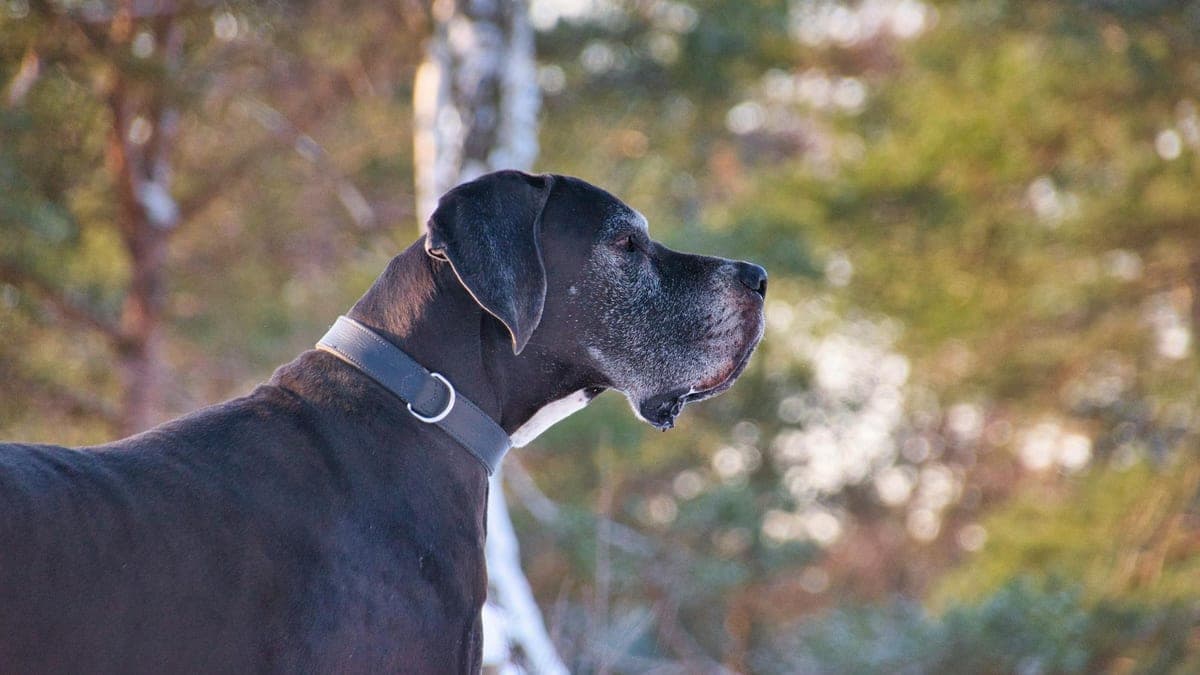
People see Atlas — 140 pounds of gray Great Dane, who stands at counter height and once startled a UPS driver into dropping a package — and assume I must have a house. A yard. Acreage, maybe.
I live in a 600 square foot apartment on the fourth floor of a walk-up building. Atlas has lived there for a year. He has opinions about this arrangement that are roughly as follows: zero. He has no complaints.
The Great Dane Paradox
Great Danes are classified as a giant breed. What most people don't know: they are also classified, by every behaviorist I've spoken to, as low-to-moderate energy dogs. They are not Labs. They are not Border Collies. They are animals who were bred to sprint in short bursts and then rest, bred for size and intimidation, not endurance.
Atlas wants two walks per day, approximately 25 minutes each. He wants to be near me. He wants to sleep — which he does for 16 to 18 hours daily, in whatever position his body has decided is structurally interesting, usually taking up approximately 70% of available floor space.
What Actually Challenges Us
The elevator. Atlas has decided the elevator is suspicious. Every day is a fresh negotiation.
The narrow hallways, where he misjudges his own width and clips doorframes. Low coffee tables. The fact that his tail, at full speed, is a structural hazard for anything on a surface below waist height.
These are inconveniences. They are not reasons a giant dog can't thrive in a small space.
What Makes It Work
Consistency. Atlas gets his walks at the same times daily. He gets a training session most mornings — Great Danes are smart and benefit from having a job. He gets access to the dog-friendly rooftop three evenings a week for off-leash time.
The apartment is his den. He doesn't need it to be large. He needs it to be safe, warm, and occupied by me.
At 600 square feet, he occupies a large percentage of it. I consider that fair.
Thinking about a large breed in an urban home? The key variables are energy level and exercise commitment — not square footage.
Are Great Danes actually good apartment dogs?
Here is the honest answer, and it's more useful than a clean yes or no: on paper, no. Our own Great Dane breed profile marks the breed as not conventionally apartment-friendly, and that rating is fair. A dog that stands 71–86 cm at the shoulder and weighs 45–90 kg turns tight hallways, stairwells and small elevators into daily logistics, and a swinging tail really is a hazard to anything on a low shelf.
But the thing that actually decides whether it works isn't floor space — it's temperament and routine. Great Danes are, by disposition, calm, patient and deeply people-bonded ("the Apollo of dogs"), and despite their size their energy level is genuinely moderate. A Dane is a giant companion who wants to lean against your leg and sleep on the couch, not an endurance athlete pacing a crate. That combination — big body, low indoor drive — is exactly why a committed owner in 600 square feet can make it work where a high-drive medium dog might climb the walls. That easygoing temperament extends to the neighbours, too: Danes are famously good with children and other animals, so the shared-building flashpoints that make some large dogs a liability — the elevator, the lobby, the dog two doors down — tend to go smoothly.
So the real question a prospective owner should ask isn't "is my apartment big enough?" It's "can I meet a giant breed's exercise, companionship and health routine, in an apartment, every single day?" If yes, the square footage is a detail. If no, a bigger home won't save you.
How much space and exercise does a Great Dane really need?
Less exercise than people expect, and the space that matters is layout, not area.
An adult Great Dane needs roughly 30–60 minutes of exercise a day — typically two moderate 20–30 minute walks plus some secure off-lead time, which matches Atlas's two-walk rhythm above. They are sprinters, not distance dogs; they'll happily do a short burst and then sleep for most of the afternoon. Forced jogging, repetitive stairs and jumping are actively discouraged, especially in puppies: a Dane's growth plates don't close until around 18–24 months, and high-impact exercise before then drives hip and elbow problems. (Full detail on the breed's growth-phase care is in our Great Dane guide.)
On space: what a Dane needs indoors is a clear path to move without clipping furniture and one open, soft resting area big enough for a body that sleeps 16–18 hours a day. A well-arranged small apartment beats a cluttered large one. One thing you won't have to design around is grooming — the Dane's short coat is moderate-shedding and genuinely low-maintenance, needing routine brushing and a nail trim every few weeks rather than any grooming-table space.
Raising a Great Dane puppy in a fourth-floor walk-up
If you're bringing home a Dane puppy rather than an adult, the walk-up itself becomes the thing to plan around — and this is the part almost no apartment guide mentions. A Great Dane's growth plates don't close until around 18–24 months, and until they do, high-impact movement is discouraged: no forced jogging, no repetitive stairs, no jumping. In a fourth-floor walk-up that means carrying a puppy who will not stay carry-sized for long, or riding the elevator Atlas distrusts, rather than letting a heavy, still-forming skeleton pound up and down flights every day. Over-fast growth and joint impact in these months drive the hip and elbow problems the breed is already predisposed to.
Diet does the other half of the work. A large-breed puppy formula matters here specifically because it controls calcium and growth rate — the goal is to grow a Dane slowly and keep it lean enough that you can easily feel the ribs. Our Great Dane care guide covers the growth-phase feeding and joint-protection routine in full. Get these 18–24 months right and the apartment is, once again, the easy variable.
Can you leave a Great Dane alone all day?
This is the constraint that catches apartment owners off guard, not the size. Danes are, by temperament, devoted and deeply people-bonded — it's the first thing our breed profile lists — and the same devotion that makes them gentle housemates makes long stretches of solitude hard on them. A bored or anxious giant in a unit with shared walls becomes everyone's problem. If your day is a nine-hour absence with no relief, a Great Dane is a difficult fit in any home, apartment or not. A midday walk, a dog walker, or a work-from-home rhythm is closer to a requirement than a nicety.
The part no one puts in the apartment photos: bloat, lifespan and cost
If you take one thing from an owner who lives this, take this: the hard parts of Great Dane ownership have nothing to do with your apartment.
- Bloat (GDV) is the breed's defining emergency. Deep-chested giants like the Dane are among the highest-risk dogs for gastric dilatation-volvulus — the stomach fills with gas and twists, and it is fatal within hours without emergency surgery. Practical management: feed 2–3 smaller meals a day rather than one large one, avoid vigorous exercise for 60 minutes before and after eating, and learn the signs (unproductive retching, a hard or swelling belly, restlessness, drooling). Many owners elect a prophylactic gastropexy ($400–$900, often at spay/neuter); emergency surgery runs $3,000–$7,000+.
- The clock runs fast. Great Danes typically live only 7–10 years, among the shortest of any breed. Keeping the dog lean and screening the heart from middle age (they're prone to dilated cardiomyopathy) is how you protect the years you get.
- Everything is priced by the kilogram. Food, weight-dosed medication, larger crates and beds, and insurance for a breed prone to expensive emergencies all cost more. Budget for it before, not during, a crisis.
Beyond bloat and heart disease, the breed's size carries a longer health tail worth watching for and budgeting around: hip and elbow dysplasia (joint malformation worsened by rapid growth and weight), osteosarcoma (an aggressive bone cancer giant breeds are prone to, and a leading cause of death in the breed), wobbler syndrome (compression in the neck causing an unsteady, wobbly hind-end gait), and hypothyroidism (common, but managed inexpensively once diagnosed). Because every extra kilogram on this frame accelerates joint and heart disease, keeping an adult Dane lean — an easily-felt ribcage and a visible waist — is one of the highest-value things an apartment owner can actually control.
None of this is a reason not to love the breed. It's the honest cost of admission, and it belongs in the decision alongside the square-footage question — the full health picture is in our Great Dane breed and care guide.
What Atlas taught us about big dogs in small spaces
A year in, the lesson isn't that every Great Dane belongs in 600 square feet — plenty don't, and I'd never tell a stranger at the dog park that size doesn't matter. The lesson is narrower and truer: with this particular breed, the apartment was never the hard part. The walks, the companionship, the meal timing, the bloat vigilance, the short years ahead — those are the real commitments, and they'd be the same commitments in a house with a yard. Atlas doesn't need more room. He needs me to keep showing up for the routine that keeps a giant dog healthy. The square footage, it turns out, was the easy variable to solve.
Questions About Atlas
Common questions answered to help you better understand this story
Not conventionally — their size makes tight spaces, stairs and elevators a real consideration, and our breed profile rates them not apartment-friendly. But their calm temperament and genuinely moderate energy mean a committed owner can make apartment life work. The deciding factor is your exercise and companionship routine, not your floor area.
Less than you'd think, and layout matters more than area. A Dane needs a clear path to move without clipping furniture and one open, soft resting spot for a dog that sleeps 16–18 hours a day. A well-arranged small apartment works better than a cluttered large one.
About 30–60 minutes — typically two moderate 20–30 minute walks plus secure off-lead time. They're sprinters, not endurance dogs. Avoid forced jogging, repetitive stairs and jumping, especially before 18–24 months while the joints are still developing.
Not long. Danes are deeply people-bonded and don't cope well with long daily solitude, which is amplified in a shared-wall apartment. A midday walk, dog walker, or work-from-home schedule is close to essential; a nine-hour daily absence suits the breed poorly in any home.
Yes — many do. It comes down to routine, not square footage: daily moderate exercise, company through the day, careful meal timing to manage bloat risk, and, for a puppy, protecting the joints from stairs until 18–24 months. Meet those and a Great Dane settles into apartment life as one of the calmest giants you can own.
Didn't find your answer?
Get in touch →More Stories
Get more stories like this
Weekly heartwarming pet stories and care tips, straight to your inbox.
No spam, ever. Unsubscribe anytime.