
The Rescue Dog Who Took Eleven Months to Wag His Tail at Us
Story Subject
Ghost
Type
Dog
Read Time
7 min
Shared By
Linda and Craig Foster
Editor
Mr Pet Lover Admin
In This Guide
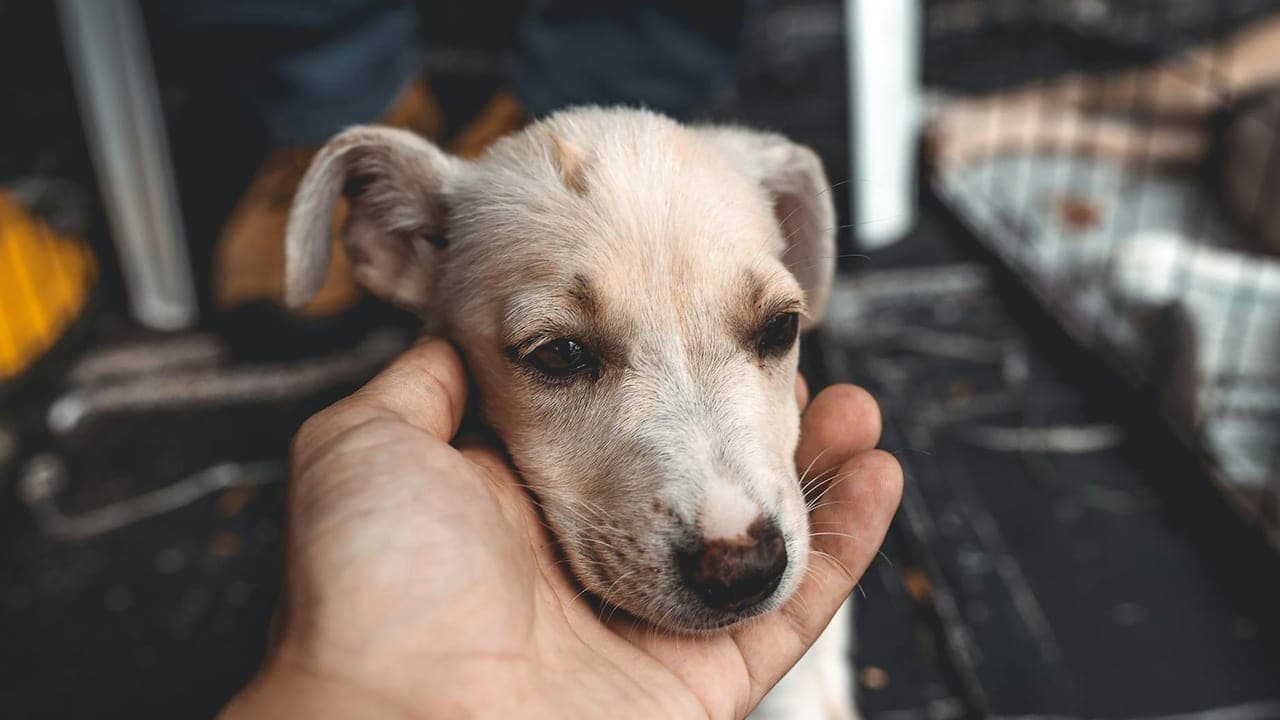
The rescue coordinator used the word "shut-down" when she described Ghost. It meant: this dog has learned that the world is not safe, and his response is to make himself invisible.
He arrived at our house and went immediately under the dining table and stayed there for three days.
He ate only after we left the room. He didn't sleep near us. He didn't make eye contact. He moved through the house along walls, always with an exit in view.
He was not aggressive. He was terrified.
What We Did
Our trainer, who specializes in fear-based behavior, gave us the framework: zero pressure, infinite patience, let Ghost set every pace.
The rules: no reaching toward him. No forcing contact. No eye contact initiated by us (direct eye contact reads as threat to a fearful dog). Sit on the floor near his space, read a book, exist without agenda.
We scattered high-value treats near his table refuge several times daily. We waited. When he came out to take one, we didn't react — no praise, no movement, nothing that might startle him back under the table.
Week three: he took a treat from the floor eight inches from my hand.
Week six: he walked past me in the hallway without pressing against the far wall.
Month two: he slept in the same room we were in.
The Slow Opening
Month four, he began sniffing my husband Craig's hand when Craig held it out low and still. No pressure — Craig would extend his hand and look away, removing the social pressure of eye contact.
Month six, Ghost lay down beside Craig on the floor — not touching, a few inches away — and stayed for twenty minutes.
Month eight, he started waiting by the door at our usual return time. Not greeting us — just waiting. Recognition that we were expected.
Month Eleven
I was sitting on the couch. Ghost was on his bed across the room. I looked at him — and his tail moved. Slow, uncertain, one side to the other, like he was checking whether this was a thing he was allowed to do.
I cried for twenty minutes. Craig came home to find me on the floor next to Ghost's bed while he wagged.
He's been wagging since. He will never be a "normal" dog — he doesn't solicit affection, he doesn't trust strangers, he approaches every new thing with the caution of an animal who has learned that caution is wise.
But he is here. He is safe. And eleven months of patience was exactly the right amount.
Traumatized rescue dogs need time, structure, and owners willing to follow the dog's lead. Seek a trainer certified in fear-free handling methods before adopting a dog with a history of abuse or neglect.
The 3-3-3 rule, and why Ghost took far longer
Rescue and shelter educators hand new adopters a rough decompression map called the 3-3-3 rule. In the first 3 days, a newly adopted dog is usually overwhelmed and shutting down — hiding, not eating in front of you, testing the exits. Ghost's three days under the dining table were exactly this phase. By roughly 3 weeks, most dogs have started to learn the household routine and let a little personality show. By about 3 months, many feel settled enough to trust the people and the space as home.
The important thing the rule quietly teaches is to lower your expectations and stop measuring. It is an average, not a deadline. A dog surrendered from neglect or abuse — a genuinely shut-down dog like Ghost — can move through those stages far more slowly, over many months rather than weeks. Treating 3-3-3 as a schedule to enforce is how well-meaning owners start pushing, and pushing is the one thing a fearful dog cannot absorb. Our new pet checklist covers what those first weeks should contain: a predictable routine, a safe retreat the dog is never dragged out of, and no crowding, no rush.
Building trust without flooding
The mistake that undoes fearful rescues is flooding — forcing a scared dog to face what frightens it (a reaching hand, a lap, a busy room) in the hope it will "get used to it." With a traumatized dog, flooding usually deepens the fear and can tip avoidance into a bite. Force-free trainers do the opposite: they build positive associations at a distance the dog can tolerate, and they let the dog choose every approach.
That is why Ghost's people got the details right. Sitting sideways, avoiding direct eye contact, extending a low still hand and then looking away, scattering high-value treats and not reacting when he took one — each move removes social pressure and lets the dog opt in. Trust is given, never taken. You are looking for the dog to make the first move, and then you reward it by asking for nothing more.
Know when to bring in a professional. If fear isn't slowly easing over weeks, if the dog panics, freezes, guards, or snaps, or if it won't eat, that is the point to involve a certified veterinary behaviorist or a fear-free/force-free trainer rather than pressing on alone — some cases also need veterinary support for anxiety. Our guide to managing anxiety and when to escalate to a behaviorist covers that threshold, and our dog care hub links the wider settling-in resources.
What eleven months with Ghost taught us
Ghost will never be the dog who greets strangers at the door, and we stopped wanting him to be. What his eleven months taught us is that trust from a traumatized dog is not something you earn by trying harder — it is something you make room for by trying less. Every meaningful step, from the treat eight inches from a hand to a tail moving across the room, was Ghost's decision, made in a house that had finally stopped asking anything of him. If you are bringing home a frightened dog, the most loving thing you can offer is time with no agenda attached — and the willingness to let the wag, whenever it comes, be entirely on the dog's terms.
Questions About Ghost
Common questions answered to help you better understand this story
By removing pressure and letting the dog set the pace. Sit near its safe space without reaching for it, avoid direct eye contact, and build positive associations with calm, high-value treats it can take on its own terms. Reward every voluntary approach by asking for nothing more. Trust is given, not taken — you are waiting for the dog to choose you, which can take weeks or many months.
It is a rough decompression guide: about 3 days to feel overwhelmed and shut down, 3 weeks to start learning your routine, and 3 months to begin feeling at home. It is an average, not a deadline — a badly traumatized dog can move far slower. Its real value is reminding adopters to lower expectations and give a new dog time and a safe retreat instead of rushing the bond.
Many dogs need roughly three months to feel genuinely at home, per the 3-3-3 framework, but there is no fixed timeline. A confident dog may relax in weeks; a shut-down or previously abused dog can take many months to fully trust — Ghost took eleven. Settling shows as eating normally, sleeping soundly, exploring freely, and seeking out the household. Judge progress by the dog's body language, not the calendar.
Give it a quiet, safe retreat it is never dragged out of, keep a predictable routine, and avoid flooding — never force contact or exposure. Work at a distance the dog can tolerate and pair your presence with good things like scattered treats. Keep early days calm and low-traffic. If fear doesn't ease, or the dog panics or guards, involve a fear-free trainer or veterinary behaviorist.
Small, voluntary choices: taking food from near you, moving through open space instead of hugging the walls, sleeping in the same room, lying down and relaxing rather than staying tense and alert, and choosing to be near you without being coaxed. Later signs include waiting for you to return and loose, wagging body language. With fearful dogs these arrive slowly and unevenly — each one is real progress.
Didn't find your answer?
Get in touch →More Stories
Get more stories like this
Weekly heartwarming pet stories and care tips, straight to your inbox.
No spam, ever. Unsubscribe anytime.