
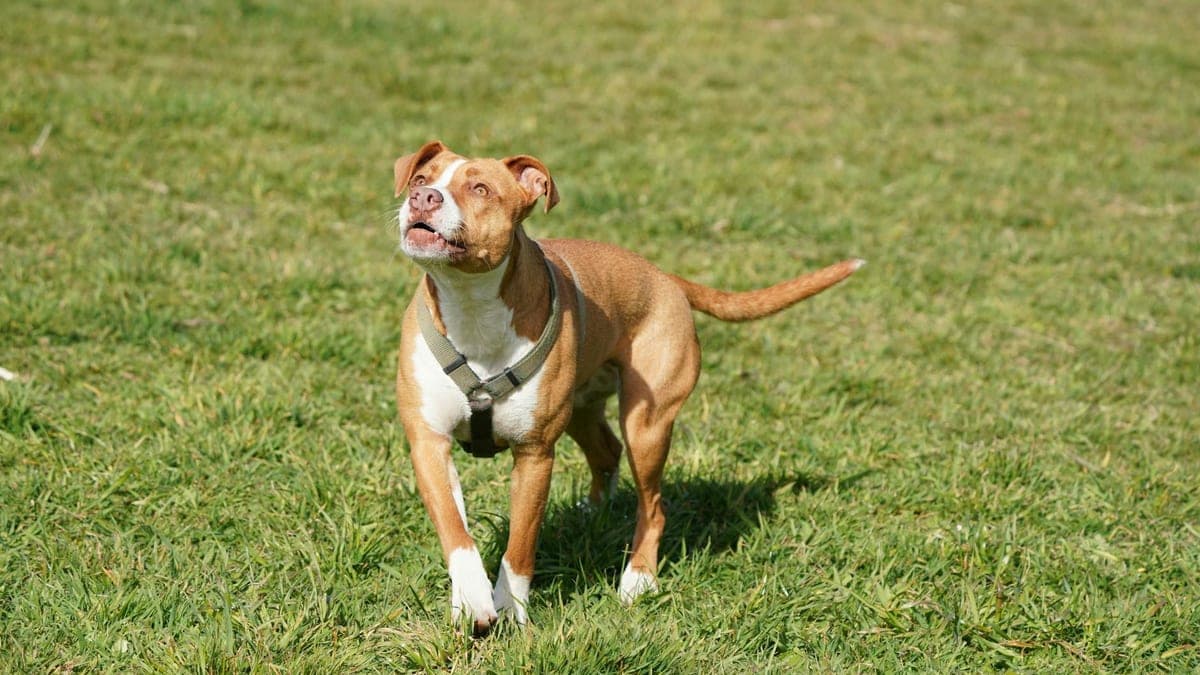
My Rescue Pit Bull Changed Everything I Thought I Knew About the Breed
Story Subject
Hazel
Type
Dog
Read Time
8 min
Shared By
Ryan Torres
Editor
Mr Pet Lover Admin
In This Guide
My mother's exact words when I told her we were considering a Pit Bull were: "Absolutely not."
My wife's parents were more diplomatic. They said they'd "have concerns about the grandkids." My brother googled something and sent me an article from 2009.
Then we actually met Hazel.
How It Happened
We weren't looking for a Pit Bull. We were at the shelter looking for a medium-sized dog, ideally over two years old, ideally already house-trained. The volunteer walked us past kennels of barking dogs to a quiet room in the back where a three-year-old brindle-and-white dog was sitting pressed against the kennel door, leaning into the wire as if she needed to be closer to every human who passed.
"She's been here five months," the volunteer said. "She's extremely gentle. She failed her guard dog evaluation because she tried to lick the evaluator."
Hazel pressed her nose through the wire and licked my daughter's hand.
My daughter looked at me. I looked at my wife. My wife looked at Hazel.
What We Encountered
I won't pretend the first weeks were controversy-free. A neighbor left a note. A family member didn't come to our house for three months. One parent at my daughter's school asked us — sincerely — if we were "worried."
What these people hadn't seen: Hazel sleeping at the foot of my daughter's bed every night since week one. Hazel sitting with my wife during a difficult phone call, resting her chin on her knee, without being asked. Hazel tolerating my daughter's friends with a patience I aspire to.
What they'd based their concern on: a breed label and decades of media imagery that bore no resemblance to the actual dog in our home.
Two Years Later
My mother takes Hazel for walks when she visits. She refers to her as "my Hazel" on the phone.
There are no dramatic conclusions to draw here about all pit bulls. Dogs are individuals. But the narrative that made five months in a shelter normal for a gentle, house-trained, three-year-old dog — that narrative has a real cost, and Hazel paid most of it.
We got the good end of that deal.
Bully breeds are among the most common dogs in shelters. Ask your local rescue about temperament-tested adults waiting for homes.
Are pit bulls actually dangerous?
The honest answer starts by separating two things the label smears together. "Pit bull" is not a single breed — it's a loose umbrella for several bully-type breeds and mixes, of which the American Staffordshire Terrier is one. Our own American Staffordshire Terrier breed profile holds two facts side by side and insists both are true at once: this is a powerful, strong-jawed, high-prey-drive terrier, and it is one of the most affectionate, people-bonded breeds in existence. A responsible owner plans for both.
The distinction that matters most is what kind of reactivity the breed actually carries. In a well-bred, well-socialized AmStaff, human aggression is not breed-typical — it is a temperament fault. The trait that genuinely needs managing is dog-directed reactivity: a terrier-origin, low tolerance for unfamiliar dogs that is handled through lifelong supervision, not trained away. So the real ownership question is not "will this dog turn on people?" but "am I prepared to manage a strong, driven dog around other dogs, for life?" That is a serious commitment — and a very different thing from the danger the label implies. It is why Hazel, a gentle house-trained adult, still spent five months in a kennel: the label kept her there, not the dog.
Where the "nanny dog" reputation comes from
The image of the pit bull as a family menace runs against the breed's documented disposition. Our breed profile describes a well-socialized AmStaff as confident, intelligent, eager to please, deeply devoted to its family, and famously good and patient with the children of its household — the old "nanny dog" reputation, it notes, "has a real basis." That patience is exactly what Ryan's family watched every night as Hazel took up her post at the foot of a child's bed.
Responsible framing matters here, because "great with kids" is never a substitute for supervision. Any dog of this size and strength should be supervised around young children as a rule, taught calm handling, and given a quiet space to retreat to. The breed's affection lowers the temperature; it does not remove the adult's job.
What responsible pit bull ownership actually requires
This is the part the fearful conversations skip and the committed owner lives. Per our breed profile, an AmStaff is "light on grooming and heavy on training, socialization, and responsible management":
- Early, lifelong socialization. Broad early socialization plus positive-reinforcement training is, in the profile's words, "the difference between a stable, friendly adult and a reactive one." Our puppy socialization guide covers the 0–16 week window where that foundation is built; for an adopted adult like Hazel, the same principles apply as gradual, positive exposure.
- Real exercise and a working brain. Plan for 45–90 minutes of vigorous daily activity plus training; an under-stimulated AmStaff becomes destructive and frustrated.
- Managing dog-dog interactions for life. Supervise introductions, avoid crowded dog parks, and accept that some AmStaffs are simply not dog-park dogs. The profile calls this responsible management, not a failure.
- The legal and insurance homework most buyers skip. Check municipal breed-specific legislation, rental restrictions, and homeowner's or renter's insurance — many insurers exclude or surcharge the breed. Fairly or not, it is a real, recurring cost of ownership.
- Breed-specific health screening. The profile flags a fatal but DNA-testable neurodegenerative disease (hereditary cerebellar ataxia / NCL), plus hip dysplasia and congenital cardiac disease — reasons to buy from tested lines or ask a shelter what is known, and to keep the dog lean.
Adopting a pit bull from a shelter
Bully-type dogs fill shelters, and a temperament-tested adult is one of the most honest ways to know the animal in front of you. Hazel had already been assessed — she "failed" a guard-dog evaluation by trying to lick the evaluator — which is precisely the individual-level information a breed label can't give you. Meeting a specific dog means reading that dog's behavior, not a statistic.
Approach it as individual assessment rather than breed shopping. Ask the shelter what they know of the dog's history and how it tested around people, children, and other dogs, and do a calm meet-and-greet — ideally more than once. Then do the legal groundwork above before you fall in love: confirm your municipality, landlord, and insurer allow the breed. Plenty of gentle, house-trained adults are waiting; you can browse temperament and care expectations across our dog breed profiles before you go. The goal is a match made with open eyes — the opposite of the fear that leaves dogs like Hazel waiting.
What Hazel's five months taught our family
I still won't tell a stranger that every pit bull is Hazel, because dogs are individuals and the label flattens that truth in both directions. But two years in, the thing our family learned is sturdier than a slogan. The fear that kept a gentle, temperament-tested dog waiting five months was built on a breed name, not on anything Hazel ever did. The real work of owning her was never about danger — it was the ordinary, committed work our breed profile lays out: socialization, exercise, supervising her around other dogs, and doing the insurance and legal homework once, up front. We did that work, and we got a dog who sleeps at the foot of a child's bed. The narrative cost Hazel most of a year. It cost us almost nothing to see past it.
Questions About Hazel
Common questions answered to help you better understand this story
Not inherently. In a well-bred, well-socialized American Staffordshire Terrier — one of the breeds grouped under "pit bull" — human aggression is not breed-typical and is considered a temperament fault. The trait that genuinely needs managing is dog-directed reactivity, handled through lifelong supervision. These are powerful, high-drive dogs that demand a committed owner, but the danger the label implies is not a breed trait.
They can be, and often are. Our breed profile describes a socialized AmStaff as confident, devoted, and famously good and patient with the children of its household — the "nanny dog" reputation has a real basis. As with any strong dog, supervise interactions with young children, teach calm handling, and give the dog a retreat space. Affection and patience lower the risk; they never replace adult supervision.
By disposition an American Staffordshire Terrier is confident, smart, good-natured, eager to please, and deeply people-bonded. The honest caveat is dog-directed reactivity — a terrier-origin low tolerance for unfamiliar dogs that is managed, not trained away — plus a strong prey drive. Temperament varies by individual and by socialization, which is why meeting and assessing the specific dog matters more than the breed name.
Meet the individual dog and ask about any temperament testing and known history — a shelter's assessment tells you more than the label. Plan for 45–90 minutes of daily exercise, early and ongoing positive-reinforcement socialization, and lifelong management of dog-dog interactions. Crucially, check local breed-specific legislation, rental rules, and insurance before you commit, because many insurers surcharge or exclude the breed.
Because a broad, visual label gets blamed for individual dogs. "Pit bull" covers several bully-type breeds and mixes, and the name, not behavior, carries the reputation. The breed's documented disposition — affectionate, family-devoted, people-bonded — bears little resemblance to it. The cost is measured in shelter time: gentle, adoptable dogs wait far longer than their temperament warrants.
Didn't find your answer?
Get in touch →More Stories


Get more stories like this
Weekly heartwarming pet stories and care tips, straight to your inbox.
No spam, ever. Unsubscribe anytime.