
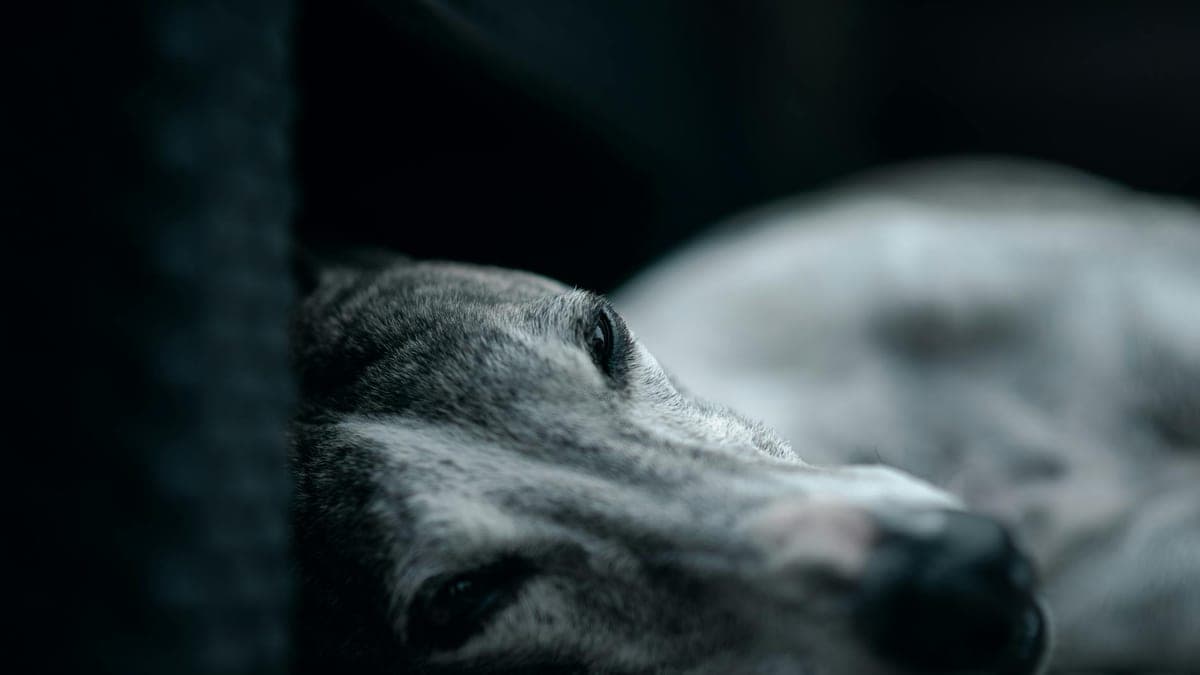
The Retired Racing Greyhound Who Taught Me to Slow Down
Story Subject
Arrow
Type
Dog
Read Time
8 min
Shared By
David Kim
Editor
Mr Pet Lover Admin
In This Guide
The foster coordinator handed me Arrow's leash and said, "He's very low-maintenance. Greyhounds are basically cats in dog suits."
I nodded politely. I assumed she was managing my expectations.
She was not managing my expectations. She was telling me the exact truth.
The Greyhound Paradox
Greyhounds are the fastest land animal after the cheetah. They can hit 45 miles per hour. Arrow walked into my apartment, surveyed the situation, and located the longest couch with the precision of an animal who has been planning this moment his entire career.
He slept for 14 hours on day one.
This is, apparently, completely normal. Racing Greyhounds spend most of their lives in kennels with short, intense bursts of activity. Retirement means the opposite: slow days, soft beds, and warmth. Arrow had never been in a house before. The carpet confused him. Stairs took two weeks to master. He had never seen a television.
What He Actually Needed
Two 20-minute walks per day. That was it. No marathons, no dog parks (Greyhounds have low body fat and thin skin — rough play with other dogs is risky), no backyard fetch sessions.
What he did need: a warm coat in winter (that thin skin again), a muzzle for off-leash areas until his prey drive around small animals was assessed, and patience while he learned what a normal domestic life looked like.
He figured it out faster than I expected. Within a month, he was soliciting ear rubs, learning to navigate the kitchen without knocking anything over, and sleeping in increasingly inventive positions.
What Arrow Gave Me
I adopted Arrow during a period when I was working 60-hour weeks and moving at a pace that wasn't sustainable. Arrow required nothing from me except presence. He didn't need activities or enrichment or stimulation. He needed me to sit down.
I sat down more in Arrow's first year than in the three years before it.
He is four years old now and appears to have no memory of his racing career. He has, however, developed very strong opinions about which throw blanket belongs to him.
Retired racing Greyhounds make exceptional apartment dogs. Many breed-specific rescues have dogs available across the country.
Do retired racing Greyhounds actually make good pets?
Yes — and the reasons run opposite to expectation. The picture in everyone's head is a hyperactive racing machine; the dog you actually get is one of the calmest, lowest-energy companions in dogdom. Our own Greyhound breed profile describes the temperament as gentle, quiet, sensitive and non-aggressive, with a barking tendency near the bottom of the scale — which is exactly why the breed is rated genuinely apartment-friendly.
The retired racer adds one more advantage: it usually arrives as a calm, already-adult dog needing a few weeks of decompression rather than months of puppy training. Arrow going straight for the longest couch wasn't a quirk — it's the breed doing what the breed does, and for an owner who wants a gentle, undemanding housemate, an unusually easy one.
How much exercise does a Greyhound really need?
Far less than the 45-mph headline suggests. A Greyhound is a sprinter, not an endurance dog — built for explosive short bursts and then long rest. The profile lists its exercise need as moderate: two or three 20–30 minute walks a day, plus a safe sprint in a fenced area a few times a week, is genuinely enough. The rest of the day a healthy Greyhound sleeps, often 16–18 hours — the source of the "40-mph couch potato" nickname.
Arrow's rhythm above — two 20-minute walks and a great deal of couch — isn't under-exercise; it's a Greyhound at its correct activity level. One caution matters more than mileage: because of a strong sighthound chase instinct, walk on lead or in fully fenced areas only, since a Greyhound that spots something worth chasing can be gone at highway speed before recall works.
What to expect when you adopt a retired racer
A racing Greyhound has often never lived in a house — stairs, glass doors and televisions can all be new, which is why Arrow needed two weeks to master the stairs. That decompression is normal, and beyond it three practical things belong on the checklist, all rooted in the breed's physiology. Prey drive: a sighthound will instinctively chase a fleeing cat, squirrel or small dog, so many adoption groups "cat-test" retired racers and place them accordingly — assume a muzzle and careful introductions until the dog's tolerance is known. Warmth and padding: with very little body fat and a thin single coat, Greyhounds chill quickly and develop pressure sores on hard floors, so a coat in cold weather and a padded bed are care items, not luxuries. Lead discipline, for the chase-instinct reason above. Meet those three and, as Arrow proved, household manners fall into place faster than new owners fear. You can compare the breed against other calm companions in our dog breed profiles.
The health realities every Greyhound owner should know
The honest part of Greyhound ownership isn't exercise or house-training — it's a short list of physiology-driven health facts, one of them non-negotiable.
- Anaesthesia sensitivity is the defining risk. Greyhounds carry very low body fat and metabolize many drugs differently in the liver, so standard sedative and anaesthetic doses can be dangerous or even fatal. The rule is absolute: tell every veterinarian the dog is a Greyhound before any sedation, dental procedure or surgery, and ideally use a vet experienced with the breed. This single briefing prevents the most avoidable cause of Greyhound death in the clinic — and it applies to every dental cleaning too.
- Bloat (GDV). The deep, narrow chest predisposes the breed to gastric dilatation-volvulus, a rapid, life-threatening stomach twist. Feed two or three smaller measured meals rather than one large one, avoid heavy exercise within an hour either side of eating, and treat a hard, distended belly with unproductive retching as a same-minute emergency.
- Osteosarcoma. Greyhounds have a notably elevated incidence of this aggressive bone cancer, usually in a limb of a middle-aged or older dog, so sudden lameness or a firm limb swelling warrants urgent imaging.
- Dental disease. Thin enamel and tooth crowding make periodontal disease near-universal, so home brushing plus regular professional cleanings are lifelong care.
None of this makes the breed hard to live with — Arrow is proof of the opposite — but these facts, along with a shorter-than-average lifespan of roughly 8–12 years, belong in the decision before you bring one home. The full picture sits in our Greyhound breed profile.
What Arrow taught me about slowing down
A year in, the lesson isn't that every Greyhound is a couch potato in a dog suit — though most really are. It's that the dog I expected to manage turned out to ask almost nothing of me but presence. The commitments that matter with this breed aren't about square footage or exercise; they're the small, specific things — a warm coat, a padded bed, a muzzle while he learned the neighbourhood, and one sentence to every vet about anaesthesia. Get those right and a retired racer hands you back something unexpected. Arrow required me to sit down, and I did. He is still deciding which throw blanket is his.
Questions About Arrow
Common questions answered to help you better understand this story
Expect a calm adult dog that has often never lived in a house. Stairs, glass doors, slick floors and televisions can all be new, and most dogs need a few weeks of decompression rather than puppy-style training. Plan from day one for prey-drive management around small animals (many groups "cat-test" their dogs), a coat and padded bed for a near-fatless body, and lead-only walking. Household manners usually settle faster than new owners fear.
Yes, for the right home. Our breed profile describes them as gentle, quiet, sensitive, affectionate and non-aggressive, with very low barking — which is why they are rated genuinely apartment-friendly. They are low-energy, undemanding housemates. The main trade-offs are managing a strong chase instinct around small animals, providing warmth for a low-body-fat dog, and briefing every vet about anaesthesia sensitivity. For an owner who wants a calm companion, they are an unusually easy fit.
Less than most people assume. A Greyhound is a sprinter, not an endurance dog, with a moderate exercise need: two or three 20–30 minute walks a day plus the occasional safe sprint in a fenced area is enough. The rest of the day a healthy Greyhound sleeps, often 16–18 hours, earning the "40-mph couch potato" nickname. Always walk on lead or in fenced areas — the chase instinct overrides recall.
Very often, yes. Retired racers are typically gentle, quiet and excellent apartment dogs thanks to their low energy and minimal barking, and they usually arrive as calm adults needing home decompression rather than training. The main adjustments are managing prey drive around small animals, providing warmth and padded bedding, and lead-walking discipline — modest trade-offs for an unusually easy temperament.
Sometimes, but it is individual and must be tested carefully. Greyhounds have a strong sighthound chase instinct triggered by fast movement; some will never be safe with cats or small dogs, while others — often "cat-tested" retired racers — live peacefully with them. Adoption groups assess this and place accordingly. Off-lead in unfenced areas is generally unsafe regardless, because a chasing Greyhound can be gone before you react.
Didn't find your answer?
Get in touch →More Stories

Get more stories like this
Weekly heartwarming pet stories and care tips, straight to your inbox.
No spam, ever. Unsubscribe anytime.