
Can Cats Eat Tuna? What Every Cat Owner Should Know
Not individually reviewed by a veterinarian. Read our editorial standards.
Last updated:
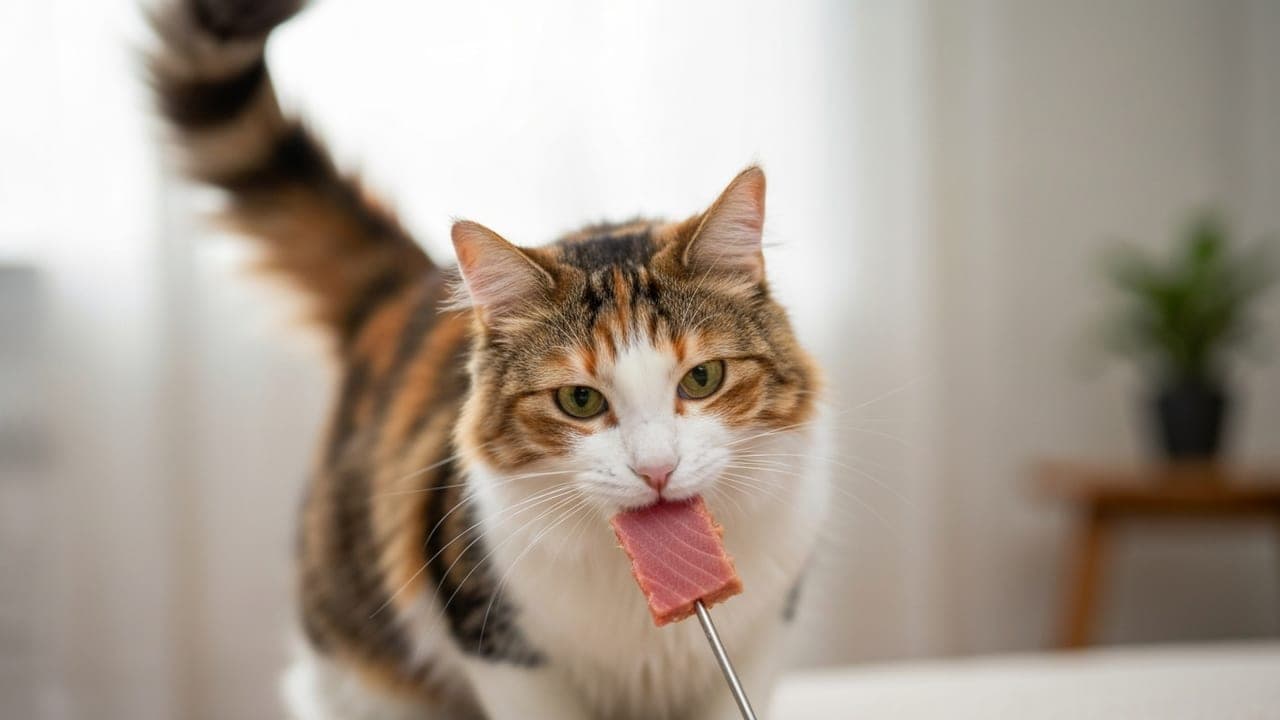
- Occasional tuna as a treat is fine, but regular feeding causes nutritional imbalance
- Mercury accumulates in tuna and can build up to toxic levels over time
- Tuna lacks essential nutrients cats need (taurine levels vary, no vitamin E balance)
- Canned tuna in water is safer than tuna in oil, but neither is complete nutrition
- Cat-formulated tuna treats are a safer alternative to human canned tuna
Can Cats Eat Tuna? The Truth About Your Cat's Favorite Obsession
If you've ever opened a can of tuna and watched your cat materialize from thin air, you already know — cats are absolutely wild about tuna. But should your feline companion be eating it regularly, or is this beloved fish doing more harm than good?
The short answer is that tuna is safe as an occasional treat but problematic as a regular part of your cat's diet. Understanding why means looking at mercury levels, nutritional balance, and the specific way a tuna-heavy diet can quietly undermine your cat's health.
Why Do Cats Love Tuna So Much?
Cats are obligate carnivores, meaning they're biologically wired to crave animal protein. Tuna is packed with protein and has a strong, distinctive aroma that triggers your cat's hunting instincts. The flavor profile — rich, meaty, and umami — is essentially irresistible to most felines.
Breeds known for their vocal food opinions, like the Siamese, can become particularly fixated on tuna. Some cats develop such a strong preference that they refuse to eat anything else — a condition veterinarians sometimes call "tuna addiction." While the term is informal, the behavior is real and can make transitioning to balanced nutrition genuinely difficult.
What's the Problem with Feeding Tuna Regularly?
Three main concerns make regular tuna feeding risky for your cat: mercury accumulation, nutritional imbalance, and thiaminase.
Mercury Buildup
Tuna is a large predatory fish that accumulates mercury throughout its life. The higher a fish sits on the food chain, the more mercury it contains. While occasional exposure is fine, consistent feeding creates a cumulative effect.
Mercury poisoning in cats (sometimes called Minamata disease) can cause neurological symptoms including loss of coordination, difficulty walking, and vision problems. It develops slowly, which makes it easy to miss until the damage is significant.
Nutritional Imbalance
Tuna alone doesn't provide the complete nutrition your cat needs. It lacks adequate amounts of vitamin E, calcium, and other essential nutrients that commercial cat foods are formulated to deliver.
A cat fed primarily tuna can develop a painful condition called steatitis (yellow fat disease), caused by vitamin E deficiency. The fat beneath her skin becomes inflamed, making even gentle touch painful. This condition is entirely preventable with a balanced diet.
Thiaminase
Raw tuna contains thiaminase, an enzyme that breaks down thiamine (vitamin B1). Thiamine deficiency in cats can cause severe neurological problems, including seizures and coma. Cooking destroys thiaminase, so this is primarily a concern with raw tuna.
How Much Tuna Is Safe for Cats?
Tuna should be treated like a special snack, not a dietary staple. A safe guideline is to limit tuna to no more than 10% of your cat's daily caloric intake, offered no more than 2-3 times per week.
For a typical 10-pound cat, that translates to roughly one tablespoon of tuna a few times a week. Think of it as a topper or flavor enhancer — not a meal replacement.
If your cat is a large breed like a Maine Coon, she can handle slightly more due to higher caloric needs, but the 10% guideline still applies proportionally.
Canned Tuna vs. Fresh Tuna: Which Is Safer?
If you're going to share tuna with your cat, the preparation matters.
Canned tuna in water (no salt added) is the most practical option for most cat owners. Avoid tuna packed in oil, which adds unnecessary fat and calories. Also avoid tuna with added salt or seasonings — cats are sensitive to sodium, and added flavors like garlic or onion are toxic to them.
Fresh tuna (cooked) is a great option if you're already preparing it for yourself. Lightly cook it without seasoning — no butter, oil, garlic, onion, or salt. Cooking eliminates the thiaminase concern and reduces (though doesn't eliminate) bacterial risk.
Raw tuna carries the highest risk due to thiaminase, potential bacterial contamination (Salmonella, Listeria), and parasites. While some raw-feeding advocates promote it, the veterinary consensus is that cooked tuna is the safer choice.
Tuna-flavored cat food is specifically formulated with tuna as a flavoring agent within a nutritionally complete recipe. This is the safest way to satisfy your cat's tuna craving while ensuring balanced nutrition. Check our cat nutrition guide for more on choosing quality cat food.
Signs Your Cat Is Eating Too Much Tuna
If tuna has become a significant portion of your cat's diet, watch for these warning signs:
- Refusing to eat regular cat food (tuna fixation)
- Weight changes — either gain from excessive tuna or loss from rejecting balanced food
- Coat quality decline (dull, flaky, or thinning fur)
- Lethargy or unusual behavior changes
- Wobbling, incoordination, or balance problems (neurological signs of mercury toxicity)
- Skin sensitivity or pain when touched (possible steatitis)
If you notice any of these symptoms, schedule a veterinary checkup. Blood tests can check for mercury levels and nutritional deficiencies.
How to Transition a Tuna-Obsessed Cat
If your cat has developed a tuna fixation and refuses other food, the transition back to balanced nutrition takes patience. Going cold turkey often backfires — cats can develop hepatic lipidosis (fatty liver disease) if they stop eating for even 2-3 days.
Week 1-2: Mix a small amount of tuna with high-quality wet cat food (75% tuna, 25% cat food). Gradually shift the ratio over 10-14 days.
Week 3-4: Move to 25% tuna, 75% cat food. You can use tuna water (drained from the can) to add flavor without adding a full serving of fish.
Week 5+: Reduce tuna to occasional treat levels — a tablespoon a few times per week. Use tuna-flavored cat food as the regular meal to satisfy the craving safely.
The goal is a nutritionally complete cat food as the primary diet, with tuna as an occasional and eagerly anticipated bonus.
What About Tuna for Cats with Health Conditions?
Cats with kidney disease should avoid tuna due to its high phosphorus content. Cats with hyperthyroidism should also be cautious, as some research has linked high fish diets to thyroid issues in felines.
If your cat has any chronic health condition, talk to your vet before introducing tuna — even as an occasional treat. Your vet can recommend appropriate treat options that won't interfere with her treatment plan.
Healthier Fish Alternatives for Cats
If your cat loves fish, there are options with lower mercury content that can be rotated as occasional treats:
- Salmon (cooked, boneless) — lower in mercury, high in omega-3s
- Sardines (in water, no salt) — small fish with minimal mercury accumulation
- Whitefish (cooked) — mild flavor, low mercury
- Shrimp (cooked, deveined, no seasoning) — low mercury, high protein
Rotating between different protein sources reduces the risk of any single contaminant building up over time. Variety also keeps meals interesting and reduces the chance of food fixation.
FAQ
Can kittens eat tuna?
Kittens have even more sensitive nutritional needs than adult cats and should be eating kitten-formulated food exclusively for their first year. A tiny taste of tuna won't harm a kitten, but it should never replace kitten food. Developing a tuna preference early makes it harder to maintain balanced nutrition as she grows.
Is canned tuna in oil safe for cats?
It's not ideal. The added oil increases caloric density and fat content, which can contribute to obesity and digestive upset. If you're offering tuna, choose canned tuna in water with no added salt. Drain it well before serving.
How do I know if my cat has mercury poisoning?
Mercury poisoning develops gradually and presents as neurological symptoms: wobbling, loss of coordination, difficulty walking, vision changes, and behavioral shifts. If your cat has been eating tuna frequently and shows any of these signs, see your vet promptly and mention the tuna consumption.
Can I give my cat tuna every day?
Daily tuna is not recommended due to the cumulative risks of mercury exposure and nutritional imbalance. Even small daily amounts can add up over time. Stick to 2-3 times per week maximum, and keep portions small — about one tablespoon per serving for an average-sized cat.
Is tuna-flavored cat food the same as actual tuna?
No. Tuna-flavored cat food uses tuna as one ingredient within a nutritionally complete formula. It contains the vitamins, minerals, taurine, and amino acids your cat needs for total health. Plain canned tuna does not. Tuna-flavored cat food is the safest way to satisfy your cat's fish craving daily.
Curious about what else belongs (and doesn't belong) in your cat's bowl? Explore our complete cat nutrition guide or browse cat breeds to learn about your specific companion's dietary tendencies.
Mr Pet Lover Team
The Mr Pet Lover team is dedicated to providing warm, accurate, and practical pet care advice backed by veterinary research and real-world experience.
Related Articles

Can Cats Eat Dog Food? Why It's Not Safe Long-Term
A nibble of dog food won't hurt your cat, but regular feeding can cause serious nutritional deficiencies. Learn why cats need cat-specific nutrition.
Can Cats Eat Cheese? A Vet-Informed Safety Guide
Most adult cats are lactose intolerant, making cheese a risky treat. Learn which types are safer, symptoms of intolerance, and better treat alternatives.

Can Dogs Eat Eggs? How Much, How to Cook Them, and When to Call a Vet
Yes — cooked. What heat actually changes, what one large egg really costs in calories (72, not 155), and the two figures the internet repeats that no study supports.