
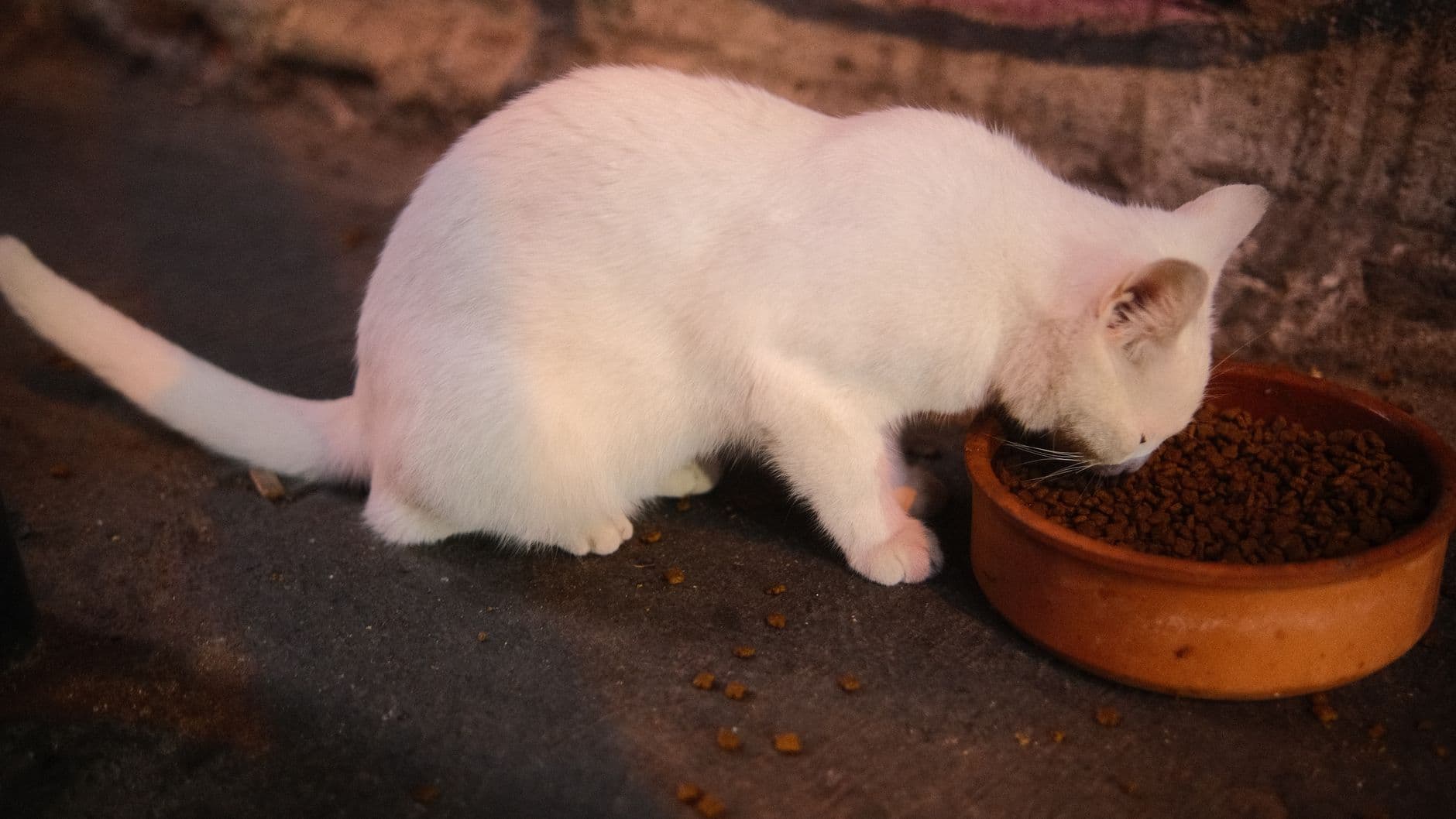
Cat Nutrition Guide: What Cats Actually Need to Eat
Obligate Carnivores: A Biological Reality Cats are obligate carnivores, which means they are biologically required to eat animal flesh to survive. This is not a preference or a dietary philosophy. It
Reading Time
📖 17 min read
Guide Type
📋 General
Last Updated
📅 Sep 9, 2026
Breed
🐱 All Pets
In This Guide
Overview
Obligate Carnivores: A Biological Reality
Cats are obligate carnivores, which means they are biologically required to eat animal flesh to survive. This is not a preference or a dietary philosophy. It is a metabolic fact with profound implications for how you feed your cat. Dogs and humans can convert beta-carotene from plants into vitamin A. Cats cannot. Dogs and humans can synthesize taurine from other amino acids. Cats cannot. Dogs can produce arachidonic acid from linoleic acid. Cats cannot. Every one of these nutrients must come directly from animal tissue in the cat's diet, and every one of them is essential for organ function, vision, and cardiac health.
This matters because feeding a cat a plant-heavy diet, a poorly formulated diet, or a diet designed for another species is not a neutral choice. Taurine deficiency causes dilated cardiomyopathy and retinal degeneration. Vitamin A deficiency causes skin problems, reproductive failure, and night blindness. These are not theoretical risks. They are documented clinical presentations in cats fed nutritionally inadequate diets.
The Wet vs Dry Food Debate
Cats evolved as desert hunters. Their primary water source was prey, not standing water. Unlike dogs and humans, cats have a relatively weak thirst drive and do not compensate for dry food by drinking significantly more water. Cats fed mainly dry food do tend to take in less water overall, and cats with feline idiopathic cystitis are more likely to eat dry food and to drink less. That is an association rather than a demonstrated chain of damage: Cornell notes there is no evidence that urinary diets reduce how often lower urinary tract signs occur.
This is not a minor consideration. Chronic kidney disease is the leading cause of death in senior cats, affecting an estimated 30-40% of cats over age 10. Feline idiopathic cystitis (painful bladder inflammation) affects primarily indoor, dry-fed cats. Urethral obstruction, a potentially fatal emergency predominantly affecting male cats, is strongly associated with dry food diets and insufficient water intake.
Wet food, which contains 70-80% moisture compared to dry food's 10%, addresses this biological mismatch directly. A cat eating canned food as its primary diet achieves adequate daily fluid intake through food alone. A cat eating only dry food must drink enough water separately to compensate for the moisture gap, and most cats do not.
Protein: The Non-Negotiable Requirement
Cats require protein at a minimum of 26-30% of diet on a dry matter basis, significantly higher than dogs at 18% and humans at much lower levels. More importantly, cats use protein as an energy source continuously, even when calories are abundant. Unlike dogs, cats cannot downregulate protein catabolism during periods of low protein intake. A cat fed a low-protein diet will break down its own muscle mass for the amino acids it needs. This is why senior cats eating insufficient protein lose muscle mass even when calories are adequate - a condition called sarcopenia that dramatically reduces quality of life.
Kitten, Adult, and Senior Nutritional Stages
Kittens (under 12 months) have dramatically higher caloric, protein, and calcium needs per pound of body weight than adults. Feed a diet labeled for (all life stages) or specifically (kittens) until 12 months. Adult cats (1-7 years) benefit from portion-controlled meals to prevent obesity. Senior cats (over 7 years) need highly digestible protein to compensate for declining intestinal absorption. Do not restrict protein in senior cats unless a veterinarian identifies specific kidney disease requiring phosphorus restriction, and even then, protein restriction in cats is complex and debated among feline internists.
Reading the Label
The single most important phrase on any cat food label is the AAFCO nutritional adequacy statement. Look for (complete and balanced for maintenance of adult cats) or (all life stages). A food labeled (for intermittent or supplemental feeding only) is not nutritionally complete and cannot serve as a primary diet. After the AAFCO statement, check that a named meat (chicken, salmon, turkey) appears as the first ingredient, not a generic (meat by-product) or a grain. Moisture content, protein percentage, and phosphorus levels are the most clinically relevant numbers for a cat's long-term health.
Daily Care
Feeding Schedules vs Free Feeding
Free feeding, where dry food is available at all times, is common in cat households but significantly associated with obesity. Cornell's Feline Health Center estimates five to ten percent of cats are overweight and about forty percent obese, and free feeding is a primary driver. An overweight cat develops joint disease, diabetes, hepatic lipidosis risk, and urinary problems at dramatically higher rates than a lean cat.
Scheduled feeding, twice daily for most adult cats, gives you visibility into appetite changes (an early indicator of illness in cats who are notoriously stoic), allows portion control, and creates predictable hunger cycles that make meal anticipation a positive enrichment event. If you feed wet food, two meals prevent bacterial growth in the bowl during hot weather.
Multiple Cat Households
In households with more than one cat, monitor food intake per cat, not per household. Dominant cats will consume more than their share. Food station separation (different rooms or vertical heights) is the simplest solution. Automatic feeders with microchip readers that only open for the registered cat's microchip are available and genuinely useful for cats with medical diets or weight management needs.
Water Enrichment
Because cats have a low thirst drive, water station placement and presentation matter more than most owners realize. Cats prefer moving water over still water, which is why many cats are attracted to running faucets. A pet water fountain significantly increases voluntary water intake in most cats. Place water stations away from food bowls - in the wild, cats would not find a water source next to a prey carcass, and the proximity triggers instinctive avoidance in some cats.
Transitioning Foods
Cats are notoriously resistant to dietary changes, and some develop food aversions if fed a new diet while nauseous or ill. Transition slowly over seven to ten days, mixing increasing proportions of new food with decreasing proportions of old food. Never force a diet change faster than a cat accepts it, and never allow a cat to go more than 24-48 hours without eating - fasting triggers hepatic lipidosis, a life-threatening liver condition unique to cats.
Nutrition
Wet Food as the Foundation
For most cats, high-quality canned or pouched wet food should form the foundation of the diet, with dry food used as an optional supplement or enrichment treat rather than the caloric base. Choose a wet food with a named protein in the first position, an AAFCO (complete and balanced) statement, and a taurine listing in the guaranteed analysis or ingredient list (it should be there - its absence in a cat food is a red flag).
Evaluating Dry Food If You Use It
If dry food is part of your cat's diet, select a formula with a minimum 32-40% protein on a dry matter basis (not the (as fed) percentage printed on the bag, which is misleading due to moisture content differences). Avoid formulas where corn, wheat, or soy appear in the first three ingredients. Carbohydrates are not toxic to cats, but they provide minimal nutritional value to an obligate carnivore and contribute to the obesity epidemic.
The Grain-Free Cat Food Question
Unlike the grain-free concern in dogs (where certain grain-free diets were linked to dilated cardiomyopathy in some breeds), grain-free cat food has not shown the same clinical association. Cats are designed for a low-carbohydrate diet, and grain-free cat foods typically have lower carbohydrate levels. However, the quality of the protein source matters more than whether grain is present. A grain-inclusive cat food with chicken as the first ingredient outperforms a grain-free food with pea protein and by-products leading the ingredient list.
Raw Diets for Cats
Raw diets are more biologically appropriate for cats than for dogs, given that cats are obligate carnivores who evolved consuming whole prey including bones, organs, and raw muscle meat. However, raw diets carry pathogen risks (Salmonella, Listeria, Toxoplasma) that affect both the cat and household members who handle the food or contact the cat. If feeding raw, use commercially prepared frozen raw from manufacturers who conduct USDA-standard pathogen testing, and handle with the same hygiene as raw chicken. Homemade raw diets without veterinary nutritionist formulation routinely produce severe nutrient deficiencies.
Supplements
A cat eating a complete and balanced commercial diet requires no supplementation. Adding fish oil for coat health is reasonable at low doses (ask your vet for the dose that suits your cat). Never supplement with calcium or vitamin A without veterinary guidance - both are toxic in excess and cats eating complete diets are already getting adequate amounts.
Exercise
Why Exercise Matters for Indoor Cats
Indoor cats live longer than outdoor cats on average, but they sacrifice the natural activity that hunting provides. An outdoor cat may cover a half-mile or more daily while patrolling territory and hunting. An indoor cat may move 50 feet between the food bowl and the couch. This sedentary lifestyle is the direct cause of the obesity epidemic in domestic cats and contributes to the boredom-based stress that manifests as over-grooming, inappropriate elimination, and inter-cat aggression.
Interactive Play Sessions
Two 10-15 minute interactive play sessions daily, one in the morning and one in the evening, satisfy the predatory drive that cats cannot express without hunting. Use wand toys that mimic prey movement: start with slow, skulking movements (like a mouse foraging), build to quick darts and direction changes, then allow the cat to catch and (kill) the toy at the end of each session. Ending sessions without a catch leaves the predatory drive unsatisfied and increases frustration. Give a small food treat or a piece of kibble after the (kill) to complete the hunt-catch-eat sequence.
Food Puzzles and Foraging
Food puzzles, where cats work to extract kibble or wet food from a physical challenge, convert meal time into activity time. A cat that spends 15 minutes working a puzzle feeder expends both physical and mental energy that a cat eating from a bowl does not. Begin with easy puzzles that deliver food quickly to build confidence, then increase difficulty as the cat learns the mechanics.
Vertical Space and Environmental Enrichment
Cats in multi-level environments (cat trees, shelving, window perches) move more throughout the day. A cat who can patrol at ceiling height, sit in a sunny window, and access different resting elevations is a more physically active cat than one limited to floor level. Vertical space also reduces conflict in multi-cat households by creating territory that can be stratified vertically rather than competed for horizontally.
Exercise for Senior Cats
Senior cats over ten years old often have arthritis that is undiagnosed because cats hide pain. If your senior cat has stopped jumping to previously accessible spots, consult a veterinarian before assuming it's (just getting older). Many senior cats benefit from joint pain management that restores comfortable movement. Adjust play sessions to ground-level activities with slower toy movements that do not require jumping.
Grooming
Self-Grooming and Its Limits
Cats are exceptional self-groomers and maintain coat hygiene without human assistance in most cases. However, self-grooming has important limits. Long-haired cats (Persians, Maine Coons, Ragdolls) cannot prevent mat formation without regular human brushing. Overweight cats cannot reach their lower back and base of tail. Senior cats with arthritis groom less thoroughly. And all cats that self-groom heavily accumulate hairballs that cause vomiting and, rarely, intestinal obstruction.
Brushing Frequency by Coat Type
Short-haired cats benefit from weekly brushing primarily during seasonal shedding. Long-haired cats require brushing every two to three days to prevent mat formation. A slicker brush removes loose fur and stimulates circulation. A metal comb with wide and narrow tines detects mats before they become severe. Never cut out a mat with scissors - the skin underneath is tented into the blade. Use a mat splitter or detangler spray and work the mat apart with fingers before combing.
Hairball Management
Regular brushing is the most effective hairball prevention because it removes fur before the cat ingests it during self-grooming. For cats with chronic hairball issues, ask your vet whether a hairball lubricant is appropriate and how often to give it — the cadence depends on the cat, and repeated hairballs, retching without production, appetite loss or constipation are reasons to have the cat examined rather than to keep dosing at home. High-fiber diets also reduce hairball frequency. Frequent hairball vomiting (more than once weekly) warrants veterinary evaluation to rule out inflammatory bowel disease or other gastrointestinal issues.
Nail Trimming
Cat nails require trimming every two to three weeks. Untrimmed nails curl inward and can penetrate the paw pad. Trim only the clear tip, staying well back from the pink quick visible inside the nail. Use dedicated cat nail clippers rather than human clippers, which can crack the nail. Begin nail trimming in kittenhood to establish tolerance. For cats that resist handling, wrap in a towel (the burrito method) to control movement without restraint that escalates stress.
Dental and Ear Care
Dental disease affects 85% of cats over three years old. Daily tooth brushing with feline-specific toothpaste prevents the periodontal disease that causes pain, tooth loss, and systemic bacterial infection affecting the kidneys and heart. Ear care for most cats requires only occasional inspection - a normal ear is pale pink, odorless, and free of dark debris. Persistent dark discharge indicates ear mites or bacterial infection requiring veterinary treatment.
Health
Taurine Deficiency: A Real Risk
Taurine deficiency is fully preventable but was historically a widespread cat killer. Before 1987, when the link between taurine deficiency and feline dilated cardiomyopathy was established, many cats on commercial dry food died of heart failure. Taurine is now added to all commercially produced complete cat foods in the United States. The risk today lies in homemade diets without proper formulation, diets based around ingredients that destroy taurine during processing, and poorly manufactured imports. Verify any cat food has an AAFCO (complete and balanced) statement, which guarantees minimum taurine levels.
Kidney Disease Prevention Through Diet
Chronic kidney disease in cats is multifactorial, with age and genetics prominent among the contributors. A lifetime of wet food as the dietary foundation does not guarantee kidney health, but it significantly reduces the cumulative stress of chronic dehydration on renal tissue. Regular annual bloodwork beginning at age seven catches kidney disease in early stages when dietary and medical intervention can meaningfully slow progression.
Urinary Tract Health
Feline lower urinary tract disease (FLUTD) encompasses a spectrum of conditions from idiopathic cystitis to urethral obstruction. Male cats are at higher risk of life-threatening urethral obstruction. Signs requiring immediate veterinary attention include straining to urinate without producing urine, crying in the litter box, blood in urine, or lethargy combined with reduced urination. A cat that cannot urinate is a medical emergency with a 24-48 hour window before fatal kidney failure.
Obesity-Related Health Risks
An overweight cat faces dramatically elevated risks of type 2 diabetes, hepatic lipidosis (triggered by even 48-72 hours of not eating), joint disease, urinary problems, and anesthetic risk during surgery. Weight loss in cats must be gradual (no more than 0.5-1% of body weight per week) and supervised by a veterinarian. Rapid weight loss in cats triggers hepatic lipidosis, the very condition obesity makes more likely. Paradoxically, a fat cat on a crash diet can develop life-threatening liver disease faster than a lean cat.
Preventive Care Schedule
Adult indoor cats require an annual veterinary exam even when apparently healthy. Cats hide illness instinctively until they can no longer compensate. Regular physical examination, weight monitoring, and annual bloodwork after age seven catch diseases in manageable stages. Core vaccines (rabies, feline herpesvirus, calicivirus, panleukopenia) should be kept up to date on the schedule your vet advises, even for indoor-only cats.
Costs
Monthly Food Budget
Cat food costs vary significantly by diet approach:
- Dry food only (mid-range brand): $20-40/month for an average adult cat
- Mixed wet and dry (recommended): $45-80/month
- Premium wet food only: $80-150/month
- Raw diet (commercial frozen): $100-200/month
The higher cost of wet food is offset, for many owners, by the reduced veterinary costs associated with better long-term urinary and kidney health. A lifetime of urinary blockage treatment ($1,500-3,000 per episode, recurring in some cats) dwarfs the difference between dry and wet food costs.
Annual Veterinary Costs
Budget $300-600 annually for a healthy adult cat's preventive care including an annual exam, core vaccines on a three-year schedule after initial series, flea and parasite prevention, and one set of baseline bloodwork. Dental cleanings under anesthesia (recommended every one to three years depending on individual dental health) run $300-700 at most veterinary practices and are not included in that estimate.
Emergency and Specialist Costs
Maintain a $1,500 emergency fund or pet insurance policy. Common cat emergencies include urethral obstruction in male cats ($1,500-3,000 for unblocking and hospitalization), foreign body ingestion requiring surgery ($2,000-5,000), and trauma. Pet insurance purchased in kittenhood before any conditions are diagnosed covers many of these emergencies at 70-90% after deductible.
Long-Term Senior Cat Costs
Senior cats (over ten years) with chronic kidney disease may require subcutaneous fluid administration at home (owner-administered after veterinary instruction), specialized prescription renal diets ($60-100/month), and quarterly bloodwork ($150-250). Factor these potential costs into your long-term commitment to a cat expected to live 15-20 years. See other guides at /care-guides for species-specific planning resources.
Frequently Asked Questions
Is dry food actually bad for him?
Weaker than the internet implies. Cornell's Feline Health Center says therapeutic urinary diets may reduce the chance an affected cat obstructs, yet there is no evidence they lower how often urinary signs occur. A review of feline idiopathic cystitis found affected cats do eat more dry food and drink less, while cautioning that few such measures were tested in randomised, placebo-controlled trials. Add moisture if he accepts it, but take straining or crying in the litter box to a vet the same day, not to a food change.
He has stopped eating. How long can I leave it?
Not days. VCA's veterinary library describes hepatic lipidosis following three to four consecutive days of little or no eating, notes the risk is greater in a cat that was overweight beforehand, and says the disease is fatal if not treated rapidly. Cornell's Feline Health Center adds that in more than 90 percent of cases it is secondary to another illness. So the refusal to eat is a symptom, not the problem. Book a same-day appointment rather than waiting for his appetite to return.
Is grain-free better for cats?
There is no established evidence that it is. The FDA's investigation into diet-associated dilated cardiomyopathy centred on dogs, but between January 2014 and April 2019 it did log nine feline reports covering fourteen cats, five of which died. The agency has never established a causal relationship and stopped issuing public updates in December 2022. Grain-free is a marketing category, not a nutritional standard. Judge a food by its nutritional adequacy statement and by how your cat actually does on it.
Does my indoor cat need different food?
Less a different food than a different quantity. Cornell's Feline Health Center estimates five to ten percent of cats are overweight and forty percent obese, and singles out food left down all day. A review of feline idiopathic cystitis found indoor confinement prominently associated with the condition, and being overweight significantly related to it. Neither finding tells you a number. Ask your vet to body-condition score him and set the portion from that, then re-weigh him monthly so drift shows up early.
Do I need to add taurine or any supplement?
Not if he eats a complete diet. Merck's veterinary manual states that taurine deficiency causes dilated cardiomyopathy and central retinal degeneration in cats. Dilated, not hypertrophic. It also advises against supplements without your vet's approval and against formulating a homemade diet yourself. AAFCO defines complete as containing every required nutrient and balanced as holding them in correct ratios. Home-mixed meals are where deficiency still turns up, so have any recipe formulated by a veterinary nutritionist first.
Sources
This guide draws on the following published references. Each opens in a new tab so you can check it against what you have read here.
ASPCA
General Cat Care(opens in a new tab)Association of American Feed Control Officials (AAFCO)
Reading Labels(opens in a new tab)Merck Veterinary Manual (Merck & Co. / MSD Animal Health)
Nutritional Requirements of Small Animals(opens in a new tab)Merck Veterinary Manual (Merck & Co. / MSD Animal Health)
Proper Nutrition for Cats(opens in a new tab)VCA Animal Hospitals
Hepatic Lipidosis in Cats (Fatty Liver Syndrome in Cats)(opens in a new tab)Cornell Feline Health Center
Feeding Your Cat(opens in a new tab)Cornell Feline Health Center, Cornell University College of Veterinary Medicine
Feline Lower Urinary Tract Disease(opens in a new tab)Cornell Feline Health Center, Cornell University College of Veterinary Medicine
Obesity(opens in a new tab)PubMed Central, US National Library of Medicine
Prevalence, Risk Factors, Pathophysiology, Potential Biomarkers and Management of Feline Idiopathic Cystitis: An Update Review(opens in a new tab)US Food and Drug Administration, Center for Veterinary Medicine
FDA Investigation into Potential Link between Certain Diets and Canine Dilated Cardiomyopathy(opens in a new tab)Cornell Feline Health Center, Cornell University College of Veterinary Medicine
Hepatic Lipidosis(opens in a new tab)Merck Veterinary Manual
Routine Health Care of Cats(opens in a new tab)
Get personalized pet care tips
Join our newsletter for breed-specific advice, care guides, and expert tips delivered weekly.
No spam, ever. Unsubscribe anytime.