
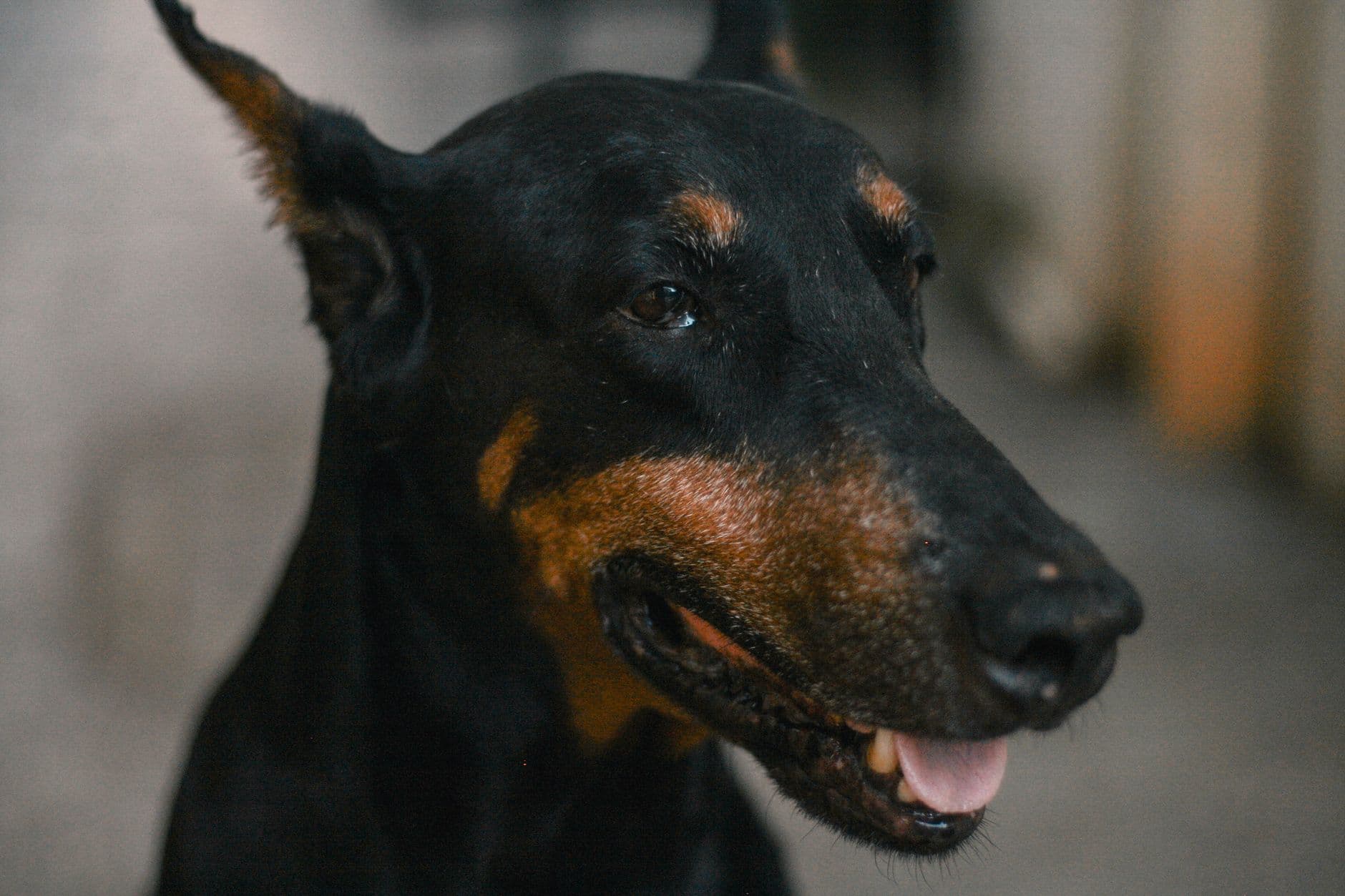
Doberman Pinscher Care Guide
Doberman Pinscher Overview: The Velcro Dog Built for Protection The Doberman Pinscher's origin is unusually well recorded for a breed of its age. In the 1890s, a German tax collector named Karl Friedr
Reading Time
📖 14 min read
Guide Type
🐾 Breed-Specific
Last Updated
📅 Sep 9, 2026
Breed
🐶 Doberman PinscherIn This Guide
Overview
Doberman Pinscher Overview: The Velcro Dog Built for Protection
The Doberman Pinscher's origin is unusually well recorded for a breed of its age. In the 1890s, a German tax collector named Karl Friedrich Louis Dobermann held the dual role of municipal dog catcher in the town of Apolda, Thuringia. His job required traveling through areas where he faced real risk of robbery and assault. With access to the local dog pound and a keen interest in breeding, Dobermann set about creating the ideal personal protection dog — athletic, intimidating, highly intelligent, and deeply loyal to its handler.
The exact breeds used in the Doberman's creation are not fully documented, but historians believe the mix included the Rottweiler, German Pinscher, Weimaraner, Manchester Terrier, Greyhound, and possibly the Great Dane. The result, refined after Dobermann's death in 1894 by breeder Otto Goeller, was a dog of extraordinary physical capability and psychological intensity: the Doberman Pinscher.
Modern Dobermans carry those traits forward in full. They are athletic, lean, and built for speed and endurance. They are among the most trainable breeds in existence, capable of police, military, search and rescue, and therapy work. And they are, in the parlance of experienced Doberman owners, velcro dogs — dogs that follow their person from room to room, sleep against them, and experience genuine distress when separated. This is not needy behavior. It is the expression of a breed that was literally designed to stay at its person's side.
Two distinct lines of Doberman exist today: the American Doberman and the European (working line) Doberman. American Dobermans have been selectively bred toward a sleeker, more refined appearance and a somewhat more manageable temperament for companion roles. European Dobermans, bred under the oversight of the IDC (International Dobermann Club), maintain stronger working drives, heavier bone structure, and higher thresholds for Schutzhund and ring sport competition. Neither line is superior — they are optimized for different purposes.
The Doberman's reputation as an aggressive dog is a product of its history in protection work and its intimidating appearance rather than its actual temperament. A properly bred and socialized Doberman is affectionate, playful, and gentle with family members including children. Early socialization is, however, essential — an undersocialized Doberman's protective instincts can become generalized anxiety or reactivity rather than controlled confidence.
Two physical characteristics define the breed's appearance: cropped ears and a docked tail. Historically standard, these practices are now prohibited in many European countries and increasingly controversial globally. Natural-eared, natural-tailed Dobermans are increasingly common and no less impressive. The controversy is worth understanding before purchasing, as a breeder's stance on cropping and docking often signals broader values about working with the breed.
The most pressing health reality for every Doberman owner to understand is dilated cardiomyopathy (DCM). Dilated cardiomyopathy is common enough in this breed to shape ownership: published cumulative prevalence figures run around 58 percent over a lifetime, though be wary of seeing that lifetime figure quoted against a specific age. It is the leading cause of death in the breed. This is not a reason to avoid Dobermans — but it is a reason to commit to annual cardiac screening by echocardiogram and Holter monitor, which European Society of Veterinary Cardiology guidance says should start at three years of age and continue yearly for life.
Daily Care
Daily Care for Doberman Pinschers
Dobermans are indoor dogs. Despite their size and athletic build, they are not well-suited to outdoor kennel life and should not be left outdoors for extended periods. They have a single, short coat with minimal insulating capacity, making them sensitive to cold. More importantly, they are psychologically wired for close human contact.
Exercise (60-120 minutes daily): Two dedicated exercise sessions per day are ideal — a morning run, long walk, or off-leash play session, and an afternoon or evening session. Dobermans are capable of sustained running alongside cyclists or joggers and excel at obedience work, tracking, Schutzhund, and agility.
Mental Engagement: Dobermans require cognitive challenge as much as physical exercise. Training sessions — even 15 to 20 minutes of advanced obedience, trick training, or nose work — provide meaningful mental fatigue. A Doberman left without mental challenge will find its own entertainment, which rarely aligns with what owners prefer.
Social Proximity: The velcro nature of the breed means a Doberman will want to be in the same room as its person at all times. This is not a problem unless you need to leave the dog alone frequently. Dobermans can develop separation anxiety — desensitization training from puppyhood and a gradual introduction to alone time are important investments.
Puppy Socialization: Between 8 and 16 weeks, expose Doberman puppies to as many novel people, animals, environments, and sounds as possible. This window is short and critical. Undersocialized Dobermans frequently develop fear-based reactivity that is much harder to address after 6 months.
Temperature Sensitivity: In cold climates, Dobermans benefit from a dog coat or jacket during outdoor exercise in temperatures below 40 degrees Fahrenheit. This is not anthropomorphism — their coat provides negligible insulation.
Nutrition
Nutrition for Doberman Pinschers
Dobermans are lean, muscular dogs with moderate-to-high energy needs. Their deep chest also makes them susceptible to bloat, which influences how and when they should be fed.
Caloric Requirements: An adult Doberman (27 to 40 kg) engaged in regular exercise requires approximately 1,700 to 2,400 kcal per day. Adjust based on body condition — ribs should be felt but not prominently visible, with a visible waist tuck from above.
Protein and Fat: Feed a diet with 25 to 30 percent protein and 12 to 18 percent fat from high-quality animal sources. Dobermans maintain muscle mass more effectively than many breeds but require adequate protein to sustain their lean physique under regular exercise.
Cardiac Nutrition Consideration: The relationship between grain-free diets and DCM has been the subject of ongoing FDA investigation since 2018. The scientific picture remains incomplete, but given the Doberman's existing genetic predisposition to DCM, many veterinary cardiologists recommend avoiding grain-free legume-heavy diets (peas, lentils, chickpeas as primary ingredients) until more data is available. Discuss this with your veterinarian and cardiologist.
Taurine: Some evidence suggests taurine supplementation may have a role in cardiac health in predisposed breeds. This is an evolving area of research. Ask your veterinary cardiologist for current guidance.
Bloat Prevention Through Feeding: Feed two to three smaller meals per day rather than one large meal. Avoid exercising for 60 minutes before and 90 minutes after meals. Elevated feeders were historically recommended for deep-chested breeds, but recent research has not confirmed a protective effect — ask your vet for current guidance.
Puppy Feeding: Use a large-breed puppy formula from 8 weeks until 18 months. Rapid growth in large breeds stresses developing joints.
Exercise
Exercise Requirements for Doberman Pinschers
Dobermans need a minimum of 60 to 90 minutes of vigorous exercise daily, distributed across two sessions. They are not dogs that can be managed with a brief morning walk. Under-exercised Dobermans develop destructive habits, anxiety, and inappropriate arousal behaviors.
- Schutzhund/IPO: The sport for which the Doberman's temperament was designed. Combines tracking, obedience, and protection work. Even participation at a club level without competition intent provides extraordinary mental and physical engagement.
- Advanced Obedience: Dobermans are among the top-performing breeds in competitive obedience. The precision work involved is cognitively demanding in ways casual play is not.
- Agility: The Doberman's athletic build and intelligence make it a capable agility competitor, though they are less common in agility than Border Collies or Belgians.
- Jogging/Cycling: A Doberman makes an ideal running partner. They can sustain a 6 to 8 mph pace comfortably for extended distances once fully grown and conditioned.
- Tracking and Nose Work: Engaging the scenting capability provides mental fatigue independent of physical exertion.
Off-Leash Suitability: Dobermans with solid recall training can be exercised off-leash in appropriate environments. They are less prone to bolt than scenthound or sighthound breeds, but recall must be trained proactively — not assumed.
Puppy Exercise Limits: Restrict high-impact running and jumping until 18 months when growth plates close. Leash walks, swimming, and training sessions are appropriate for puppies. Avoid stairs and jumping on/off furniture during the growth phase.
Minimum Commitment: Two hours of combined daily exercise. Dogs receiving less than this will not be well-behaved companions. This is a function of breed drive, not individual personality.
Grooming
Grooming a Doberman Pinscher
The Doberman is one of the lowest-maintenance breeds from a grooming standpoint. Their short, close-lying, single coat requires minimal professional intervention.
Brushing: Weekly brushing with a rubber curry brush or grooming mitt removes loose hairs and stimulates the skin. Dobermans shed moderately year-round but do not blow a seasonal coat the way double-coated breeds do. Regular brushing keeps shedding manageable.
Bathing: Bathe every 6 to 8 weeks or when visibly dirty. The short coat dries quickly — a towel dry is usually sufficient. Use a dog-specific shampoo that maintains skin oil balance.
Ears: Ear care differs significantly depending on whether the dog has cropped or natural ears. Cropped ears require regular posting during the healing period (6 to 8 weeks post-procedure), which is demanding. Check a natural-eared Doberman's ears when you groom, since a dropped ear is harder to see into than an erect one. Note that no source supports cropping as a way to prevent ear infections, and the procedure is illegal in the UK and has been banned from Royal Kennel Club events for over a century. Check and clean ears weekly.
Nail Care: Trim every 3 to 4 weeks. Dobermans are active enough that nails may wear somewhat naturally, but check monthly. Overgrown nails cause discomfort and alter gait — a meaningful concern in an athletic breed.
Coat Color and Skin Notes: Blue and fawn (Isabella) Dobermans carry the color dilution gene and are prone to Color Dilution Alopecia (CDA) — a condition causing progressive hair thinning and skin fragility in the diluted-color areas. There is no cure, but medicated shampoos and careful sun protection help. Standard black-and-rust and red-and-rust Dobermans do not carry this risk.
Teeth: Brush 2 to 3 times per week. Dobermans are not particularly prone to dental disease relative to other breeds, but dental hygiene prevents systemic health complications over time.
Health
Doberman Pinscher Health: The DCM Reality
Dobermans are a breed under genuine genetic health pressure. Understanding the primary conditions before ownership is an ethical responsibility.
Dilated Cardiomyopathy (DCM): The defining health challenge of the breed. DCM involves progressive enlargement and weakening of the heart muscle, leading to arrhythmias, congestive heart failure, and sudden death. Published cumulative prevalence for DCM in Dobermans runs to roughly 58 percent across a lifetime, and sudden cardiac death is reported in a quarter to a third of affected dogs. Many dogs are presymptomatic for years — annual echocardiography plus 24-hour Holter monitoring is the standard of care, starting at three years of age per European Society of Veterinary Cardiology guidance. Some dogs are managed with medication for years; others decline rapidly. Sudden cardiac death without prior symptoms does occur.
Von Willebrand's Disease (vWD): A bleeding disorder caused by deficiency of von Willebrand factor, a protein essential for platelet adhesion and clot formation. Type 1 vWD (the form in Dobermans) is usually mild, with excessive bleeding during surgery or injury rather than spontaneous hemorrhage. DNA testing identifies affected dogs and carriers. Inform your veterinarian of any known vWD status before surgical procedures.
Wobbler Syndrome (Cervical Spondylomyelopathy): Compression of the spinal cord in the neck region, causing ataxia in all four limbs — the Merck Veterinary Manual describes a long, protracted stride behind with a short-strided gait in front, sometimes called a "two-engine gait" — plus weakness and, in severe cases, paralysis. Dobermans and Great Danes are the breeds most commonly affected. Surgical intervention is possible but expensive ($3,000 to $10,000) with variable outcomes.
Hypothyroidism: the breed is among those reported as predisposed; it is managed with lifelong daily thyroid hormone replacement prescribed by a vet, not a supplement.
Recommended Screenings: Annual echocardiogram and Holter monitor from age 3, vWD DNA test, thyroid panel, OFA hip evaluation, and ophthalmologic exam.
Costs
Cost of Owning a Doberman Pinscher
Dobermans are moderately expensive to acquire and own, with cardiac screening representing the most significant ongoing veterinary cost unique to the breed.
Acquisition Cost: Reputable breeders with health testing charge $1,500 to $3,000. European working-line imports can cost $3,000 to $6,000. Doberman rescue organizations are available for experienced owners seeking adult dogs.
Food: A 35 to 40 kg active Doberman requires $70 to $130 per month in quality food.
Cardiac Screening: Annual echocardiogram and Holter monitor from age 3 costs $300 to $600 per year at a veterinary cardiologist. This is a mandatory ongoing cost, not an optional upgrade.
Routine Veterinary Care: $500 to $900 annually. Add $50 to $150 per month for cardiac medication if DCM is diagnosed — which is a realistic planning assumption given prevalence statistics.
Pet Insurance: Strongly recommended. Monthly premiums of $60 to $120 given the cardiac risk profile. Read DCM exclusion clauses carefully — some insurers exclude it for known predisposed breeds.
Training: Dobermans benefit from puppy class ($150 to $300), intermediate obedience ($200 to $400), and ideally sport-level training if the owner is interested in protection sports or advanced obedience. Initial training investment of $500 to $1,500 over the first two years.
Grooming: Minimal cost — home grooming tools are under $50. Professional grooming is rarely necessary.
Total Annual Cost Estimate: $3,500 to $7,000 including cardiac monitoring. Costs rise substantially if DCM is diagnosed and managed long-term.
Frequently Asked Questions
My breeder says both parents were DCM DNA-tested clear. How much does that protect my puppy?
Less than it sounds. The two tests sold target the PDK4 and titin variants, and both are risk markers rather than a diagnosis. A 2020 Journal of the American Veterinary Medical Association study of 48 affected Dobermans found six carried neither variant, and a 2025 PLoS One study of 74 UK Dobermanns found no difference in either variant between affected dogs and controls. Clear parents do not exempt your puppy from lifelong cardiac screening.
Why does the cardiologist want both an echocardiogram and a 24-hour Holter?
They find different things. The European Society of Veterinary Cardiology's Doberman guidelines call for both, because the echo measures left ventricular volume and pumping function while the Holter counts ventricular premature complexes over a full day — under 50 in 24 hours is normal, over 300 is diagnostic. A single-moment ECG can miss an arrhythmia entirely. Those guidelines start screening at three years of age and repeat yearly for life.
My Doberman's vWD DNA test came back as a carrier — is he a bleeding risk in surgery?
Probably not, but tell the surgeon anyway. VCA reports that of 15,000 Dobermans screened, more than 70 percent were carriers, and that although the breed has the highest incidence of von Willebrand's disease, affected dogs usually have the mildest form. Bleeding shows up after trauma or surgery rather than spontaneously. Put the result in the file before any dental, spay, neuter or gastropexy, not on the day.
My seven-year-old Doberman is moving strangely and tiring easily — what should the vet rule out?
Two very different things. The Merck Veterinary Manual describes disk-associated wobbler syndrome in Dobermans with a typical onset at seven, causing ataxia in all four limbs — long strides behind, short strides in front — not just weak hindquarters; myelography, CT or MRI is needed to confirm it, and around 80 percent of dogs do well after surgery. Merck also lists the breed as predisposed to hypothyroidism, so ask for a thyroid panel too.
Should I have my Doberman's ears cropped and tail docked?
The two big registries describe different dogs. The American Kennel Club standard says ears are normally cropped and carried erect, with the tail docked at roughly the second joint. The Royal Kennel Club standard describes ears small, neat and dropped close to the cheeks, and gives undocked tail wording. Cropping is illegal in the UK and the Royal Kennel Club banned cropped dogs from its events over a century ago. Decide by where you live and compete.
Sources
This guide draws on the following published references. Each opens in a new tab so you can check it against what you have read here.
The Royal Kennel Club
Ear cropping campaign(opens in a new tab)American Kennel Club
Official Standard of the Doberman Pinscher(opens in a new tab)The Royal Kennel Club
Dobermann Breed Standard (Working Group)(opens in a new tab)American Kennel Club
Doberman Pinscher — breed standard and profile(opens in a new tab)Cornell University College of Veterinary Medicine
Dilated cardiomyopathy — Riney Canine Health Center(opens in a new tab)ASPCA
General Dog Care(opens in a new tab)Journal of Veterinary Cardiology, via Europe PMC
European Society of Veterinary Cardiology screening guidelines for dilated cardiomyopathy in Doberman Pinschers (Wess G, Domenech O, Dukes-McEwan J, Haggstrom J, Gordon S; J Vet Cardiol 2017;19(5):405-415; PMID 28965673)(opens in a new tab)Journal of the American Veterinary Medical Association, via Europe PMC
Assessment of PDK4 and TTN gene variants in 48 Doberman Pinschers with dilated cardiomyopathy (Meurs KM, Stern JA, Adin D, Keene BW, De Francesco TC, Tou SP; J Am Vet Med Assoc 2020;257(10):1041-1044; PMID 33135971)(opens in a new tab)PLoS One, via Europe PMC
Association of the TTN, PDK4, and RNF207 mutations with dilated cardiomyopathy in Dobermanns from the United Kingdom (Dutton LC, Crosland A, Dukes-McEwan J, Connolly DJ; PLoS One 2025; PMID 40080479; PMCID PMC11906055)(opens in a new tab)Frontiers in Veterinary Science, via Europe PMC
Septal-to-basal ventricular peak activation time determined by vectorcardiography as a potential new pre-screening parameter for preclinical dilated cardiomyopathy in Doberman Pinschers (Gheeraert M, Wess G, Mampaey G, et al.; Front Vet Sci 2025; PMID 40260214; PMCID PMC12009881)(opens in a new tab)Merck Veterinary Manual
Routine Health Care of Dogs(opens in a new tab)VCA Animal Hospitals
Von Willebrand's Disease in Dogs(opens in a new tab)Merck Veterinary Manual
Dilated Cardiomyopathy in Dogs and Cats(opens in a new tab)Merck Veterinary Manual
Degenerative Diseases of the Spinal Column and Cord in Animals(opens in a new tab)Merck Veterinary Manual
Hypothyroidism in Animals(opens in a new tab)
Affiliate disclosure: We may earn a commission from qualifying purchases. This doesn't affect our recommendations.
Recommended Products
Get personalized pet care tips
Join our newsletter for breed-specific advice, care guides, and expert tips delivered weekly.
No spam, ever. Unsubscribe anytime.