
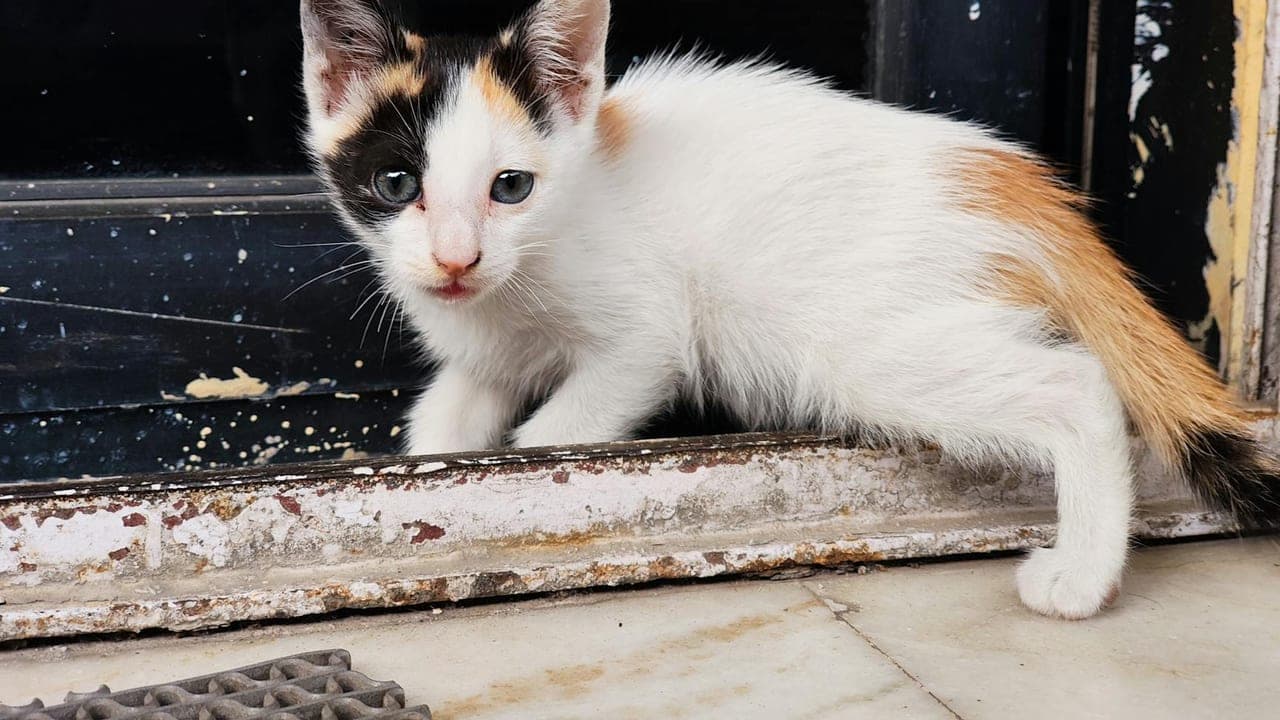
Kitten Care 101: Your Complete First-Year Guide
A kitten's behavioral foundation is largely set by nine weeks of age — weeks before most people finish kitten-proofing. The American Association of Feline Practitioners (AAFP) places the feline social
Reading Time
📖 9 min read
Guide Type
📋 General
Last Updated
📅 Sep 9, 2026
Breed
🐱 All Pets
In This Guide
Overview
A kitten's behavioral foundation is largely set by nine weeks of age — weeks before most people finish kitten-proofing. The American Association of Feline Practitioners (AAFP) places the feline socialization-sensitive period at roughly two to seven weeks, closing near week nine, which is earlier and shorter than a puppy's. The first year is not a slow ramp; it is a sequence of dated decisions, and missing the window on any one of them costs more to fix later than to do on time.
This guide is that sequence — what to do, when, why, and what it costs.
Four decisions carry most of the first-year outcome: the core vaccine series (timing is not flexible), the food transition (most owners get the end date wrong), socialization and handling before the window closes, and spay/neuter timing. Everything else — toys, scratchers, the second litter box — matters, but rarely changes your cat's health trajectory the way these four do.
If you do nothing else from this article: keep your kitten on a food labeled complete and balanced for growth until 10–12 months, complete the full vaccine series (not just the first shot), and handle the kitten gently and often before week nine.
Daily Care
| Age | The decision that's due | Why it can't wait | |---|---|---| | 6–8 weeks | First FVRCP vaccine; first deworming | Maternal antibodies are fading; the protection gap opens here | | 8–9 weeks | Socialization + handling intensifies | Sensitive period is closing — exposure after this is remediation, not prevention | | 10–12 weeks | FVRCP booster; begin litter routine review | A single FVRCP dose does not confer reliable immunity | | 12–16 weeks | Rabies vaccine; FeLV series | Rabies is legally required in most US states; FeLV risk is highest young | | 16–20 weeks | Final FVRCP booster | The series ends here, not at the first shot | | ~5 months | Spay/neuter decision | AAFP's "Fix by Five" reduces spray-marking, roaming, and some cancers | | 10–12 months | Switch off growth food | Adult food earlier under-supplies a growing skeleton; later risks obesity |
Print this. The single most common preventable problem we see described by owners is a kitten that got one vaccine and was treated as protected — the series is the protection, not the first dose.
The first week home
Confine a new kitten to one quiet room with food, water, a litter box, a hiding spot, and a scratcher for the first few days, then expand access room by room. This is not coddling — a kitten flooded with a whole house often hides for days, eats poorly, and is harder to litter-train because it cannot find the box from wherever it panics. A single room compresses the world to something learnable.
Book the first veterinary visit within the first week, before problems appear, not after. That visit establishes a weight baseline (kittens should gain steadily — a flat or dropping weight is an early warning), confirms or starts the vaccine and deworming schedule, and is the standard point to test for FeLV and FIV, which the AAFP recommends for all kittens regardless of where they came from, because retroviral status changes the whole care plan. Bring a fresh fecal sample if your veterinarian asks — intestinal parasites are near-universal in kittens and are not always visible.
Do not introduce a new kitten nose-to-nose with resident pets on day one. Scent-swap first (trade bedding), feed on opposite sides of a closed door, then allow brief supervised visual contact. Rushing introductions is the most common cause of lasting cat–cat tension in multi-pet homes.
Nutrition
Feed a diet whose label carries the AAFCO statement "complete and balanced for growth" (or "all life stages"). Adult-maintenance food fed during growth under-supplies the protein, calcium-to-phosphorus ratio, and caloric density a developing kitten needs.
Feeding frequency by age (healthy kittens):
- Under 12 weeks: ~4 small meals/day — a kitten's stomach can't buffer large portions, and blood sugar drops fast at this age.
- 3–6 months: 3 meals/day.
- 6–12 months: 2 meals/day.
The mistake to avoid: switching to adult food at six months "because the bag is finished." Skeletal growth in most cats continues to roughly 10–12 months (longer — 12–24 months — in large breeds like the Maine Coon). Transition over 7–10 days by mixing increasing proportions of adult food once your kitten reaches that age, not before. If you are unsure of your kitten's growth stage, your veterinarian can assess it at a routine visit.
Wet versus dry is a smaller decision than the internet implies: both can be complete and balanced. Wet food raises water intake (useful given cats' low thirst drive and feline urinary disease risk); dry is convenient and supports some dental abrasion. A practical default is a wet/dry combination. Never feed cow's milk — most kittens are lactose-intolerant after weaning and it causes diarrhea.
Exercise
Socialization is the first-year decision with the shortest deadline. Between roughly two and seven weeks, gentle handling by multiple people, exposure to normal household sounds, and calm contact with other pets build a confident adult cat. After about nine weeks you are doing damage control, not foundation-building — still worthwhile, just slower and less complete.
Concretely, before week nine: handle paws and ears daily, let the kitten experience the vacuum and doorbell from a distance paired with treats, and introduce the carrier as a normal open object with food inside (not something that only appears before the vet). A kitten who associates the carrier with comfort travels far better for years afterward.
A practical exposure list before week nine, a few minutes at a time, always paired with food or play and never forced:
- People: several different adults, and — supervised and gentle — children, so the kitten generalizes "humans are safe" beyond one person.
- Handling: paws, ears, mouth, and being briefly held on its back, so future nail trims, ear checks, and vet exams are not a fight.
- Sounds: vacuum, doorbell, hairdryer, kitchen clatter — at low intensity and distance first.
- The carrier and the car: carrier open with treats inside daily; one or two short, calm car trips that do not end at the vet.
- Surfaces and the cat-carrier-to-vet routine, so the only time the carrier appears is not an emergency.
Play is also predation rehearsal. Two short (5–10 minute) wand-toy sessions a day, ending with a "catch" the kitten gets to keep for a moment, satisfies the hunt sequence and measurably reduces ankle-ambushing and 3 a.m. zoomies. Rotate toys rather than leaving them all out — novelty sustains interest. Do not use hands or feet as toys: it teaches a kitten that skin is prey, and that bite is far harder to unlearn at eight months than to never teach at eight weeks.
Grooming
Start grooming and dental handling now, while it's easy. Short-haired kittens need brushing weekly; long-haired (Persian, Maine Coon) need it daily to prevent mats. Introduce a finger toothbrush and pet-safe enzymatic toothpaste in the first months — periodontal disease is one of the most common adult feline problems, and a cat habituated young tolerates brushing for life.
Litter setup is mostly about avoiding aversion:
- Provide n + 1 boxes (one per cat, plus one).
- Use a large, low-sided box and unscented clumping litter — strong scents and cramped boxes are common causes of "litter-box problems" that are actually setup problems.
- Scoop daily; full replacement weekly.
- Keep boxes away from food and from loud appliances.
A kitten that suddenly stops using a previously reliable box is a medical question (urinary disease, parasites), not only a behavioral one — see the triage list below.
Health
Core vaccines (AAFP/AAHA). FVRCP protects against feline viral rhinotracheitis, calicivirus, and panleukopenia — panleukopenia in particular is frequently fatal in unvaccinated kittens. The series begins at 6–8 weeks and repeats every 3–4 weeks until 16–20 weeks; rabies is given at 12–16 weeks and is legally required in most US states. The AAFP recommends the FeLV (feline leukemia) series for all kittens, with adult boosters based on outdoor/exposure risk.
Parasites. Deworm on your veterinarian's schedule — commonly every 2 weeks from 2 weeks of age through 8–12 weeks, then monthly to ~6 months — and start year-round flea and broad-spectrum parasite prevention. Many intestinal parasites of kittens are zoonotic (transmissible to people), which is why this is not optional.
Spay/neuter. The AAFP's "Fix by Five Months" position supports sterilizing by five months in healthy kittens; it reduces unwanted litters, spray-marking and roaming, mammary cancer risk in females, and testicular disease in males. Discuss exact timing with your veterinarian.
When to call the vet now (don't wait and watch):
- Not eating for more than 12–24 hours, or sudden lethargy
- Labored or open-mouth breathing
- Repeated vomiting or diarrhea, especially with blood, or any straining in the litter box
- Pale or yellow gums, a distended belly, or collapse
"When in doubt, ask your vet" applies — but the list above is the line at which doubt should already be resolved in favor of calling. Kittens decompensate quickly; a problem that would be "monitor overnight" in an adult cat is often same-day in a kitten.
Costs
Owners routinely budget for the adoption fee and underestimate the rest. Approximate US ranges (regional variation is wide; low-cost and shelter clinics sit at the bottom of each):
- Core vaccine series + exams (first year): ~$100–$300
- Spay/neuter: ~$50–$300 at low-cost/shelter clinics; higher at private practices
- Parasite prevention (year one): ~$80–$200
- Litter, food, and core supplies (year one): ~$400–$700
- Realistic first-year total: frequently $1,000–$2,000, before any unplanned illness
The hidden cost is not any single line — it's an unplanned emergency in an under-vaccinated or under-monitored kitten. The preventive spend above is the cheaper side of that trade-off.
Frequently Asked Questions
When can a kitten leave its mother?
Most welfare guidance places the earliest appropriate rehoming at 8 weeks, with 10–12 weeks preferred — it preserves maternal social learning during the sensitive period. Earlier separation is associated with more behavioral problems.
Is one set of shots enough?
No. A single FVRCP dose does not reliably protect a kitten. Immunity depends on completing the booster series to 16–20 weeks, because maternal antibodies can blunt earlier doses.
When do I switch from kitten to adult food?
Around 10–12 months for most cats; 12–24 months for large breeds such as the Maine Coon. Transition over 7–10 days. Switching at six months is the most common nutritional mistake.
Do indoor kittens still need the rabies and FeLV vaccines?
Rabies is legally required in most US states regardless of lifestyle. FeLV is recommended for all kittens by the AAFP; adult boosters are then risk-based. Confirm specifics with your veterinarian.
My kitten stopped using the litter box — is it behavior?
Treat a sudden change as medical until proven otherwise. Urinary disease and intestinal parasites present this way; rule those out with your veterinarian before assuming a behavioral cause. --- *Related: [Kitten feeding schedule by age](/care/kitten-nutrition-feeding-schedule) · [Kitten socialization & litter training](/care/kitten-socialization-and-litter-training) · [Kitten-proofing your home](/care/kitten-proofing-your-home) · [All puppy & kitten care guides](/care-guides/puppy-kitten)* *This guide reflects current AVMA, AAHA, and AAFP preventive-care guidance. It does not replace individual veterinary advice; your veterinarian tailors timing to your kitten.*
Sources
This guide draws on the following published references. Each opens in a new tab so you can check it against what you have read here.
AVMA
What's Your Pet's Life Stage?(opens in a new tab)ASPCA
General Cat Care(opens in a new tab)Merck Veterinary Manual
Kitten Care(opens in a new tab)Merck Veterinary Manual
Routine Health Care of Cats(opens in a new tab)
Affiliate disclosure: We may earn a commission from qualifying purchases. This doesn't affect our recommendations.
Recommended Products
Get personalized pet care tips
Join our newsletter for breed-specific advice, care guides, and expert tips delivered weekly.
No spam, ever. Unsubscribe anytime.