
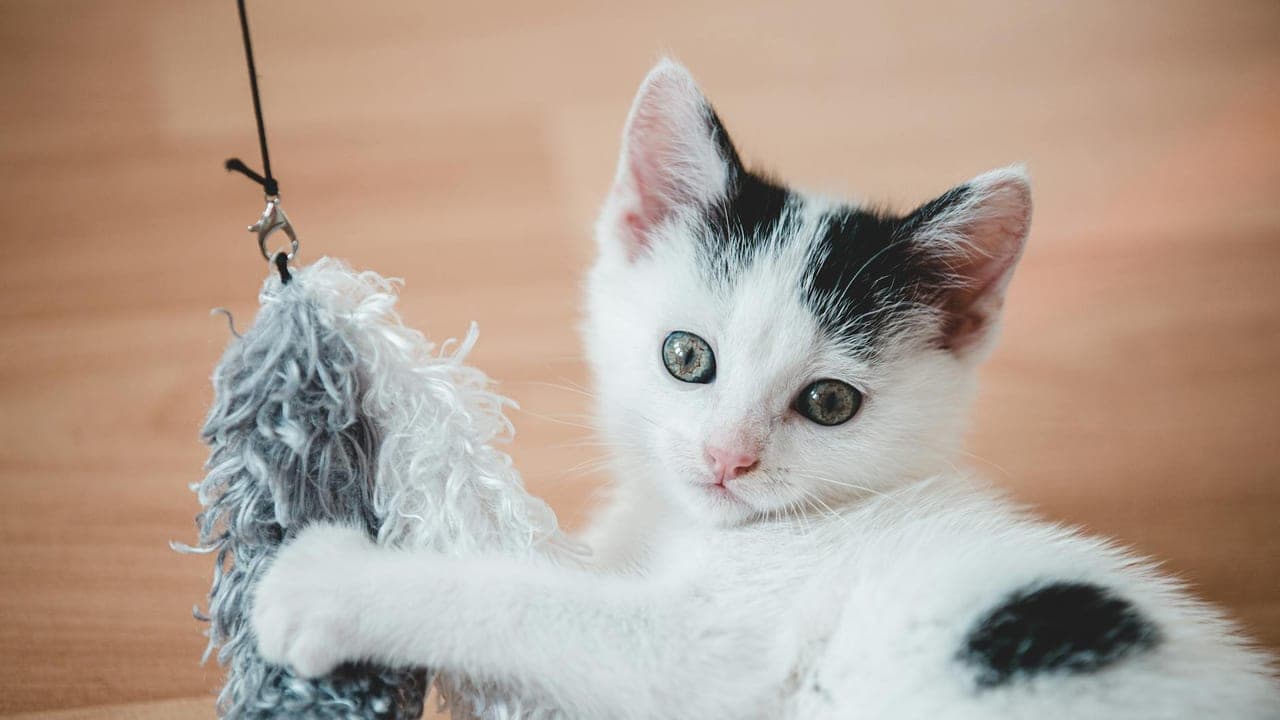
Kitten Socialization & Litter Training: The 2-9 Week Window
Overview The American Association of Feline Practitioners (AAFP) places the feline socialization-sensitive period at roughly two to seven weeks of age, closing near week nine. That is a five-week work
Reading Time
📖 14 min read
Guide Type
📋 General
Last Updated
📅 Sep 10, 2026
Breed
🐱 All Pets
In This Guide
Overview
Overview
The American Association of Feline Practitioners (AAFP) places the feline socialization-sensitive period at roughly two to seven weeks of age, closing near week nine. That is a five-week working window that has usually shut before most adopters bring a kitten home at 8–12 weeks, and it is shorter and earlier than a puppy's. Whatever a kitten has — or has not — generalized as "safe" by then becomes the default temperament you live with for the next 15 years. Exposure after week nine still helps, but it is remediation: slower, less complete, and never as durable as the foundation laid on schedule.
This guide ties both jobs to that same clock. Socialization and litter-box reliability are not separate projects — a kitten that is confident, knows where the box is, and was set up on equipment it does not find aversive almost never becomes a "litter problem" cat. The thing most owners get wrong is treating litter failure as a behavior flaw. In a kitten or young cat it is far more often a setup problem or a medical one, and reading it as "bad behavior" delays the vet visit that the situation actually needs.
Four things carry most of the first-year behavioral outcome: handling and people-exposure before week nine, a litter setup the kitten will not reject (box size, litter type, location, count), a predictable feeding and play routine that gives a kitten security to explore, and recognizing a litter change as a clinical signal, not a discipline issue. Everything else — the third toy, the cat tree, the matching food bowls — matters, but rarely changes the trajectory the way these four do.
If you do nothing else from this article: handle the kitten gently and often, by more than one person, before week nine; give it a large, low-sided, unscented box from day one; and treat any sudden change in litter use as a medical question until a veterinarian rules it out.
Daily Care
The 2-9 Week Window (Daily Care)
The socialization clock and the litter clock run together. Use this as the week-by-week routine; print it, because the dates are not flexible and "I'll start next week" is usually after the window has narrowed.
| Age | Socialization due | Litter / setup due | Why it can't wait | |---|---|---|---| | 2–4 wk | Daily gentle handling by 2+ people; calm household sounds at distance | Shallow, very-low-sided box; non-clumping or kitten-safe litter | Sensitive period is opening; kittens this age eat litter, so skip clumping until ~8 wk | | 4–7 wk | Peak window: handle paws/ears/mouth; carrier open with food inside; meet a calm child supervised | Box always within a few steps of the sleeping/eating area | This is the irreplaceable block — confidence built here is the most durable | | 7–9 wk | Continue handling daily; one short calm car trip not ending at the vet | Switch to unscented clumping, large low box; confirm n+1 boxes if multi-cat | Window is closing — after this you are doing damage control, not foundation work | | 9–12 wk | Maintain daily handling; introduce nail-trim and tooth-brush handling | Move box only if needed, one location change at a time | Habits set now; abrupt litter or location changes here cause aversion | | 12–16 wk | Generalize: more people, surfaces, the vacuum paired with treats | Scoop twice daily; full change weekly; recheck location vs. noise | Reliability is consolidated by repetition, not by a single good week |
The first days home
Confine a newly arrived kitten to one quiet room with food, water, a litter box, a hiding spot, and a scratcher for the first few days, then expand access room by room. This is not coddling. A kitten flooded with a whole house hides, eats poorly, and is harder to litter-train, because it cannot find the box from wherever it panicked. A single room compresses the world to something a kitten can actually learn — and learnable is the entire goal during a closing window.
Place the box where the kitten already spends time, not where it is convenient for you. A kitten will not cross a large, frightening space to reach a box during the first week; it will use the nearest soft surface instead, and that first "accident" can become a learned preference within days. Keep the box a few steps from the resting and eating area, away from the food bowl and away from loud appliances (a furnace or washer that kicks on mid-use teaches a kitten the box is dangerous).
Show the kitten the box after meals and after waking — the two highest-probability elimination moments — and set it gently inside. Do not pick a kitten up and drop it in mid-elimination, and never rub its nose in a miss: cats do not connect punishment to the act, and a kitten that becomes anxious about you near the box will start eliminating where you are not. Reward the right thing instead — a calm "good" and a treat after a successful box visit, paired during the same window you are using for socialization, so the box and your presence both read as safe.
Nutrition
Nutrition: Why the Feeding Routine Is a Litter Tool
The nutrition lever for this topic is predictability, not the brand. Feed a diet whose label carries the AAFCO statement "complete and balanced for growth" (or "all life stages"); adult-maintenance food fed during growth under-supplies the protein and caloric density a developing kitten needs. But for socialization and litter success specifically, when and how regularly you feed does more work than what.
Feed on a fixed schedule rather than free-feeding during the first months: roughly four small meals a day under 12 weeks, three meals 3–6 months, two meals 6–12 months. Scheduled meals matter here for two concrete reasons. First, a kitten on a predictable routine has a predictable elimination rhythm — most kittens pass stool within a relatively tight window after eating, so a fed-then-shown-to-the-box loop builds the association faster than random free-fed grazing. Second, mealtime is the lowest-cost socialization currency you have: hand-feeding a few pieces of the regular ration during handling pairs your touch with food without adding calories, which keeps a growing kitten lean while you build trust.
Keep the food and water bowls away from the litter box — cats instinctively will not eliminate near where they eat, and a box placed too close to the feeding station is a common, invisible reason a kitten "refuses" an otherwise fine box. Never feed cow's milk: most kittens are lactose-intolerant after weaning, and the resulting diarrhea both distresses the kitten and produces exactly the litter-box mess that gets misread as a training failure.
Exercise
Play as Socialization
For a kitten, structured play is not exercise filler — it is the safest, fastest socialization channel you have, and it directly reduces the two behaviors most likely to get a young cat surrendered: human-directed biting and litter-box anxiety driven by under-stimulation.
Run two short wand-toy sessions a day, about 5–10 minutes each, and end every session with a "catch" the kitten gets to hold for a moment before a small food reward. The reason for the structured ending is specific: play is predation rehearsal, and an interrupted hunt sequence (chase with no capture) leaves a kitten aroused and frustrated, which is when ankle-ambushing and 3 a.m. zoomies appear. Letting the kitten complete the sequence — stalk, chase, catch, "kill," eat — discharges that drive and measurably lowers redirected aggression toward hands and feet.
During the 2–9 week window, fold people into play deliberately. Have more than one person run wand sessions, and — supervised, brief, and gentle — let a calm child roll a ball or trail a toy, so the kitten generalizes "humans produce good things" beyond a single handler. A kitten socialized to only one person often becomes a one-person cat that hides from everyone else, which is itself a stress driver and an indirect cause of out-of-box elimination when the household changes.
The single firmest rule: do not use hands or feet as toys. It teaches a kitten that skin is prey, and that bite is far harder to unlearn at eight months than to never teach at eight weeks — the same cost-of-delay logic that governs the socialization window itself. Rotate two or three toys rather than leaving everything out; novelty sustains interest, and a bored, under-played kitten is more likely to invent stress outlets, including digging at or avoiding the box.
Grooming
Grooming: Handling Habituation Is the Real Goal
For an adult cat, grooming is coat maintenance. For a kitten inside the socialization window, the brush, the nail clipper, and the toothbrush are training tools — the point is not the groom, it is teaching a kitten that being handled by humans is normal and safe before the window closes and that lesson costs ten times more to install.
Start now, while it is easy. Short-haired kittens need brushing roughly weekly; long-haired kittens (Persian, Maine Coon) need it daily to prevent mats, but the cadence matters less in month one than the habituation. Every grooming touch should be brief, paired with food, and stopped before the kitten objects — you are building tolerance, not finishing a task. Handle the paws, ears, and mouth daily during the 4–9 week block specifically, because future nail trims, ear medications, and veterinary exams all depend on a cat that learned young that these are non-threatening. A kitten that never had its paws touched until its first nail trim at six months turns that trim into a fight for life.
Introduce a finger toothbrush and pet-safe enzymatic toothpaste (never human toothpaste — xylitol and fluoride are toxic to cats) in the first months. Periodontal disease is one of the most common health problems in adult cats, and a cat habituated to brushing as a kitten tolerates it for life, which is the difference between a 30-second home routine and recurring dental procedures under anesthesia.
There is a litter connection here too. A kitten comfortable being handled is a kitten you can examine when something looks wrong at the box — checking under the tail, feeling the bladder area gently, getting it into a carrier without a wrestling match. The handling you bank now is what lets you act on the triage thresholds in the next section instead of waiting because you cannot safely catch your own cat.
Health
Health: When a Litter Change Is a Clinical Signal
This is the YMYL core of the topic. The single most important reframing in this guide: in a kitten or young cat, a sudden change in litter-box behavior is a medical question until a veterinarian rules out disease. Treating it first as misbehavior is the mistake that delays diagnosis of conditions that are time-sensitive.
What "a change" actually means. Watch for: straining in the box with little or no urine produced; going more often with small amounts; blood-tinged or discolored urine; crying or vocalizing in or near the box; eliminating just outside the box or on cool smooth surfaces (sinks, tile); a previously reliable cat suddenly missing; or any change in stool consistency or frequency. Each of these has a medical differential, not a behavioral one as the first hypothesis.
Named conditions, per recognized authorities. Feline lower urinary tract disease (FLUTD) — including idiopathic cystitis and, less commonly in young cats, crystals or stones — is recognized by the AAFP and AAHA as a leading cause of house-soiling and inappropriate elimination, and stress is a documented trigger, which is exactly why the socialization and routine work above is also clinical prevention. Intestinal parasites (roundworms, hookworms, coccidia, Giardia) are near-universal in kittens per AVMA preventive-care guidance and routinely cause diarrhea that gets misread as "not litter-trained." Most relevant of all: a urethral obstruction in a male kitten or cat — straining with no urine — is a life-threatening emergency the AAHA/AAFP urinary guidelines treat as same-day, because an obstructed cat can deteriorate within 24–48 hours.
Triage — see a vet within this window if you see this:
- Now / emergency (do not wait): a cat straining in the box producing little or no urine, crying, restless, or with a firm painful belly — especially a male. This is treated as a potential obstruction. Same-day, not "watch overnight."
- Within 24 hours: blood in urine; repeated unproductive trips; diarrhea with blood, or any straining with diarrhea; a kitten not eating for more than 12–24 hours; new lethargy alongside any litter change.
- Within a few days (vet visit, not emergency): a gradual increase in frequency, mild stool changes lasting more than 48 hours, or persistent out-of-box use after you have corrected the obvious setup issues (box too small, scented litter, bad location, too few boxes).
- Behavioral work is appropriate only after medical causes are ruled out by a veterinarian. "When in doubt, ask your vet" applies here — but the thresholds above are the line at which the doubt should already be resolved in favor of calling. Kittens decompensate quickly; a problem that would be "monitor" in an adult is often same-day in a kitten.
The practical takeaway: do not buy a third behavior product or a pheromone diffuser as your first move when a kitten stops using the box. Rule out the bladder and the gut first. The setup fixes (bigger box, unscented litter, more boxes, better location) and the medical workup are the first two moves; behavior modification is the third, not the first.
Costs
What This Actually Costs
Owners budget for the adoption fee and the cute supplies, then underestimate the parts that actually prevent problems. The preventive spend is small and mostly one-time; the bill it prevents is not.
- A litter setup done right — a large low-sided box or two, unscented clumping litter, and a mat, more in a multi-cat home running the n+1 rule. Modest, and the single highest-leverage spend on this page.
- A scratcher and wand toys for socialization play — the cheapest line item and the one that most directly prevents bite and stress problems.
- A behavior consult if it goes wrong — a veterinary-behavior or experienced-trainer consultation for established inappropriate elimination costs many times the preventive setup, and resolution often takes weeks.
- The medical workup behind a "litter problem" — an exam plus urinalysis for suspected FLUTD; if it is an obstruction, emergency management and hospitalization are an order of magnitude higher again.
The hidden cost is not any single line — it is the obstructed-male-cat emergency that arrives because a straining-in-the-box signal was read as "he's mad at us" for two days instead of as a clinical sign on day one. The entire preventive side of this guide — the litter setup, a small toy budget, and ten minutes a day of handling inside the window — is the cheap side of that trade-off. Missing the socialization window has no invoice, but it is paid later in consult fees and in the years of a fearful or house-soiling cat.
Frequently Asked Questions
When does the kitten socialization window actually close?
The AAFP places the feline socialization-sensitive period at roughly two to seven weeks, closing near week nine — earlier and shorter than a puppy's. Handling and people-exposure done before week nine is foundation-building; after that it is remediation, which still helps but is slower and less complete.
My kitten suddenly stopped using the litter box — is that behavior or medical?
Treat a sudden change as medical until a veterinarian rules it out. The AAFP and AAHA recognize feline lower urinary tract disease and intestinal parasites as leading causes of inappropriate elimination in young cats. A male straining with little or no urine is a potential urethral obstruction — a same-day emergency, not a behavior issue.
What litter setup prevents most "litter problems"?
A large, low-sided box the kitten can enter without climbing, unscented clumping litter (strong scents drive avoidance), one box per cat plus one, scooped daily and fully changed weekly, placed away from food and from loud appliances. Most "litter-box problems" in kittens are setup problems wearing a behavior label.
Can I still socialize a kitten I adopted at 12 weeks, after the window closed?
Yes, with realistic expectations. Daily gentle handling by several people, treat-paired exposure to sounds and the carrier, and structured play still build a more confident cat — it is remediation rather than prevention, so it takes longer and the result is less complete than work done before week nine. Start the day it arrives.
How do play and feeding routines connect to litter success?
Both create the predictability and lowered stress that prevent stress-linked elimination. Scheduled meals produce a predictable post-meal elimination rhythm you can pair with the box; completed predatory play (chase-catch-eat) discharges arousal that otherwise shows up as box anxiety and biting. The AAFP recognizes stress as a documented trigger for feline idiopathic cystitis, so routine is also clinical prevention.
Sources
This guide draws on the following published references. Each opens in a new tab so you can check it against what you have read here.
AVMA
Socializing Your Pet(opens in a new tab)AVMA
What's Your Pet's Life Stage?(opens in a new tab)Merck Veterinary Manual
Providing a Litter Box for a Cat(opens in a new tab)Cornell Feline Health Center
Feline Behavior Problems: House Soiling(opens in a new tab)Merck Veterinary Manual
Behavior Problems in Cats(opens in a new tab)
Affiliate disclosure: We may earn a commission from qualifying purchases. This doesn't affect our recommendations.
Recommended Products
Large low-sided litter box + unscented clumping litter
A box a kitten can step into without climbing plus unscented clumping litter — the setup that prevents most aversion-driven 'litter problems.'
Kitten socialization & handling kit (treats + wand toy)
Small treats for treat-paired handling plus a wand toy for the two-a-day predatory play sessions that build confidence inside the 2-9 week window.
Get personalized pet care tips
Join our newsletter for breed-specific advice, care guides, and expert tips delivered weekly.
No spam, ever. Unsubscribe anytime.