
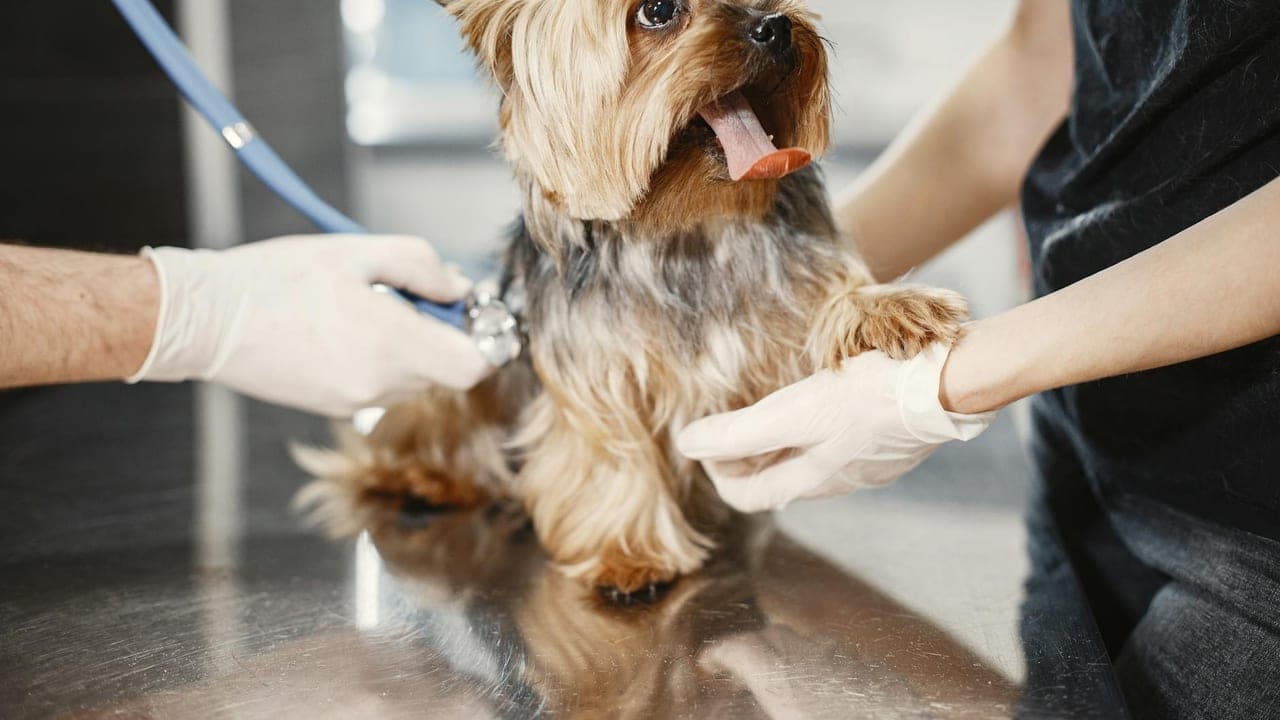
Puppy Vaccination & Deworming Schedule: The First-Year Plan
A puppy is not fully protected until roughly two weeks after the final DAPP dose at 16 weeks — about week 18 — and the single most expensive mistake owners make happens in the gap before that. The Ame
Reading Time
📖 13 min read
Guide Type
📋 General
Last Updated
📅 Sep 9, 2026
Breed
🐶 All Pets
In This Guide
Overview
A puppy is not fully protected until roughly two weeks after the final DAPP dose at 16 weeks — about week 18 — and the single most expensive mistake owners make happens in the gap before that. The American Animal Hospital Association (AAHA) 2022 Canine Vaccination Guidelines set the core series to repeat every 3–4 weeks from 6–8 weeks until at least 16 weeks precisely because maternal antibodies fade on an unpredictable schedule that no single shot can outrun. One vaccine is a deposit, not coverage.
This is the tension that defines the first year. The American Veterinary Medical Association (AVMA) and the American Veterinary Society of Animal Behavior (AVSAB) both warn that the behavioral cost of waiting until 16 weeks to socialize a puppy is greater, statistically, than the infectious-disease risk of careful early exposure — yet parvovirus in an unvaccinated 10-week-old is a hospitalization that costs many times the entire preventive series with a real mortality rate. You do not get to ignore either side. You manage both, on a calendar.
Four decisions carry most of the first-year outcome: completing the full DAPP series (not the first dose), getting rabies on the legally required timeline, deworming on cadence because nearly every puppy is born with or quickly acquires intestinal worms, and socializing in the immunity gap without exposing an under-vaccinated puppy to high-risk ground. If you do nothing else from this article: finish the series to 16+ weeks, deworm on schedule, and socialize on controlled surfaces before week 16 — because skipping any one of these costs more to fix later than to do on time.
Daily Care
The first year is a sequence of dated decisions, not a slow ramp. The schedule below is the AAHA-aligned core framework; your veterinarian adjusts exact dates to your puppy's age at intake and regional disease risk.
| Age | Core vaccine due | Non-core (lifestyle) options | Deworming | |---|---|---|---| | 6–8 weeks | DAPP dose 1 (distemper, adenovirus, parvovirus, parainfluenza) | — | Pyrantel/fenbendazole — start deworming if not begun at 2 weeks | | 9–11 weeks | DAPP dose 2 | Leptospirosis dose 1 and Bordetella if lifestyle risk (boarding, daycare, dog parks) | Deworm again — roundworm/hookworm reinfection is the norm at this age | | 12–15 weeks | DAPP dose 3; rabies at 12–16 weeks | Leptospirosis dose 2 (3–4 weeks after dose 1); canine influenza if regional outbreak | Deworm; begin year-round broad-spectrum parasite + heartworm prevention | | 16–18 weeks | DAPP final dose (must be at or after 16 weeks to count) | Lyme dose 2 if started; Lyme is regional (tick-endemic areas only) | Monthly preventive continues; transition to monthly product | | ~6 months | — | Spay/neuter discussion with your veterinarian | Fecal recheck — confirm parasite clearance before relaxing cadence | | 12–16 months | First adult boosters (DAPP + rabies 1-year, then 3-year cycle) | Lifestyle non-core boosters annually if risk persists | Year-round monthly prevention for life |
Print this and put it on the fridge. The most common preventable problem described by owners is a puppy that got one DAPP shot at 8 weeks, went 5 weeks without the next, and was treated as protected — the series is the protection, and the final dose at or after 16 weeks is the dose that closes the maternal-antibody window. A dose given at 15 weeks does not substitute; AAHA is explicit that the series must extend to at least 16 weeks because some puppies retain interfering maternal antibody that late.
Why the 3–4 week interval is not negotiable
Maternal antibodies passed in the dam's first milk protect a puppy for an unknown number of weeks — sometimes 6, sometimes 16 — and while present they also neutralize vaccine antigen, so an early dose can "take" in one littermate and fail in another. Repeating every 3–4 weeks until 16+ weeks is a statistical net: you cannot test the exact day maternal antibody drops in an individual puppy without titer testing, so you vaccinate on a cadence that catches every puppy as its window opens. Spacing doses more than 4 weeks apart leaves a longer unprotected gap; closer than 2 weeks can blunt the response. Stay inside the 3–4 week band.
The first week home
Book the first veterinary visit within the first 3–5 days, before problems appear, not after. That visit sets a weight baseline (healthy puppies gain steadily — a flat or dropping weight is an early warning), confirms or starts the vaccine and deworming schedule on your puppy's actual age, and is the standard point to run a fecal exam because intestinal parasites are near-universal in puppies and not always visible in stool. Bring a fresh fecal sample if asked. Confine a new puppy to a small, cleanable area at first — a flooded whole-house environment makes house-training slower and makes it harder to monitor stool, which in the parvo-risk window is something you want to be watching daily.
Nutrition
Feed a diet whose label carries the AAFCO statement "complete and balanced for growth" or "all life stages" — and for puppies expected to mature over 70 lb, specifically one stating "including growth of large-size dogs (70 lb or more as an adult)." Large-breed growth formulas control calcium and calorie density because over-supplementing a large-breed puppy's skeleton drives developmental orthopedic disease; an adult-maintenance food fed during growth under-supplies a small-breed puppy.
Feeding frequency by age for healthy puppies, because young puppies cannot buffer large portions and small breeds drop blood sugar fast:
- Under 12 weeks: 4 small meals/day.
- 3–6 months: 3 meals/day.
- 6–12 months: 2 meals/day.
The common mistake is switching to adult food at 6 months "because the bag is finished." Skeletal growth runs to roughly 10–12 months in small and medium breeds and 12–18+ months in large and giant breeds; transition over 7–10 days at that point, not before. Never feed cow's milk to a weaned puppy — most are lactose-intolerant after weaning and it causes diarrhea, which during the parvo-risk window creates a dangerous diagnostic ambiguity you do not want. If you are unsure of your puppy's growth stage, your veterinarian assesses it at a routine visit.
Exercise
Socialization is the first-year decision with the shortest deadline and the one most directly in tension with vaccination. The AVSAB position statement places the canine sensitive period at roughly 3 to 14 weeks, closing around 16 weeks — which falls before the final DAPP dose. Waiting until full immunity to begin socializing means missing the window entirely, and AVSAB's stated position is that behavioral problems, not infectious disease, are the leading cause of death for dogs under three years because under-socialized dogs are surrendered or euthanized for fear and aggression. So the answer is not "wait"; it is "socialize on controlled ground."
How to socialize safely before the series is complete, because each rule lowers a specific parvo exposure vector:
- Use clean, controlled surfaces. Carry the puppy or use a stroller/blanket in public; let it walk on your own yard and friends' verified-vaccinated homes. Avoid dog parks, pet-store floors, rest stops, and any ground with unknown dog traffic until 1–2 weeks after the 16-week dose, because parvovirus survives months in soil and is shed by asymptomatic carriers.
- Curate the dogs, not just the places. Arrange playdates with adult dogs you can confirm are fully vaccinated and healthy; one calm vaccinated adult teaches more bite inhibition in 20 minutes than a week of isolation, and the disease risk is near-zero versus a strange dog of unknown status.
- Run a structured exposure list at home, a few minutes at a time, paired with food, never forced: handling of paws/ears/mouth (so future nail trims and vet exams are not a fight), household sounds (vacuum, doorbell, traffic) at low intensity, surfaces (tile, grass, metal), the crate and a calm car ride that does not end at the vet, and several different people including, supervised, children.
- Consider a well-run puppy class. The AVSAB endorses puppy socialization classes starting as early as 7–8 weeks provided puppies have had at least one set of vaccines plus deworming 7 days prior and the floor is sanitized — the controlled-class risk is acceptable and the behavioral payoff is high.
For physical exercise, keep it low-impact while growth plates are open: short, frequent free-play and exploration over forced running or long jogs, because repetitive high-impact loading on an immature skeleton — especially in large breeds — is a recognized contributor to joint disease. A rough guide some veterinarians use is roughly 5 minutes of structured walk per month of age, twice daily, adjusted to the individual.
Grooming
Start handling now, while it is easy, because a puppy habituated young tolerates grooming for life and a fearful adult turns every nail trim into a fight. Brush short coats weekly and long or double coats several times a week; introduce a finger toothbrush with pet-safe enzymatic toothpaste in the first months, since periodontal disease is one of the most common adult canine problems and prevention starts with tolerance built before the adult teeth are in.
Trim nails every 3–4 weeks from the start — not because a puppy's nails are long yet, but because the goal at this age is desensitization, not maintenance: a puppy that has had its paws handled twice weekly accepts the clipper at one year. Bathe only when actually dirty (roughly every 4–6 weeks at most for most coats) because over-bathing strips coat oils. During the parvo-risk window, do not take a puppy to a communal grooming salon; do it at home until the series is complete.
Health
Core vaccines (AAHA 2022). DAPP — also written DHPP/DA2PP — protects against canine distemper virus, adenovirus (hepatitis), parvovirus, and parainfluenza. Parvovirus is the one that fills emergency wards: it attacks the intestinal lining and bone marrow, and in an unvaccinated puppy it is frequently fatal without intensive care. The series runs every 3–4 weeks from 6–8 weeks to a final dose at 16 weeks or later, then a booster at ~1 year, then every 3 years. Rabies is a separate core vaccine given once at 12–16 weeks (legally required in nearly all US jurisdictions regardless of lifestyle), boosted at 1 year, then on a 1- or 3-year cycle by local law.
Non-core (lifestyle) vaccines. These are risk-based, not universal: leptospirosis (a 2-dose primer 3–4 weeks apart, recommended in most of the US now because lepto is zoonotic and increasingly urban), Bordetella and canine parainfluenza/influenza (for dogs that board, attend daycare, or visit dog parks), and Lyme (tick-endemic regions only). Decide each with your veterinarian based on where you live and how the dog will live.
Titers. A vaccine titer is a blood test measuring antibody to distemper and parvovirus. AAHA's position is that titers can confirm response after the puppy series is complete, but a titer does not replace the puppy series — a young puppy with maternal antibody can show a number that does not reflect durable immunity. Titers are most useful for adult booster decisions, not for skipping puppy doses.
Deworming. Most puppies are infected with roundworms or hookworms via the dam, before birth or through milk, so deworming is not contingent on a positive fecal — it is routine. The Companion Animal Parasite Council (CAPC) recommends deworming every 2 weeks from 2 weeks of age until 8–12 weeks, then monthly broad-spectrum prevention. Many of these parasites are zoonotic (roundworm larval migration in children is the reason this is not optional), which is also why fecal exams continue through the first year. Start year-round heartworm prevention by 12 weeks or as your veterinarian directs.
Vaccine reactions. Mild soreness, a low-grade temperature, or 24–48 hours of being subdued is normal and self-limiting. The reaction that needs action is anaphylactic or facial: it typically appears within minutes to a few hours.
See a veterinarian — emergency, do not wait and watch:
- Facial swelling, hives, vomiting, collapse, or trouble breathing within hours of a vaccine — this is a same-hour emergency, call before driving.
- Vomiting plus lethargy plus diarrhea (especially bloody or with a distinct foul odor) in an under-vaccinated puppy — treat as suspected parvovirus and seek care within hours, not the next day; parvo puppies decline fast and survival is tightly linked to how early supportive care starts.
- Repeated vomiting, refusal to eat or drink for more than 12 hours, or any collapse in a puppy of any vaccine status.
Call the same day: a single vomit or soft stool with a puppy that is otherwise bright, eating, and playing — but if a second sign appears, it moves to the emergency list above. Monitor at home and call if it does not resolve by next day: mild post-vaccine soreness or one quiet evening with normal eating. "When in doubt, ask your vet" applies — but the parvo triad above is the line at which doubt should already be resolved in favor of going in, because a puppy that is "a bit off" in the morning can be critically ill by evening.
Costs
What This Actually Costs
Owners budget for the adoption fee and underestimate the rest. The preventive spend is small, fixed, and predictable — and it is dwarfed by the one bill it exists to prevent.
The preventive side is a handful of modest, mostly one-time lines in year one:
- The full DAPP series and puppy exams — the largest of the preventive lines, and still a fraction of a single emergency.
- The rabies vaccine — inexpensive, often bundled into a visit, and legally required.
- Non-core vaccines (lepto, Bordetella, and others as your vet indicates by lifestyle and region).
- Deworming and year-one parasite and heartworm prevention — routine, on a cadence, not optional.
- Spay/neuter — lowest at shelter and low-cost clinics, higher at private practices.
The hidden cost is not any line above — it is a single parvovirus hospitalization in an under-vaccinated puppy: several days of inpatient fluids, anti-nausea and antibiotic therapy, isolation, and monitoring, with no certain outcome. That one event costs many times the entire preventive series. The vaccine schedule is not the expensive side of this decision — skipping it is. Budget the preventive spend as fixed, not optional, and front-load the vet relationship in the first week so the schedule never slips into the gap.
Frequently Asked Questions
Is one puppy shot enough to protect my dog?
No. A single DAPP dose does not reliably protect a puppy because maternal antibodies can neutralize early doses, and they fade on an unpredictable timeline. AAHA requires the full series repeated every 3–4 weeks with a final dose at 16 weeks or later — that final dose is what closes the immunity gap, not the first shot.
When can my puppy safely go for a walk in public?
Plan on full-traffic public ground (dog parks, pet stores, rest stops) being off-limits until about 1–2 weeks after the 16-week DAPP dose, because parvovirus persists for months in soil and is shed by asymptomatic dogs. Before then, socialize on controlled surfaces — your yard, verified-vaccinated friends' homes, a sanitized puppy class — rather than not socializing at all.
How do I socialize a puppy before vaccinations are complete without risking parvo?
Curate surfaces and dogs instead of skipping socialization. Carry the puppy in public, host playdates only with confirmed fully vaccinated healthy adult dogs, run a structured handling-and-sound exposure list at home, and consider a well-run puppy class that requires one prior vaccine set plus deworming. AVSAB's position is that under-socialization kills more young dogs than infectious disease, so controlled exposure beats isolation.
How often should I deworm my puppy?
The CAPC schedule is every 2 weeks from 2 weeks of age until 8–12 weeks, then monthly broad-spectrum prevention. Deworming is routine, not contingent on a positive fecal test, because most puppies acquire roundworms or hookworms from the dam — and several of these parasites are zoonotic, which is why fecal exams continue through the first year.
Can a titer test replace my puppy's vaccine series?
No. AAHA's position is that titers can confirm a response after the puppy series is finished, but a titer in a young puppy can reflect interfering maternal antibody rather than durable immunity. Titers are most useful for adult booster decisions; they do not let you skip puppy doses.
Sources
This guide draws on the following published references. Each opens in a new tab so you can check it against what you have read here.
AVMA
Vaccinations(opens in a new tab)AVMA
What's Your Pet's Life Stage?(opens in a new tab)ASPCA
General Dog Care(opens in a new tab)Merck Veterinary Manual
Puppy Care(opens in a new tab)Merck Veterinary Manual
Routine Health Care of Dogs(opens in a new tab)
Affiliate disclosure: We may earn a commission from qualifying purchases. This doesn't affect our recommendations.
Recommended Products
Puppy vaccine-record book & first-year training kit
A physical schedule log so the 3–4 week DAPP interval does not slip — the gap is where parvo gets in.
Enzymatic pet stain & odor cleaner
Enzymatic (not just disinfectant) cleanup for house-training accidents during the parvo-era window.
Get personalized pet care tips
Join our newsletter for breed-specific advice, care guides, and expert tips delivered weekly.
No spam, ever. Unsubscribe anytime.