
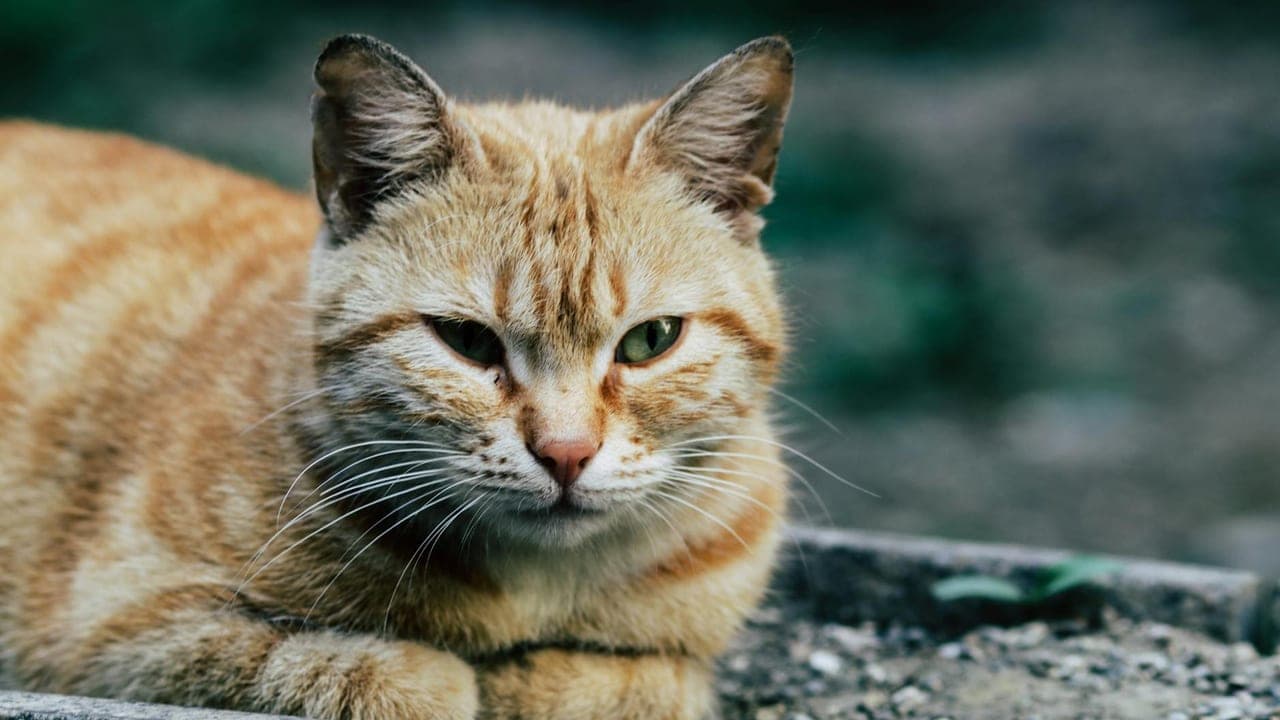
Senior Cat Hyperthyroidism: Weight Loss Despite a Big Appetite
A 13-year-old cat that eats two bowls a day and still drops from 5.0 kg to 3.6 kg over four months is not a healthy cat with a big appetite — it is the textbook presentation of feline hyperthyroidism,
Reading Time
📖 15 min read
Guide Type
📋 General
Last Updated
📅 Sep 9, 2026
Breed
🐱 All Pets
In This Guide
Overview
A 13-year-old cat that eats two bowls a day and still drops from 5.0 kg to 3.6 kg over four months is not a healthy cat with a big appetite — it is the textbook presentation of feline hyperthyroidism, and the appetite is the reason owners wait too long. The American Animal Hospital Association (AAHA) and American Association of Feline Practitioners (AAFP) describe it as the most common endocrine disorder of older cats, with most cases diagnosed after age 10. Because the cat is hungry, active, and often vocal rather than visibly sick, the disease is easy to read as "just getting old" until the weight loss is severe.
Hyperthyroidism is caused by a benign overgrowth (in roughly 95–98% of cases, per ACVIM consensus) of one or both thyroid glands, which floods the body with thyroid hormone and runs the cat's metabolism far above normal. The cat burns through muscle and fat faster than it can eat to replace it. That is why the hallmark is the contradiction itself: weight loss with a normal or increased appetite. Less consistently you may also see increased thirst and urination, a high heart rate, intermittent vomiting or loose stool, restlessness or night-time yowling, and a coat that looks unkempt because the cat is grooming less or its body is too catabolic to maintain it.
This guide covers what the disease looks like at home, the single blood test that confirms it (total T4, sometimes with free T4), the four real treatment options and the trade-offs between them — including why cure costs more upfront but less over time — and the most important interaction in feline medicine for this age group: treating hyperthyroidism can unmask chronic kidney disease (CKD) that the overactive thyroid was hiding. If your cat is over 10 and the bag of food is emptying faster while the cat gets lighter, that pattern alone is reason to book a veterinary appointment, not to wait and watch.
Daily Care
The single most useful thing you can do at home is weigh the cat on a digital scale every two weeks and write the number down. Trend, not snapshot, is what catches this disease early and what tells you whether treatment is working. A kitchen-style digital pet scale that reads in 10–20 g increments is sensitive enough; weigh the cat in a carrier and subtract the carrier weight if it will not sit still. A loss of more than 5% of body weight in a month in a senior cat is a veterinary conversation, not a diet success.
Alongside weight, track three things in a notebook or phone note, because your veterinarian will ask and "he seems off" is not data: appetite (how much offered vs eaten), water bowl refills per day, and litter-box output (volume and frequency of urine). A cat that is eating well but losing weight, drinking visibly more, and producing larger urine clumps is showing the classic triad.
Once a cat is diagnosed and on treatment, monitoring becomes the daily-care job. The reason this matters: every one of the four treatments is managed by recheck bloodwork, not by how the cat looks. A cat can feel and act normal while its thyroid level is still too high (under-treated) or while newly normal thyroid levels have revealed failing kidneys.
Treatment options at a glance — the four real choices, with the trade-offs spelled out:
| Option | How it works | Pros | Cons / cost | |---|---|---|---| | Methimazole (oral or transdermal gel) | Drug blocks thyroid hormone production; given once or twice daily for life | Cheap to start, reversible, no facility needed, dose adjustable, lets you trial-treat before committing to a cure | Lifelong daily medicating; not a cure; side effects in ~10–15% (vomiting, facial itching, rarely low white cells/liver); recheck bloodwork every 3–6 months. ~$15–$40/month | | Radioiodine (I-131) | One injection of radioactive iodine destroys only the overactive thyroid tissue | Considered the gold-standard curative option by ACVIM; single treatment cures ~95%+; no daily pills | High one-time cost; requires a licensed facility and 3–7 days hospitalized isolation (you cannot visit); limited handling rules for ~2 weeks after; can still unmask CKD. ~$1,500–$2,500 once | | Prescription iodine-restricted diet | Limits dietary iodine so the gland cannot overproduce hormone | No pills, no facility, no anesthesia; useful when meds/I-131 are not feasible | Cat must eat only this food forever — one treat or hunting a mouse breaks it; hard in multi-cat or indoor-outdoor homes; not a cure; effect slower; long-term restriction questioned in cats with concurrent disease. ~$30–$70/month | | Thyroidectomy (surgery) | Surgical removal of the affected gland(s) | Can be curative | Rarely chosen now: anesthetic risk in old cats, risk to parathyroid glands (calcium control), often bilateral disease. Reserved for select cases. ~$1,000–$2,000+ once |
The decision is not "which is best" — it is which trade-off fits this cat and this household, and that is the central choice this guide is here to clarify (covered in Health and Costs below).
Nutrition
The iodine-restricted prescription diet deserves its own honest section because it is the option owners most often choose for convenience and most often fail to execute. The mechanism is real: thyroid hormone is built from iodine, so a diet engineered to deliver very little iodine starves the overactive gland of raw material and brings hormone levels down — typically over several weeks to a few months.
The problem is not the food; it is strict exclusivity. For the diet to control the disease the cat can eat nothing else with measurable iodine: no other cat food, no treats, no table scraps, no dental chews, and — for an indoor–outdoor cat — no caught prey. A single deviation a few times a week can be enough to lose control. This is why it is a poor fit for the most common senior-cat household: multi-cat homes where bowls get shared, and homes where the cat goes outside. AAFP life-stage guidance is also cautious about long-term tight nutrient restriction in older cats, who frequently have other conditions (kidney, dental, GI) whose ideal diets may conflict with an iodine-restricted formula.
Use the restricted diet when daily pilling is genuinely impossible, the cat is a strict indoor single cat, I-131 is out of reach, and your veterinarian agrees it suits this cat's other diagnoses. Transition over 7–10 days like any food change to avoid a hunger strike. Whatever the chosen treatment, do not free-feed and guess intake: measure food, because tracking grams eaten against the every-two-week weight is how you and your veterinarian tell whether the disease and the muscle loss are actually under control. If the cat is also being worked up for kidney disease, the diet question gets more complex and is a veterinary decision, not a label-reading exercise — high-iodine-restriction and renal-support diets are not the same food.
Exercise
There is no exercise prescription for hyperthyroidism — an untreated hyperthyroid cat is, if anything, over-active and restless because excess thyroid hormone is driving the metabolism, not deconditioned. The relevant point is the opposite of most senior-cat advice: a sudden burst of late-life "kitten energy," pacing, or 3 a.m. yowling in a 12-plus-year-old cat is not a fitness win, it is a common sign that should prompt a thyroid test rather than reassurance. Once treatment normalizes hormone levels, activity usually settles to an age-appropriate baseline; gentle, low-impact play (short wand-toy sessions, easy-access perches) is fine and helps preserve the muscle the disease was burning, but it is supportive, not therapeutic. Energy level is also a rough at-home gauge: a treated cat that becomes newly lethargic warrants a recheck, because that can signal over-treatment (hormone now too low) or emerging kidney disease, both of which are managed by bloodwork.
Grooming
Coat is a free diagnostic you can read every day. A hyperthyroid cat's coat often looks dull, greasy, matted, or unkempt — not because the cat is dirty but because a body running this catabolically is too busy burning itself to maintain grooming, and some cats also groom less when restless or losing condition. In a normally fastidious cat, a coat that has gone scruffy over a few months — especially paired with weight loss and a big appetite — is a meaningful sign, not a cosmetic one, and is worth mentioning to your veterinarian rather than fixing with a bath.
Practically: brush a senior cat at least weekly (daily for long-haired breeds such as the Persian or Maine Coon) both to manage the unkempt coat and because grooming time is hands-on monitoring — it is when you will feel new weight loss, a fast or pounding heartbeat, a goitre-like swelling at the throat, or muscle wasting over the spine and hips before the scale fully shows it. Keep nails trimmed; older cats use scratching posts less, and an overgrown claw can grow into the pad. Improvement in coat quality after treatment starts is one of the visible signs that hormone levels are coming under control, alongside the weight trend.
Health
This is the core of the disease, so it gets the detail.
Diagnosis — total T4, sometimes with free T4. The confirming test is a blood total T4 (thyroxine). In most cats with clinical signs, a clearly elevated total T4 plus the typical picture (older cat, weight loss with good appetite) is diagnostic. The complication is the early or mild case, or a cat with another illness: a concurrent non-thyroidal illness can suppress total T4 into the high-normal range and mask the disease. When the total T4 is equivocal but suspicion is high, ACVIM consensus supports adding a free T4 (by equilibrium dialysis) and, if still unclear, repeating T4 in 2–4 weeks or pursuing additional testing rather than treating on a guess. AAHA's senior-care guidance is the reason this is found at all: a yearly total T4 is part of standard senior wellness bloodwork from about age 8–10, often before the owner has noticed anything. Do not accept a hyperthyroid diagnosis or start lifelong treatment without a measured T4 — the signs overlap with diabetes, CKD, GI disease, and cancer.
The four treatments, in clinical detail:
- Methimazole — an antithyroid drug, oral tablet or compounded transdermal gel applied to the inner ear, given once or twice daily indefinitely. It is the usual first move because it is reversible and lets you and your veterinarian observe what happens to kidney values when thyroid levels normalize before committing to an irreversible cure. Roughly 10–15% of cats have side effects: GI upset, facial excoriation from self-trauma, and uncommonly low white-cell counts or liver enzyme rises — which is why a recheck T4 plus CBC/chemistry at about 2–4 weeks, then every 3–6 months once stable, is part of the treatment, not optional.
- Radioiodine (I-131) — the ACVIM-recognized gold-standard curative option. A single subcutaneous injection of radioactive iodine is taken up only by overactive thyroid tissue and destroys it, sparing normal tissue. Cure rate is roughly 95%+ from one treatment, with no further medication in most cats. The trade-off is logistical and financial: it requires a licensed facility, a mandatory 3–7 day hospitalized isolation period during which you cannot visit, radiation-safety handling limits for about two weeks after discharge (limited close contact, separate litter handling), and a high one-time cost. A minority of cats become hypothyroid afterward and need supplementation. I-131 does not protect against the CKD interaction below.
- Prescription iodine-restricted diet — controls hormone production by limiting substrate; covered in Nutrition. Effective only with absolute dietary exclusivity; not a cure; reversible if the cat eats anything else.
- Thyroidectomy (surgery) — surgical gland removal, potentially curative, now infrequently chosen. The drawbacks are anesthetic risk in a typically 12-plus-year-old cat, frequent bilateral disease, and the risk of damaging the adjacent parathyroid glands, which control blood calcium. Reserved for selected cases where other options are unsuitable.
The CKD-unmasking trade-off — read this before choosing. This is the most important interaction in the disease and the second trade-off this guide exists to explain. Excess thyroid hormone artificially increases blood flow through the kidneys and can make kidney values (creatinine, SDMA) look better than the kidneys actually are. When any treatment brings thyroid levels back to normal, that artificial boost goes away and previously hidden chronic kidney disease can become apparent — sometimes within weeks. This does not mean treatment caused kidney disease; it means the hyperthyroidism was masking pre-existing CKD, common in the same senior age group. The clinical consequence: the reversible treatment (methimazole) is often started first specifically so the veterinary team can watch kidney values as thyroid levels normalize and confirm the cat tolerates a euthyroid state before an irreversible cure (I-131 or surgery) is chosen. Going straight to I-131 in a cat with borderline kidneys removes that safety check. This is exactly why "which treatment" is a decision made with your veterinarian on this cat's bloodwork, not from a website.
Other complications hyperthyroidism drives. Sustained excess thyroid hormone commonly causes systemic hypertension (high blood pressure), which can damage the eyes (acute retinal detachment and sudden blindness), kidneys, heart, and brain — so blood-pressure measurement is part of the workup and follow-up. It also causes a secondary cardiac change (often a thickened heart muscle and fast heart rate); in most cats this improves once thyroid levels are controlled, which is another argument for treating rather than monitoring.
Vet-now vs. recheck thresholds:
- Book a veterinary appointment within days if a cat over 10 is losing weight while eating normally or more, has a new big increase in thirst/urination, or has developed a scruffy coat plus restlessness or night yowling.
- Same-day / emergency if there is sudden blindness or dilated unresponsive pupils (possible hypertensive retinal detachment), open-mouth or labored breathing, collapse, or a cat not eating at all for more than 24 hours.
- On treatment, contact your veterinarian for vomiting, severe facial scratching, or sudden lethargy/poor appetite (possible drug reaction, over-treatment, or emerging CKD) — and keep the scheduled recheck bloodwork even if the cat seems perfectly well, because this disease is managed by numbers, not by appearance.
When in doubt, ask your veterinarian — but in a senior cat, the weight-loss-with-good-appetite pattern is itself the point at which doubt should already be resolved in favor of testing.
Costs
Costs split into diagnosis, then the chosen treatment's lifetime math. US ranges; regional and specialty-hospital variation is wide.
- Diagnostic workup: senior exam + total T4 + general bloodwork is roughly $150–$400; adding free T4, blood pressure, and urine if needed pushes a full workup toward $400–$700.
- Methimazole (lifelong): roughly $15–$40/month for the drug, plus recheck bloodwork every 3–6 months at ~$120–$250 each. Realistic year-one cost including monitoring is often $700–$1,200, and it recurs every year for the rest of the cat's life. Over 4–5 years that compounds well past the cost of a one-time cure.
- Radioiodine (I-131): a one-time ~$1,500–$2,500 all-in (treatment + the required isolation stay), then little or no thyroid medication. The upfront number is the sticker shock; the lifetime math often favors it. A simple comparison: methimazole at ~$25/month drug plus two ~$180 rechecks a year is roughly $840/year. A cat treated at 11 that lives to 16 accrues on the order of $4,000+ in lifelong-medication-and-monitoring cost — more than I-131's one-time price, before counting the daily pilling burden and the risk of missed doses. The right choice still depends on the cat's kidney status and the household, not on arithmetic alone.
- Prescription iodine-restricted diet: roughly $30–$70/month indefinitely, plus periodic recheck bloodwork — similar long-run spend to methimazole, with the added hidden cost that one lapse can waste it.
- Thyroidectomy (surgery): roughly $1,000–$2,000+ one-time, plus anesthesia and pre-op workup; rarely the economically or clinically chosen route today.
The hidden cost most owners miss is not the treatment line — it is the months of unnoticed disease before diagnosis, when untreated hypertension and cardiac strain quietly cause damage that is cheaper to prevent than to treat. Early testing in a senior cat is the inexpensive side of that trade-off.
Frequently Asked Questions
My senior cat is eating more than ever but losing weight — is that good?
No. In a cat over 10, weight loss with a normal or increased appetite is the classic sign of hyperthyroidism, not a healthy appetite. The disease burns muscle and fat faster than the cat can eat to replace it. Ask your veterinarian for a total T4 blood test rather than waiting to see if the cat "fills back out."
What test confirms feline hyperthyroidism?
A blood total T4 (thyroxine). In most symptomatic older cats an elevated total T4 with the typical picture is diagnostic. If T4 is borderline or another illness may be suppressing it, ACVIM guidance supports adding a free T4 or repeating the test in 2–4 weeks rather than treating on a guess.
Which treatment is the cure?
Radioiodine (I-131) is the ACVIM-recognized gold-standard curative option — a single injection cures roughly 95%+ of cats. Surgery can also be curative but is rarely chosen now. Methimazole and the iodine-restricted diet control the disease but are not cures and must continue for life.
Why might treating hyperthyroidism make my cat's kidney disease appear?
Excess thyroid hormone increases blood flow through the kidneys and can make kidney values look better than the kidneys truly are. Normalizing thyroid levels removes that effect, so previously hidden chronic kidney disease can become apparent. This is why methimazole is often started first — it is reversible and lets your veterinarian watch kidney values before choosing an irreversible cure.
Is the prescription diet a good option for a multi-cat household?
Usually not. The iodine-restricted diet only works if the cat eats nothing else with iodine — no other food, treats, or prey. In multi-cat or indoor–outdoor homes that exclusivity is hard to maintain, and a few lapses a week can lose disease control. Discuss with your veterinarian whether your cat's situation and other conditions make it realistic.
Sources
This guide draws on the following published references. Each opens in a new tab so you can check it against what you have read here.
AVMA
Senior Pet Care(opens in a new tab)Merck Veterinary Manual
Disorders of the Thyroid Gland in Cats(opens in a new tab)Cornell Feline Health Center
Hyperthyroidism in Cats(opens in a new tab)Cornell Feline Health Center
Loving Care for Older Cats(opens in a new tab)Merck Veterinary Manual
Routine Health Care of Cats(opens in a new tab)
Affiliate disclosure: We may earn a commission from qualifying purchases. This doesn't affect our recommendations.
Recommended Products
Digital pet scale (10–20 g precision for weight tracking)
Weigh the cat every two weeks — trend, not snapshot, is what catches and monitors this disease.
Calm pill giver & pill pockets (for daily methimazole)
Makes lifelong once- or twice-daily dosing manageable if methimazole is the chosen treatment.
Get personalized pet care tips
Join our newsletter for breed-specific advice, care guides, and expert tips delivered weekly.
No spam, ever. Unsubscribe anytime.
More Care Guides
Adopting a Senior Pet: The Honest Case (and the Real Costs)
20 min read·General
Quality-of-Life Assessment: A Calm Framework for a Hard Decision
18 min read·General
Senior Cat Mobility & Litter Box: The Arthritis Nobody Diagnoses
16 min read·General
Senior Cat Kidney Disease (CKD): Catching It Before the Crisis
14 min read·General