
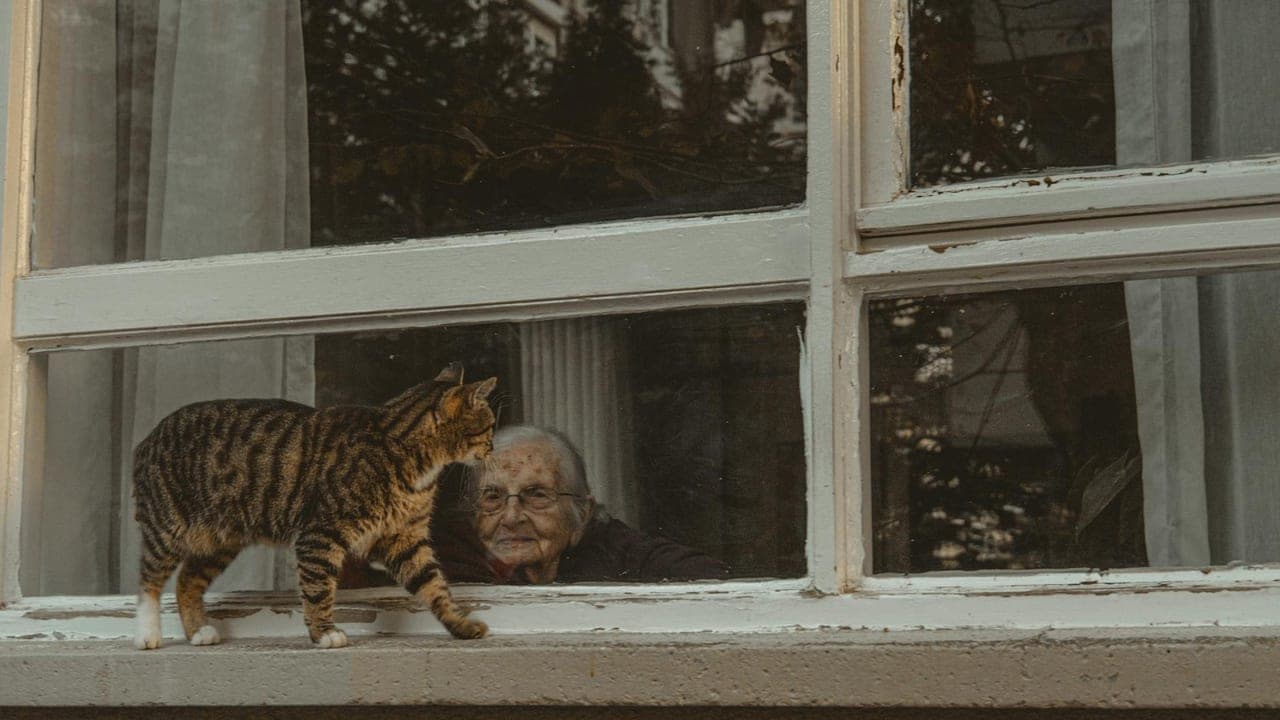
Senior Cat Mobility & Litter Box: The Arthritis Nobody Diagnoses
Radiographic surveys reported by the American Association of Feline Practitioners (AAFP) and International Society of Feline Medicine (ISFM) put degenerative joint disease (DJD, the feline form of ost
Reading Time
📖 16 min read
Guide Type
📋 General
Last Updated
📅 Sep 9, 2026
Breed
🐱 All Pets
In This Guide
Overview
Radiographic surveys reported by the American Association of Feline Practitioners (AAFP) and International Society of Feline Medicine (ISFM) put degenerative joint disease (DJD, the feline form of osteoarthritis) in roughly 60 percent of cats over six years old and over 90 percent of cats past twelve — and almost none of those cats limp. That gap, between how common the disease is and how rarely an owner notices it, is the entire reason this guide exists. A dog with arthritis hobbles to the door; a cat with the same joints simply stops doing the things that hurt and does them so quietly that the change is read as "she's just getting old and lazy."
Cats evolved as both predator and prey, and a prey animal that advertises weakness gets eaten. So a cat in chronic joint pain does not cry out or favor a leg the way a dog does. Instead it edits its own behavior: it stops the high jump to the windowsill, takes the stairs one careful step at a time or refuses them, grooms less over the spine and hips because the twist hurts, sleeps more, plays less, and — the one owners actually bring to the vet — starts urinating or defecating just outside the litter box. House-soiling in an older cat is one of the most common reasons cats are surrendered to shelters, and a large share of those cats are not being spiteful or "untrainable." They are in pain and physically cannot get into the box the way they used to.
The practical message of this guide is twofold, and it maps onto a single decision you will have to make. First, learn to read the behavioral tells, because the limp you are waiting for is usually never coming. Second, understand that the response is rarely one thing — it is an environmental layer (a low-entry litter box, ramps, raised food, warmth, soft bedding, which are cheap and you can start this week) plus a veterinary pain layer (a confirmed diagnosis and a vet-prescribed analgesic plan, because feline pain control is narrow and dangerous to improvise). This article gives you the home audit, the sign-to-fix table, the nutrition and grooming pieces most owners miss, the named medical options to discuss with your veterinarian, the real cost ranges, and — the line that matters most — the painkillers that are toxic to cats and must never be given.
Daily Care
Start with a structured home audit, because the behavioral changes are gradual and your memory of "normal" drifts with them. Spend one evening watching your cat move through the spaces it uses every day, and write down what you see against a baseline.
The 60-second mobility audit (do it monthly past age 7):
- Does the cat still jump up to its highest favorite spot in one motion, or does it bunny-hop, hesitate, choose a lower route, or no longer go there at all? Lost vertical access is the single most reliable early DJD sign.
- Going down — does it leap confidently, or lower itself, climb backward, or stall at the edge? Cats hide flexion pain more on descent, so descent reluctance often appears first.
- At stairs: pause at the bottom or top, take them one limb at a time, or avoid them?
- At the litter box: does it step cleanly over the side, or hesitate, perch on the rim, or eliminate right next to the box?
- Grooming: is the coat over the lower back, hips, and tail base sleek, or rough, dull, or matted? A cat that cannot twist will leave exactly that zone undone.
The reason a sign-to-fix table works here is that every behavioral tell maps to a specific physical limitation, and most limitations have a cheap environmental fix you can deploy before, and alongside, the vet visit — not instead of it.
| Behavioral sign | Likely cause | Environmental adjustment | |---|---|---| | Eliminating just outside the box; perching on the rim | High box sides are painful to step over; squatting is uncomfortable | Switch to a litter box with one very low entry side (under ~5 cm / 2 in) or cut a low U-shaped entrance into a deep box; add a second box on every floor the cat uses so it never has to travel or take stairs to reach one | | Stopped jumping to bed, sofa, or windowsill | Loss of pain-free vertical range, especially hip and stifle | Place pet ramps or wide carpeted steps to one or two chosen high spots; remove the need to choose between pain and isolation | | Reluctant or refusing stairs | Repetitive flexion under load hurts | Keep one full resource set (food, water, box, bed) on each floor so stairs become optional, not mandatory | | Sleeping more, seeking warmth, stiff after rest | Cold and inactivity stiffen arthritic joints; "gel" phenomenon | A warm, well-padded bed (orthopedic foam or a low-wattage heated pad rated for pets) in a draft-free spot; warmth measurably eases stiffness | | Eating or drinking less, or with effort | Bending the neck and elbows to floor-level bowls loads sore forelimbs and spine | Raise food and water to low-chest height on a stable stand | | Hesitating to be picked up; flinching when stroked over the back | Spinal and hip DJD; touch-evoked discomfort | Support hindquarters when lifting; avoid scruffing and back pressure; note these reactions for your vet |
Deploy the environmental layer first because it is reversible, low-cost, and confirms the hypothesis: if a cat that "refused" the box starts using a low-entry one within days, you have just learned the problem was access, not behavior — and that is exactly the information your veterinarian needs.
Nutrition
Body weight is the lever owners most underestimate, because every extra 100 grams is load that arthritic joints carry on every step, jump, and squat over the box. Studies in companion animals consistently show that excess weight worsens joint pain and that controlled weight loss reduces it, sometimes enough to lower the analgesic dose a cat needs. A 6 kg cat that should weigh 4.5 kg is carrying roughly a third more than its frame was built for, and the cat cannot diet itself — that decision is yours.
Assess body condition honestly: you should feel ribs under a thin fat layer without pressing, see a waist from above, and see a slight abdominal tuck from the side. If you cannot feel ribs, the cat is overweight, and weight reduction is the single highest-yield, lowest-cost intervention for feline DJD. Do it slowly and under veterinary guidance — cats must never be crash-dieted, because rapid weight loss in cats can trigger hepatic lipidosis, a life-threatening liver condition. A safe target is roughly 0.5 to 2 percent of body weight per week, with the plan and the calorie target set by your veterinarian, not guessed from the bag.
For the diet itself, two evidence-supported tools exist. Therapeutic joint diets formulated with elevated long-chain omega-3 fatty acids (EPA and DHA) have been associated in feline trials with improved measured activity and owner-assessed mobility. Omega-3 supplementation (a marine-source fish-oil product dosed for cats) is the other commonly recommended adjunct; ask your veterinarian for the specific EPA/DHA dose, because effective amounts are higher than general "skin and coat" labeling and human fish-oil capsules are not dosed for a 4 kg cat. Glucosamine-chondroitin and green-lipped-mussel supplements are widely sold; evidence in cats is weaker than for diet and omega-3s, so treat them as low-risk add-ons your vet may suggest, not as the foundation. Whatever you feed, keep the senior cat well hydrated — wet food or a water fountain helps — because many older cats also have early kidney disease, and that overlap directly shapes which pain medications are safe (covered in the health section).
Exercise
The goal for an arthritic senior is not fitness in the dog sense; it is preserving range of motion and lean muscle without flaring the joints. Muscle is a joint's shock absorber, and a cat that stops moving loses muscle fast, which makes the next movement hurt more — a downward spiral you interrupt with the right kind of low-impact activity, not with rest.
What to do: short, gentle, daily play that the cat controls. Two or three sessions of just three to five minutes with a wand toy moved slowly along the floor — encouraging walking, stepping over a low object, and gentle stretching rather than vertical leaps — keeps joints mobile and the mind engaged. Floor-level food puzzles and scattering a few kibble pieces along a flat route add gentle foraging movement. Let the cat set the pace and stop the instant it disengages, sits, or shows effort; pushing a sore cat to "exercise" teaches it that play hurts.
What to avoid is as important as what to do. Do not encourage or lure high jumps, fast direction changes, hard chases up stairs, or laser-pointer sprinting that ends in skids and twists — these are exactly the loaded, ballistic movements an arthritic feline joint tolerates worst, and they can cause a multi-day pain flare. Do not let an older cat free-jump from heights onto hard floors; that is what the ramps and steps from the daily-care section are for. And do not interpret a single good day as recovery and resume vigorous play — DJD is managed, not cured, and consistency at a low level beats occasional bursts. If any activity is followed by limping, hiding, or reluctance the next day, it was too much; scale down and tell your veterinarian, because a clear activity-then-pain pattern is useful diagnostic information.
Grooming
Grooming is where many owners are looking straight at the diagnosis without recognizing it. A cat keeps itself clean by twisting the spine and reaching the lower back, hips, and tail base — precisely the joints DJD attacks. When those joints hurt, the cat simply stops reaching that zone, and a rough, greasy, dandruffy, or matted patch over the lower back and hips, while the chest and front legs stay sleek, is one of the most specific visible signs of feline arthritis. It is easy to read as "old-cat coat" and miss entirely. Run this check during the monthly mobility audit; a coat that degrades from the hips backward is a behavioral tell as reliable as a refused jump.
The response is assisted grooming, gently and on the cat's terms. Use a soft brush or grooming glove and short, frequent sessions rather than one long one, working with the lie of the coat and supporting the body so you are not forcing a painful twist. Mats over the spine and hips should be teased apart with fingers or a mat-splitter, or — if tight or close to skin — clipped by your veterinarian or a groomer, never cut with scissors against the skin (the skin of an older cat is thin and tents into the blades easily). Long-haired seniors (Persian, Maine Coon, ragdoll) need this attention more often because the same unreached zone mats faster.
Two related senior tasks ride along with grooming. Check the claws every couple of weeks and trim them: an arthritic cat scratches and stretches less, so claws overgrow and can curl into the pad — painful and infection-prone, and it further reduces willingness to move. And keep up dental care, because oral pain stacked on joint pain compounds the "she's just slowing down" picture; periodontal disease is one of the most common conditions in older cats.
Health
This is the section where getting it wrong is genuinely dangerous, so it carries two non-negotiable messages: DJD in cats is real, treatable, and badly under-diagnosed because the cat hides it — and feline pain control is narrow, so it must be vet-directed.
Why it goes undiagnosed. A standard exam can miss feline DJD because a stressed cat on a clinic table guards everything and rarely limps. The richest data comes from you. Tools your veterinarian may use — the Feline Musculoskeletal Pain Index and similar owner questionnaires endorsed in AAFP/ISFM and WSAVA pain guidance — are built around exactly the behavioral tells in this guide: changes in jumping height, stairs, grooming, litter-box habits, and activity. Bring the audit notes and, if you can, short phone videos of the cat moving at home. Radiographs help confirm and stage disease, but in cats the correlation between X-ray changes and pain is imperfect, so the history often outweighs the film.
Veterinary pain options (discuss; do not self-select). Modern feline DJD management is multimodal, and your veterinarian chooses based on your cat's kidney values and other conditions:
- A monoclonal anti-NGF antibody (frunevetmab) is a vet-administered monthly injectable specifically licensed for feline osteoarthritis pain in many regions, and is often a first-line choice because it does not depend on the same organ clearance as oral drugs.
- NSAIDs licensed for cats — for example, where approved, a meloxicam protocol or robenacoxib — may be used for cats under close veterinary monitoring of kidney function; these are prescription-only, dose-critical in cats, and require baseline and follow-up bloodwork.
- Adjuncts such as gabapentin (also useful for the fear/stress that magnifies pain), the joint diet and omega-3s from the nutrition section, environmental modification, and, where available, physical rehabilitation or acupuncture.
The absolute rule — read this twice. Never give a cat any human or dog pain medication. Ibuprofen, naproxen, aspirin, paracetamol/acetaminophen, and dog-formulated NSAIDs such as carprofen are toxic to cats; cats lack the liver enzyme to process several of these safely, and a single human-strength acetaminophen tablet can be fatal to a cat. "Just a little of what's in the cabinet" is one of the most common causes of accidental fatal poisoning in cats. The only safe analgesic is one prescribed by a veterinarian for this individual cat.
Triage — see a vet (not wait and watch) if:
- A previously box-trained senior cat starts soiling outside the box, or strains, or makes frequent small trips — book within a few days, sooner with straining, because urinary disease can mimic or accompany this and a fully blocked cat is a same-day emergency.
- Sudden non-weight-bearing on a limb, swelling, a wound, or pain on touch — same-day.
- Stopped eating for more than 24 hours, marked lethargy, or rapid decline — same-day; appetite loss in cats triggers liver risk quickly.
- Gradual loss of jumping, stair use, grooming, or activity over weeks to months — book a non-urgent senior assessment; this is the under-diagnosed DJD pattern, and "old age" is a diagnosis of exclusion, not a verdict.
When in doubt, ask your veterinarian — but treat the soiling-with-straining and the not-eating lines above as already past the point where doubt should delay the call.
Costs
The economics of this problem are lopsided in a way worth seeing clearly, because the cheapest interventions are the ones most owners skip and the most expensive outcome is the one nobody budgets for.
The environmental layer (start this week, one-time and inexpensive):
- A low-entry senior litter box, or a deep tub with a cut-down entrance
- A pet ramp or carpeted steps to one or two high spots
- An orthopedic or low-wattage heated bed
- A raised food and water stand
Together these remove most daily pain triggers for a modest, one-time outlay — the cheapest and fastest-acting intervention available.
The veterinary layer (diagnosis and ongoing):
- A senior assessment and exam, often with screening bloodwork
- Radiographs, if pursued
- An anti-NGF monoclonal injection, given monthly on an ongoing basis
- A licensed NSAID or adjunct course, with the periodic bloodwork monitoring it requires — budget for the recheck labs, not just the drug
- A therapeutic joint diet or vet-dosed omega-3s, a small ongoing premium over standard food
The hidden cost — the one that dwarfs the rest. The expensive outcome is not the ramp or even the monthly injection. It is rehoming or euthanizing a cat for "behavioral" house-soiling that was untreated joint pain the whole time — a decision made because the disease was invisible, not because it was untreatable. Framed as a trade-off: an inexpensive environmental layer plus a veterinary pain plan, versus losing the cat over a problem the AAFP and ISFM both classify as common, recognizable, and manageable. Spend on the cheap environmental layer immediately and book the veterinary workup — do not choose between them, and do not read silence as the absence of pain.
Frequently Asked Questions
My senior cat never limps — can it really have arthritis?
Yes, and that is the norm. Most cats with degenerative joint disease never limp because, as prey animals, they mask pain by quietly editing their behavior instead. The reliable signs are behavioral — stopped jumping, hesitating at stairs, missing the litter box edge, and reduced grooming over the hips — not a visible limp. Absence of a limp is not absence of pain.
My cat started peeing outside the box — is it being spiteful?
Treat it as medical until your veterinarian proves otherwise. In an older cat this is frequently pain (the box sides hurt to climb) or urinary disease, not spite — cats do not soil to punish owners. Punishing the cat worsens stress and the problem; a low-entry box plus a vet check is the correct first response.
Can I give my cat a little ibuprofen or paracetamol for the pain?
No — never. Ibuprofen, naproxen, aspirin, paracetamol/acetaminophen, and dog NSAIDs like carprofen are toxic to cats, and a single human-strength acetaminophen tablet can be fatal. Cats lack the liver enzymes to process several of these. The only safe pain relief is a medication prescribed by a veterinarian specifically for your cat.
What helps fastest and costs least?
The environmental layer — a low-entry litter box on every floor, ramps to favorite spots, raised food and water, a warm padded bed, and assisted grooming. It is an inexpensive, one-time, reversible spend that often shows results within days, which also confirms the problem was pain-driven access. It complements, but does not replace, a veterinary pain plan.
At what age should I start watching for this?
Begin a monthly 60-second mobility check from about age seven, because degenerative joint disease is present in roughly 60 percent of cats over six and over 90 percent past twelve. Earlier detection means cheaper environmental fixes and a vet pain plan started before the cat has months of compounding muscle loss and learned avoidance.
Sources
This guide draws on the following published references. Each opens in a new tab so you can check it against what you have read here.
AVMA
Senior Pet Care(opens in a new tab)Merck Veterinary Manual
Joint Disorders in Cats(opens in a new tab)Merck Veterinary Manual
Providing a Litter Box for a Cat(opens in a new tab)Cornell Feline Health Center
Feline Behavior Problems: House Soiling(opens in a new tab)Cornell Feline Health Center
Loving Care for Older Cats(opens in a new tab)
Affiliate disclosure: We may earn a commission from qualifying purchases. This doesn't affect our recommendations.
Recommended Products
Get personalized pet care tips
Join our newsletter for breed-specific advice, care guides, and expert tips delivered weekly.
No spam, ever. Unsubscribe anytime.
More Care Guides
Adopting a Senior Pet: The Honest Case (and the Real Costs)
20 min read·General
Quality-of-Life Assessment: A Calm Framework for a Hard Decision
18 min read·General
Senior Cat Hyperthyroidism: Weight Loss Despite a Big Appetite
15 min read·General
Senior Cat Kidney Disease (CKD): Catching It Before the Crisis
14 min read·General