
I Adopted a 14-Year-Old Cat Nobody Wanted. It Was the Best Decision of My Life.
Story Subject
Duchess
Type
Cat
Read Time
12 min
Shared By
Eleanor Jamison
Editor
Mr Pet Lover Admin
In This Guide
The shelter volunteer warned me before we walked in: "She's been here seven months. Most people want kittens."
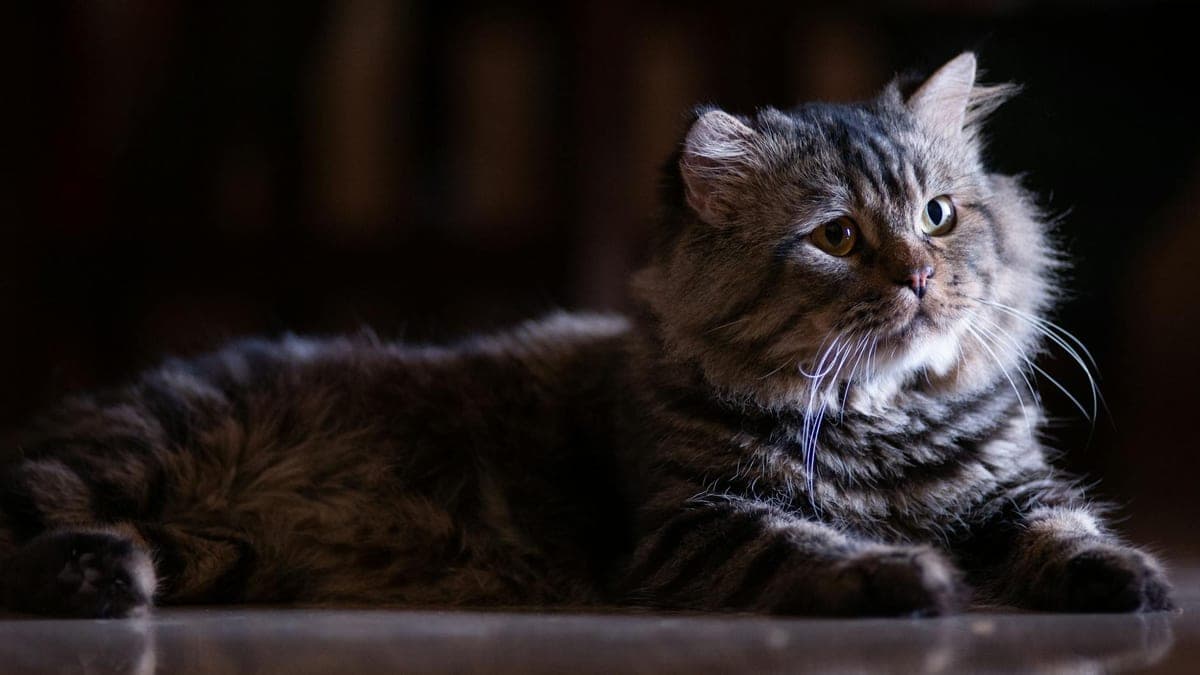
Duchess was in the back corner of the cat room — a 14-year-old cream-and-gray longhair with a slightly flattened ear from an old injury and eyes that tracked me the moment I stepped through the door. She didn't get up. She watched.
I sat down in front of her kennel. She blinked slowly. I blinked back.
I filled out the adoption paperwork an hour later.
What People Don't Understand About Senior Cat Adoption
Everyone I told responded the same way: "Oh, but won't she... you know. Soon?"
Yes. Eventually. That's true of all of us.
What people misunderstand is what the remaining time looks like. Senior cats are not broken versions of younger cats. Duchess had a fully formed personality — calm, opinionated, affectionate on her schedule, not mine. She knew exactly what she wanted (warmth, quiet, a window with birds), what she didn't want (loud sounds, strangers, being picked up unexpectedly), and how to communicate both with crystalline clarity.
There were no months of figuring her out. She arrived complete.
The Medical Reality
I won't pretend the vet bills were small. Duchess had hyperthyroidism — common in senior cats — managed with a small daily pill I learned to hide in a treat. She had early kidney disease, controlled with a prescription diet. Her teeth needed a cleaning under anesthesia, which required cardiac clearance first.
I budgeted $150 per month for her care. Some months were less. Two months were more.
What I didn't budget for: how little any of this would feel like a burden. Because I wasn't managing a cat in decline. I was caring for a specific creature I loved, who happened to have specific needs.
Nineteen Months
Duchess lived with me for nineteen months before she died — quietly, on a Tuesday morning, on her favorite chair by the radiator, with my hand on her side.
The shelter had told me she might have a year. She gave me nineteen months of watching birds at the window, evenings on the couch, and the particular peace of a cat who has decided, after much deliberation, that you are acceptable company.
I would do it again. I will do it again.
There is a 13-year-old tabby at my local shelter right now. His name is Chester. He's been there four months.
Senior cats in shelters are often overlooked. Ask your local shelter about their long-stay residents — they are often the most rewarding adoptions.
What you should actually know before adopting a senior cat
Eleanor's story is the version that goes right, and the way you make it go right is to do before the adoption what she describes doing after it — turn the unknowns into knowns.
A senior cat's biggest advantage over a kitten is that it is already who it is: the temperament is set, and the energy level is visible in the kennel rather than a coin-flip. The trade-off is equally concrete — a cat seven or older is statistically more likely to arrive with, or develop within a year or two, a chronic condition. That is not a reason to walk away; it is a reason to go in with your eyes open. Our guide to adopting a senior pet lays out the pre-adoption screen in full, but its core is short:
- Ask for the full surrender and medical records. An owner-surrendered cat often comes with a name, a diet, current medications, and the reason for surrender — the single highest-value piece of information about an adult animal. Ask intake staff directly whether anything is being treated.
- Book an independent vet exam in the first week, with all the shelter paperwork in hand. A kennel walk-through cannot detect a heart murmur, early kidney disease, a dental grade, or joint pain on palpation; a veterinary exam can. For a cat over roughly seven to ten, that first visit should include senior screening bloodwork, a urinalysis, and a thyroid (T4) check — the AAHA senior-care and AAFP feline life-stage guidance treat that baseline panel as standard preventive care, not an extravagance, precisely because the common senior diseases are silent until they are advanced.
- Price the diet and medication before you commit, not after. If the records list a prescription renal or cardiac diet, that is a recurring cost that is easy to underestimate.
None of this is a reason to skip a cat like Duchess. It is the difference between adopting a known monthly commitment and discovering a much larger one after you are already attached. Browse the site's cat care library for the breed and life-stage guides that match whichever cat you meet.
The four conditions to screen for: kidneys, thyroid, teeth, and joints
Eleanor names two of Duchess's diagnoses — hyperthyroidism and early kidney disease — almost in passing. They are not unusual; they are the two most common serious medical stories in an older cat, and they interact.
Chronic kidney disease (CKD) is the most common serious illness of older cats, and it hides: by the time a cat shows obvious signs, the kidneys have usually lost about two-thirds of their filtering capacity, because surviving nephrons compensate and the cat looks normal. Some studies suggest 30–50% of cats over 15 have some degree of CKD. The earliest signals are undramatic — drinking and urinating noticeably more, and a slow drop in weight over months — which is exactly why owners file them under "she's just getting old." A newer blood marker, SDMA, can flag the disease when only about 25–40% of function is lost, months before creatinine moves, and the therapeutic renal diet has the strongest evidence base of any intervention for slowing progression. Our senior-cat kidney-disease guide covers the catch-it-early routine — track water and monthly weight — that finds it before a crisis.
Hyperthyroidism is the most common endocrine disorder of older cats, most cases diagnosed after age 10, and caused in roughly 95–98% of cats by a benign thyroid overgrowth. Its hallmark is a contradiction owners misread as good news: weight loss despite a normal or increased appetite, because the overactive gland runs the metabolism so hot the cat burns muscle faster than it can eat. It is confirmed by a single blood test (total T4) and it is treatable — Duchess's "small daily pill" is methimazole, the usual first move. A vet often starts there rather than jumping to the one-time radioiodine cure because of a critical interaction: an overactive thyroid props up kidney blood flow and can mask CKD, so normalising the thyroid can unmask kidney disease hiding underneath. That is why "which treatment" is a decision made with your vet on this cat's bloodwork. The full picture is in our feline hyperthyroidism guide.
Dental disease is one of the most common senior findings, and a cleaning or extractions under anesthesia is the most common large planned first-year cost — which is why Duchess's dental work needed cardiac clearance first. Arthritis is the one almost nobody diagnoses: radiographic surveys reported by the AAFP and ISFM put degenerative joint disease in roughly 60% of cats over six and over 90% past twelve — and almost none of them limp. A cat in joint pain does not cry out; it stops jumping to the windowsill, takes the stairs one careful step at a time, grooms less over its hips, and sometimes eliminates just outside a litter box it can no longer step into comfortably. Our senior-cat mobility guide maps each of those quiet tells to a cheap home fix.
Are senior cats harder to care for?
Not harder — different, and in ways that often favour the adopter. The daily work of a settled senior cat is mostly environmental, and it is inexpensive. Because a large share of the litter-box "failures" and "he's just slowing down" complaints trace back to arthritis a cat is hiding, the highest-value moves are the ones that remove pain and effort from ordinary movement:
- A litter box with a very low entry side (under about 5 cm) or a U-shaped opening cut into a deep box, plus a second box on every floor the cat uses.
- Ramps or wide carpeted steps to one or two chosen high spots, so the cat never has to choose between pain and isolation.
- Raised food and water, a warm padded bed away from drafts, and non-slip runners on hard floors, where aging cats lose traction and confidence.
- Gentle daily play — two or three short sessions with a wand toy moved along the floor — because muscle is a joint's shock absorber and a cat that stops moving loses it fast.
The other half is watching. With a senior you are the early-warning system: a monthly weigh-in on a kitchen scale and a note of appetite, water intake, and litter output turn "she seems off" into data your vet can act on. Vets classify a cat as senior at about 11 and geriatric at 15, and the AAHA/AAFP guidelines step wellness screening up to every six months at 11 and older for exactly this reason. Our senior-cat care guide covers the full home setup. One safety line is non-negotiable: never give a cat human pain relievers — ibuprofen, naproxen, aspirin, and acetaminophen are toxic to cats, which are especially sensitive to acetaminophen, and a senior with undiagnosed kidney compromise is at higher risk still.
What a senior cat actually costs — and the pet-insurance catch
Eleanor budgeted $150 a month for Duchess and found "some months were less, two months were more." That shape is right, and it is worth understanding before you adopt so the number is a plan rather than a shock.
A senior's veterinary spend is front-loaded: the diagnostic work-up and the first dental or condition stabilisation cluster into the first year, then settle into a steadier monthly cost for a therapeutic diet or medication. Duchess's hyperthyroidism is a concrete example — our guide puts the diagnostic work-up (senior exam, total T4, general bloodwork) at roughly $150–$400, and lifelong methimazole at about $15–$40 a month plus recheck bloodwork every three to six months. The adoption fee itself is frequently the cheapest part: many shelters run senior-specific fee-waived programs precisely because seniors are the least-adopted group.
The catch that surprises most new senior adopters is pet insurance. It does not work like human health insurance — essentially every US insurer excludes pre-existing conditions, meaning anything diagnosed or showing signs before the policy and its waiting period is usually not covered, often permanently. For a senior that is the central problem, because the exact conditions a senior is most likely to have (CKD, arthritis, dental, heart disease) are the ones a new policy will not pay for. Insurance bought after you discover a condition is most useful for the next, unrelated problem; budget for the known condition as self-funded, because it is. The honest money conversation, in full, is in our adopting-a-senior-pet guide.
Nineteen months, and the next Chester
Eleanor did not adopt a project or a countdown. She adopted a specific cat with specific needs, screened for what could be screened, budgeted for what couldn't, and got nineteen months of birds at the window in return. That is the argument for a senior adoption, and it is not a sentimental one: the temperament holds no surprises, the home setup is cheap, and the medical picture — kidneys, thyroid, teeth, joints — is knowable in advance if you ask the questions before you sign. Duchess was never a broken version of a younger cat; she was complete, and the work of loving her was ordinary. Chester, four months into his own wait, is asking the same small thing of whoever reads his card next.
Questions About Duchess
Common questions answered to help you better understand this story
Get the full surrender and medical records and book an independent vet exam in the first week, and specifically ask about the four most common senior findings — kidney disease (CKD), hyperthyroidism, dental disease, and arthritis. Senior screening bloodwork plus a urinalysis and, for a cat over about seven to ten, a thyroid (T4) check catch what a kennel visit cannot. The goal is to turn resolvable unknowns into knowns and price the ones you can't, not to screen out every possible future problem.
No — usually more predictable. A senior cat's temperament and energy are already set, and many are past the destructive, sleep-wrecking kitten stage. The real work is environmental (a low-entry litter box, ramps, warm bedding, raised bowls) plus watching for change, because a lot of senior "misbehaviour" is hidden arthritis. The trade-off is medical: a senior is more likely to have a chronic condition to manage, so the effort shifts from training to monitoring.
Four dominate: chronic kidney disease (the most common serious illness of older cats, often silent until two-thirds of kidney function is gone), hyperthyroidism (the most common endocrine disorder, hallmarked by weight loss despite a big appetite), dental disease, and arthritis — which the AAFP and ISFM find in over 90% of cats past twelve, though almost none limp. All four are manageable, which is why a first-week vet exam and senior bloodwork matter so much.
Expect a front-loaded shape: the diagnostic work-up and any dental or condition stabilisation cluster into the first year, then settle into a monthly cost for a therapeutic diet or medication. A hyperthyroid work-up, for example, runs roughly $150–$400 with lifelong medication around $15–$40 a month plus periodic rechecks. The adoption fee is often reduced or waived for seniors. Crucially, pet insurance generally will not cover a condition that existed before the policy, so budget for a known diagnosis as self-funded.
It depends far more on health than on the number on the intake card. Vets consider a cat senior at about 11 and geriatric at 15, and many indoor cats stay active well into their teens — so adopting a cat in its early or mid-teens frequently means years, not months, especially once conditions like kidney disease or hyperthyroidism are caught and managed. A pre-adoption health screen is what turns "how long" from a guess into an informed expectation.
Didn't find your answer?
Get in touch →More Stories
Get more stories like this
Weekly heartwarming pet stories and care tips, straight to your inbox.
No spam, ever. Unsubscribe anytime.