
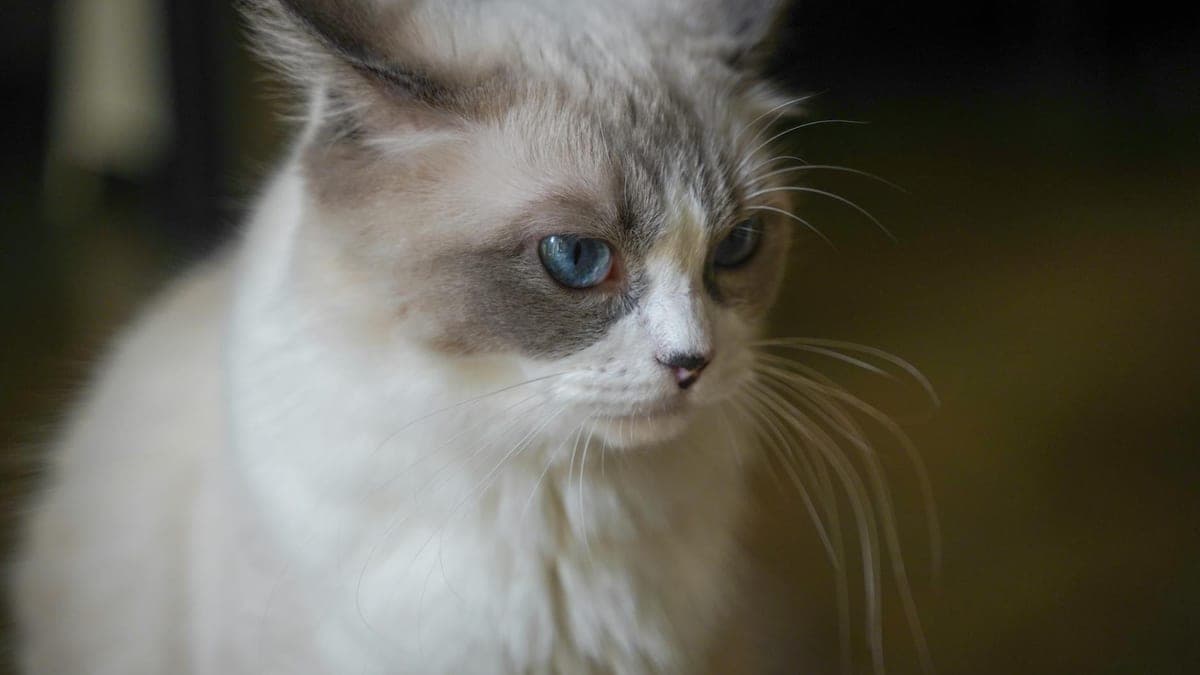
The Cat With No Front Claws Who Taught Me About Declawing
Story Subject
Ivory
Type
Cat
Read Time
8 min
Shared By
Steph Collins
Editor
Mr Pet Lover Admin
In This Guide
Ivory's previous owner surrendered her with a note that read: "Biting and aggressive — not suitable for a home with children."
Ivory was a three-year-old Ragdoll — a breed so famously docile they're named for the way they go limp in human arms. The "aggressive" designation didn't match the cat in front of me, who pressed herself against the kennel door and slow-blinked.
I asked about her history. She had been declawed at eight months old.
What Declaw Surgery Actually Involves
I had grown up thinking declawing was a trim. It is not. Declaw surgery removes the last bone of each toe — the equivalent, in human anatomy, of amputating each finger at the top knuckle. When complications occur — bone fragments, nerve regrowth, scar tissue — the result is chronic pain that the cat cannot explain and the owner cannot see.
The most common behavioral consequence of chronic post-declaw pain: biting. Cats with painful paws redirect their primary defense to their remaining option.
I adopted Ivory and made a vet appointment.
The Diagnosis
The vet took X-rays. Bone spurs in three toes — small fragments from an incomplete procedure, pressing on soft tissue with every step. Ivory's "aggression" was her pain response, which she had been living with for two years unidentified.
Surgery to remove the bone spurs: $800. Recovery: four weeks of bandaged paws and a very patient cat.
After Surgery
Two weeks post-recovery, Ivory jumped onto the couch, walked across my lap, and settled against my side with the bonelessness that Ragdolls are actually known for. She had never done this before, in any home, according to any record we had.
She has never bitten unprovoked since surgery. She has bitten me once, when I accidentally stepped on her tail, which is exactly as reasonable as it sounds.
She is currently on the blanket beside me, doing what Ragdolls do: existing beautifully and taking up space.
The "aggression" note is somewhere in a filing cabinet. It has nothing to do with the cat I know.
Cats with behavior changes — especially biting — should have a full veterinary work-up before behavioral conclusions are drawn. Pain is often the first place to look.
Why a declawed cat has to be an indoor-only cat
Ivory's story ends indoors for two reasons that stack on top of each other, and it's worth pulling them apart because they apply to different cats.
The first is the declawing itself. A cat's front claws are its primary tool for both defence and escape — how it warns off a threat, and how it grips bark or fencing to scramble out of danger. Remove the claws and you remove both. A declawed cat that meets a dog, a car, or an aggressive tom outdoors cannot climb to safety and cannot defend itself; its remaining option is exactly the one Ivory was punished for — biting. That is why every major veterinary body that permits the surgery at all treats indoor-only life as a condition of it, not a suggestion.
The second reason is specific to Ivory: she is a Ragdoll, and for this breed indoor-only is already a requirement before you factor in the claws. As our Ragdoll breed profile puts it plainly, the breed was bred for an extreme tolerance of handling — a cat that "does not struggle, does not flee, and trusts everyone," greets strangers, has poor street-survival instincts, and is easily stolen. Declawed and a Ragdoll, Ivory has essentially no defensive margin outdoors. The same trusting nature makes indoor life easy, though: Ragdolls are calm and people-bonded, content to follow you room to room rather than pine for a garden.
What declawing actually does — and the problems that follow
Steph's realisation in the story — that declawing "is not a trim" — is the whole medical picture in one line. Declawing (the veterinary term is onychectomy) is the amputation of the last bone of each toe, the third phalanx, because the claw grows from that bone and cannot be removed without it. It is closer to removing the tip of each of your fingers at the top knuckle than to a nail trim.
The problems follow directly from that. Because the cat now walks on the ends of amputated toes, gait and weight-bearing change, and some cats develop the hard-to-spot chronic pain Ivory carried for two years — worsened, in her case, by the retained bone spurs an incomplete procedure left behind. When bone fragments, nerve regrowth, or scar tissue are involved, that pain has no outlet except behaviour. The two behaviours most consistently linked to it are the two that got Ivory surrendered: increased biting (the redirected defence Steph describes) and litter-box avoidance, because digging in coarse litter presses on paws that hurt. This is not inevitable in every declawed cat, but it is common enough that pain should be the first thing investigated when a declawed cat "turns aggressive" or stops using the box.
Is declawing bad for cats? The reason it is now banned across the UK and much of Europe and prohibited in a growing list of US states and cities is that the surgery carries real risk of exactly these lasting harms while solving a problem — scratching — that has effective, non-surgical alternatives.
Caring for a declawed cat day to day
If you adopt a cat who is already declawed, the goal is to remove pressure from the paws and give back, through the environment, the security the claws used to provide.
- Choose a paw-friendly litter and box. Soft, fine-grained, unscented litter is gentler on sensitive paws than coarse clay pellets, and a large low-entry box means less awkward climbing. A declawed cat that suddenly avoids the box is often telling you a paw hurts — treat it as a medical question, not a discipline one.
- Keep play claw-free and low-impact. Wand toys and chase games let a declawed cat hunt without needing to grip; avoid rough hand-play that invites the biting these cats already lean on.
- Manage weight and joints. Extra weight loads already-altered paws. Our Ragdoll profile flags this breed as a "classic obesity setup" — large, food-motivated, low-energy — so measured meals matter doubly here.
- Build the indoor world up, not out. With outdoors off the table, enrichment carries the load. Our indoor cat care guide covers the core kit — vertical space, window perches, puzzle feeders, daily play — and the rest of our cat care library fills in the specifics.
The through-line is the one Ivory proved: watch the paws and the behaviour together. Her whole personality changed once the pain was found and fixed — not because she was retrained, but because caring for a declawed cat is mostly about believing the body first.
What Ivory taught Steph about believing the cat
The note in the filing cabinet said "biting and aggressive." The X-rays said bone spurs in three toes. Between those two documents is the whole lesson of Ivory's story: a declawed cat's behaviour is almost always a message about its paws, and the kindest response is to look there first. Ivory didn't need a stricter home or a warning label — she needed someone to find the pain, fix it, and then give her the one thing a clawless, trusting Ragdoll actually requires: a safe indoor world with nothing to defend against. Do that, and the "aggressive" cat turns out to be the one flopping bonelessly against your side, exactly as her breed always promised.
Questions About Ivory
Common questions answered to help you better understand this story
Yes. Declawing removes a cat's primary means of both defending itself and climbing to escape, so a declawed cat outdoors cannot fend off a predator or scramble to safety and is left with biting as its only defence. Veterinary guidance treats strictly-indoor life as a condition of the surgery, not a preference. For a trusting breed like the Ragdoll, indoor-only is doubly essential — our breed profile already lists it as a breed requirement.
The common issues trace back to the surgery, which amputates the last bone of each toe. They include long-term chronic paw pain, an altered gait, and — where bone fragments, nerve regrowth, or scar tissue occur — ongoing discomfort. The two behaviours most linked to that pain are increased biting (a redirected defence) and litter-box avoidance. As Ivory showed, these are frequently misread as "aggression" when the real cause is unaddressed pain.
Declawing is not a nail trim; it is the amputation of the third bone of every toe, and it carries real risk of lasting harm — chronic pain, gait changes, litter-box avoidance, and biting. That risk, against a problem (scratching) that has effective non-surgical fixes, is why it is banned across the UK and much of Europe and prohibited in a growing number of US states and cities. Most veterinary bodies now discourage it except in rare medical cases.
Take pressure off the paws and enrich the indoor world. Use soft, unscented, fine-grained litter in a large low-entry box; keep play to claw-free wand and chase games rather than rough hand-play; and manage weight so altered paws and joints aren't overloaded. Because outdoor access is unsafe, lean on indoor enrichment — vertical space, window perches, puzzle feeders, and daily play. Above all, treat sudden biting or box-avoidance as a pain question first.
The most likely reason is pain: digging in coarse litter presses on surgically altered paws, so the cat associates the box with discomfort and goes elsewhere. Switch to a soft, fine-grained, unscented litter and a large low-entry box — and because retained bone spurs or nerve pain can be the driver, as they were for Ivory, have a vet examine and, if needed, X-ray the paws before treating it as a behaviour problem.
Didn't find your answer?
Get in touch →More Stories
Get more stories like this
Weekly heartwarming pet stories and care tips, straight to your inbox.
No spam, ever. Unsubscribe anytime.