
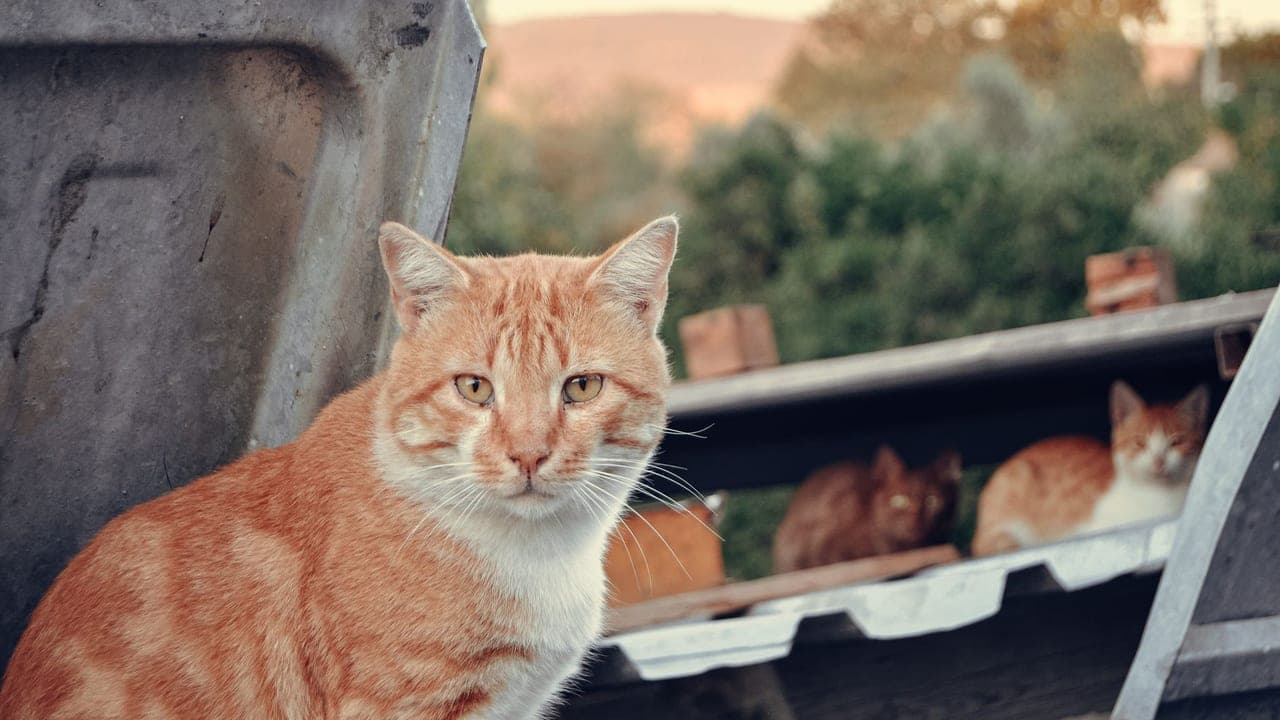
Socializing a Feral Cat to Indoor Life: Ghost's Two-Year Journey
Story Subject
Ghost
Type
Cat
Read Time
6 min
Shared By
Anna Petersen
Editor
Mr Pet Lover Admin
In This Guide
Socializing a feral cat to indoor life can take months or years, and some cats never become fully touchable. Ghost's story worked because Anna treated trust as the goal, not forced affection: food came first, then predictable routines, veterinary care through trap-neuter-return, indoor access by choice, and touch only after Ghost's body language allowed it. This is not a shortcut guide. It is a realistic account of what slow, boundary-led socialization can look like when a cat has had little early human contact.
Ghost arrived in my garden in February, thin and suspicious, during a cold snap that made me put food out for whatever was eating my fence-side plantings.
She was gray and almost translucent in the early morning light. She ate with her back always to me, positioned for maximum escape routes. When I moved, she was gone.
This went on for a year.
What Feral Means
Feral cats are not the same as stray cats who have wandered away from a home. Feral cats have had limited or no socialization with humans during the early developmental window. Alley Cat Allies describes socialization as a continuum, not a simple yes-or-no label, which matters because some cats can move closer to people over time while others remain most comfortable outdoors or semi-outdoors.
Ghost had clearly been feral since kittenhood. She was not trying to be unfriendly. She was being exactly as cautious as her experience had taught her to be.
I had her spayed and vaccinated through a trap-neuter-return clinic in year one. That mattered before any indoor plan. Trap-neuter-return reduced the risks of pregnancy, fighting, roaming, and preventable disease, and it gave Ghost a safer baseline whether she ever chose the house or not.
The trapping process also set us back months. She avoided the spot where the trap had been for six weeks. That was the first lesson: every necessary intervention has an emotional cost for a feral cat, and pretending otherwise only makes the human impatient.
The Slow Work
I started sitting in the garden during her feeding times - at first ten feet away, then gradually closer over months. I learned her body language: the high tail that meant approaching neutrality, the low crouch that meant "do not move," the slow blink that meant she had decided, for this moment, that I was acceptable.
I never reached for her. I let her set every boundary.
In month fourteen, she entered the house through a propped door and ate from a dish I'd moved inside. She stayed for forty minutes, then left.
By month eighteen, she was sleeping inside most nights.
How Indoor Life Became Realistic
Indoor life became realistic only after the house stopped feeling like a trap. I kept the door open during early indoor meals so Ghost could leave. I placed her food just inside the threshold, then a few feet farther in, then near a quiet corner with a covered bed. I did not close the door until she had chosen the room many times on her own.
The setup was simple:
- A quiet room with hiding places
- Food and water away from foot traffic
- A litter box placed where she could reach it without crossing the whole house
- Predictable feeding times
- No guests, children, or loud introductions during the transition
The biggest mistake would have been confusing progress with permission. Entering the house did not mean she wanted hands on her. Sleeping near me did not mean she wanted to be picked up. The point was to make indoor life feel safer than outdoor life, not to make her perform like a social cat.
Mistakes That Slowed Progress
The trap was necessary, but it slowed trust. Moving the food too far indoors too quickly also slowed trust. Once, I shifted the dish from the doorway to the kitchen in a single week because I thought she was ready. She refused to enter for four days.
After that, I treated every change as a small test:
- If she ate normally, the change could stay.
- If she froze, crouched, or retreated, I moved one step back.
- If she skipped a meal, I made the setup easier the next day.
That rhythm did more than protect Ghost. It protected me from turning hope into pressure.
The Touch
Two years after I first put food out, Ghost was sleeping near my feet on the couch when I lowered my hand - slowly, with the back of my fingers closest to her first - and made contact with the top of her head.
She froze. Then she didn't move. Then she exhaled.
She has let me pet her approximately twice a week since then. She will never be a lap cat. She has chosen a permanent indoor life and has favorite spots I am not allowed to sit in.
It took two years and I would do every slow week of it again.
What Ghost's Story Teaches
Ghost's story is not proof that every feral cat should become an indoor pet. It is proof that the right question is not "How do I tame this cat?" The better question is "What does this cat's behavior say she can tolerate next?"
Some feral cats remain happiest with outdoor shelter, food, TNR, and monitoring. Some become indoor cats but never enjoy handling. A smaller number become affectionate companions. The humane approach is to let the cat's stress signals decide the pace.
For owners looking for a practical next step, start by learning cat stress and trust signals. Our cat body language guide is the best internal companion to this story, and our indoor cat enrichment guide explains how to make the home feel safer once a cat is ready.
Questions About Ghost
Common questions answered to help you better understand this story
Some feral cats can become indoor cats, especially when they show curiosity, eat near people, use sheltered spaces, and recover from stress quickly. Others remain too fearful for indoor life. The goal is safety and welfare, not forcing a specific outcome.
Do not reach for a feral cat just because the cat is nearby. Wait for relaxed body language, predictable routines, and repeated voluntary closeness. Forced contact can cause bites, scratches, and major trust setbacks.
Didn't find your answer?
Get in touch →More Stories
Get more stories like this
Weekly heartwarming pet stories and care tips, straight to your inbox.
No spam, ever. Unsubscribe anytime.