
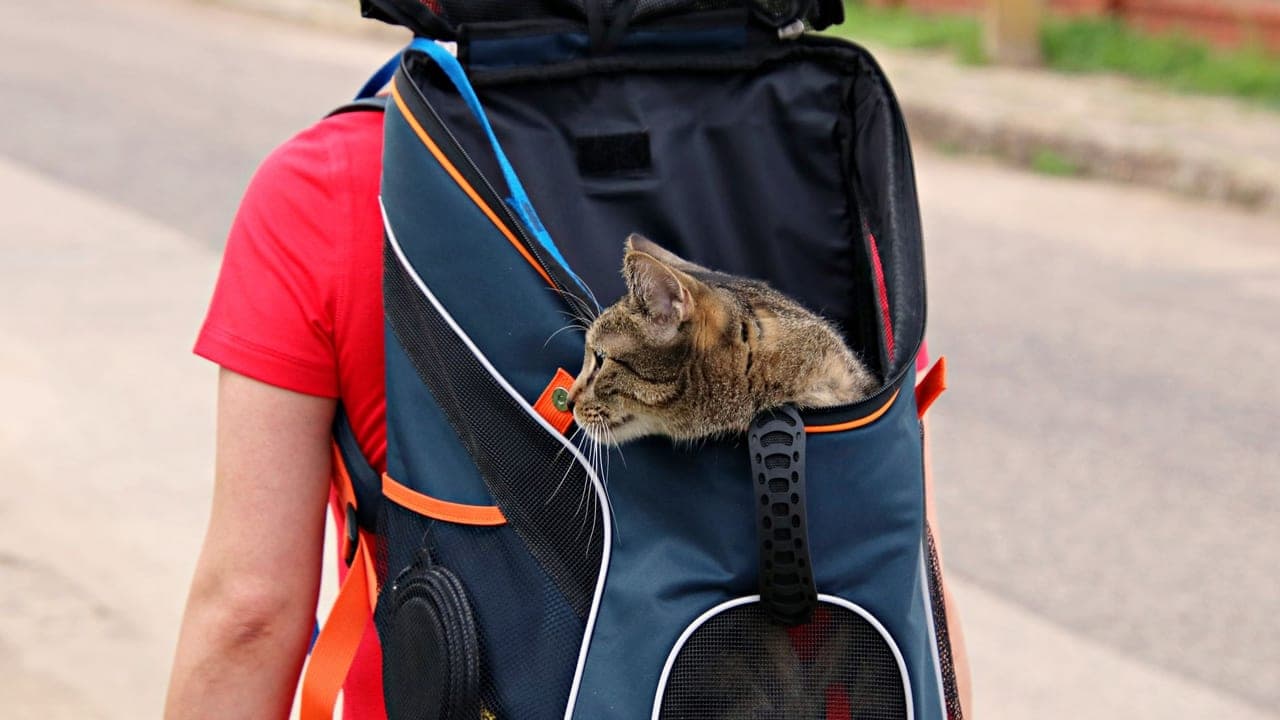
How a Street Cat in Rome Ended Up in My Living Room in Ohio
Story Subject
Roma
Type
Cat
Read Time
7 min
Shared By
Patricia Walsh
Editor
Mr Pet Lover Admin
In This Guide
I fed her once. That was my mistake — or my best decision, depending on how you calculate these things.
Roma appeared outside the restaurant where I was having dinner on my third night in Rome. Small, gray, improbably fluffy for a street cat, doing the thing street cats do where they sit nearby and make it unclear whether they are interested in you or occupying nearby space.
I gave her half my fish.
She was at the same spot when I walked by the next morning.
How This Becomes a Decision
I had nine days left in Rome. I told myself I was just feeding a stray cat, which is a thing many travelers do, which usually ends when they board their flight home.
By day seven, I had named her Roma, purchased cat food from a farmacia, and begun researching the logistics of international pet transport.
By day nine, I had contacted a Rome-based animal rescue organization that assists with exactly this situation — tourists who have formed attachments they cannot leave behind. They were not surprised. They handle several cases per year.
What International Transport Actually Involves
The US requires: a health certificate issued by an accredited veterinarian within ten days of departure, a microchip (ISO standard 15-digit), documentation of rabies vaccination (Roma needed her primary series before she was eligible). Most countries including Italy do not require a quarantine for cats entering the US, but the paperwork must be current and complete.
The rescue organization helped with Roma's vet appointment, microchipping, and vaccination documentation. An international pet transport service handled the cargo booking and airline coordination.
Total cost: approximately $800, including the transport service, vet fees, carrier, and airline cargo fee.
Roma in Ohio
Roma arrived in Columbus on a February afternoon, cargo-cold and disoriented, in a carrier that smelled of the Rome rescue's facility.
She explored my apartment in widening circles for four hours. She found the heated throw blanket on the couch.
She has not appeared homesick. Cats, I've come to believe, don't carry geography the way we do. They carry warmth, food, safety, and the particular smell of one specific human.
She's been in Ohio for two years. She remains improbably fluffy.
International pet adoption is complex but achievable. Organizations like PetRelocation.com and International Pet and Animal Transportation Association (IPATA) members can guide the logistics.
What it actually takes to bring a cat home from another country
Every country writes its own rules for importing a pet, and they differ enough that the single most important step is to check the destination country's official veterinary or agriculture authority — in the US, USDA APHIS, with the CDC governing animal-disease entry — before you book anything. Roma's paperwork above was specific to one cat, one country, one year; treat any figure or timeline you read, including mine, as a starting point to verify, not a checklist to copy.
That said, a few requirements show up almost everywhere:
- An ISO-standard microchip. A 15-digit ISO 11784/11785 chip is the near-universal identifier, and it usually has to be implanted before the rabies vaccination so the vaccination record ties to a readable chip.
- A current rabies vaccination, given after the microchip and often with a minimum waiting period before travel.
- An official health certificate from an accredited or government-endorsed veterinarian, issued within a short window — commonly days, not weeks — of departure.
- An import permit or advance notice for some destinations, filed before the cat travels.
Rabies-free and rabies-controlled countries frequently add a rabies antibody titre blood test with a mandatory waiting period after the draw, a step that can push the timeline out by months. Airlines set their own live-animal rules on top of the government ones; members of IPATA — the International Pet and Animal Transportation Association named in Roma's story — are professional shippers who coordinate exactly this. Because the steps are chained — chip, then vaccinate, then sometimes titre, then certificate — start early and let the required order drive your calendar.
Settling an imported cat into a new home
An imported cat arrives with more to process than a shelter adoption from across town: a long flight, a temperature swing, and none of the scents it knew. Give it the same decompression most shelters and vets recommend for any new cat — one quiet room with food, water, a litter box and a place to hide — and let the cat set the pace. A widely used shelter framework describes the arc as roughly three days to stop hiding, three weeks to learn the routine, and three months to feel at home; treat it as a reminder to be patient, not a stopwatch.
Two practical priorities in the first days:
- A vet visit within about a week of arrival, so a local veterinarian can confirm the travel paperwork, check for anything the journey stressed, and set up ongoing care. Our indoor cat care guide covers the enrichment — vertical space, scratching, daily play — that helps a former street cat adapt to living indoors.
- A steady, complete diet. A cat that lived on scraps abroad does best on a consistent, complete food introduced gradually to avoid stomach upset. Our cat nutrition guide covers what cats need, and you can browse all our cat resources as your cat settles in.
Roma took four hours and one heated blanket; most cats take longer, and a street-hardened adult may stay wary for weeks before deciding a new human is safe — which is normal, not a failing adoption.
What Roma's flight home taught me I still don't fully know whether feeding a gray cat outside a Roman restaurant was a mistake or the best decision I've made — but the flight home was the easy part to get right. The paperwork was a solved problem: a chip, a vaccine, a health certificate, a rescue that had done it before, and a couple of patient months. The harder, quieter work doesn't fit on a customs form — earning the trust of an animal that had survived on her own, and letting her decide, in her own time, that Ohio was safe. Two years and one heated blanket later, Roma has. If you're weighing your own version of this: respect the logistics, verify every rule with the official source, and give the cat the time the journey earned.
Questions About Roma
Common questions answered to help you better understand this story
Confirm the cat is genuinely unowned and healthy enough to travel, then work with a reputable local rescue or a professional pet-transport service, who arrange the veterinary steps and coordinate the airline. Because the rules are set by your destination country, verify current requirements with its official veterinary authority (USDA APHIS and the CDC for the US) before you commit to dates or costs.
They vary by destination, but a common core repeats worldwide: an ISO-standard 15-digit microchip, a current rabies vaccination given after the chip, and an official health certificate issued shortly before departure. Some countries also require an import permit, a rabies antibody titre blood test, or advance notification. Always check the destination country's government authority for the exact, current list, because requirements and timelines change.
It depends on the destination and the paperwork. Many countries — including the US in Roma's case — require no quarantine when a cat's microchip, vaccination and health certificate are complete and compliant. Rabies-free or rabies-controlled countries are stricter and may add a titre test, a waiting period, or quarantine on arrival. Confirm the rule with the official authority first, because a paperwork gap is what triggers a hold.
Give it a small, quiet space first — one room with food, water, a litter box and somewhere to hide — and let it come to you. A street cat may stay wary for days or weeks, and that's normal. Keep routines predictable, book a vet check within about a week of arrival, and add indoor enrichment like vertical perches and daily play. Patience, not pressure, settles a wary rescue.
It's a fair debate. Critics point out that the money spent importing one cat could fund spay-neuter or feeding for many strays locally, and that removing a healthy community cat can do more harm than good. Responsible adoption means confirming the cat is truly unowned, healthy, and genuinely better off relocated — and working through a legitimate rescue rather than a rushed airport handoff.
Didn't find your answer?
Get in touch →More Stories
Get more stories like this
Weekly heartwarming pet stories and care tips, straight to your inbox.
No spam, ever. Unsubscribe anytime.