
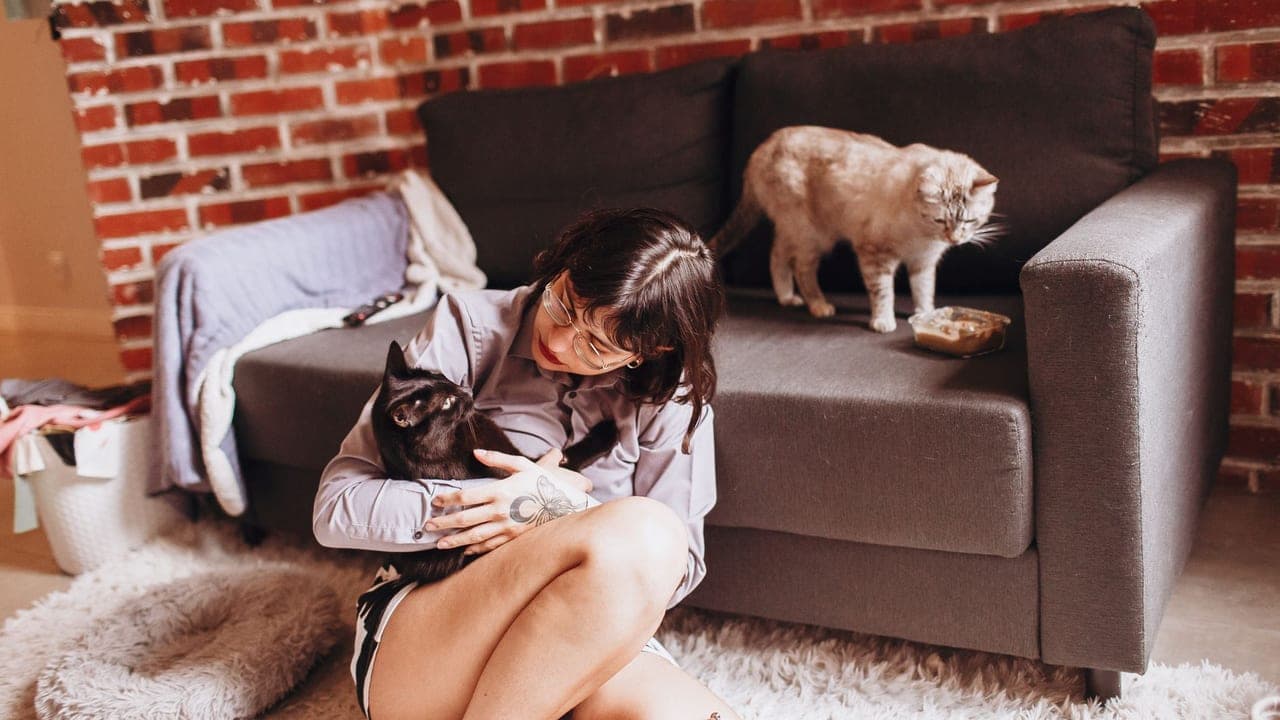
I Discovered I'm Allergic to Cats. I Kept My Cats Anyway.
Story Subject
Fig and Plum
Type
Cat
Read Time
8 min
Shared By
Jo Chen
Editor
Mr Pet Lover Admin
In This Guide
Year three of owning Fig and Plum, I started waking up with eyes so swollen I couldn't see my phone. My doctor ordered a skin prick test. The results were clear: cat dander, severe reaction.
"You need to rehome them," the allergist said.
I drove home and told Fig and Plum, who responded with the indifference characteristic of their species and then asked for dinner.
I called the allergist back and asked what our options were.
The Allergy Management Protocol
Rehoming wasn't on the table. I'd had Fig since she was eight weeks old. Plum was a bonded pair with Fig and had come to me when a friend moved abroad. They were family.
My allergist, to her credit, worked with me once I was firm on this. The protocol we built:
Daily: non-sedating antihistamine, nasal rinse, no touching face after contact, hands washed immediately after handling.
Weekly: HEPA vacuuming of all soft surfaces, laundry washed at high heat.
Environmental: HEPA air purifier in the bedroom (cats banned from bedroom entirely — this was the hardest adjustment for all three of us), no carpets in the main living area (we switched to area rugs that vacuum ), leather sofa instead of fabric.
Medical: allergy immunotherapy (shots) starting at month three. A three-to-five year course that gradually desensitizes the immune response. I'm 18 months in. The shots are working.
What Got Easier
The first three months were genuinely hard. My symptoms were controlled but not gone. I wore glasses more than contacts (lenses worsen allergic eye reactions), I stopped touching my face with the reflexive frequency most people don't notice until they're trying to stop.
By month six, between the environmental controls and the early immunotherapy progress, I was symptomatic only when I'd been lax about the protocol — missed vacuuming, skipped the air purifier cleaning.
The Bedroom Situation
Fig and Plum are not allowed in the bedroom. They have expressed their feelings about this through sustained effort at every closed door.
They have not succeeded. The bedroom is the one space where I sleep, breathe, and recover. The cats sleep on a heated mat in the hallway and have apparently forgiven me.
I wake up able to see now. It was worth the investment.
Cat allergy management is possible for many owners. An allergist specializing in environmental allergies can help you build a sustainable plan.
Can you actually live with cats if you're allergic?
For a lot of people, yes — and the plan starts with understanding what you're actually allergic to. It is not the hair.
The main cat allergen is a tiny protein called Fel d 1, produced mostly in a cat's saliva and skin oils. When a cat grooms, it spreads the protein across its coat; the saliva dries and flakes off on microscopic dander that's light, sticky and slow to settle. Those particles drift through the air and cling to walls, upholstery and clothing — which is why a reaction can linger long after the cat has left the room. Shed hair matters only as the vehicle. That reframes the problem: you're not containing fur, you're clearing a sticky airborne protein.
Whether you specifically can live with cats comes down to how severe your reaction is and how consistently you'll run a layered routine. Plenty of owners with mild-to-moderate allergies do it comfortably. But if your symptoms include asthma, wheezing or chest tightness rather than itchy eyes and sneezing, that's a medical line to walk with a doctor — an allergist can test you, gauge severity, and say whether keeping a cat is safe for your airways. (New to cats generally? Our cats hub is a good starting point.)
Cutting the allergen load at home
There is no single fix — my plan worked because every layer removes a little and the layers add up. The controls, most of which show up in the protocol above:
- A cat-free bedroom. The hardest part for Fig, Plum and me, and the highest-value control. You spend roughly a third of your life in that room; keeping it off-limits gives your immune system one reliably low-allergen place to recover each night.
- HEPA air filtration. A true-HEPA purifier captures the fine airborne dander Fel d 1 rides on, and matters most in the bedroom. Clean the filter on schedule — a neglected purifier stops working, which is exactly when my symptoms crept back.
- Hard, wipeable surfaces. Carpet, heavy drapes and fabric sofas hold the protein for months; hard flooring with washable rugs and leather furniture give the allergen far less to hang onto.
- Wash, and don't touch your face. Washing your hands after handling a cat, and breaking the habit of touching your eyes and nose, cuts the most direct route from cat to symptoms. Launder bedding often at high heat.
- Keep the cat and its space clean. Regular grooming and a clean litter area lower how much allergen the cat sheds. Wiping a tolerant cat with a damp cloth helps too, but only temporarily. Our indoor cat care guide covers the grooming and home-cleaning routine in more depth.
Hypoallergenic breeds, medication and the long game
"Hypoallergenic" cats are lower, never zero. Breeds marketed this way — Siberian, Balinese and others — tend to produce less Fel d 1, and hairless Sphynx cats still make the protein despite shedding almost no hair. Neutered males and females generally produce less than intact males, and individuals vary. A lower-allergen breed can tip a borderline case into "manageable," but no cat is allergen-free, and it doesn't replace the environmental controls above.
Medication and immunotherapy change the trajectory. Day-to-day symptoms are usually managed with non-sedating antihistamines, nasal steroid sprays and saline rinses — a plan a doctor tailors to you, which is why I'm not naming doses here. What actually shifts the underlying reaction over years is allergy immunotherapy — the shots I started at month three. It gradually retrains the immune system to tolerate the allergen over a multi-year course, and it's the piece I credit for waking up able to see. An allergist prescribes and monitors it; it's not something to improvise.
What Fig and Plum are worth to me
Eighteen months into the shots, with the bedroom door closed and the purifier humming, the math is simple. My allergist's first instinct — rehome them — is the standard advice, and for some people with severe airway disease it's the right call. It wasn't mine, because my reaction was severe but manageable, and because Fig and Plum were family before they were a diagnosis. What made staying possible wasn't loving them harder; it was treating the allergy like the medical, environmental problem it actually is — Fel d 1, not fur — and running the whole layered plan without cutting corners. I still wake up able to see.
Questions About Fig and Plum
Common questions answered to help you better understand this story
Often, yes. Many people with mild-to-moderate cat allergies live with cats comfortably by stacking controls: a cat-free bedroom, HEPA air filtration, hard washable surfaces, frequent hand-washing, regular cleaning, and medication or immunotherapy from a doctor. The bigger caution is allergic asthma — wheezing or chest tightness — which should be assessed by an allergist before you commit, because that's an airway-safety question, not just comfort.
The trigger is a protein called Fel d 1, made mainly in a cat's saliva and skin oils — not the fur itself. Grooming spreads it across the coat, where it dries and flakes off on microscopic dander that goes airborne and sticks to surfaces. Your immune system overreacts to that protein, producing the itchy eyes, sneezing, congestion or wheezing. Because hair is only the carrier, even low-shedding cats still produce the allergen.
Layer several controls, since no single one is enough. Keep the bedroom cat-free, run a true-HEPA air purifier and clean its filter on schedule, and swap carpet and fabric sofas for hard flooring, washable rugs and leather furniture. Wash your hands after contact, avoid touching your face, launder bedding at high heat, and keep the cat and litter area clean.
Not truly — only lower-allergen ones. Breeds like the Siberian and Balinese tend to produce less Fel d 1, and hairless Sphynx cats still make the protein despite shedding little hair. Neutered males and females usually produce less than intact males, and individual cats differ. A lower-allergen cat can make a borderline situation workable, but none is allergen-free, so it doesn't replace environmental controls and medical management.
They can, but rarely on their own. Casual exposure alone is unpredictable and can just as easily keep symptoms simmering. The reliable path to lasting improvement is allergy immunotherapy — a multi-year course of shots (or, in some cases, drops) that gradually desensitizes the immune response under an allergist's supervision. Environmental controls and daily medication manage symptoms in the meantime; immunotherapy is what changes the underlying reaction.
Didn't find your answer?
Get in touch →More Stories



Get more stories like this
Weekly heartwarming pet stories and care tips, straight to your inbox.
No spam, ever. Unsubscribe anytime.