
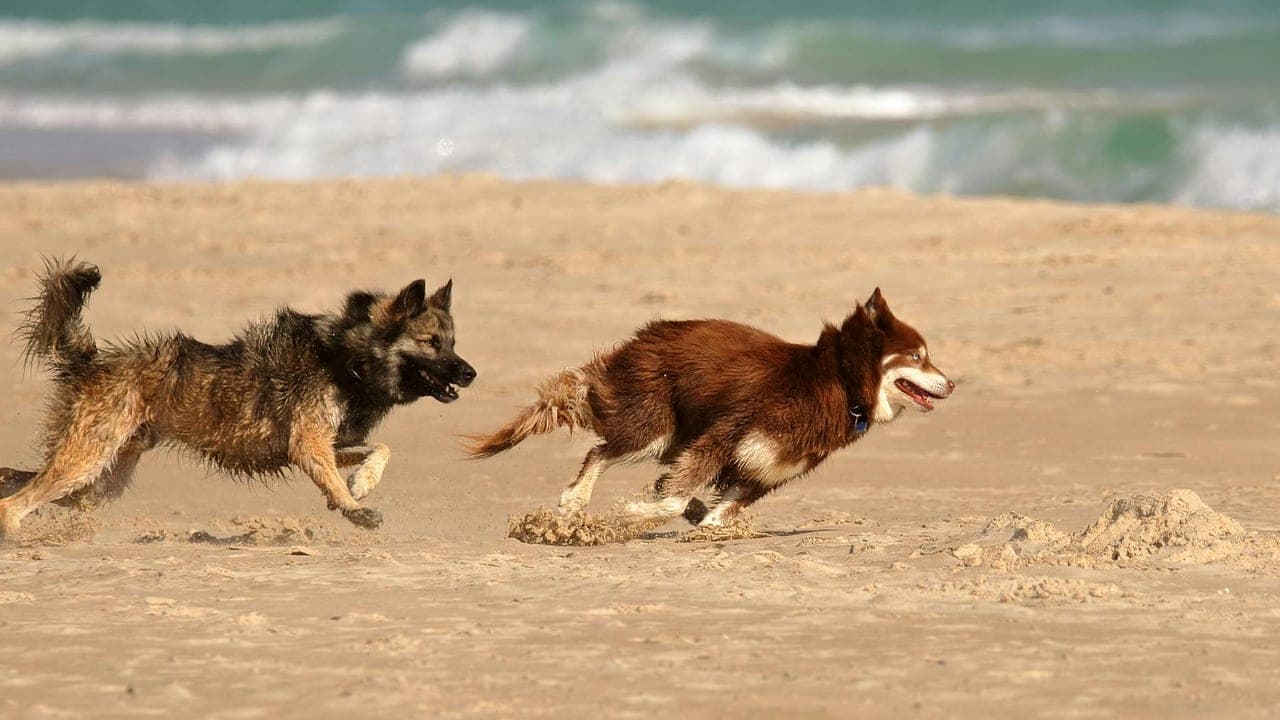
Why I Drive My Dog 45 Minutes to the Same Dog Beach Every Saturday
Story Subject
Nelson
Type
Dog
Read Time
7 min
Shared By
Greg Patel
Editor
Mr Pet Lover Admin
In This Guide
People have asked me, reasonably, why I don't go to the closer park. It's ten minutes away. It has grass, walking paths, a water fountain.
I've tried to explain the beach, and I usually fail. Let me try again.
How It Started
Nelson is a Labrador Retriever. He came home at eight weeks with a number of factory-installed predispositions, including an orientation toward water that borders on philosophical commitment. The first time he saw a puddle, he entered it with the confidence of an animal who has waited his whole brief life for this exact puddle.
The closer park has no water. The beach has the Pacific Ocean.
We drove out the first time when Nelson was five months old. He ran in, dove under a wave, surfaced, and looked at me with an expression I can only describe as recognition. This is what I'm for.
That was six years ago. We have not missed a Saturday with the exception of two weeks when Nelson had a post-surgery restriction and I drove out anyway, sat on the sand, and felt his absence as a specific weight.
What the Ritual Does
There is research on the psychological benefits of routine for dogs — consistent, predictable positive experiences reduce baseline anxiety, build confidence, and contribute to what behaviorists call "welfare state." Nelson knows Saturday. He knows the route by the third turn. His energy in the car shifts from general Lab enthusiasm to something more specific.
What the ritual does for me: it's ninety minutes round-trip where I'm not working, not planning, not managing anything except the location of a wet Labrador. This turns out to be excellent for my baseline anxiety as well.
What It Looks Like
We arrive at 7:30 before the crowds. Nelson enters the water immediately, with the immediacy of an animal who needs no warm-up period for joy. He retrieves his ball until I stop throwing it (not until he stops wanting it — he would go forever). He interacts with other dogs in the easy, distracted way of a dog who has a primary objective and considers other dogs secondary.
We leave at 9. He is wet and satisfied and sleeps on my feet in the car.
I drive home thinking about nothing in particular.
It's worth 45 minutes every time.
Labrador Retrievers have a strong genetic affinity for water. See our Lab breed guide for more on exercise needs and what makes this breed thrive.
Taking a dog to the beach safely
Nelson makes the beach look effortless, but the ocean is one of the few environments where a dog's own enthusiasm is the main hazard. A few well-established precautions turn a Saturday ritual into a safe one.
Don't let a dog drink salt water. This is the big one, and it's easy to miss because a panting, retrieving dog will gulp whatever is closest. A few mouthfuls of seawater between fetches typically just causes "beach diarrhea," but larger amounts overload the body with sodium and can cause genuine salt toxicity — vomiting, weakness, tremors, and in severe cases seizures. The fix is simple: bring plenty of fresh water and a bowl, and offer it often enough that your dog is never thirsty enough to drink from the sea.
Rinse and dry afterward. Salt and sand left in the coat irritate the skin, and a water-loving breed pays for it at the ears. Nelson's Labrador care guide is explicit about this: rinse salt water out of the coat and thoroughly dry the drop ears after every swim, because trapped moisture in those low-airflow ears is exactly how recurrent — and expensive — ear infections start.
Respect heat, tides, paws, and the local rules. Bring shade and watch for early heatstroke on warm days, since a dog racing in and out of the surf will overheat before it slows down. Check the tide and current before you let a dog swim — not every dog is a strong swimmer, and a canine life vest is cheap insurance for weaker ones or bigger surf. Test the sand with your hand; midday sand can burn paw pads, and it's worth checking paws for cuts from shells or glass on the way out. Finally, confirm the beach actually allows dogs and whether leashes are required — many beaches restrict dogs by season or by time of day, so the rule that applies at 7:30 a.m. may not be the one posted at noon.
Why the routine and the exercise matter
The deeper reason Nelson's owner drives 45 minutes isn't sentiment — it's that this is a breed built to need exactly what the beach provides. Our Labrador Retriever profile rates the breed's exercise needs as very high, and the care guide puts a number on it: 60–90 minutes of real activity a day — retrieving, swimming, scent work — not a fifteen-minute leash loop. An under-exercised Lab, it warns bluntly, is a destructive Lab.
Swimming is close to the ideal outlet for this dog. The care guide singles it out as high-cardio and joint-sparing, which matters for a breed genuinely prone to hip and elbow trouble and to obesity driven by an unusually blunted sense of fullness. A hard swim burns energy without pounding the joints the way a long run on pavement would. Layer that onto a predictable weekly rhythm and you get the compounding benefit the owner describes above: a dog who knows Saturday is coming, arrives already regulated, and comes home genuinely tired. If your own dog's energy has nowhere to go, the fix is rarely a gadget — it's more of the right kind of exercise, which you can compare across breeds on our dog breed pages.
What six years of Saturdays taught Nelson and me
The honest version is that the drive was never really about finding the best beach. It was about giving a water-built Labrador the one thing his wiring most wants, on a schedule he can count on — and discovering that the ritual regulated me as much as it did him. The safety habits became second nature: fresh water in the bag, a rinse before the car, ears dried, an eye on the tide. None of it is complicated. What makes it work is showing up every Saturday, wet dog and all, and letting a routine do quietly for both of us what no single grand outing ever could.
Questions About Nelson
Common questions answered to help you better understand this story
Yes, for most healthy dogs, as long as you manage a few specific risks: keep your dog from drinking salt water, bring fresh water and shade against heat, mind the tide and currents, check that the sand isn't hot enough to burn paw pads, and confirm the beach actually allows dogs. Strong swimmers with recall do best; weaker swimmers should wear a canine life vest near surf.
No. A few incidental gulps usually cause only "beach diarrhea," but drinking any real quantity of seawater floods a dog's system with sodium and can cause salt toxicity — vomiting, weakness, tremors, and in serious cases seizures. Prevent it by offering fresh water frequently so your dog is never thirsty at the water's edge, and take breaks from fetch so the gulping stops.
Bring fresh water and a bowl, offer shade, and avoid the hottest hours. Watch the tide and use a life vest for weaker swimmers. Test the sand for heat and check paws for cuts. Don't let your dog drink seawater, and rinse the salt and sand from the coat afterward — drying the ears well, which for drop-eared breeds like Labradors prevents painful ear infections.
Yes — both. Predictable, positive routines help dogs feel secure, and adequate exercise is essential to physical and behavioral health. It's breed-specific, though: our profile rates the Labrador Retriever's needs as very high, with the care guide recommending 60–90 minutes of real daily activity. Fall short and high-energy breeds tend to redirect that energy into destructive behavior at home.
Water-oriented, high-energy breeds tend to thrive at the beach. The Labrador Retriever is a classic example — a strong genetic affinity for water, a weatherproof double coat, and exercise needs our breed profile rates as very high. Any strong-swimming, high-drive dog can love the beach, but always match the outing to the individual dog's fitness and swimming ability rather than the breed name alone.
Didn't find your answer?
Get in touch →More Stories


Get more stories like this
Weekly heartwarming pet stories and care tips, straight to your inbox.
No spam, ever. Unsubscribe anytime.