
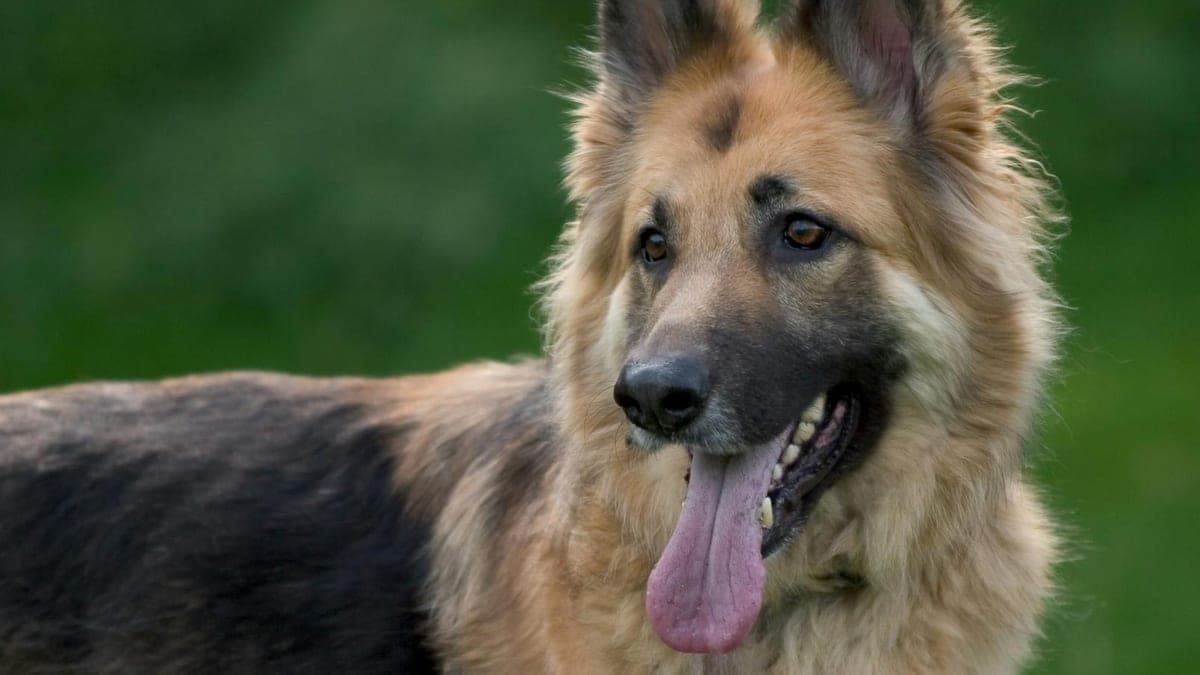
The Unlikely Friendship: My German Shepherd and the Rabbit
Story Subject
Atlas and Clover
Type
Dog
Read Time
7 min
Shared By
Tobias Green
Editor
Mr Pet Lover Admin
In This Guide
I adopted Clover, a four-pound Holland Lop rabbit, with the full expectation that she and Atlas would maintain a respectful distance across a pet gate for the rest of their respective lives.
This plan did not survive the first week.
The Introduction
German Shepherds have a high prey drive. This is a fact of the breed. Atlas is trained, calm, and responsive — but he is still a dog whose instincts were built for exactly the category of small, fast-moving animal that Clover represented.
I introduced them carefully: Atlas on leash, Clover in her enclosure, fifteen minutes at a time over several days. Atlas was intensely curious — nose pressed to the enclosure wire, tail moving slowly, which our trainer said indicated controlled interest rather than hunting arousal.
By day four, Clover had stopped thumping (her alarm signal) when Atlas approached. She had begun moving toward his side of the enclosure to sniff him from her end.
The First Supervised Contact
After two weeks, I allowed supervised contact: Clover free in the living room, Atlas leashed beside me. He lay down. She approached him.
She groomed his face for approximately forty-five seconds.
Atlas did not move. He looked at me with an expression I can only describe as bewildered gratitude.
Now
They share the living room freely under my supervision. Clover grooms Atlas's ears. Atlas allows this with a patience that has impressed everyone who witnesses it. He does not chase her. She does not thump at him.
They nap in proximity on weekend afternoons — not touching, but close enough that both are clearly aware of the other and unbothered.
I do not leave them unsupervised. Prey drive exists regardless of established relationship. But within the bounds of supervised cohabitation, they have built something that continues to mildly astonish me.
Multi-species households require careful management. The key is slow introductions and maintaining supervision until long-term comfort is established.
Can a dog and a rabbit really live together?
The honest answer starts with our own breed profile, and it isn't reassuring. The German Shepherd is, in the profile's words, a high-drive working dog whose intelligence and instincts were engineered for pursuit — and on the site's own rating the breed is marked not reliably good with other pets. A four-pound rabbit sits squarely in the category of small, fast-moving animal those instincts were built to chase. So the real answer is not a clean yes.
What makes cohabitation possible — for some individual dogs, with the right owner — is that prey drive can be managed, not that it disappears. A rabbit is a prey animal, and the danger runs both ways: a single reflexive grab can be fatal, and so can the stress of simply being chased. Rabbits hide illness and can decline quickly from fear, which is why "living together" here never means the two are left loose in a room alone. It means the permanently supervised, managed arrangement the story above describes. If you want a low-effort pairing, a Shepherd and a rabbit is not it — and browsing our other dog breeds for a calmer disposition toward small pets is fair to do before you commit.
Introducing a high-prey-drive dog to a small pet, safely
Slow, structured, and reversible is the whole method — closer to weeks than days.
- Secure the rabbit's own space first. A rabbit needs a safe retreat it fully controls before any dog is in the picture; our rabbit housing guide covers the enclosure and bunny-proofing that make that retreat real. The dog should never be able to reach it.
- Scent before sight. Let each animal investigate the other's bedding or a swapped blanket for several days, so the first face-to-face is not the first encounter.
- Barrier introductions, dog leashed and calm. Keep the rabbit enclosed and the dog on a loose leash beside you, in short sessions. Reward calm attention and end before the dog gets aroused — you are building a boring, unremarkable association, not a stand-off.
- A trained baseline is non-negotiable. Our German Shepherd care guide is emphatic that early socialization and reliable obedience are not optional extras for this breed. A solid "leave it" and a settled down-stay are what you lean on here.
- Read the body language and respect it. Loose, soft, able-to-look-away is fine. A hard fixed stare, stiffening, a closed mouth, whining, or an inability to disengage means end the session calmly and go back a step.
- Never leave them alone together. This is the rule that does not relax with time. Prey drive is instinct, not a phase a good relationship cures — a barrier or separate rooms whenever you are not actively watching is permanent, not temporary.
- Know when it won't work. A dog that fixates, lunges, or genuinely cannot settle around the small pet, or a rabbit showing chronic stress — hiding, off its food, repeatedly thumping — means the pairing isn't safe. Keeping them permanently separated is a responsible outcome, not a failure.
What Atlas and Clover taught me about prey drive and patience
A year of watching a German Shepherd let a rabbit groom his ears has not convinced me that prey drive is a myth — it has convinced me of the opposite. What made this work was never that Atlas stopped being a Shepherd; it was slow introductions, a rabbit who always had somewhere safe to go, obedience I could trust, and one rule I have never once broken: I do not leave them alone together. That is the honest lesson. Not that any dog and any rabbit can be friends, but that the ones who manage it are the households where the human treats the instinct as real and permanent. Clover is safe because I never forget what Atlas is.
Questions About Atlas and Clover
Common questions answered to help you better understand this story
Some can, under permanent supervision — but it is never guaranteed and depends heavily on the individual dog. A rabbit is a prey animal, and even a friendly dog's chase reflex can injure or fatally frighten one in seconds. Safe cohabitation means barriers or separate spaces whenever you are not actively watching, a rabbit with its own secure retreat, and a dog with reliable obedience. Loose, unsupervised togetherness is not a safe goal for any dog-and-rabbit household.
Go slowly and keep every step reversible, over weeks rather than days. Start by swapping scent (bedding or a blanket) before any meeting. Then do short barrier sessions with the rabbit enclosed and the dog on a loose leash beside you, rewarding calm and ending before the dog gets excited. Only much later, and only if the dog stays relaxed, allow closer contact with the dog still leashed. Never rush to unsupervised access — see our rabbit housing guide for the secure setup this depends on.
Not by default. Our German Shepherd breed profile describes a high-drive working dog and rates the breed as not reliably good with other pets, precisely because its instincts target small, fast-moving animals. Individual, well-trained Shepherds can learn to coexist with a rabbit under strict supervision, as the story above shows, but this is an outcome you manage carefully — not a safe assumption to make about the breed.
Prey drive is the instinctive sequence — orient, stalk, chase, grab — that many dogs feel toward small, fast-moving animals, and in working breeds like the German Shepherd it is strong and easily triggered. It is not aggression or a training failure; it is hardwired instinct. That is why it can be managed with obedience and supervision but never fully trained away, and why a small prey pet is never left alone with a dog that has it.
Watch for a hard, fixed stare that the dog can't break, a stiff or frozen body, a closed tense mouth, whining or trembling with excitement, lunging, or an inability to settle or respond to you near the small pet. Any of these means end the session calmly and increase distance. If they persist across careful, gradual sessions, the pairing isn't safe, and permanent separation is the right, responsible call.
Didn't find your answer?
Get in touch →More Stories
Get more stories like this
Weekly heartwarming pet stories and care tips, straight to your inbox.
No spam, ever. Unsubscribe anytime.