
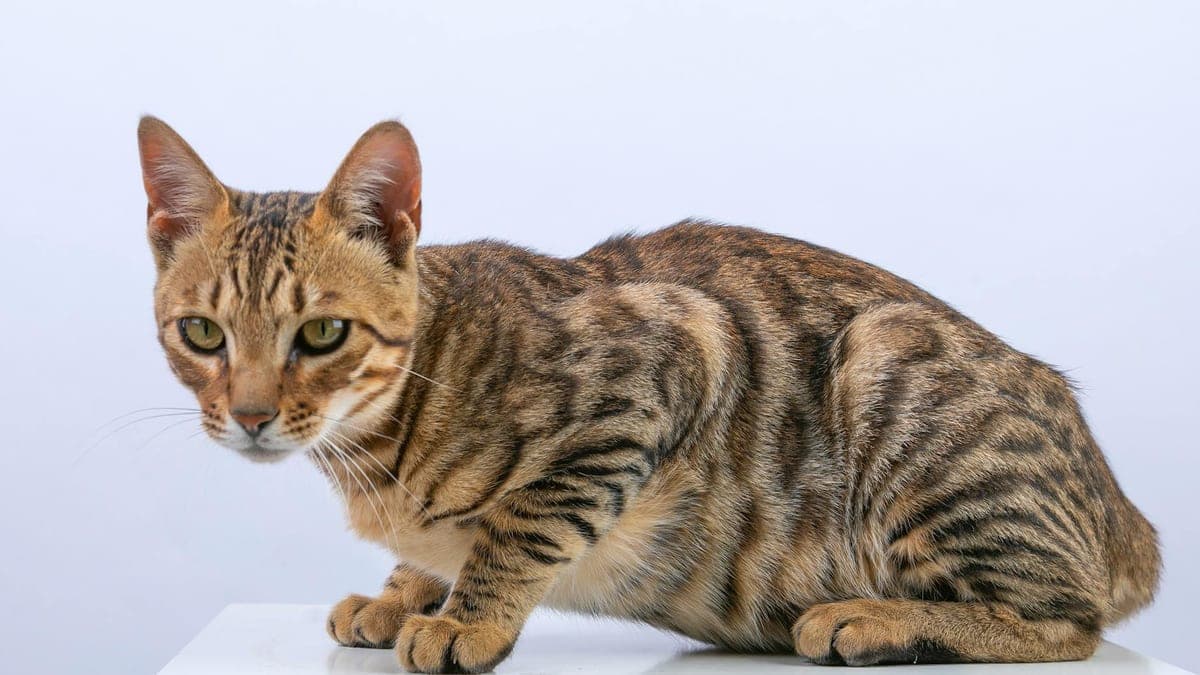
Our Cat's Indoor Enrichment Overhaul — And Why It Saved Our Furniture
Story Subject
Cosmo
Type
Cat
Read Time
10 min
Shared By
Dana and Will Chow
Editor
Mr Pet Lover Admin
In This Guide
Cosmo cost us two couches.
He is a Bengal cat — a breed that is approximately 40% domestic cat and 60% concentrated energy in a spotted package — and we got him without fully understanding what that meant in practical terms for indoor living.
What it meant: Cosmo needed to hunt, problem-solve, climb, sprint, and scratch approximately six times as much as a typical domestic cat. What we gave him: a two-bedroom apartment and occasional toy dangles.
The couches didn't stand a chance.
Understanding the Problem
Our vet referred us to a feline behaviorist after the second couch. Dr. Reyes spent an hour observing Cosmo's behavior during a home visit and delivered a diagnosis that was obvious in retrospect: "He's bored. He's been bored since you got him. Everything he's destroying represents an attempt to meet needs you haven't provided an outlet for."
The scratching wasn't spite. It was displacement behavior — energy and frustration finding the path of least resistance, which happened to be our upholstery.
The Enrichment Overhaul
We restructured the apartment around Cosmo's needs:
Vertical space: Two floor-to-ceiling cat trees plus wall-mounted shelving that created a circuit — Cosmo could now traverse the living room at ceiling height without touching the floor.
Designated scratching surfaces: Six sisal posts placed at the exact locations Cosmo had been scratching (couches, door frames, one particular corner). Cats return to familiar scratching locations — redirect to an acceptable surface at that location rather than moving the post to where you'd prefer it.
Hunt-based feeding: Kibble in puzzle feeders, hiding spots, and slow-feeder mats. Cosmo now "hunts" three meals per day rather than eating from a bowl. Feeding time is mentally exhausting for him in the best way.
Play sessions: Twenty minutes, twice daily, with wand toys that mimic prey movement. The key is proper play — prey-like motion, allowing Cosmo to "catch" periodically, ending with a small food reward so the hunt feels complete.
Six Months Later
We haven't bought a new couch yet. We have one couch with a cover, which Cosmo does not touch because four sisal posts are positioned at the corners he previously preferred.
He is calmer. He sleeps more. He scratches appropriately. He solicits play at specific times and is satisfied by the sessions we provide.
What we were missing was this: a bored Bengal is a destructive Bengal. A stimulated Bengal is a spectacular animal to live with.
Bengal cats require significantly more enrichment than average domestic cats. Read our breed profile before adopting one.
Why an indoor Bengal needs enrichment more than almost any cat
Dr. Reyes's verdict — "he's bored" — was not a Cosmo quirk; it is the most predictable thing about the breed. Our own Bengal profile puts the Bengal's energy level and social needs at the very top of the scale and lists its temperament as alert, agile, energetic, demanding, and intelligent — a cat created by crossing domestic cats with the wild Asian leopard cat, whose athleticism and problem-solving are, in the profile's words, "the wild ancestry showing through in a domestic package." The consequence is stated plainly: without daily interactive play, vertical space, and enrichment, that intelligence "turns into countertop chaos, yowling, and destruction," and an under-stimulated Bengal becoming destructive and loud is the leading reason the breed is rehomed.
That reframes the ruined couches. The scratching, the sprinting, the raids on the counters were not behavior problems layered on top of an otherwise content cat; they were the visible symptoms of a need nobody had answered — exactly as the behaviorist said. It is also why the breed is explicitly wrong for anyone wanting a calm lap cat: the same intelligence that lets a Bengal open cupboards and learn tricks is what has to be aimed at a job every single day. Enrichment for this cat is not indulgence. It is the maintenance schedule the animal came with, and the couches were the invoice for skipping it.
Building vertical territory: turning the walls into a highway
The ceiling-height circuit Cosmo now patrols is not a luxury build; it is the first item on our indoor cat care guide's environmental-enrichment checklist. Indoor cats, the guide explains, "depend entirely on you for stimulation, exercise, and environmental variety" — the climbing, patrolling, and territory an outdoor cat takes for granted has to be engineered indoors, and vertical space (a cat tree, wall shelves, a window perch) is how you give a floor-bound animal three-dimensional room to live. For a Bengal the point is sharper still: the breed profile describes them flatly as "climbers who need vertical territory," which is why tall cat trees and shelves sit beside daily play in the breed's own care summary rather than counting as extras.
Height does specific work. It multiplies usable space in a small apartment without a bigger footprint; it gives a nervous or overstimulated cat somewhere to retreat and survey from; and — paired with a window view of birds and street activity, another checklist item — it hands an indoor hunter something to watch all day. Cosmo traversing the living room without touching the floor is precisely the outcome the guide aims at: an environment rich enough that the cat stops inventing its own, usually destructive, entertainment.
Protecting the furniture: redirect the scratch, don't punish it
The couches were never really the target — they were just the best scratching surface Cosmo could find. Scratching is a normal behavior an indoor cat has to perform somewhere, which is why our indoor cat care guide lists scratching surfaces — "both vertical and horizontal" — as an enrichment essential rather than a nice-to-have. Take the outlet away and the cat does not stop scratching; it scratches your upholstery.
The move that saved the furniture was the one the behaviorist prescribed and the one Cosmo's story demonstrates: put an acceptable surface at the exact spot the cat already chose, rather than in the corner you would prefer. Because cats return to familiar scratching locations, six sisal posts at the couches, door frames, and that one particular corner met the behavior where it already lived; the single surviving couch stays intact because four posts now guard the corners Cosmo used to prefer. Punishment does the opposite of what owners hope — it adds stress to a cat the breed profile already describes as prone to "talk" loudly and act out when under-stimulated. Give a better target in the right place, and the expensive one stops being interesting.
Feeding and play that satisfy the hunt
Cosmo "hunts" three meals a day now, and that phrasing is doing real work. The indoor cat care guide is emphatic that free-feeding dry food is "the leading cause of feline obesity" and that indoor cats are twice as likely to be overweight as outdoor ones — so measured meals delivered through puzzle feeders and food-dispensing toys solve two problems at once, controlling calories while making the cat work for them. Weight is not a cosmetic concern here: the Bengal profile notes that obesity directly compounds the breed's heart (HCM) and joint risks, making a lean body condition a genuine health control rather than vanity. Body-score monthly — ribs easily felt, a visible waist from above — and feed to that, not to the bowl. Hydration rides along with it: Bengals are reported prone to lower-urinary-tract trouble, and because cats chronically underdrink, the guide's advice to add a pet fountain and lean on wet food is enrichment and health cover at once.
Play is the other half. The guide prescribes two focused 10–15 minute sessions timed to a cat's crepuscular dawn-and-dusk peaks, using wand toys that let the cat stalk, chase, and — critically — catch; a session that never lets the cat win, or a laser dot that never lands on something physical, leaves the hunt unfinished and the cat wound up. Cosmo's twenty-minute wand sessions ending in a food reward follow the guide's "play, eat, groom, sleep" sequence, which it names as the single most effective fix for 3 a.m. zoomies. For a Bengal — whose care summary asks for two or more interactive sessions daily, plus clicker tricks and even leash walks — that rhythm is the floor, not the ceiling.
What Cosmo taught us about a bored Bengal
Six months on, the lesson is not that we bought the right products — it is that we finally read the cat we already had. Everything Cosmo destroyed was a request we hadn't answered: to climb, to hunt, to scratch, to be handed a job. The couches were never the real problem, and a bigger apartment would not have fixed them; the fix was matching our routine to a breed whose energy and intelligence sit at the very top of the scale. Give a Bengal vertical territory, meals it has to hunt for, scratching posts where it already scratches, and real daily play, and the "destructive" cat turns out to be — in the only words that fit — a spectacular animal to live with. If you are weighing one, read the breed profile and browse our other cat breeds honestly first: the enrichment is the commitment, and for this cat it is not optional.
Questions About Cosmo
Common questions answered to help you better understand this story
Recreate what an outdoor cat gets for free. Our indoor cat care guide's essentials are vertical space (a cat tree, wall shelves, a window perch), scratching surfaces both vertical and horizontal, hiding spots, puzzle feeders, a window view of outdoor activity, and toys rotated every few days so they stay novel. High-energy breeds like the Bengal need the full set daily, not occasionally.
Two focused 10–15 minute interactive play sessions a day, timed to dawn and dusk when cats are naturally most active, do more than a motorized toy left running for an hour. Use wand toys that mimic prey and let the cat actually catch them, feed a meal straight afterward to complete the hunt-eat-sleep cycle, and rotate toys every few days so they stay interesting.
Give a better surface in the same place — not punishment. Scratching is normal, so provide sturdy posts, both vertical and horizontal, placed at the exact spots the cat already uses, since cats return to familiar scratching locations. Cover or block the furniture temporarily while the new posts take over. Punishing a cat adds stress and rarely stops the scratching; redirecting it does.
Yes. Cats are climbers, and our indoor cat care guide lists vertical space — a cat tree, wall shelves, a window perch — as a core enrichment essential because it multiplies usable territory and gives a cat somewhere to retreat and survey from. For climbing breeds like the Bengal it is close to mandatory: the profile calls tall cat trees and shelves part of basic daily care, not decoration.
Yes — they turn eating into the mental work a hunting animal is built for and slow down fast eaters. Our indoor cat care guide recommends puzzle feeders and food-dispensing toys for both enrichment and portion control, since free-feeding is the leading cause of feline obesity. Start easy and increase the difficulty as your cat learns, and count the food inside as part of the daily ration rather than as extra.
Didn't find your answer?
Get in touch →More Stories



Get more stories like this
Weekly heartwarming pet stories and care tips, straight to your inbox.
No spam, ever. Unsubscribe anytime.