
The Labrador Who Got Fat and the Diet That Saved His Life
Story Subject
Murphy
Type
Dog
Read Time
12 min
Shared By
Grace and Sam Kim
Editor
Mr Pet Lover Admin
In This Guide
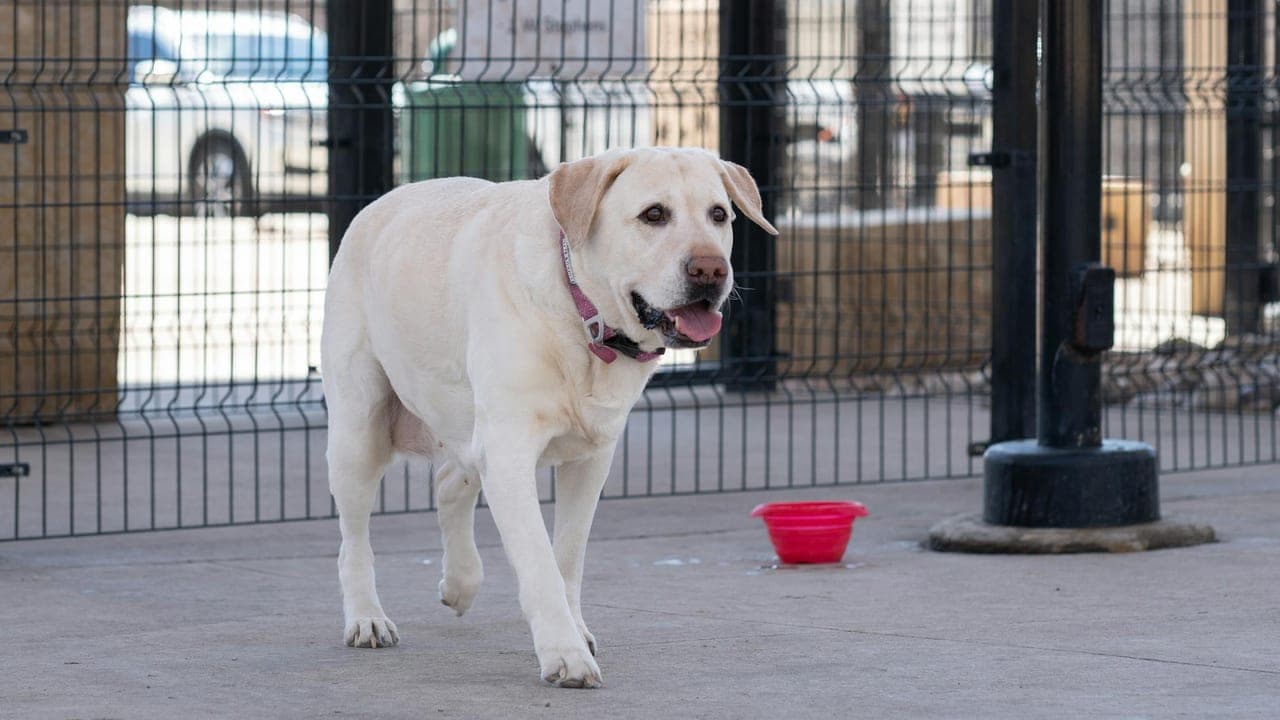
At Murphy's six-year checkup, our vet pulled up a body condition scoring chart, pointed to a diagram of a dog that looked like a barrel wearing a head, and said: "Murphy is here."
Murphy was at a 8 out of 9 on the obesity scale. He weighed 108 pounds. A healthy male Labrador Retriever his height should weigh approximately 75.
"He should not be able to use stairs comfortably," Dr. Park said. Murphy had been laboring up stairs for a year, which we had attributed to aging. It was weight.
How It Happened
Labs have what researchers now call a "food drive mutation" — a variant in a gene called POMC that affects the satiety signal. Many Labs don't feel full the way other dogs do. They experience hunger as a baseline state.
Murphy had this. We also had generous hands with treats, a rotating cast of family members who interpreted begging as starvation, and a kibble brand that was calorie-dense without the protein satiation to match.
None of this was visible day-to-day. Obesity in dogs accumulates the same way it does in people: incrementally, until a chart at a vet visit reveals what daily life had obscured.
The Plan
Dr. Park referred us to a veterinary nutritionist — something I didn't know existed and would recommend to any owner managing canine weight. She designed a specific plan: a reduced-calorie prescription diet, strict portioning (using a kitchen scale, not a scoop), all treats counted against daily calories, and a graduated exercise increase starting at 15 minutes twice daily.
We instituted a house rule: one person feeds Murphy, one portion, weighed each day. No exceptions for visiting grandparents.
This was harder to enforce than the diet itself.
Fourteen Months Later
Murphy weighs 79 pounds. His body condition score is 4.5. He runs up stairs. He has rediscovered a lower-body enthusiasm for fetch that we thought he'd lost permanently.
The hardest part wasn't the diet. It was the way Murphy looked at us during the calorie reduction period — with an expression of profound, communicative disappointment that I still feel slightly guilty about.
He's fine. He doesn't hold grudges. Labs don't.
Labrador Retrievers have a genetic predisposition to obesity. Learn more about managing Lab weight in our Labrador care guide.
Why Labradors gain weight faster than almost any other breed
Murphy's "food drive mutation" is not folklore, and it is not a failure of willpower on his part. A large share of Labradors carry a documented deletion in the POMC gene that blunts the satiety signal — the biochemical "I'm full" message most dogs get after a meal. Our own Labrador Retriever breed profile lists this as the breed's defining health-management issue: Labs are genuinely hungrier than most dogs and will eat themselves obese if you free-feed. Grace and Sam's begging-obsessed, grandparent-fed household didn't create Murphy's appetite; it simply gave a hard-wired appetite room to run.
That matters because it reframes the whole problem. If you treat a Lab's weight as a discipline problem — "he just needs to eat less and want it less" — you will lose, because the wanting is built into the dog. The breed care summary is blunt about where the leverage actually is: calories and exercise are the two levers you control completely. Weight in a Lab is described as the single highest-impact decision in this breed, because obesity here is not cosmetic — it directly accelerates the hip dysplasia, elbow dysplasia, and osteoarthritis Labs are already predisposed to, and it raises the risk of diabetes. Murphy laboring up the stairs for a year was that acceleration happening in slow motion.
So the honest starting point for any overweight-Lab owner is the same one Grace and Sam arrived at the hard way: the appetite is not going to fix itself, and the environment around the bowl is the thing you change.
How vets actually decide a dog is "overweight" — body condition scoring
The chart Dr. Park pointed at has a name: a body condition score (BCS), the standard veterinary tool for judging fat independently of the number on the scale. Most clinics use a 9-point scale, where a 4–5 is ideal, and each point above ideal corresponds to roughly 10% over a dog's healthy weight — which is why an 8/9 like Murphy is described as clearly, structurally obese rather than merely "a bit chunky."
The useful part is that you can run a rough version of the same assessment at home, and our breed profile spells out the pass/fail signs for a Lab specifically:
- Ribs: you should be able to feel them easily with light pressure, like the back of your hand — not have to press through a pad of fat to find them.
- Waist: looking down from above, there should be a visible tuck behind the ribcage; a straight-sided "barrel" outline (Murphy's, exactly) is a fail.
- Profile: from the side, the belly should tuck up toward the hips rather than hang level or sag.
The breed care guidance turns this into a live feedback loop rather than a one-time verdict: keep ribs easily palpable with a visible waist from above, and if the waist disappears, cut portions by about 10% and re-check in three weeks. That is the same instrument Grace and Sam ended on — Murphy's BCS moving from 8 to 4.5 is the real measure of success, more than the 108-to-79 headline, because it confirms the loss was fat and the target was set to his frame, not to a generic breed average.
Building a safe weight-loss plan: measured feeding and a vet-set target
The plan a veterinary nutritionist built for Murphy — reduced-calorie diet, scale-weighed portions, treats counted, exercise ramped — maps almost exactly onto the standing feeding advice in our Labrador care guide and breed profile. The pieces, in the order they matter:
- Start from a target weight, not a bag chart. The feeding guidance on a pet-food bag is calibrated to an average dog of that size and routinely overfeeds a spayed, lower-activity pet. A vet sets a goal weight from the dog's frame and body condition, then rations calories to that number — the reason Murphy's nutritionist referral was worth it.
- Measure by weight, never by scoop. The breed care summary is explicit: feed two measured meals from a scale, because a "scoop" quietly drifts 20–30% heavier over time. This single change — the kitchen scale over the coffee mug — is the highest-yield habit in the whole plan.
- Count treats against the daily total. Standard canine nutrition guidance holds treats to no more than 10% of daily calories, and our breed profile recommends swapping in low-calorie vegetables (green beans, carrot) for training rewards so a food-driven Lab still gets the ritual without the calories.
- Kill free-feeding and the multi-feeder problem. The care guide calls free-feeding strongly discouraged for this breed. Grace and Sam's "one person feeds Murphy, one weighed portion" house rule is the practical form of that — the grandparents topping up the bowl were, unknowingly, running a parallel diet.
- Consider a prescription reduction diet for big losses. For a dog with a lot to lose, vets often use a therapeutic weight-loss food (higher protein and fiber, lower calorie density) so the dog stays full on fewer calories — exactly the "protein satiation" gap Grace and Sam identified in Murphy's old kibble.
None of this requires guesswork or a fad. It is portion discipline, applied to a breed whose appetite makes portion discipline unusually load-bearing.
How fast should a dog lose weight — and how to add exercise without hurting the joints
The instinct is to crash-diet the weight off. Don't. Most veterinary weight-management guidance targets roughly 1–2% of body weight lost per week for dogs — deliberately slow, so the dog loses fat rather than muscle and doesn't tip into other problems. That pace is why Murphy's journey took fourteen months, not fourteen weeks, and the slowness is a feature: a gradual, sustainable loss is far less likely to rebound than a dramatic one.
Exercise is the second lever, but for an already-overweight, joint-vulnerable Lab it has to be ramped, not launched — which is precisely why the nutritionist's plan started at 15 minutes twice daily. A few rules the breed guidance supports:
- Build up gradually. A dog carrying 30 extra pounds has more strain on already at-risk hips and elbows; loading it with a sudden hour of hard exercise invites injury. Short, frequent, low-impact sessions first, lengthening as the weight comes down.
- Swimming is close to ideal. The breed profile singles out swimming as high cardio, joint-sparing, and a breed favorite — the water carries the weight the joints can't yet afford to. For a heavy Lab, it is often the safest way to burn real calories early.
- Mind the joints in growth and old age. The care guidance warns against forced repetitive exercise (long jogs, stairs) for puppies until 12–18 months while growth plates close, and for seniors it recommends adjusting for existing joint issues rather than pushing through them.
- Fixing the inputs usually fixes the behavior. The breed's own decision rule: if your Lab is gaining weight or destroying the house, the answer is almost never a diet pill or a crate — it is more exercise and a measured bowl. Treat the inputs before the symptoms.
A full weight-loss program should always be run with your own vet weighing the dog regularly and adjusting the ration — the 1–2% figure is a guide rail, and the recheck is what keeps the loss on target and healthy.
What Murphy actually got back: the case for keeping a Lab lean
The reason all of this is worth fourteen months of grandparent-management is not vanity. In a landmark lifetime study of Labradors, cited in our own breed FAQ, dogs kept lean lived roughly two years longer than their overweight littermates — the same dogs, same genetics, split only by how much they were fed. For a breed whose baseline lifespan is 10–12 years, two years is a staggering return on a kitchen scale.
And the near-term dividend is the one Grace and Sam saw first. The breed profile ties excess weight directly to the hip, elbow, and arthritis problems Labs are prone to; take the weight off and you take pressure off those joints. Murphy running up stairs he'd labored on for a year, rediscovering fetch — that is not sentiment, it is a lighter dog moving a joint-friendly frame. The lesson the study makes clinical, Murphy made visible: with this breed, the feeding discipline, more than the genetics, decides whether your Lab sees the top or the bottom of its lifespan.
What Murphy's fourteen months taught us about a food-driven breed
If there's a single thing to take from Murphy's chart-to-fetch turnaround, it's that his weight was never a mystery of metabolism or a moral failing — it was a hard-wired Labrador appetite meeting a house that fed it. Grace and Sam didn't fix Murphy with a miracle diet; they fixed the environment around him: one feeder, one weighed portion, treats counted, exercise added a careful fifteen minutes at a time, and a vet-set target to aim at. The hardest part, they'll tell you, wasn't the reduced-calorie food — it was enforcing the house rule against a dog who has genuinely never felt full, and against grandparents who read begging as hunger. That's the real work with this breed. Do it, and an 8-out-of-9 barrel becomes a 4.5 who runs up the stairs — and, if the longevity research holds, a dog who gets a couple more years to do it.
Questions About Murphy
Common questions answered to help you better understand this story
Work from a vet-set target weight, not the bag chart. Feed two measured meals weighed on a kitchen scale, switch to a lower-calorie or prescription reduction diet if there's a lot to lose, hold treats to under 10% of daily calories (low-calorie veg for rewards), and eliminate free-feeding. Add exercise gradually — swimming is ideal for a joint-vulnerable Lab. Have your vet reweigh regularly and adjust the ration.
A healthy Labrador weighs about 25–36 kg (roughly 55–79 lb) per our breed profile, with males toward the top of that range and females lower. The scale number matters less than body condition: you should feel the ribs easily and see a waist tuck from above. If you can't, the dog is likely overweight regardless of where it falls in the range.
Slowly. Most veterinary weight-management guidance targets around 1–2% of body weight per week, so the dog loses fat rather than muscle and the loss lasts. That's why substantial reductions take many months, not weeks. Crash dieting risks muscle loss and rebound. Have your vet set the pace, weigh the dog regularly, and adjust the food as the target gets closer.
It's biology, not bad manners. A large share of Labs carry a POMC gene deletion that blunts the "I'm full" satiety signal, so they're genuinely hungrier than most breeds and won't self-regulate. The fix is structural, not willpower: measure every meal by weight, feed on a schedule, use low-calorie vegetables as training rewards, and never free-feed. Manage the bowl and you manage the dog.
Use a body condition score. Vets use a 9-point scale where 4–5 is ideal and each point above adds roughly 10% over healthy weight. At home: you should feel the ribs easily with light pressure, see a waist tuck behind the ribcage from above, and see the belly tuck up from the side. A straight-sided "barrel" outline and hard-to-find ribs mean it's time to talk to your vet about a plan.
Yes, and the effect is large. A landmark lifetime study of Labradors found lean-fed dogs lived about two years longer than their overweight littermates — same breed, same genetics, differing only in food intake. Excess weight also directly worsens the hip, elbow, and arthritis problems Labs are prone to. For a breed that lives 10–12 years, disciplined feeding is one of the highest-impact things an owner controls.
Didn't find your answer?
Get in touch →More Stories

Get more stories like this
Weekly heartwarming pet stories and care tips, straight to your inbox.
No spam, ever. Unsubscribe anytime.