
Understanding Your Cat's Body Language: 15 Signals Decoded
Not individually reviewed by a veterinarian. Read our editorial standards.
Last updated:
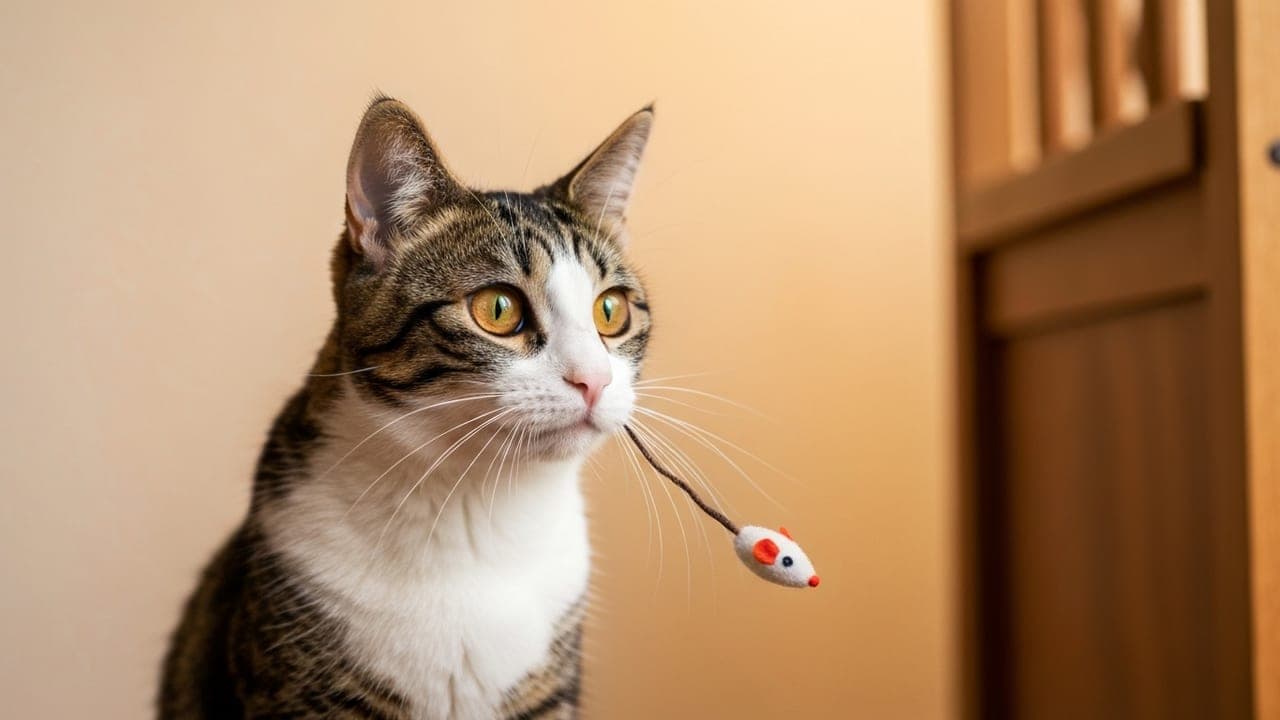
- A slow blink from your cat is a sign of trust — blink back to communicate affection
- Tail position is the most reliable mood indicator: up = happy, puffed = frightened
- Forward ears mean curious/friendly; flattened ears mean scared or aggressive
- A belly-up cat is not always inviting a belly rub — it can be a defensive position
- Dilated pupils in bright light can signal excitement, fear, or pain
Your cat has been staring at you from across the room for three full minutes, pupils wide, tail flicking at the tip. Is she planning something adorable or something destructive? Reading cat body language is one of the most useful skills any cat owner can develop — and most people get it wrong more often than they realize.
Cats communicate constantly. They use their tail, ears, eyes, body posture, and voice to tell you exactly how they feel. The problem is that feline signals don't follow the same rules as canine ones, and misreading them can damage the trust your cat has placed in you.
How to Read Tail Positions
A cat's tail is her most expressive feature. Learning to read it accurately changes how you interact with your cat.
Straight up is a greeting signal. When your cat walks toward you with her tail raised vertically, she's saying she's happy to see you. A slight curve or hook at the very tip adds warmth — think of it as an exclamation point on a friendly hello. Siamese cats are famous for their enthusiastic vertical tail greetings.
Puffed up like a bottle brush means fear or defensive aggression. Your cat is making herself look bigger to intimidate a perceived threat. Give her space and remove whatever is causing the reaction.
Tucked between the legs signals anxiety, fear, or submission. A cat in this posture feels vulnerable. Don't force interaction — let her come to you when she's ready.
Slow, sweeping swish indicates focused concentration. Your cat is locked onto something — a bird outside the window, a toy, or a spot on the wall only she can see. This is hunting mode.
Rapid, hard thrashing is a warning. Unlike dogs, whose tail wagging signals happiness, a thrashing cat tail means irritation or overstimulation. If you're petting your cat and the tail starts thrashing, stop immediately. One more stroke and you'll probably get bitten.
Low and horizontal is neutral or uncertain. Your cat is assessing the situation and hasn't decided how she feels yet.
What Ear Positions Mean
Cats have over 30 muscles controlling each ear, giving them extraordinary expressiveness.
Forward-facing ears mean your cat is engaged, curious, and feeling confident. This is the default position of a relaxed, alert cat.
Ears rotated sideways (airplane ears) indicate growing anxiety or irritation. Think of it as a yellow light — your cat is moving from relaxed toward stressed. If a child is approaching your cat and you see airplane ears, redirect the child.
Ears flattened back against the head signal fear or aggression. A cat with flattened ears is either about to fight or about to flee. Either way, she's telling you she feels threatened. Give space immediately.
One ear forward, one back means your cat is processing conflicting signals. She's heard something interesting but isn't sure about it yet.
Decoding Eye Signals
Feline eye communication is subtle but powerful.
The slow blink is arguably the most important signal to understand. When your cat looks at you and slowly closes and reopens her eyes, she's expressing deep trust and affection. Researchers sometimes call this a "cat kiss." Try slow-blinking back — many cats will return the gesture. Bengal cats are particularly responsive to slow-blink exchanges.
Dilated pupils can mean excitement, fear, or playfulness, depending on context and lighting. In a bright room, dilated pupils suggest a strong emotional response. During play, it means your cat is in hunting mode. Combined with tense body posture, it signals fear.
Constricted pupils (thin slits) in normal light can indicate contentment, but they can also appear during aggressive focus. Context matters here — a relaxed body with slit pupils means contentment; a tense body with slit pupils means potential aggression.
Direct, unblinking stare is confrontational in cat language. Two cats staring each other down are engaged in a dominance contest. If a cat you don't know well is staring at you, break the gaze by slowly looking away. Never stare back.
Half-closed eyes mean your cat feels safe and relaxed. She may be about to fall asleep, or she's enjoying a peaceful moment.
Reading Body Postures
Full-body postures tell the complete story when individual signals are ambiguous.
The loaf — paws tucked under the body, tail wrapped around — is a resting position that signals moderate comfort. Your cat feels safe enough to relax but is keeping her feet ready just in case.
Belly up is a display of ultimate trust. Your cat is exposing her most vulnerable area. However — and this is where most people go wrong — belly exposure is not an invitation to touch the belly. Many cats will grab your hand with claws and teeth if you reach for it. She's saying "I trust you," not "please rub my stomach."
Arched back with fur standing on end is the classic Halloween cat pose. It's a defensive posture designed to make the cat look as large as possible. Your cat is frightened and may become aggressive if cornered.
Arched back with relaxed fur during a stretch is completely different — it's just a comfortable stretch, often paired with a request for back scratches.
Head bunting — when your cat presses her head or cheek against you — is both affection and territorial marking. Cats have scent glands on their cheeks, forehead, and chin. When she bunts you, she's claiming you as part of her social group.
Kneading (making biscuits) is a comfort behavior that originates from nursing. It means your cat feels safe, content, and possibly nostalgic for kittenhood. Read more about this fascinating behavior in our piece on why cats knead.
Understanding Vocalizations
While body language does most of the heavy lifting, vocalizations add important nuance.
Meowing is a sound cats developed primarily to communicate with humans, not other cats. Adult cats rarely meow at each other. The pitch and length convey different messages: short, high-pitched meows are greetings; long, low-pitched meows are demands or complaints; repeated meows indicate excitement or urgency.
Purring usually signals contentment, but cats also purr when stressed, in pain, or healing. Purring releases endorphins and promotes bone healing, which is why injured cats often purr. If your cat is purring but showing other signs of distress (hiding, not eating, flattened ears), the purring may be self-soothing rather than happiness.
Hissing and growling are clear warnings. Your cat is telling you — or another animal — to back off. Respect it every time.
Chattering (the rapid jaw movements cats make when watching birds through a window) likely reflects frustrated hunting instinct, excitement, or a predatory reflex. It's harmless and often entertaining to watch.
Trilling — a brief, musical, rising sound — is a friendly greeting. Mother cats trill to their kittens. When your cat trills at you, she's being affectionate.
Reading Signal Combinations
Single signals can be misleading. The real skill is reading combinations.
- Purring + slow blink + kneading = maximum contentment
- Flat ears + puffed tail + hissing = fear-based aggression — back away slowly
- Tail up + ears forward + slow approach = friendly greeting
- Dilated pupils + wiggling hindquarters + low crouch = about to pounce (playful)
- Airplane ears + tail thrashing + skin rippling = overstimulated — stop petting
Common Misunderstandings
Three myths cause more cat-owner miscommunication than anything else.
Myth 1: A wagging tail means happiness. In dogs, yes. In cats, a wagging or thrashing tail usually means irritation, not joy. The only exception is a gentle, slow swish during focused play.
Myth 2: Belly exposure means "rub my belly." It means "I trust you." Only about 30% of cats actually enjoy belly rubs. The rest will claw you for trying.
Myth 3: Purring always means happiness. Purring is a complex self-regulation behavior. Happy cats purr. So do stressed, sick, and dying cats. Always read purring in context with other body language.
Building a Better Bond
The more accurately you read your cat's signals, the more she'll trust you. Start by observing without interfering. Watch your cat during different activities — eating, playing, resting, looking out the window — and note which signals appear in which contexts.
Over time, you'll develop an intuition for your individual cat's communication style. Every cat has her own personality and her own variations on these universal signals. For more on feline quirks, explore why cats knock things off tables.
Explore all of our cat breed profiles to learn how different breeds express these signals in their own unique ways.
FAQ
Do cats communicate differently with different family members?
Yes. Cats adjust their communication style based on who they're interacting with. They often develop specific meow patterns for specific people — one tone for the person who feeds them, another for the person who plays with them. Studies show cats are more vocal with humans who respond to their vocalizations, creating personalized "languages" within each relationship.
Why does my cat stare at me without blinking?
An unblinking stare from your own cat (not a stranger cat) usually means she wants something — food, play, attention, or access to a closed room. It's less confrontational than it would be between two unfamiliar cats. Try offering a slow blink back. If she slow-blinks in return, she was just checking in. If she keeps staring, she probably wants something specific.
Can I teach my cat to understand my body language?
Cats already read human body language better than most people realize. Research shows cats can distinguish between happy and angry human facial expressions, and they respond differently to pointed fingers and gaze direction. You can strengthen this by being consistent — always approaching your cat slowly, blinking softly, and avoiding direct stares.
Why does my cat's behavior change at night?
Cats are crepuscular, meaning they're most active at dawn and dusk. Dilated pupils at night are normal due to low light. Increased energy, vocalizing, and hunting behavior in the evening reflect natural circadian rhythms, not mood changes. If nighttime activity is disruptive, increase play sessions in the early evening to tire your cat out before bedtime.
How do I know if my cats are playing or fighting?
Playing involves soft paws (claws retracted), taking turns being the chaser and the chased, and breaks where both cats relax. Fighting involves hissing, growling, puffed fur, flattened ears, claws out, and one cat consistently trying to escape. If you hear screaming or see fur flying, separate them immediately with a loud noise (clap or drop a book) — never with your hands.
Mr Pet Lover Team
The Mr Pet Lover team is dedicated to providing warm, accurate, and practical pet care advice backed by veterinary research and real-world experience.
Related Articles
Why Does My Cat Knead? The Science Behind 'Making Biscuits'
Kneading traces back to nursing instinct — but it also involves territory marking, comfort-seeking, and a deep bond with you.
Why Is My Cat Not Using the Litter Box? 8 Common Causes
Before blaming your cat, check for medical causes — 50% of litter box issues have a health component. A complete troubleshooting guide.

How to Help Your Dog with Thunderstorm Anxiety
Storm anxiety goes deeper than noise — barometric pressure, static electricity, and scent all play a role. Comfort strategies, medication, and long-term solutions.