
How to Help Your Dog with Thunderstorm Anxiety
Not individually reviewed by a veterinarian. Read our editorial standards.
Last updated:
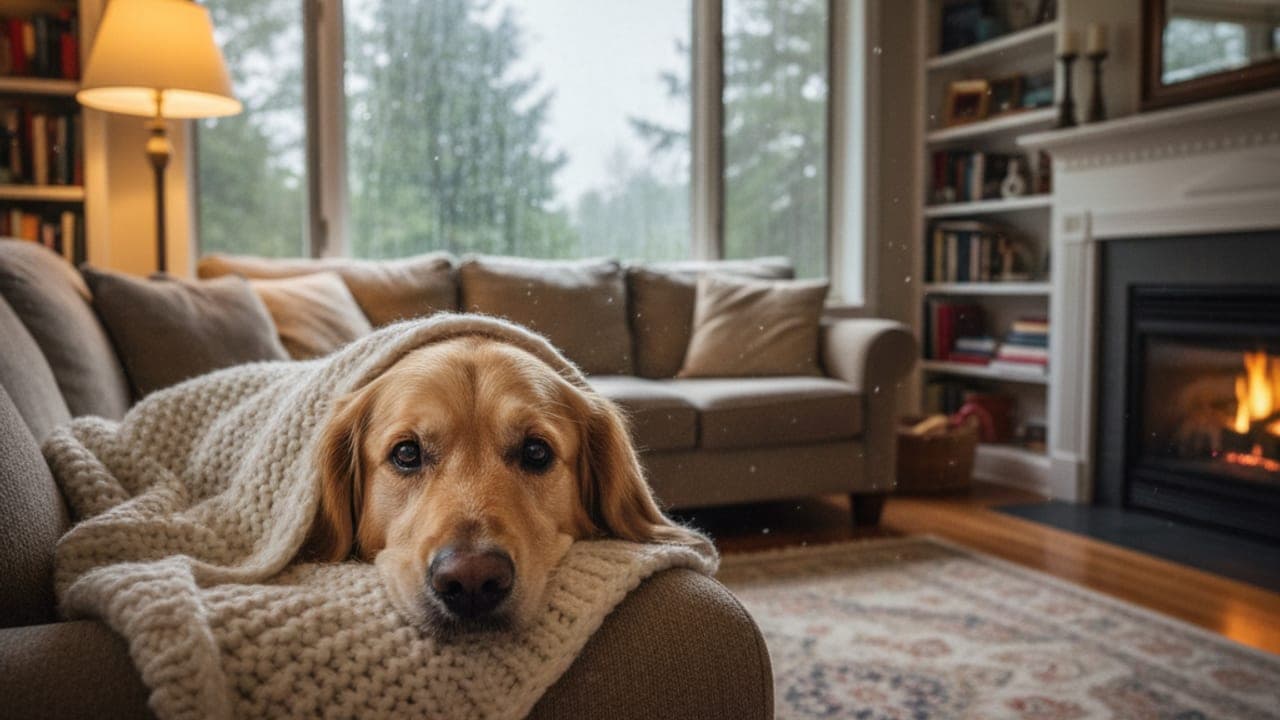
- Storm anxiety goes beyond noise fear — dogs sense pressure changes and static electricity
- A safe, enclosed space with white noise can reduce storm anxiety significantly
- Desensitization training during calm weather is the best long-term strategy
- Calming wraps, supplements, and prescription medication all have evidence of benefit
- Storm anxiety typically worsens each season without intervention — start early
The forecast shows thunderstorms tonight, and you already feel the dread — not for yourself, but for your dog. She'll pace, pant, tremble, hide in the bathtub, and refuse to eat until the last rumble fades. You've tried everything from holding her to ignoring her, and nothing seems to help. You're not imagining her suffering, and she's not being dramatic.
Thunderstorm anxiety affects an estimated 15–30% of dogs, and it's more complex than a simple noise phobia. Understanding what your dog is actually experiencing — and why standard advice often fails — is the first step toward genuine relief.
Why Thunderstorm Anxiety Is Deeper Than Noise Phobia
Most people assume thunderstorm fear is fear of loud sounds. If that were true, dogs with storm anxiety would react equally to fireworks, gunshots, and construction noise. Many don't. Some dogs who panic during thunderstorms are completely fine during fireworks.
Research suggests that thunderstorm anxiety involves multiple triggers layered together:
Barometric pressure changes. Dogs can detect drops in atmospheric pressure that precede storms, sometimes hours before the first thunder. This explains why some dogs become anxious before any audible signs of a storm.
Static electricity. Storms generate significant static charge. Dogs — particularly those with thick, double coats like German Shepherds and Border Collies — may experience uncomfortable static shocks from their coat during storms. Some researchers believe this explains why storm-anxious dogs often hide in bathtubs, behind toilets, or in basements — grounded spaces with less static buildup.
Changes in ozone and scent. The distinctive smell before a storm (ozone, petrichor) may trigger learned anxiety associations in dogs who have experienced storms before.
Sound. Yes, thunder is loud and startling. But it's the combination of sound with the other sensory inputs that makes thunderstorms particularly overwhelming.
Wind and vibration. The sound of wind against windows and walls, the vibration of the house during strong gusts, and the change in ambient noise all contribute.
This multi-sensory assault explains why thunderstorm anxiety is harder to treat than simple noise sensitivity — and why playing thunder recordings at gradually increasing volume (a standard desensitization technique for noise phobia) often doesn't work for storm anxiety.
Recognizing the Signs
Thunderstorm anxiety ranges from mild to severe. Signs include:
Mild: Restlessness, ears back, seeking proximity to owner, yawning, lip licking.
Moderate: Panting, pacing, trembling, hiding (closets, bathrooms, under furniture), refusing food, following you room to room, whining.
Severe: Destructive behavior (scratching at doors, breaking through windows or crates), self-injury, loss of bladder or bowel control, inconsolable panic that persists for hours after the storm passes.
Dogs with severe storm anxiety can injure themselves trying to escape perceived danger. Broken teeth from crate bars, torn nails from scratching at doors, and lacerations from broken windows are documented veterinary presentations.
Immediate Comfort Strategies
When a storm is approaching or happening, these strategies provide relief:
Create a safe space. Many storm-anxious dogs gravitate toward enclosed, interior spaces: closets, bathrooms, basements. Rather than fighting this instinct, make their chosen hideout comfortable — add a bed, blankets, and a piece of your worn clothing. An interior room away from windows reduces sound and light exposure.
Use white noise or calming music. Playing music, running a fan, or using a white noise machine can mask some of the thunder. Classical music specifically designed for dogs (Through a Dog's Ear) and reggae have been shown to reduce canine stress in studies.
Try a compression garment. The Thundershirt (or similar anxiety wraps) applies gentle, constant pressure to the torso, similar to swaddling an infant. Research shows it reduces anxiety symptoms in approximately 80% of dogs. It doesn't eliminate fear, but it takes the edge off.
Stay calm yourself. Your dog reads your emotions. If you're anxious about the storm or visibly stressed about your dog's behavior, she picks up on it. Maintain a calm, matter-of-fact demeanor. Provide comfort if your dog seeks it (the old advice to "ignore them or you'll reinforce the fear" has been debunked), but don't hover.
Anti-static strategies. Wipe your dog down with anti-static dryer sheets (unscented, if possible) or a damp cloth during storms. Some owners report improvement by grounding their dog — letting her lie on a tiled or concrete floor rather than carpet.
Long-Term Desensitization
While storm recordings don't perfectly replicate the multi-sensory experience of a real storm, systematic desensitization and counter-conditioning can still help.
Step 1: Play thunder recordings (available on YouTube or specialized apps) at very low volume — so low your dog barely notices.
Step 2: While the recording plays quietly, engage in something your dog loves: treats, play, training, or mealtime. Pair the sound with positive experiences.
Step 3: Gradually increase volume over weeks and months, always staying below the threshold where your dog shows anxiety. If she shows stress, you've moved too fast — go back a step.
Step 4: Add other storm elements gradually: flashing lights (a strobe on low), vibration (a subwoofer), and fans to simulate wind.
Limitations: This works best for mild to moderate cases and for the noise component specifically. It may not address barometric pressure or static sensitivity. Plan for 3–6 months of consistent practice.
For storm anxiety tips, see our deep dive on helping anxious dogs during storms.
Medication Options
For moderate to severe storm anxiety, medication is often the most humane and effective intervention. This is not a failure — it's medical treatment for a medical condition.
Situational Medications (Given Before or During Storms)
Trazodone — a serotonin modulator that provides mild sedation and anxiety reduction. Given 1–2 hours before a storm or at the first sign of anxiety. Widely prescribed and generally well-tolerated.
Sileo (dexmedetomidine) — an FDA-approved gel applied to the dog's gum tissue for noise aversion. Absorbed through the oral mucosa for rapid effect (30–60 minutes). Designed specifically for noise-related anxiety events.
Gabapentin — originally a seizure medication, increasingly used for anxiety and pain management. Provides sedation and anxiety relief. Given 2–3 hours before the event.
Alprazolam (Xanax) — a benzodiazepine that provides fast-acting anxiety relief. Effective but carries sedation side effects and potential for dependency with frequent use. Usually reserved for severe cases.
Daily Medications (For Dogs with Frequent or Severe Anxiety)
Fluoxetine (Prozac) or Sertraline (Zoloft) — SSRIs that take 4–6 weeks to reach full effect but provide consistent baseline anxiety reduction. Used for dogs whose anxiety extends beyond storms or who live in areas with frequent storms. Often combined with a situational medication for breakthrough events.
Never give human medications to your dog without veterinary guidance. Dosages differ dramatically between species, and some human anti-anxiety medications are toxic to dogs.
Calming Products: What Works and What Doesn't
| Product | Evidence Level | Notes |
|---|---|---|
| ThunderShirt | Moderate | ~80% report some improvement. Low risk. Worth trying. |
| Adaptil (pheromone diffuser) | Low–Moderate | DAP (dog-appeasing pheromone) plug-in. Some dogs respond, some don't. |
| CBD oil | Limited | Variable quality, limited research. Discuss with vet. |
| Calming treats (L-theanine, melatonin) | Low–Moderate | Mild effect. May help mild cases. Unlikely to help severe anxiety. |
| Thunder recordings (desensitization) | Moderate | Helpful for noise component. Doesn't address static/pressure. |
| Anti-static coat / grounding mat | Anecdotal | Not scientifically validated but low risk and inexpensive. |
What NOT to Do
Don't punish your dog for anxiety behavior. Punishing fear increases fear. Period.
Don't force your dog out of her hiding spot. If she's chosen the closet as her safe space, let her stay there. Forcing her into the open removes her coping mechanism.
Don't crate a severely storm-anxious dog. Dogs in full panic mode can injure themselves trying to break out of crates — broken teeth, torn nails, and lacerations are common. If your dog is crate-trained and chooses the crate voluntarily, that's fine. But a locked crate during a panic episode is dangerous.
Don't leave a severely storm-anxious dog alone during storms. If you know storms are coming, adjust your schedule if possible. Your presence alone provides significant comfort.
When in doubt, ask your vet about the best combination of behavioral and medical strategies for your individual dog. Storm anxiety is treatable, and your dog doesn't have to suffer through every storm season.
FAQ
Does storm anxiety get worse with age?
Usually, yes. Without intervention, storm anxiety tends to escalate over time. Each negative storm experience reinforces the fear cycle. Early intervention — even mild strategies like a Thundershirt and safe space — can prevent mild anxiety from becoming severe panic. Dogs who develop storm anxiety later in life (after age 5–6) may be experiencing age-related changes in hearing sensitivity or cognitive decline.
Can puppies develop storm anxiety?
Puppies can develop storm anxiety, especially during fear periods (8–11 weeks and 6–14 months). A single overwhelming storm experience during these sensitive periods can create lasting storm anxiety. During thunderstorms, keep puppies in a comfortable, enclosed space with background noise and provide positive associations (treats, play) if the puppy is willing.
Are certain breeds more prone to storm anxiety?
Herding breeds (German Shepherds, Border Collies, Australian Shepherds) and sporting breeds (Labrador Retrievers, Golden Retrievers) appear to be more commonly affected, though storm anxiety occurs across all breeds. Dogs with generally anxious temperaments and dogs with noise sensitivity are at higher risk.
Will my dog outgrow storm anxiety?
This is uncommon without intervention. Most dogs' storm anxiety remains stable or worsens over time. The combination of safe space management, counter-conditioning, and appropriate medication provides the best outcome. Early intervention gives the best long-term prognosis.
Is it okay to comfort my dog during a storm?
Yes. The outdated advice that comforting a fearful dog "reinforces the fear" has been thoroughly debunked by veterinary behaviorists. Fear is an emotion, not a behavior — you cannot reinforce an emotion. If your dog seeks comfort, provide it. Calm petting, a soothing voice, and physical proximity help most anxious dogs.
Mr Pet Lover Team
The Mr Pet Lover team is dedicated to providing warm, accurate, and practical pet care advice backed by veterinary research and real-world experience.
Related Articles

Do Dogs Dream? The Science of Canine Sleep
Dogs enter REM sleep and dream about their daily lives — research confirms it. What science reveals about your dog's sleeping brain.
Why Does My Dog Eat Grass? 5 Reasons Explained
Dogs eat grass for five main reasons — from ancient instinct to simple enjoyment. Learn when it's normal and when to call your vet.
Why Does My Cat Knead? The Science Behind 'Making Biscuits'
Kneading traces back to nursing instinct — but it also involves territory marking, comfort-seeking, and a deep bond with you.