
Do Dogs Dream? The Science of Canine Sleep
Not individually reviewed by a veterinarian. Read our editorial standards.
Last updated:
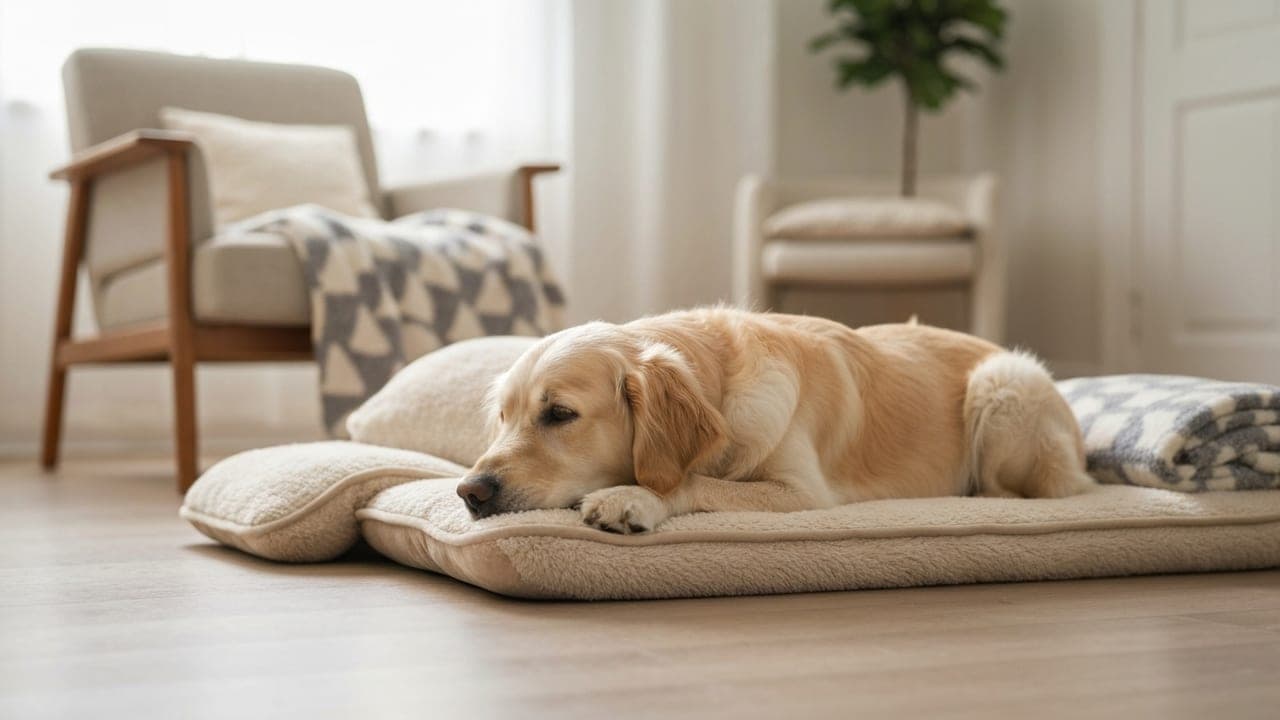
- Yes — dogs experience REM sleep and likely dream about daily activities
- Twitching, paddling, and soft whimpering during sleep are normal dream signs
- Small dogs dream more frequently but for shorter periods than large dogs
- Puppies and senior dogs spend more time in REM sleep than adult dogs
- Never wake a dreaming dog — the startle can cause a reflexive snap
Your dog is fast asleep on the couch, paws twitching, eyes flickering behind closed lids, and soft little woofs escaping between breaths. You've watched this scene a hundred times, and the same question always surfaces: is she dreaming? And if so, what does a dog dream about?
Science has a surprisingly clear answer, and it turns out your dog's sleeping brain is far more active — and more similar to yours — than most people realize.
Yes, Dogs Dream — Here's the Evidence
Researchers have known since 2001 that dogs experience dream states remarkably similar to humans. The key evidence comes from studying brain activity during sleep.
REM sleep in dogs. Like humans, dogs cycle through sleep stages, including rapid eye movement (REM) sleep — the stage associated with dreaming. During REM, a dog's brain wave patterns closely resemble those of a waking dog, suggesting active mental processing. The eyes move rapidly behind closed lids (hence the name), breathing becomes irregular, and muscle twitches occur.
The MIT study. In a landmark 2001 study at MIT, researchers monitored the brain activity of rats while they ran a specific maze, then monitored the same rats during sleep. The sleeping brain activity patterns matched the waking maze-running patterns precisely — the rats were replaying their day in their dreams. Since dogs have more complex brains than rats, researchers concluded that dogs almost certainly dream as well, likely replaying daily experiences.
The pons experiment. The pons is a structure in the brainstem that paralyzes large muscle groups during REM sleep to prevent us (and our pets) from physically acting out dreams. When researchers temporarily deactivated the pons in sleeping dogs, the dogs began moving during REM sleep — walking, running, and performing behaviors consistent with their breed-specific activities. Pointers pointed. Retrievers retrieved. This strongly suggests dogs dream about their daily experiences.
What Do Dogs Dream About?
Based on the evidence, dogs most likely dream about their daily lives — the same things they experienced while awake.
Familiar activities: Walking, playing, eating, chasing squirrels, greeting their owner at the door. A Labrador Retriever might dream about swimming or fetching. A herding dog might dream about rounding up sheep (or your children).
Familiar people and animals: Your dog probably dreams about you. She also likely dreams about other dogs, cats, and animals she encounters regularly. The emotional centers of the brain are active during REM sleep, so these dreams likely carry emotional content — joy, excitement, sometimes anxiety.
Novel experiences: Big events — a trip to a new park, meeting a new dog, a thunderstorm — are more likely to be replayed during sleep. The brain uses sleep to process and consolidate new memories, so unusual days probably generate more vivid dreams.
Sleep Architecture: How Dogs Sleep
Understanding how dogs sleep helps explain when and how much they dream.
Total sleep time. Dogs sleep 12–14 hours per day on average. Puppies and senior dogs may sleep up to 18–20 hours. This doesn't mean continuous sleep — dogs nap frequently throughout the day and night.
Sleep cycles. Dogs cycle through sleep stages faster than humans. A complete cycle (light sleep → deep sleep → REM) takes about 20 minutes in dogs, compared to 90 minutes in humans. This means dogs enter REM sleep more frequently but for shorter periods.
REM percentage. Dogs spend approximately 10% of their sleep time in REM, compared to 25% in humans. Despite the lower percentage, the shorter cycle length means dogs dream multiple times during each sleep period.
What the Twitching and Sounds Mean
Those adorable (and sometimes alarming) physical signs during sleep are normal and correspond to dream activity.
Paw twitching and paddling — your dog is probably "running" or "walking" in her dream. The pons normally prevents full-scale movement during REM, but small twitches leak through.
Woofing, barking, or whimpering — vocalizations during sleep reflect dream content. Soft woofs might correspond to greeting someone. Whimpering could indicate a stressful dream scenario.
Rapid eye movement — visible as flickering eyelids. The eyes are tracking visual content in the dream, just as they would when watching something while awake.
Irregular breathing — changes in breathing pattern during REM are normal and correspond to dream activity level.
What's NOT normal: Full-body stiffness, violent thrashing, loss of bladder control, or difficulty waking. These may indicate seizure activity, not dreaming. If you're unsure, record a video and show it to your vet.
Do Breed and Size Affect Dreams?
Research suggests yes — both dream frequency and content correlate with size and breed.
Small dogs dream more frequently but for shorter durations. A toy poodle might cycle through REM every 10 minutes, dreaming briefly each time. A Great Dane might enter REM less often but dream for longer periods.
Breed-specific behaviors appear in dreams. The pons-deactivation studies showed dogs performing breed-typical behaviors during REM: pointers assuming the pointing stance, guard dogs displaying alert postures, and retrievers performing carrying motions. Your dog's breed likely influences the content of her dreams.
Puppies dream more than adults. Puppies spend a higher percentage of their sleep in REM, which makes sense — their brains are processing enormous amounts of new information every day. The first year of life involves more learning (and therefore more dream processing) than any other period.
Sleep Needs by Age
| Life Stage | Daily Sleep | REM Percentage | Dream Frequency |
|---|---|---|---|
| Puppy (0–4 months) | 18–20 hours | High (>20%) | Very frequent |
| Adolescent (4–12 months) | 14–18 hours | Moderate-High | Frequent |
| Adult (1–7 years) | 12–14 hours | ~10% | Regular |
| Senior (7+ years) | 14–18 hours | May decrease | Regular, possibly less vivid |
Should You Wake a Dreaming Dog?
The old saying "let sleeping dogs lie" is actually good advice.
Don't wake a dreaming dog. Dogs who are woken during REM sleep may be disoriented, startled, and may snap reflexively — not out of aggression, but out of confusion. Their brain is transitioning rapidly from dream state to wake state, and the transition isn't always smooth.
If your dog seems distressed during a dream (whimpering, crying, prolonged paddling), call her name softly from a distance rather than touching her. Let her wake naturally at the sound of your voice.
If you suspect seizures rather than dreaming, gently call your dog's name. A dreaming dog will usually respond to voice and can be aroused. A seizing dog cannot. If your dog doesn't respond to her name, is rigid rather than twitching, or appears distressed upon waking, consult your vet.
When Sleep Changes Signal Problems
Sleep is a reliable health indicator. Changes in sleep patterns can be early signs of medical or behavioral issues.
Sleeping significantly more than usual can indicate hypothyroidism, depression, pain, infection, or other illness. If your normally active dog suddenly becomes lethargic, schedule a vet visit.
Sleeping significantly less or restless sleeping can indicate pain, cognitive dysfunction (in senior dogs), anxiety, or environmental discomfort. Restless sleep in senior dogs — pacing at night, vocalizing, seeming confused — is a hallmark of canine cognitive dysfunction syndrome (similar to Alzheimer's in humans).
Changes in sleep position may indicate pain. A dog who normally sleeps on her side but suddenly sleeps only in a curled position may be protecting a sore area.
Snoring changes can indicate respiratory issues, weight gain, or allergies. New or worsening snoring warrants a check-up.
For more on what your dog's behavior reveals about her inner life, see our article on what dog tail positions mean.
A Glimpse Into Their Inner Life
Dog dreams offer a remarkable window into the fact that our pets have rich inner lives — experiences, emotions, and memories that persist beyond the moment. When your dog twitches, woofs, and paddles in her sleep, she's replaying the life you've built together.
That afternoon at the park. The squirrel that almost got caught. The moment you came home. She's reliving it all.
Understanding your dog's sleep patterns can also help you spot health issues early. Dogs who suddenly sleep much more or much less than usual, or who seem restless during sleep, may be dealing with pain or illness. If your senior dog's sleep habits have changed noticeably, our guide on signs your senior dog might need a vet visit can help you decide when to call the vet.
FAQ
Do dogs have nightmares?
Almost certainly. If dogs dream about pleasant experiences, it follows that they also dream about stressful or frightening ones. Whimpering, growling, or agitated movements during sleep may indicate an unpleasant dream. Don't wake your dog during a nightmare — let her wake naturally or call her name softly from across the room.
Can I tell if my dog is dreaming or having a seizure?
Dreaming involves soft twitching, paddling, and vocalizations. The dog is relaxed between movements and responds when you call her name. Seizures involve rigid body stiffness, violent movements, drooling, potential loss of bladder or bowel control, and the dog cannot be awakened. If you're ever unsure, record a video and show it to your veterinarian.
Why does my puppy twitch so much in sleep?
Puppies spend more time in REM sleep than adult dogs because their rapidly developing brains have enormous amounts of new information to process. Twitching, paddling, and whimpering during puppy sleep is extremely common and perfectly normal. It typically decreases in frequency as the puppy matures.
Do dogs dream about their owners?
While we can't know for certain, the evidence strongly suggests yes. Dogs dream about their daily experiences, and for most dogs, their owner is the most significant figure in their daily life. The same brain regions activated during bonding and social interaction show activity during REM sleep.
How can I help my dog sleep better?
Provide a comfortable, quiet sleeping area with a quality bed. Maintain consistent daily routines (feeding, exercise, sleep times). Ensure adequate daily exercise — a physically and mentally tired dog sleeps more soundly. Avoid stimulating activities (play, feeding) right before bedtime. For senior dogs showing sleep disturbances, consult your vet about possible cognitive dysfunction.
Mr Pet Lover Team
The Mr Pet Lover team is dedicated to providing warm, accurate, and practical pet care advice backed by veterinary research and real-world experience.
Related Articles
How to Help Your Dog with Thunderstorm Anxiety
Storm anxiety goes deeper than noise — barometric pressure, static electricity, and scent all play a role. Comfort strategies, medication, and long-term solutions.
Why Does My Dog Eat Grass? 5 Reasons Explained
Dogs eat grass for five main reasons — from ancient instinct to simple enjoyment. Learn when it's normal and when to call your vet.
Why Does My Cat Knead? The Science Behind 'Making Biscuits'
Kneading traces back to nursing instinct — but it also involves territory marking, comfort-seeking, and a deep bond with you.