
Your Dog's Tail Position Says More Than You Think
Not individually reviewed by a veterinarian. Read our editorial standards.
Last updated:
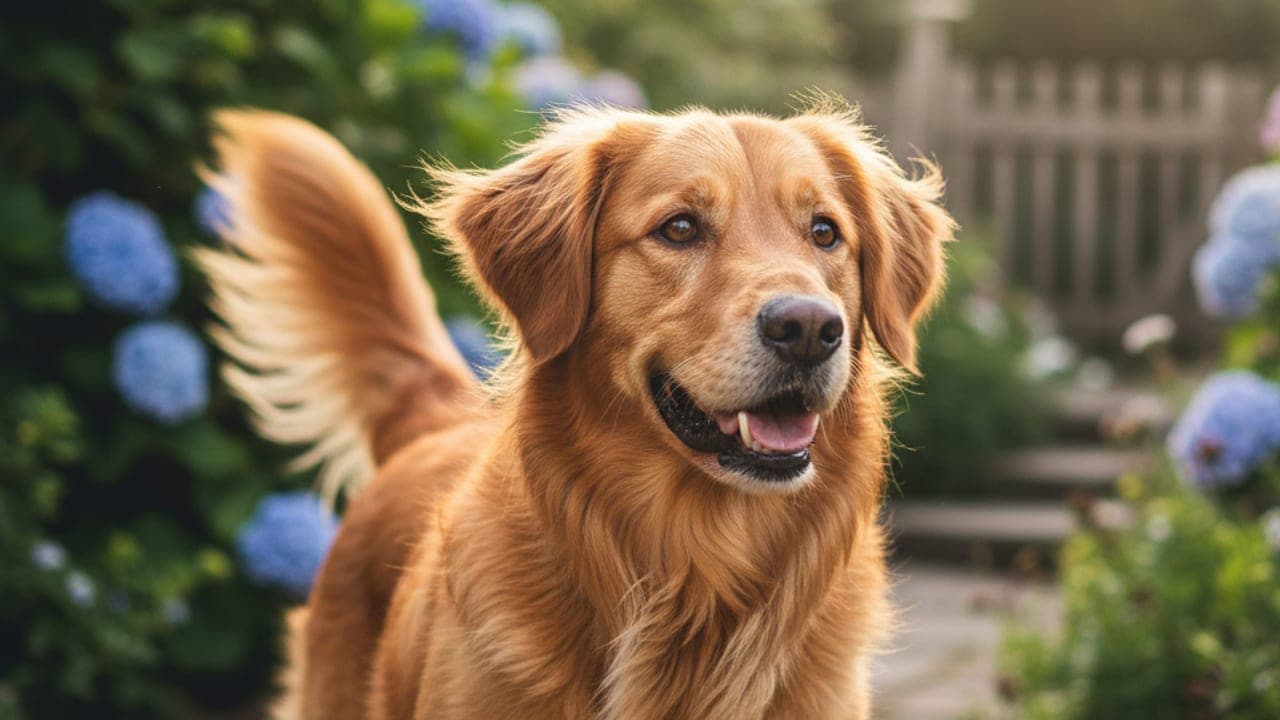
- Tail position reveals emotional state: high = alert/confident, low = anxious/submissive
- Wagging does NOT always mean happy — speed, direction, and height all matter
- A stiff, high wag is often a warning signal, not a greeting
- Breed-specific tail anatomy changes baseline positions (curled, docked, naturally low)
- Combined body language (ears, posture, eyes) gives the full picture
Your dog is wagging her tail, so she must be happy — right? Not necessarily. A wagging tail can mean excitement, anxiety, insecurity, or even a warning, depending on the position, speed, and direction. Understanding what your dog's tail is actually saying can transform how you read her emotions.
Once you learn these signals, you will never look at a wagging tail the same way again.
Why Do Dogs Use Their Tails to Communicate?
Dogs are social animals who evolved complex body language to coordinate with pack members, avoid conflict, and express emotional states. The tail is one of the most visible and versatile communication tools they have.
Tail language works in combination with other body signals — ear position, body posture, facial expression, and hackle state. Reading the tail alone can be misleading. Reading the tail in context with the whole body gives you a much more accurate picture.
It is also worth noting that tail communication is partly for other dogs. Your dog did not evolve tail signals for human benefit — but learning to read them gives you a window into what she is feeling.
What Does a High, Stiff Tail Mean?
A tail held high and rigid — especially with a slow, stiff wag — signals alertness, confidence, or dominance. Your dog is saying: "I see something interesting and I am assessing it."
This posture is common when your dog spots another dog, a stranger approaching, or an unfamiliar animal in the yard. It is not necessarily aggressive, but it is not relaxed either.
Context matters:
- High tail + forward-leaning body + stiff legs = potential confrontation signal. Proceed with caution.
- High tail + relaxed body + ears forward = confident interest. Your dog is curious but not tense.
German Shepherds naturally carry their tails lower than many breeds, so a "high" tail for a Shepherd may look different than a "high" tail for a Labrador Retriever. Know your dog's breed-specific baseline.
What Does a Low or Tucked Tail Communicate?
A tail held low — below the line of the back — or tucked between the legs signals fear, submission, or discomfort. The further the tail tucks toward the belly, the more intense the emotion.
Low but not tucked: Mild unease or uncertainty. Your dog is unsure about the situation but not panicked. You might see this during a vet visit or when meeting a new person.
Fully tucked against the belly: Significant fear or extreme submission. Your dog feels threatened and is trying to make herself as small and non-threatening as possible.
This is an important signal to respect. A dog with a tucked tail is not being "dramatic" — she is genuinely distressed. Forcing interaction or exposure in this state will increase fear, not resolve it.
If your dog frequently carries her tail tucked in routine situations (home, familiar environments), chronic anxiety or pain may be involved. When in doubt, ask your vet.
What Does a Neutral, Relaxed Tail Mean?
A tail hanging in a natural, relaxed position — roughly in line with the back or just below — indicates a calm, content dog. This is your dog's emotional baseline.
You will see this when your dog is:
- Resting comfortably
- Walking casually on a familiar route
- Lounging near you without any apparent stimulation
Knowing what your dog's neutral tail looks like is essential because it gives you a comparison point. Any deviation from neutral — up, down, stiff, rapid — tells you something has changed.
Does Wagging Speed Actually Matter?
Yes, enormously. Wag speed and amplitude communicate different things:
Broad, sweeping wag (whole-body wiggles): Pure, unfiltered happiness. This is the tail movement that actually does mean joy. Often accompanied by a relaxed face, soft eyes, and full-body loose movement.
Fast, tight wag (small amplitude): Arousal or excitement — which can be positive (greeting you at the door) or negative (fixating on a squirrel). High speed with small movements means high emotional intensity, but the emotion could be anything.
Slow, deliberate wag: Caution. Your dog is assessing the situation and has not decided how she feels yet. You might see this when your dog encounters an unfamiliar person or animal at a distance.
Wag that stops abruptly: A sudden freeze — tail goes still mid-wag — is a warning sign. Your dog has transitioned from assessing to deciding, and the decision may involve a defensive reaction. Give her space.
Does the Direction of the Wag Mean Anything?
Fascinating research published in Current Biology found that tail wag direction correlates with emotional valence:
- Right-biased wag (the tail sweeps more to the dog's right): Associated with positive emotions — approach, comfort, recognition of a familiar person.
- Left-biased wag (the tail sweeps more to the dog's left): Associated with withdrawal emotions — anxiety, unfamiliarity, or encountering something threatening.
This asymmetry is subtle and can be hard to spot in real time, but it reflects the lateralization of brain function (left brain controls right side of body and vice versa). Other dogs can detect wag direction and respond accordingly.
How Do Breed-Specific Tail Types Affect Communication?
Not all dogs have the same tail "hardware," which complicates reading.
- Curled tails (Pomeranian, Akita, Shiba Inu): These tails naturally curl over the back, making position-based reading harder. Focus on tension — a tight curl versus a loose, relaxed curl.
- Docked tails (Boxers, Dobermans): Dogs with docked tails have reduced ability to communicate via tail, which can lead to more misunderstandings with other dogs. They compensate with ear, body, and facial signals.
- Long, feathered tails (German Shepherds, Golden Retrievers): These tails offer the most readable signals because of their range of motion and visibility.
- Whip tails (Greyhounds, Whippets): Naturally low-set tails that may look "tucked" at rest but are actually neutral for the breed.
- Stub tails (some Australian Shepherds, Corgis): Very limited tail language — these dogs rely heavily on body posture and ear position.
The lesson: learn YOUR dog's neutral tail position and range of motion. A Labrador Retriever's neutral and a Pomeranian's neutral look completely different.
How Can You Use Tail Language in Daily Life?
Understanding tail communication helps you in practical situations:
At the dog park: If you see a dog approaching with a high, stiff tail and rigid body, recall your dog. That approach is not friendly; it is confrontational.
Meeting new people: A slow wag with a lowered body says your dog is uncertain. Ask the person to crouch, avoid direct eye contact, and let your dog approach on her terms.
At the vet: A tucked tail at the clinic is expected. Bring high-value treats and give your dog time to decompress in the waiting room.
During training: A broad, sweeping wag during a training session means your dog is engaged and enjoying the process. A suddenly still tail means she is confused or stressed — simplify the exercise.
FAQ
Why does my dog wag her tail in her sleep?
Dogs dream, and tail wagging during sleep likely corresponds to dream content. Research suggests dogs experience REM sleep and may dream about familiar activities. A wagging tail during a nap is a sign of a contented, dreaming dog.
My dog wags her tail but growls. What does that mean?
A wagging tail does not always mean friendliness. A growl paired with a stiff, high-frequency wag is a conflict signal — your dog is aroused and uncertain. Respect the growl as a warning and give her space. Never punish a growl; it is honest communication.
Can dogs control their tail wagging?
Tail wagging is largely involuntary — an emotional response rather than a deliberate choice. However, dogs may have some conscious control, similar to how humans can control facial expressions to a degree but also smile or frown reflexively.
Do dogs without tails have trouble communicating with other dogs?
Dogs with docked or naturally short tails may face more social misunderstandings, as other dogs rely on tail signals for distance assessment. These dogs typically compensate with enhanced ear, body, and vocal communication, but the risk of misreading is real. Our breed guides cover breed-specific communication traits.
Why does my dog chase her own tail?
Occasional tail-chasing is normal play behavior, especially in puppies. Frequent, compulsive tail-chasing in adult dogs can indicate boredom, anxiety, or a medical condition (skin irritation, anal gland issues). If it happens daily, talk to your vet.
Explore breed-specific body language in our dog breed guides or take our dog breed quiz to learn more about your companion's communication style.
Mr Pet Lover Team
The Mr Pet Lover team is dedicated to providing warm, accurate, and practical pet care advice backed by veterinary research and real-world experience.
Related Articles
How to Help Your Anxious Dog Feel Calmer During Storms
Thunderstorms can terrify dogs. Learn vet-approved techniques to comfort your pup and reduce storm anxiety.

Is Your Dog Bored? 8 Signs (And What to Do About It)
Destructive chewing, constant barking, and restless pacing are not personality flaws — they are boredom signals.

How Often Should You Really Bathe Your Dog?
Bathing too often can harm your dog's skin. Here is how to find the right frequency for your dog's coat type.