
Why Does My Cat Knock Things Off Tables? (And How to Redirect It)
Not individually reviewed by a veterinarian. Read our editorial standards.
Last updated:
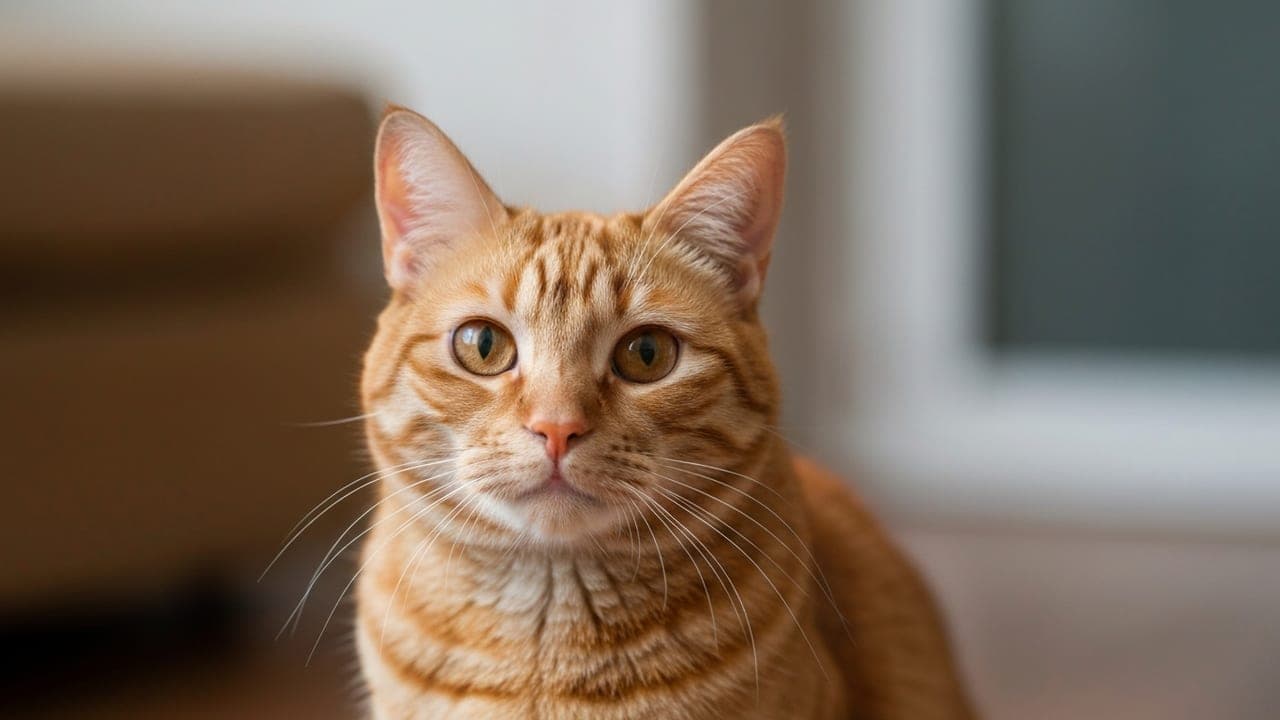
- Pushing objects is driven by hunting instinct — your cat is testing if the 'prey' moves
- Attention-seeking is the second most common reason, especially if you react
- Boredom and lack of enrichment make the behavior worse
- Redirect with puzzle feeders, interactive toys, and scheduled play sessions
- Securing breakable items is management, not defeat
Your cat carefully inches your water glass toward the edge of the nightstand, making unbroken eye contact the entire time. Then — one final nudge — and it crashes to the floor. If this scene replays daily in your home, you are living with a perfectly normal cat.
Understanding why your cat does this is the first step toward saving your favorite mug.
Is Knocking Things Off Tables a Hunting Instinct?
In the wild, cats use their paws to investigate and interact with potential prey. A mouse might be playing dead, and the safest way to test that is a quick bat with one paw. Your cat is engaging that same hardwired instinct when she swats a pen, a hair tie, or your phone off the counter.
This behavior is especially pronounced in high-energy breeds. Bengals and Siamese were bred from lines with strong predatory drives, and without adequate outlets, your belongings become substitute prey.
Watch closely the next time your cat does it. You will likely notice intense focus, dilated pupils, and a crouched posture — all classic hunting signals.
Is Your Cat Doing It for Attention?
Here is the uncomfortable truth: if you react when your cat knocks something over — even with a firm "no!" or a gasp — you have just rewarded the behavior with exactly what she wanted. Your attention.
Cats are brilliant observers of cause and effect. She pushed the glass, you jumped up, you looked at her, you spoke to her. From her perspective, that was a successful social interaction.
This pattern is most common in cats who spend long stretches alone during the day. A cat who feels under-stimulated will find creative ways to engage you, and knocking objects off surfaces is one of the most reliable methods she has discovered.
Could Your Cat Be Bored?
Boredom is one of the biggest drivers of counter-clearing behavior, especially in indoor-only cats. A cat with nothing interesting to do will create her own entertainment — and your kitchen counter is full of fascinating, pushable objects.
Signs that boredom is the root cause include:
- The behavior happens most when you have been away or busy
- Your cat targets different objects each time (exploring novelty)
- She seems restless or vocal before and after the swatting
- She does not have access to climbing structures, window perches, or interactive toys
Are Cats Testing Physics When They Push Things?
This sounds whimsical, but there is real science behind it. Cats learn about their environment through tactile exploration, and their paw pads are loaded with sensitive nerve endings.
When your cat pushes a pen off the table, she is gathering information: How heavy is this? How does it move? What sound does it make? Does it roll or bounce? Each object provides different sensory feedback, which is genuinely interesting to an animal wired for investigation.
Kittens and young cats do this more frequently as they are still mapping their world. Older cats may do it selectively — often targeting new or unfamiliar objects first.
How Can You Redirect the Behavior?
You do not need to accept a life of broken glasses. Here are strategies that address the root cause, not just the symptom.
Increase Interactive Play
The single most effective change is more structured play. Two 15-minute sessions per day with a wand toy, laser pointer (always ending on a physical toy she can "catch"), or feather attachment can dramatically reduce attention-seeking and boredom-driven swatting.
For high-drive breeds like Bengals, you may need closer to 30 minutes total daily play.
Introduce Puzzle Feeders
Replace your cat's food bowl with a puzzle feeder or slow-feed mat. This engages the same "manipulate objects with paws" drive in a constructive way. Your cat gets to work for her food, which satisfies her natural foraging instinct and tires her out mentally.
Create Approved Exploration Zones
Cat trees, wall-mounted shelves, and window perches give your cat surfaces that are hers to patrol. Vertical space is deeply important to cats — it provides security, territory, and a vantage point for watching the world.
Place a bird feeder outside a window near her favorite perch for built-in entertainment.
Secure High-Value Items
This is not surrender; it is practical management. Use museum putty to secure decorative items. Move breakables into closed cabinets during the transition period. Keep counters clear of tempting lightweight objects.
Stop Reacting
This is the hardest strategy but often the most effective. When your cat pushes something off the table, do not rush over. Do not gasp. Clean it up calmly later. Without your dramatic response, the behavior loses much of its reward value.
When Should You Be Concerned About This Behavior?
Occasional table-clearing is normal and healthy feline behavior. However, a sudden increase in destructive or attention-seeking behavior could signal:
- Chronic boredom from inadequate environmental enrichment
- Stress from household changes (new pet, move, schedule shift)
- Cognitive changes in senior cats (disorientation, restlessness)
- Pain that is causing agitation
When in doubt, ask your vet. A checkup can rule out underlying health issues and give you tailored enrichment recommendations.
What the Research Says About Feline Object Play
Animal behaviorists at the University of Lincoln studied how cats interact with novel objects in their environment. Their findings suggest that batting objects off surfaces serves multiple functions: it mimics the unpredictable movement of prey, tests the cat's own reflexes, and provides sensory feedback through the sound and motion of falling items. In multi-cat households, the behavior may also function as a form of social signaling — one cat knocking something off a shelf often triggers investigative behavior from other cats in the home.
Why this matters for you: If your cat is a serial table-sweeper, she's likely under-stimulated in at least one area — physical activity, environmental complexity, or social interaction. Rather than trying to stop the behavior entirely (which rarely works), redirect it. Puzzle feeders that require batting and swiping, treat-dispensing balls that roll unpredictably, and dedicated "knock-off shelves" with lightweight, safe objects can channel this instinct constructively.
Try a designated play shelf: Set up a low shelf with lightweight plastic balls or crinkle toys that your cat is allowed to bat off freely. Keep breakables off nearby surfaces so the play shelf is the easiest place to swat.
FAQ
Why does my cat stare at me before pushing something off?
Your cat has learned that the push-and-crash sequence gets your attention. The stare is not defiance — it is anticipation. She is checking whether you are watching because your reaction is part of the reward.
Do all cat breeds knock things off tables?
Most cats will do this occasionally, but breeds with high intelligence and strong prey drives — like Siamese and Bengals — tend to do it more frequently. Lower-energy breeds may be less inclined, though individual personality matters more than breed alone.
Will punishment stop my cat from doing this?
No. Punishment (spraying water, yelling, pushing your cat away) creates stress and damages your bond without addressing the underlying cause. Redirection and enrichment are far more effective and preserve your cat's trust.
How many toys does an indoor cat actually need?
Variety matters more than quantity. Aim for a rotation of 5-8 toys across different categories: one wand toy for interactive play, one puzzle feeder, a few small batting toys, and at least one self-play option like a ball track. Rotate toys weekly to maintain novelty.
At what age do cats start knocking things off surfaces?
Kittens begin experimenting with object manipulation as early as 8-12 weeks. The behavior often peaks in young adults (1-3 years) when energy levels are highest and environmental curiosity is strongest.
Curious what makes your cat tick? Browse our cat breed guides or explore enrichment strategies in our care guides.
Mr Pet Lover Team
The Mr Pet Lover team is dedicated to providing warm, accurate, and practical pet care advice backed by veterinary research and real-world experience.
Related Articles
Indoor vs Outdoor Cats: How to Give Your Indoor Cat a Rich, Happy Life
The indoor-outdoor debate divides cat owners. Here's what the research says about safety and longevity, plus how to make indoor life stimulating enough that your cat thrives.
Why Does My Cat Knead? The Science Behind Those Happy Paws
That rhythmic push-pull your cat does on your lap has roots in kittenhood, territory, and pure contentment. Here's what veterinary science tells us about kneading.
Why Your Cat Brings You 'Gifts' — And What It Really Means
A dead mouse on the doormat. A half-alive lizard on your pillow. Your cat's gift-giving habit has evolutionary roots that reveal something surprising about how she sees you.