
Indoor vs Outdoor Cats: How to Give Your Indoor Cat a Rich, Happy Life
Not individually reviewed by a veterinarian. Read our editorial standards.
Last updated:
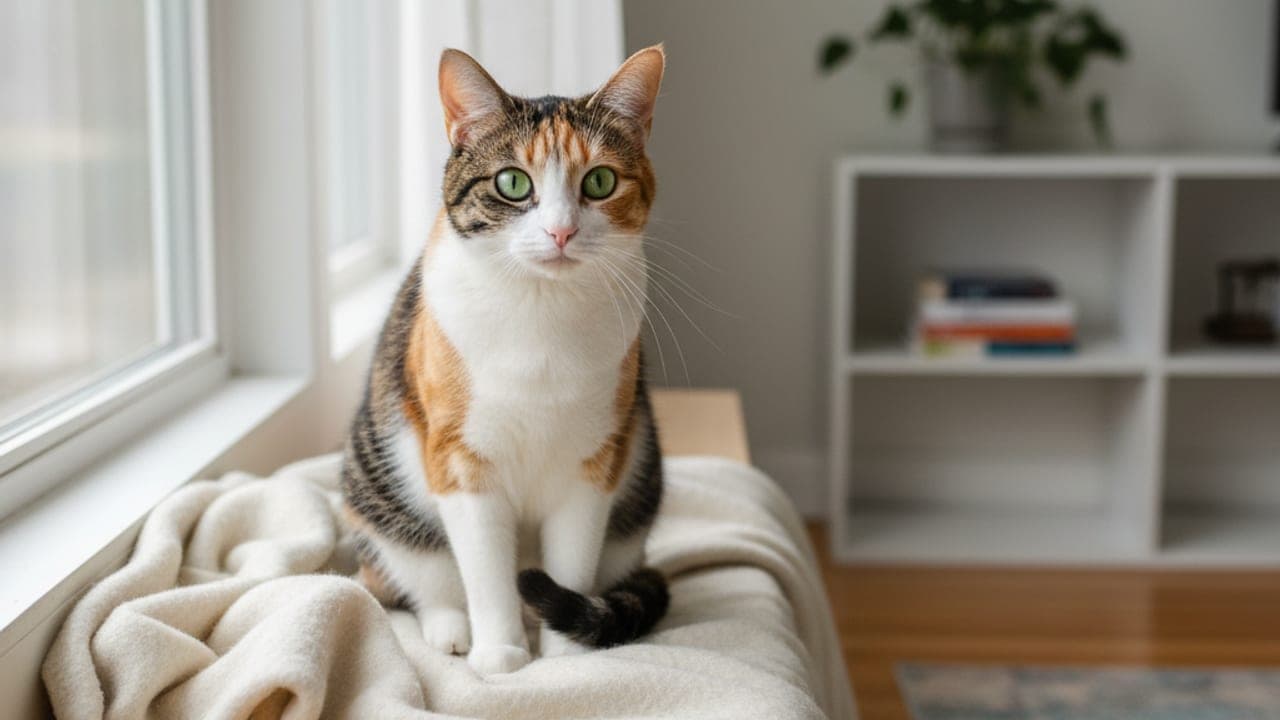
- Indoor cats live an average of 12–18 years, compared to 2–5 years for outdoor-only cats
- Environmental enrichment (cat trees, puzzle feeders, window perches) prevents boredom-related behavior problems
- A catio or enclosed balcony gives your cat outdoor stimulation without the risks of traffic, predators, or toxins
- Rotate toys every few days — cats lose interest in familiar objects but rediscover 'new' ones with excitement
- Schedule two 15-minute interactive play sessions daily to satisfy your indoor cat's hunting instinct
A tabby named Oliver sits on a windowsill in a third-floor apartment, watching a sparrow hop along the fire escape. His tail twitches. His jaw chatters softly — that strange, stuttering sound cats make when prey is tantalizingly close but unreachable. Below him, traffic hums. Across the alley, a calico on a balcony does the same thing.
Oliver has never been outside. He's six years old, healthy, muscular from years of climbing cat trees and chasing feather wands, and he will likely live to be seventeen or eighteen. The calico across the alley? She's also an indoor cat. Her owner made that choice after their previous cat, an indoor-outdoor adventurer, was hit by a car at age four.
The indoor-outdoor debate is one of the most emotionally charged conversations in cat ownership. It touches on freedom, safety, ethics, environmental impact, and our deepest feelings about what it means to give an animal a good life. Here's what the evidence actually says — and how to make the choice that's right for your cat.
The Lifespan Gap: What the Numbers Show
The statistics are stark. Indoor cats live an average of 12-18 years. Outdoor cats average 2-5 years. Even indoor-outdoor cats — those with regular outdoor access who return home — average 10-12 years, significantly shorter than their fully indoor counterparts.
These aren't contested figures. They appear consistently across veterinary literature, including studies from the UC Davis School of Veterinary Medicine, the Journal of Feline Medicine and Surgery, and the ASPCA.
The causes of the gap are straightforward:
- Vehicle strikes remain the leading cause of death for outdoor cats in urban and suburban areas.
- Predation — by coyotes, dogs, hawks, and in some regions, alligators and snakes — accounts for a significant percentage of outdoor cat deaths in rural and semi-rural areas.
- Disease exposure increases dramatically outdoors. Feline leukemia virus (FeLV), feline immunodeficiency virus (FIV), feline infectious peritonitis (FIP), and upper respiratory infections spread through contact with other cats. Indoor-only cats are essentially shielded from these.
- Parasites — fleas, ticks, intestinal worms, heartworm — are overwhelmingly outdoor problems. While preventatives exist, outdoor cats face constant re-exposure.
- Toxins — antifreeze, rodenticides, pesticide-treated plants — pose ongoing risks to outdoor cats.
- Human cruelty is an uncomfortable reality. Outdoor cats are vulnerable to poisoning, shooting, and trapping by people who view them as nuisances.
The Environmental Impact (The Conversation We Need to Have)
This is where the discussion gets uncomfortable for outdoor-cat advocates. Domestic cats are one of the most effective invasive predators on the planet.
A landmark 2013 study published in Nature Communications by Dr. Scott Loss and colleagues at the Smithsonian Conservation Biology Institute estimated that free-ranging domestic cats kill 1.3 to 4 billion birds and 6.3 to 22.3 billion mammals annually in the United States alone. Cats have been implicated in the extinction of at least 63 species worldwide.
This isn't a judgment on cat owners — cats are doing what evolution designed them to do. But the environmental impact of outdoor cats is significant enough that organizations including the American Bird Conservancy, the International Union for Conservation of Nature, and many veterinary associations now recommend keeping cats indoors.
For cat owners who love both their cats and the ecosystem, indoor living is the choice that protects both.
The Enrichment Imperative: Indoor Doesn't Mean Boring
Here's where many indoor-cat skeptics have a legitimate point: a barren indoor environment is not a good life for a cat. A cat confined to a small apartment with no climbing surfaces, no hunting outlets, no window access, and no mental stimulation will become bored, stressed, and potentially destructive or depressed.
But "indoor" doesn't have to mean "barren." The field of feline environmental enrichment has advanced enormously, and creating a stimulating indoor world for your cat is achievable in any living space.
Vertical Space: Think Like a Cat
Cats are vertical animals. In the wild, they climb to survey territory, escape predators, and feel secure. An apartment that feels small to you can feel expansive to a cat if you add vertical elements.
Cat trees (at least one tall tree near a window), wall-mounted shelves, window perches, and cat-accessible bookshelf tops dramatically expand your cat's usable living space. A Maine Coon or Bengal with access to a floor-to-ceiling cat tree and a window perch overlooking bird activity will use that vertical space constantly.
Hunting Simulations: Feed the Predator Brain
Cats need to hunt. Not want to — need to. The hunting sequence (stalk → chase → pounce → kill → eat) is hardwired. When cats can't complete this sequence, they redirect the energy into problematic behaviors: attacking ankles, ambushing other pets, or developing obsessive grooming.
Puzzle feeders — balls, mazes, and timed dispensers that make cats work for their food — are one of the most effective enrichment tools available. They turn mealtime into a 20-minute hunting simulation instead of a 30-second gulp.
Interactive play with wand toys (feathers, strings, fur mice) for 15-20 minutes twice daily satisfies the stalk-chase-pounce sequence. End each play session by letting the cat "catch" the prey and then offering a small meal — this completes the full hunting cycle.
Rotating toys every few days keeps them novel. Cats are neophiles for hunting objects — they're attracted to new movement patterns. The same feather wand that's boring after three days becomes fascinating again after a week in the closet.
Window Access: Cat TV
Never underestimate the power of a window. A window with a view of bird activity, squirrels, pedestrians, or even blowing leaves provides hours of mental stimulation. Add a bird feeder outside the window and you've created premium cat television.
Window perches, heated window beds, and cat-safe window enclosures let your cat observe the outside world safely. Some cat owners install "catios" — screened outdoor enclosures that provide fresh air and sunshine without the risks of free roaming.
Social Needs: Each Cat Is Different
Some cats — particularly social breeds like Siamese and Ragdolls — thrive with a feline companion. Two bonded cats will play together, groom each other, and provide the social stimulation that humans can't always offer during work hours.
Other cats are firmly solitary and will be stressed by a housemate. Know your cat's personality before adding a second cat. Shelter staff can help match temperaments if you're considering adoption.
Routine and Predictability
Cats are creatures of routine. Consistent meal times, play times, and quiet times create a sense of security that reduces stress behaviors. Environmental enrichment isn't just about adding stimulation — it's about creating a predictable, safe world that your cat can trust.
The Middle Ground: Safe Outdoor Access
For cat owners who feel strongly about providing outdoor experiences, several options exist that don't carry the risks of free roaming:
Catios (cat patios): Screened outdoor enclosures attached to a window or door. They range from simple window boxes to elaborate multi-level structures. Cats get fresh air, sunshine, and outdoor sights and sounds without exposure to predators, traffic, or disease.
Harness and leash training: Some cats adapt well to harness walking. Start indoors, introduce the harness gradually, reward cooperation, and begin with short outdoor sessions in quiet areas. Not every cat will accept this — don't force it — but cats who do enjoy it benefit greatly.
Enclosed garden systems: Modular fence-top systems that prevent cats from climbing over while allowing free movement within a yard. These work best in private gardens and require secure perimeter fencing as a base.
Signs Your Indoor Cat Needs More Enrichment
If your cat displays any of these behaviors, she may need more environmental stimulation:
- Overgrooming (bald patches, especially on the belly or legs)
- Aggression toward housemates (human or animal)
- Excessive vocalization (particularly in breeds not known for talkativeness)
- Destructive behavior (scratching furniture beyond normal claw maintenance)
- Overeating or loss of appetite
- Lethargy (sleeping significantly more than the normal 12-16 hours)
- Inappropriate elimination (urinating or defecating outside the litter box in a cat who was previously reliable)
These behaviors are not disobedience — they're distress signals. The solution is environmental, not punitive.
Indoor life works differently by breed. Review the Persian, Ragdoll, British Shorthair, and Russian Blue profiles to match enrichment, grooming, and activity expectations.
Frequently Asked Questions
Can I convert an outdoor cat to indoor-only?
Yes, but it requires patience and enrichment investment. Provide cat trees, window perches, puzzle feeders, and daily interactive play from day one. The transition typically takes 2-4 weeks. Expect vocal protests initially — they'll subside as the cat adapts to indoor stimulation.
Is it cruel to keep a cat indoors?
No — provided you meet the cat's enrichment needs. A well-enriched indoor environment offers safety, health, and stimulation. An empty apartment with no vertical space, no toys, and no human interaction would be inadequate, but that's an enrichment failure, not an indictment of indoor living.
Do indoor cats still need flea and tick prevention?
Fleas can enter on shoes, clothing, or other pets. Year-round flea prevention is still recommended for indoor cats, though the risk is lower. Discuss a reduced prevention schedule with your veterinarian based on your specific situation.
My cat sits at the door and cries to go out. What should I do?
This is common and doesn't mean your cat is unhappy — she's responding to outdoor stimuli (smells, sounds). Redirect with play, offer a window perch near the door, and avoid opening the door when she's crying (which reinforces the behavior). The behavior typically diminishes within a few weeks if not reinforced.
Want to learn more about your cat's unique personality? Explore our cat care guides or discover breed-specific traits with our breed quiz.
Angel Lequiron
The Mr Pet Lover team is dedicated to providing warm, accurate, and practical pet care advice backed by veterinary research and real-world experience.
Related Articles
Why Does My Cat Knock Things Off Tables? (And How to Redirect It)
Your cat nudges your glass to the edge and stares at you. Here is what is really going on and how to redirect it.
Can Cats Eat This? The Complete Toxic & Safe Human-Foods List
A cat-specific list of which human foods are safe, which are risky, and which are an emergency — with the active risk and a clear vet-now trigger for each.
Why Does My Cat Knead? The Science Behind Those Happy Paws
That rhythmic push-pull your cat does on your lap has roots in kittenhood, territory, and pure contentment. Here's what veterinary science tells us about kneading.