
Why Does My Cat Knead? The Science Behind Those Happy Paws
Not individually reviewed by a veterinarian. Read our editorial standards.
Last updated:
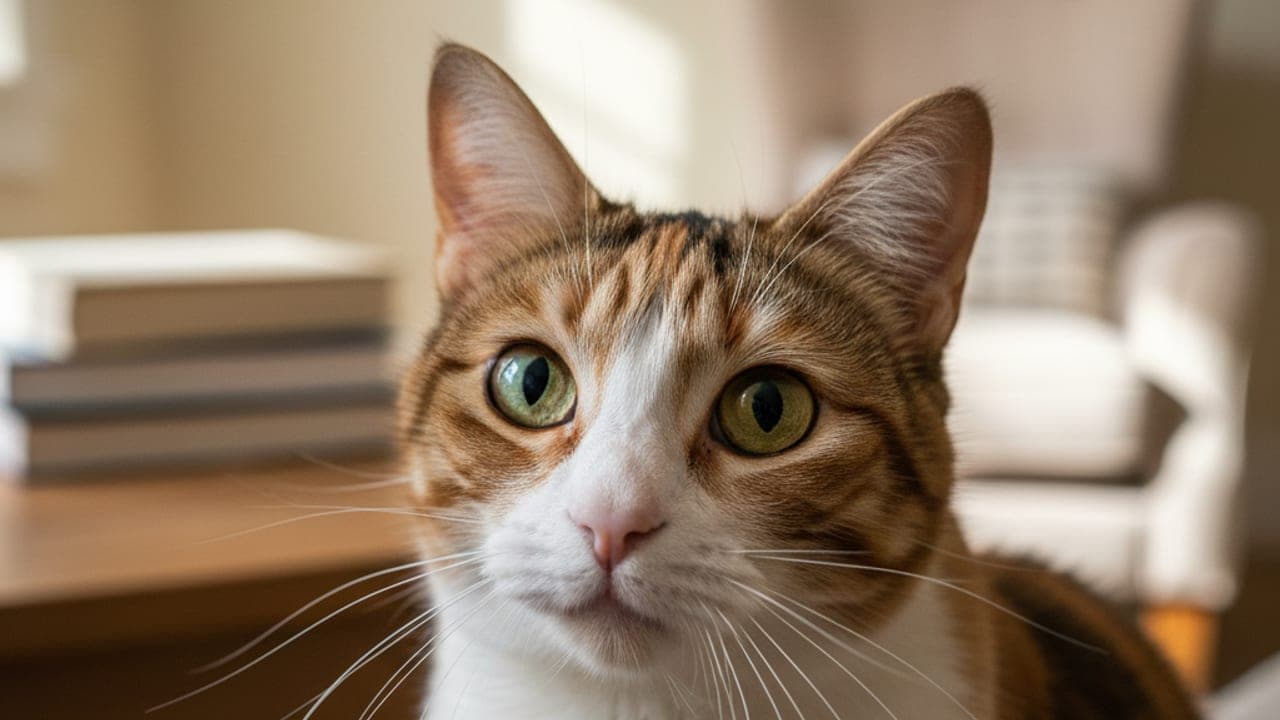
- Kneading is a kitten nursing behavior that persists into adulthood — it signals comfort and trust
- Cats knead on soft surfaces, laps, and blankets when they feel safe and content
- The behavior releases endorphins and may also serve as territorial scent-marking through paw glands
- If kneading hurts (claws out), keep nails trimmed and place a thick blanket on your lap as a buffer
- Excessive or sudden kneading changes can signal stress or pain — monitor for other behavioral shifts
You're settled on the couch with a warm mug and a book when your cat hops onto your lap, circles twice, and begins pressing her front paws into your thigh in a slow, rhythmic pattern. Left, right, left, right — her eyes drift half-closed, and a low purr starts rumbling from somewhere deep in her chest. It's one of the most endearing things a cat can do, and nearly every cat owner has felt it. But why do cats knead?
The answer reaches back to the first hours of a kitten's life, threads through feline neuroscience, and touches on something surprisingly tender about the bond between cats and the humans they choose.
The Kitten Connection: Where Kneading Begins
Kneading starts at birth. Newborn kittens press their tiny paws against their mother's mammary glands to stimulate milk flow while nursing. It's one of the first coordinated motor behaviors a kitten performs — even before her eyes open. The motion triggers the let-down reflex in the mother cat, releasing milk that the kitten desperately needs in those fragile early days.
Dr. John Bradshaw, a feline behavior researcher at the University of Bristol and author of Cat Sense, explains that this nursing behavior creates a powerful association in the kitten's brain: kneading equals warmth, nourishment, and safety. That neural pathway doesn't disappear when the kitten grows up. It finds new contexts.
When your adult cat kneads your lap, she's essentially replaying a deeply embedded comfort script. The soft surface of your blanket or the give of your thigh triggers the same motor pattern she used as a newborn. She's not trying to get milk from you — she's reliving a feeling of complete security.
Comfort, Contentment, and the Purr Connection
If you've ever noticed that your cat only kneads when she seems relaxed, you're picking up on a real pattern. Kneading is closely linked to a cat's parasympathetic nervous system — the "rest and digest" state. When a cat feels safe enough to let her guard down, kneading often follows.
The purring that usually accompanies kneading isn't just a happy sound effect. Purring vibrates at frequencies between 25 and 150 Hz, a range that research from Dr. Elizabeth von Muggenthaler at the Fauna Communications Research Institute suggests may promote tissue healing and bone density maintenance. So when your cat is kneading and purring on your lap, she may actually be doing something physiologically beneficial for herself.
This is also why cats sometimes knead on soft blankets, stuffed animals, or even other cats. The behavior isn't limited to human laps. Any surface that feels safe and yielding can trigger it. If your Ragdoll or Maine Coon is a prolific kneader, it's a sign she feels deeply at home in your space.
Territory Marking: The Scent You Can't Smell
Here's a layer most people miss: kneading also serves a territorial function. Cats have scent glands in the soft pads of their paws. When your cat presses her paws into your lap, she's depositing pheromones that are invisible and odorless to you but broadcast a clear message to other cats: this human is mine.
This scent-marking behavior is subtle but significant. It's part of the same system that drives cats to rub their cheeks on furniture corners, headbutt your chin, and scratch specific surfaces. Each of these behaviors leaves a chemical signature that says, "I was here, I feel safe here, this belongs to me."
So the next time your cat is rhythmically pressing into your favorite sweater, know that she's not just comforting herself — she's claiming you as part of her territory. Take it as a compliment.
Why Some Cats Knead More Than Others
Not every cat kneads with the same frequency or intensity, and that variation is perfectly normal. Several factors influence how much a cat kneads:
Early weaning. Kittens separated from their mothers very early (before 8 weeks) sometimes knead more as adults. The behavior may persist as a self-soothing mechanism because the kitten didn't get to complete the natural weaning process. Shelter cats and cats with unknown early histories often fall into this category.
Breed tendencies. Some breeds are more tactile and affectionate. Siamese cats, known for their strong human bonds, tend to knead frequently. So do Ragdolls, Burmese, and other breeds that have been selectively bred for social temperament.
Individual personality. Just like people, cats have unique temperaments. Some are lap cats who knead every evening. Others show their affection through headbutts, slow blinks, or sitting nearby. Neither style is more "loving" — they're just different expressions of attachment.
Stress relief. Some cats knead when they're mildly anxious, not just when they're content. It functions like a self-soothing ritual, similar to how a person might tap their foot or twist a ring when nervous. If your cat kneads during stressful events — a visitor arriving, a new piece of furniture — she may be calming herself down.
The Claw Question: When Kneading Gets Sharp
Let's address the practical side. Kneading feels wonderful when your cat's claws are retracted. It feels considerably less wonderful when those claws are out, puncturing your jeans and the skin underneath.
Here's the thing: cats often extend their claws during kneading without any intention of scratching. It's part of the full motor pattern. The deeper the contentment, the more fully the pattern expresses — claws included.
A few gentle strategies can help:
- Keep claws trimmed. A regular nail trim every 2-3 weeks reduces the sharpness without affecting your cat's ability to knead. Ask your vet to show you the technique if you're unsure.
- Use a thick blanket barrier. Drape a folded blanket or towel over your lap before settling in. Your cat gets the soft surface she craves; you keep your skin intact.
- Never punish kneading. Pushing your cat off or scolding her for kneading will damage trust without changing the behavior. She doesn't understand that her claws hurt — she only knows she was feeling safe and then suddenly wasn't.
- Redirect gently. If the claws are too much, slowly guide her paws to a nearby pillow or blanket. Many cats will happily continue kneading the new surface.
Kneading and Nesting: The Sleep Ritual
Watch your cat closely before she settles down for a nap. There's often a kneading ritual involved — she'll circle a spot, knead it for 10-30 seconds, and then curl up. This behavior likely has ancient roots.
Wild and feral cats knead grass and leaves to create a comfortable sleeping surface and to check for hidden threats like insects or snakes beneath the foliage. Domestic cats don't need to worry about snakes under the couch cushion, but the instinct remains. It's a pre-sleep comfort check that says, "This spot is safe, this spot is soft, I can rest here."
If you've ever wondered why your cat insists on kneading your pillow at 3 AM — now you know. She's preparing her bed with the same care her ancestors used in the wild.
When Kneading Signals Something More
In rare cases, excessive kneading — especially when combined with suckling on blankets or fabric — can indicate a compulsive behavior pattern. This is most common in cats who were orphaned very young or experienced significant early-life stress.
If your cat suckles fabric to the point of ingesting fibers, or if the kneading seems obsessive rather than relaxed, it's worth mentioning to your veterinarian. Fabric ingestion can cause intestinal blockages, and compulsive behaviors sometimes respond well to environmental enrichment, puzzle feeders, or in severe cases, veterinary behavioral consultation.
For the vast majority of cats, though, kneading is a sign that all is well in their world.
Frequently Asked Questions
Is it normal for male cats to knead?
Absolutely. Kneading has nothing to do with sex or reproductive behavior. Male and female cats knead at similar rates. It's a kitten-origin comfort behavior, not a gender-linked one.
Why does my cat drool while kneading?
Drooling during kneading is common and harmless. It's tied to the nursing association — the relaxation is so deep that the salivation reflex activates. Think of it as a sign of extreme contentment.
Should I let my cat knead on me?
Yes, unless the claws are causing injury. Kneading is one of the clearest signs that your cat feels safe with you. Allowing it strengthens your bond. Use a blanket barrier if the claws are an issue.
My cat doesn't knead at all. Is something wrong?
Not at all. Some cats express comfort differently — through slow blinks, head bumps, or choosing to sleep near you. Absence of kneading doesn't mean absence of affection.
Why does my cat knead before lying down?
This nesting behavior echoes the wild instinct of preparing a sleeping surface. Your cat is checking that the spot is comfortable and safe before committing to rest.
Curious about your cat's other quirky behaviors? Explore our cat care guides or discover which feline personality matches yours with our breed quiz.
Angel Lequiron
The Mr Pet Lover team is dedicated to providing warm, accurate, and practical pet care advice backed by veterinary research and real-world experience.
Related Articles
Why Does My Cat Knock Things Off Tables? (And How to Redirect It)
Your cat nudges your glass to the edge and stares at you. Here is what is really going on and how to redirect it.
Why Your Cat Brings You 'Gifts' — And What It Really Means
A dead mouse on the doormat. A half-alive lizard on your pillow. Your cat's gift-giving habit has evolutionary roots that reveal something surprising about how she sees you.
Can Cats Eat This? The Complete Toxic & Safe Human-Foods List
A cat-specific list of which human foods are safe, which are risky, and which are an emergency — with the active risk and a clear vet-now trigger for each.