
Dental Disease in Cats: The Silent Health Threat
Not individually reviewed by a veterinarian. Read our editorial standards.
Last updated:
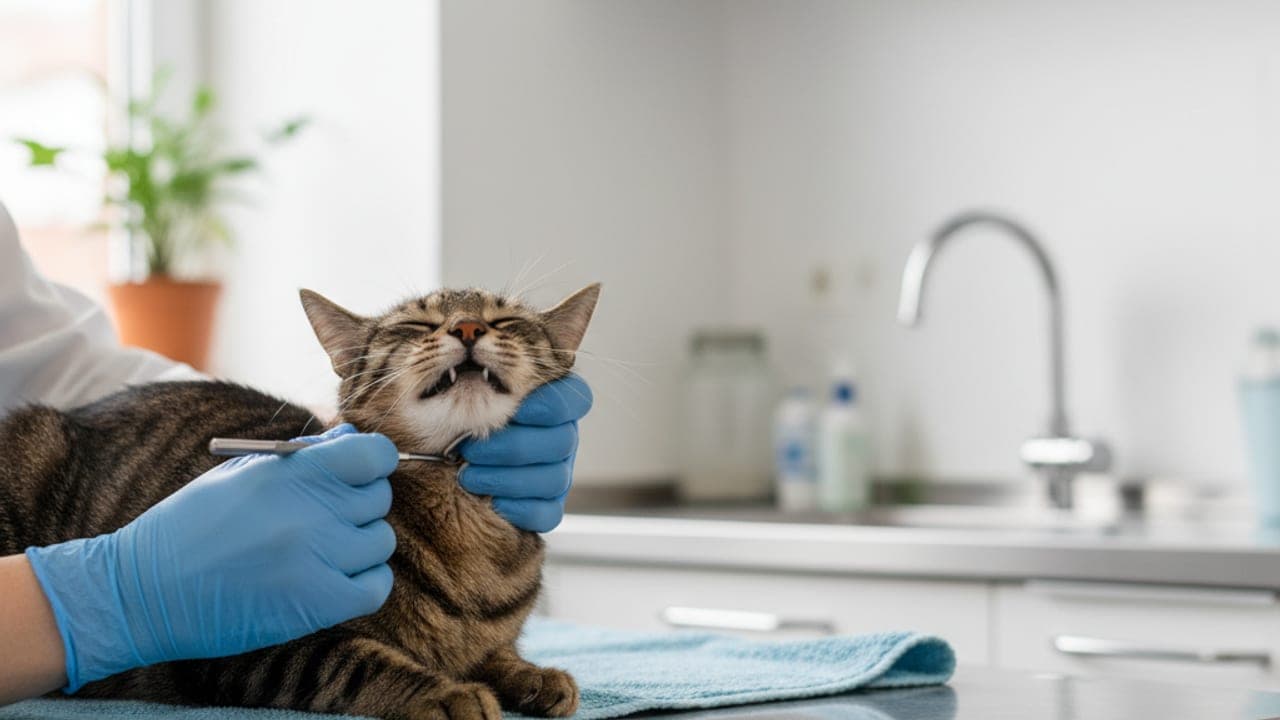
- Over 70% of cats have some form of dental disease by age 3
- Bad breath is NOT normal in cats — it's usually the first sign of dental problems
- Tooth resorption is unique to cats and causes painful erosion of teeth
- Annual professional dental cleanings are the gold standard for prevention
- Daily brushing with cat-specific toothpaste is the best at-home prevention
If your cat's breath has gotten worse lately or she's been dropping food while eating, dental disease could be the culprit. The reassuring news is that dental problems in cats are extremely well understood, and treatment can transform your cat's comfort and quality of life almost overnight.
How Common Is Dental Disease in Cats?
Studies consistently show that over 70% of cats have some form of dental disease by age three. That number climbs to over 85% in cats over six years old. Yet dental disease remains one of the most under-diagnosed conditions in feline medicine because cats are masters at hiding pain.
Your cat might be eating, purring, and seemingly fine — while dealing with significant oral pain. Cats are wired to conceal vulnerability, which means dental problems often progress quietly until they become severe.
Types of Dental Disease in Cats
Gingivitis
The earliest and most reversible form. The gums become red, swollen, and may bleed. Gingivitis is caused by plaque buildup along the gumline. If caught early, professional cleaning and home care can reverse it completely.
Periodontitis
When gingivitis progresses, infection moves below the gumline and damages the structures supporting the teeth — bone, ligaments, and root surfaces. Periodontitis is irreversible. Affected teeth may loosen and eventually need extraction.
Tooth Resorption
Unique to cats and increasingly common — affecting an estimated 28-67% of adult cats. The body begins breaking down and absorbing the tooth structure, starting at or below the gumline. It's extremely painful. The cause remains unknown, and extraction is the only effective treatment.
Siamese and Persian breeds may be more predisposed to certain dental conditions, though all breeds are affected.
Stomatitis
Severe inflammation of the entire mouth — gums, cheeks, throat. Often immune-mediated, stomatitis causes excruciating pain. Some cats with stomatitis need full-mouth or near-full-mouth extractions to achieve relief.
How to Spot Dental Problems
Cats rarely stop eating entirely, even with severe dental pain. Instead, watch for these subtler signs:
Early signs:
- Bad breath (halitosis) — the most common first symptom owners notice
- Red or swollen gums, especially along the gumline
- Slight changes in eating speed or preference for wet food over dry
- Pawing at the mouth occasionally
Progressive signs:
- Drooling, sometimes with blood-tinged saliva
- Dropping food while eating or chewing on one side
- Weight loss despite apparent appetite
- Swelling below the eye (indicating a tooth root abscess)
- Teeth visibly discolored, broken, or covered in tartar
Severe signs:
- Refusing to eat
- Chattering jaw movements
- Aggressive reaction when the face is touched
- Nasal discharge (if a tooth root infection communicates with the nasal cavity)
If you can safely lift your cat's lip, look at the teeth where they meet the gumline. Healthy gums are pink and lie flat against the teeth. Red, swollen, or bleeding gums indicate disease.
Professional Dental Care
A veterinary dental cleaning is the foundation of treatment. Here's what it involves:
Pre-anesthetic blood work — to ensure your cat is healthy enough for anesthesia. This is especially important for senior cats.
General anesthesia — dental procedures require full anesthesia. "Anesthesia-free dentistry" cannot clean below the gumline (where disease lives) and is not recommended by any veterinary dental organization.
Full oral examination — your vet examines every tooth, probing for pockets and abnormalities.
Dental X-rays — essential for detecting disease below the gumline. Up to 60% of dental problems are hidden beneath the surface and invisible without radiographs.
Scaling and polishing — removing plaque and tartar above and below the gumline, then polishing to smooth the tooth surface.
Extractions — if teeth are diseased beyond saving. Cats do remarkably well with extractions, even multiple ones. Most cats eat more comfortably after painful teeth are removed.
Cost: Dental cleanings with X-rays typically cost $400-1,000. If extractions are needed, costs can reach $1,500-3,000 depending on the number and complexity.
Home Dental Care
While professional cleanings are essential, home care extends the benefit:
Tooth brushing — the gold standard. Use a cat-specific toothpaste (never human toothpaste) and a small, soft brush or finger brush. Start slowly — just touching the gums, then progressing to brief brushing sessions. Daily brushing is ideal; even 3 times weekly helps.
Dental treats and chews — look for the VOHC (Veterinary Oral Health Council) seal. These products have proven efficacy in reducing plaque and tartar.
Water additives — some veterinary-approved water additives help control bacteria. They're the easiest option but least effective compared to brushing.
Dental diets — some prescription cat foods are formulated with larger kibble and specific fiber patterns that scrub teeth as the cat chews.
For a complete guide to feline nutrition, including how diet affects dental health, check our nutrition guide.
Prevention Strategies
- Start dental care early — kittens are easier to train for tooth brushing
- Schedule annual veterinary dental exams (some cats need cleanings every 6-12 months)
- Feed a quality diet and consider dental-specific options
- Monitor your cat's mouth regularly — lift the lip monthly and check the gums
- Don't wait for symptoms. By the time signs are obvious, disease is often advanced
When to See the Vet
Beyond annual exams, schedule a dental visit if you notice:
- Persistent bad breath
- Changes in eating behavior
- Visible tartar buildup or red gums
- Drooling or blood in saliva
- Face rubbing or pawing at the mouth
A vet visit for dental concerns is never overreacting. Early treatment is less invasive, less expensive, and prevents your cat from suffering in silence. Browse our cat breed guides for breed-specific health information including dental predispositions.
FAQ
Do cats need dental cleanings under anesthesia?
Yes. Proper dental cleaning requires cleaning below the gumline, which is impossible on an awake cat. Anesthesia also allows for dental X-rays, which detect 60% of problems invisible to the naked eye. "Anesthesia-free" dental cleanings are cosmetic only and are not endorsed by veterinary dental specialists.
How often do cats need professional dental cleanings?
Most cats benefit from cleanings every 1-2 years, though some cats with aggressive dental disease need cleanings every 6-12 months. Your vet will recommend a schedule based on your cat's individual oral health.
Can cats eat without teeth?
Yes. Cats don't chew their food the way humans do — they primarily use their teeth to tear food into swallowable pieces. Most cats eat wet food (and even dry food) comfortably after full-mouth extractions. Their quality of life typically improves dramatically once painful teeth are removed.
Is dental disease in cats painful?
Extremely. Tooth resorption and periodontitis are among the most painful conditions in feline medicine. Cats hide pain as an instinct, so a cat eating normally may still be in significant discomfort. Many owners report that their cat seems "years younger" after dental treatment.
Can I brush my cat's teeth?
Yes, and it's the most effective home dental care. Start gradually with flavored cat toothpaste on your finger, then progress to a small brush. Most cats accept brushing within 2-3 weeks of patient, slow training. Even a few times per week makes a measurable difference.
Mr Pet Lover Team
The Mr Pet Lover team is dedicated to providing warm, accurate, and practical pet care advice backed by veterinary research and real-world experience.
Related Articles

Feline Lower Urinary Tract Disease (FLUTD): A Complete Guide
Straining in the litter box or blood in your cat's urine is alarming. Here's everything you need to know about FLUTD, from causes to treatment.

Can Dogs Eat Chocolate? Toxicity by Weight + What to Do Right Now
No — chocolate is toxic to dogs. How much is dangerous by your dog's weight and the chocolate type, the symptoms to watch, and exactly what to do right away.

How Long Are Dogs Pregnant? A Week-by-Week Timeline (+ When to Call the Vet)
Dogs are pregnant about 63 days (range 58–68). A week-by-week timeline of what to expect, how to count the due date, and the exact signs that mean call the vet now.