
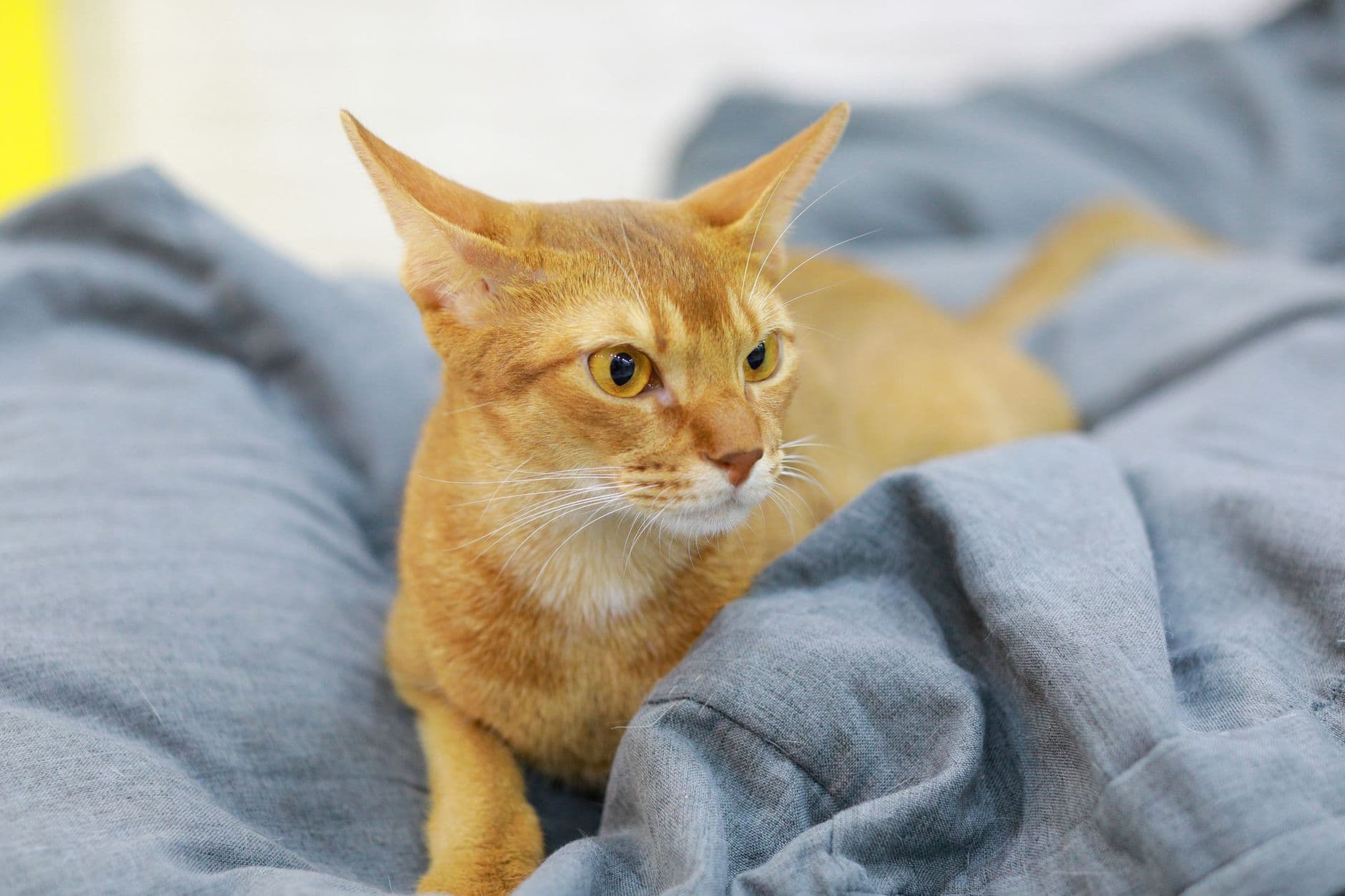
Abyssinian Cat Care Guide
The Ancient Athlete of the Cat World The Abyssinian is one of the oldest known domestic cat breeds, with a history that stretches back thousands of years. Ancient Egyptian artwork depicting slender, l
In This Guide
Overview
The Ancient Athlete of the Cat World
The Abyssinian is one of the oldest known domestic cat breeds, with a history that stretches back thousands of years. Ancient Egyptian artwork depicting slender, large-eared cats bears a striking resemblance to the modern Abyssinian, leading many historians to believe this breed walked alongside the pharaohs. Despite this ancient heritage, the Abyssinian as we know it today was developed in Britain during the 19th century, with the first recorded specimen brought back from Abyssinia (modern-day Ethiopia) following a military expedition in 1868.
What makes the Abyssinian instantly recognizable is its stunning ticked tabby coat. Each individual hair is banded in multiple alternating colors, creating a warm, iridescent shimmer that resembles the coat of a wild rabbit or cougar. This distinctive pattern, called agouti ticking, gives the Aby a wild, exotic appearance that belies its thoroughly domesticated and affectionate nature.
The Most Athletic Domestic Cat Breed
Do not let the Abyssinian's slender, elegant build fool you. Pound for pound, these cats are among the most muscular, agile, and energetic of all domestic breeds. Frequently described as the (clowns of the cat world), Abyssinians are in perpetual motion - leaping to the highest point in any room, investigating every drawer and cabinet, and inserting themselves into whatever their humans are doing. If you set something down, expect it to be batted off a surface within minutes.
This athleticism is not just playful mischief. The Abyssinian has a genuine need for physical and mental stimulation that must be met daily. A bored Abyssinian is a destructive Abyssinian. Unlike many cat breeds that can contentedly nap through a workday, Abyssinians left alone for extended periods will redecorate your home in ways you did not authorize.
A Social Cat That Needs Companionship
One of the most important things to understand before adopting an Abyssinian is that these cats cannot thrive in isolation. They form deep bonds with their human families and follow owners from room to room with dog-like devotion. However, when owners work full-time jobs, a solo Abyssinian can develop anxiety, depression, and behavioral problems.
The strongly recommended solution is to adopt Abyssinians in pairs, or to ensure another confident, playful cat companion is already in the home. Two Abyssinians together will entertain each other, burn off energy cooperatively, and maintain healthy mental stimulation during the hours you are away. Male Abyssinians tend to be bolder and more outgoing, while females are often described as more independent - though both sexes need companionship.
Lifespan and General Health Outlook
With proper care, Abyssinians typically live 12 to 15 years. They are generally a robust breed, but several serious heritable conditions require awareness from any responsible owner or breeder. Progressive retinal atrophy (PRA), pyruvate kinase deficiency, and renal amyloidosis are the three most significant genetic health concerns in this breed. Additionally, Abyssinians have a higher tendency toward hyperthyroidism as they age compared to some other breeds.
Buying from a reputable breeder who DNA-tests their breeding cats is non-negotiable with this breed. Two of them - PRA and PK deficiency - have validated DNA tests, so responsible breeding can keep them out of a line. Renal amyloidosis is not in that category: the familial form is not a simple monogenic trait, so no DNA test clears a cat for it. For full information on cat breeds and health considerations, explore the breed database.
Is the Abyssinian Right for You?
The Abyssinian is an extraordinary companion for active households that can provide stimulation, interaction, and ideally a feline companion. They are not the right cat for someone seeking a lap cat, a quiet presence, or a pet that can be left alone for 10-hour workdays without consequences. But for the right owner, the Abyssinian delivers decades of entertainment, loyalty, and genuine connection.
Daily Care
Structuring Your Abyssinian's Day
Abyssinians are not cats you set up with food and water and check on at night. They require an engaged, structured day with dedicated interaction periods. Plan for a minimum of two 20-minute active play sessions daily - morning and evening - using wand toys, laser pointers, or puzzle feeders. Without this outlet, you will notice increased vocalization, destructive behavior, and stress-related grooming.
Environmental Enrichment Essentials
Because Abyssinians are vertical animals, the height of your space matters as much as the square footage. Invest in tall cat trees that allow climbing to ceiling height, wall-mounted shelving systems designed for cats, and window perches that give your Aby a view of the outside world. Rotating toy selections every few days prevents boredom - these are intelligent cats that lose interest in the same stimuli quickly.
Puzzle feeders and food-dispensing toys are particularly effective. Rather than feeding from a static bowl, make your Abyssinian work for a portion of their daily calories. This replicates natural hunting behavior and keeps the mind engaged.
The Companion Imperative
If you work outside the home, a second cat is not optional - it is the responsible choice for this breed. Two Abyssinians will play together, groom each other, and share naps throughout the day in a way that a single cat cannot manage alone. Introduce a companion before behavioral problems develop rather than as a response to them. See care guides for multi-cat household management tips.
Litter Box Standards
Abyssinians are fastidiously clean cats. Provide one litter box per cat plus one additional, keep them scooped at minimum once daily, and perform a full litter change weekly. A dirty box is one of the fastest ways to trigger inappropriate elimination in this breed. Unscented, clumping litter in a box sized generously for the cat's body length is the standard recommendation.
Nutrition
Feeding the Athletic Abyssinian
The Abyssinian's high energy output means nutritional quality matters more than with sedentary breeds. These cats need protein-first diets derived from named animal sources - chicken, turkey, salmon, or rabbit should appear as the first ingredient on any food label. Cheap fillers like corn gluten meal or wheat are poor matches for an Abyssinian's digestive system and energy needs.
Wet Food Priority
Abyssinians, like all cats, are obligate carnivores with a low thirst drive. In the wild, cats obtain the majority of their hydration through prey. Dry-only diets therefore contribute to chronic low-level dehydration, which stresses the kidneys over time - particularly significant given the Abyssinian's genetic predisposition to renal amyloidosis. Feeding a high-quality wet food as the primary diet, or at minimum offering wet food twice daily alongside a measured serving of dry, is the standard of care for this breed.
Portion Control and Weight Monitoring
Despite their active lifestyle, Abyssinians can gain weight if free-fed, particularly as they age and activity levels decline. Establish measured meal portions based on the feeding guidelines of your chosen food and your veterinarian's body condition score assessment. Adult Abyssinians typically weigh between 6 and 10 pounds - males on the higher end. Weigh your cat monthly and adjust portions accordingly.
Supplements and Special Considerations
Omega-3 fatty acids (from fish oil) support the coat quality and joint health of active Abyssinians. If your cat is diagnosed with pyruvate kinase deficiency, your veterinarian will guide specific dietary support. Abyssinians with early signs of renal amyloidosis may require a phosphorus-restricted prescription diet. Never supplement or restrict without veterinary guidance.
Exercise
Born to Move
No other domestic cat breed demands more physical activity than the Abyssinian. These cats evolved as active hunters in warm, open environments, and that drive has not been diminished by thousands of years of domestication. Plan your exercise strategy before bringing an Abyssinian home, not as an afterthought.
Active Play Sessions
Wand toys that simulate prey movement - feathers, fabric strips, or mylar crinkle attachments on a flexible rod - trigger the Abyssinian's predatory sequence (stalk, chase, pounce, catch) in a way that simple balls rolling across the floor do not. Two structured sessions of 20-25 minutes, morning and evening, are the minimum. Many Abyssinian owners find their cats will initiate additional play if the human is willing.
Da Bird, Cat Dancer, and similar interactive wand toys are consistently the highest-rated options among Abyssinian owners. Rotate regularly to maintain novelty.
Vertical Exercise and Climbing Infrastructure
Abyssinians exercise vertically as readily as horizontally. A well-designed cat tree with multiple climbing levels, sisal scratching posts, and elevated platforms positioned near windows provides opportunities for exercise throughout the day even without human involvement. Wall-mounted cat shelving systems - installed at varying heights with intentional jump distances - turn a wall into a full exercise circuit.
Mental Exercise Counts
For a breed as intelligent as the Abyssinian, mental fatigue from problem-solving is real exercise. Rotate puzzle feeders, introduce new scent objects from outdoors (pinecones, safe leaves), and teach basic tricks using clicker training. Abyssinians are highly trainable and respond well to positive reinforcement. A mentally exhausted Abyssinian is a calm Abyssinian.
Grooming
The Low-Maintenance Luxury Coat
One of the Abyssinian's practical advantages is a coat that requires minimal intervention. The short, dense, ticked coat does not mat, rarely needs professional grooming, and sheds at modest levels compared to double-coated breeds. However, (low maintenance) does not mean (no maintenance).
Brushing Routine
Weekly brushing with a soft-bristle brush or grooming glove removes loose hairs, distributes natural skin oils, and gives you an opportunity to check the skin for any unusual lumps, scabs, or parasites. During seasonal transitions in spring and autumn, brushing frequency can increase to twice weekly as the Abyssinian sheds its undercoat. A chamois cloth run over the coat after brushing adds a natural polish to that distinctive ticked shimmer.
Nail Care
Trim your Abyssinian's nails every two to three weeks using sharp, cat-specific nail clippers. Active cats who use sisal scratching posts regularly may need slightly less frequent trims. Familiarize kittens with nail handling early so the process remains stress-free throughout their life.
Ear and Dental Care
Abyssinians have large, forward-tilting ears that collect debris and should be checked weekly. Use a cotton ball dampened with a veterinarian-approved ear cleaning solution to wipe the outer ear canal - never insert anything into the ear canal itself. If you notice redness, odor, or discharge, consult your veterinarian.
Dental disease is the most common preventable health issue in all cats. Brush your Abyssinian's teeth daily using a cat-specific toothpaste and finger brush, or at minimum three times per week. Dental chews and water additives offer partial support but do not replace mechanical brushing.
Eye Care
Wipe any discharge from the corners of the eyes with a damp, lint-free cloth. Use a separate cloth for each eye to prevent cross-contamination.
Health
Primary Genetic Health Concerns
Abyssinians are generally a healthy breed, but several heritable conditions occur at higher rates than in the general cat population. Every prospective Abyssinian owner should understand these conditions before purchasing or adopting.
Progressive Retinal Atrophy
Progressive retinal atrophy (PRA) causes the gradual degeneration of photoreceptor cells in the retina, eventually leading to complete blindness. In Abyssinians the rdAc mutation is the most common form. It sits in the CEP290 gene and is autosomal recessive, so a cat must inherit two copies to be affected and carriers see normally. DNA testing of breeding cats can keep that form out of a line. The breed carries a second, separate retinal mutation as well - the Rdy deletion in the CRX gene, which the Online Mendelian Inheritance in Animals database classes as incomplete dominant, so one copy is enough. Ask your breeder which mutation their documentation actually names.
Pyruvate Kinase Deficiency
Pyruvate kinase (PK) deficiency is a red blood cell disorder in which the enzyme responsible for red blood cell energy production is deficient, leading to hemolytic anemia. Symptoms include lethargy, pale gums, jaundice, and poor growth. Like PRA, PK deficiency is autosomal recessive and fully preventable through DNA testing. Affected cats may require management ranging from supportive care to bone marrow transplantation in severe cases.
Renal Amyloidosis
Renal amyloidosis involves the abnormal deposition of amyloid protein in the kidneys, progressively impairing kidney function. In Abyssinians the condition has a heritable component, but a 2021 Scientific Reports study of affected Abyssinians concluded the familial renal form is not a simple monogenic trait, implicating several low-penetrance variants rather than one testable gene - which is why no DNA test clears a cat for it. That study's three affected cats died between two and five years of age, so this is not reliably a middle-aged disease. There is no cure, though dietary management (phosphorus restriction, high-quality protein) and fluid support can slow progression. Because onset can come early, agree a kidney-monitoring schedule with your vet from young adulthood rather than waiting for a senior screening age.
Hyperthyroidism
Abyssinians show a higher tendency toward hyperthyroidism as they age, particularly after 10 years. Symptoms include weight loss despite increased appetite, increased thirst and urination, vomiting, and hyperactivity. Hyperthyroidism is highly manageable with medication (methimazole), radioiodine therapy, or dietary management using iodine-restricted prescription food.
Recommended Preventive Care Schedule
Annual wellness exams until age 7, then biannual. Bloodwork panels to baseline kidney and thyroid values, started at the age your vet advises for this breed rather than at a fixed senior threshold. Keep vaccinations current per your veterinarian's protocol. Maintain year-round flea and parasite prevention.
Costs
What to Budget for an Abyssinian
The Abyssinian is an established, widely recognized purebred, so its purchase price sits in the moderate range for pedigreed cats — below the newest or rarest breeds. A kitten from a registered breeder who health-tests the parents costs more than a rescue adoption, and show-quality kittens from champion lines command the most; that premium buys documented lineage and screening, not a more affectionate cat. Breed rescues do occasionally have Abyssinians, at a fraction of breeder pricing.
First-Year Setup Is Enrichment-Led
Abyssinians are exceptionally active and intelligent, and that decides where the setup money goes: less on the basics, more on keeping a busy cat occupied. A tall, sturdy cat tree, a rotating set of interactive toys, and puzzle feeders are the difference between a contented Aby and a destructive one — treat them as core spending, not extras. The standard one-time items round it out: spay or neuter if the kitten is not already altered, the initial vaccine series, a first wellness exam, and microchipping.
What Recurs
A single Abyssinian's ongoing costs are led by a quality wet-primary diet, then annual wellness care, year-round parasite prevention, litter, and dental cleaning under anesthesia every few years. None of these is breed-specific in kind — an Aby eats about what any active cat of its size does — so the recurring figure tracks the general cost of a well-kept indoor cat.
Where the Financial Case Turns: Heritable Health Risk
An Abyssinian's costs diverge from an average cat's on the breed's inherited condition profile — renal amyloidosis, hyperthyroidism, and pyruvate-kinase (PK) deficiency. If one develops, medication and prescription diets become a standing monthly cost, and a severe case needing specialist care is the open-ended bill that defines this breed's financial tail risk. That risk, not the routine costs, is why insurance is strongly recommended for an Abyssinian, and why it is worth buying before any symptom appears, while nothing can be excluded as pre-existing. Buying from a breeder who screens the parents for PK deficiency is the other lever that lowers the same tail.
Frequently Asked Questions
My breeder says their cats are "PRA tested" — does that cover everything?
Not necessarily, because this breed carries two separate retinal mutations and most certificates name only one. The rdAc form sits in the CEP290 gene and is recessive, so carriers see normally. The Rdy form is a deletion in the CRX gene, and the Online Mendelian Inheritance in Animals database run by the University of Sydney classes it as incomplete dominant — a single copy is enough to affect the kitten. Ask which mutation the certificate names before you pay a deposit.
My two-year-old Aby has started hesitating on the stairs at dusk. Is this rdAc starting?
The timing fits. Langford Vets at the University of Bristol puts first detectable changes at one to two years of age and blindness at three to five, while noting some affected cats keep useful vision past six. A review in the Journal of Ophthalmology recorded measurably reduced retinal function as early as seven months. Book a veterinary ophthalmology exam and run the DNA test, then fix your furniture, litter trays and bowls in place and leave them there.
Our vet found no sign of PK deficiency at the kitten check. Is she clear?
A clear examination is not a clear genotype. The 2012 BMC Veterinary Research study that identified the feline PKLR mutation describes an autosomal recessive disease "with high variability in onset and severity," with signs first appearing anywhere between six months and five years, running as a chronic intermittent anaemia — so a good day proves nothing. Get the DNA result in writing. If her gums ever look white or yellow, Cornell's Feline Health Center treats that as grounds for an urgent packed cell volume test.
Can renal amyloidosis be bred out with a DNA test the way PK deficiency and PRA can?
Not at present. A 2021 Scientific Reports multi-omic study of affected Abyssinians concluded that the familial renal form "is not a simple monogenic trait," implicating several low-penetrance variants rather than one testable gene, and confirmed AA-type deposits in the interstitium, glomeruli and vessel walls. Its three affected cats died between two and five years old. So treat even a fully DNA-tested pedigree as silent on amyloidosis, and agree a kidney-monitoring schedule with your vet early rather than waiting for middle age.
Are blue and fawn Abyssinians a rarer line that needs different health checks?
No. The Cat Fanciers' Association recognises ruddy, cinnamon, blue and fawn as one breed, all carrying the same banded ticking that marks each individual hair. Coat colour tells you nothing about the retinal or red-cell mutations, so a fawn kitten needs exactly the same parental genotype paperwork as a ruddy one. A breeder who leans on colour rarity while skipping those certificates is telling you where their priorities sit.
Sources
This guide draws on the following published references. Each opens in a new tab so you can check it against what you have read here.
Cat Fanciers' Association
Abyssinian — breed standard and profile(opens in a new tab)The Cat Fanciers' Association
Abyssinian Breed Profile(opens in a new tab)Cornell Feline Health Center, Cornell University College of Veterinary Medicine
Anemia(opens in a new tab)ASPCA
General Cat Care(opens in a new tab)Online Mendelian Inheritance in Animals, Sydney School of Veterinary Science, University of Sydney
Retinal atrophy - Rod-cone dysplasia, CRX related in Felis catus (OMIA 000881-9685)(opens in a new tab)Journal of Ophthalmology (2011), via PubMed Central
The Domestic Cat as a Large Animal Model for Characterization of Disease and Therapeutic Intervention in Hereditary Retinal Blindness(opens in a new tab)BMC Veterinary Research (2012), via PubMed Central
Erythrocyte Pyruvate Kinase Deficiency mutation identified in multiple breeds of domestic cats(opens in a new tab)Scientific Reports (2021), via PubMed Central
Multi-omic analyses in Abyssinian cats with primary renal amyloid deposits(opens in a new tab)Merck Veterinary Manual
Routine Health Care of Cats(opens in a new tab)Langford Vets, University of Bristol
Progressive Retinal Atrophy (rdAc)(opens in a new tab)
Affiliate disclosure: We may earn a commission from qualifying purchases. This doesn't affect our recommendations.
Recommended Products
Get personalized pet care tips
Join our newsletter for breed-specific advice, care guides, and expert tips delivered weekly.
No spam, ever. Unsubscribe anytime.