
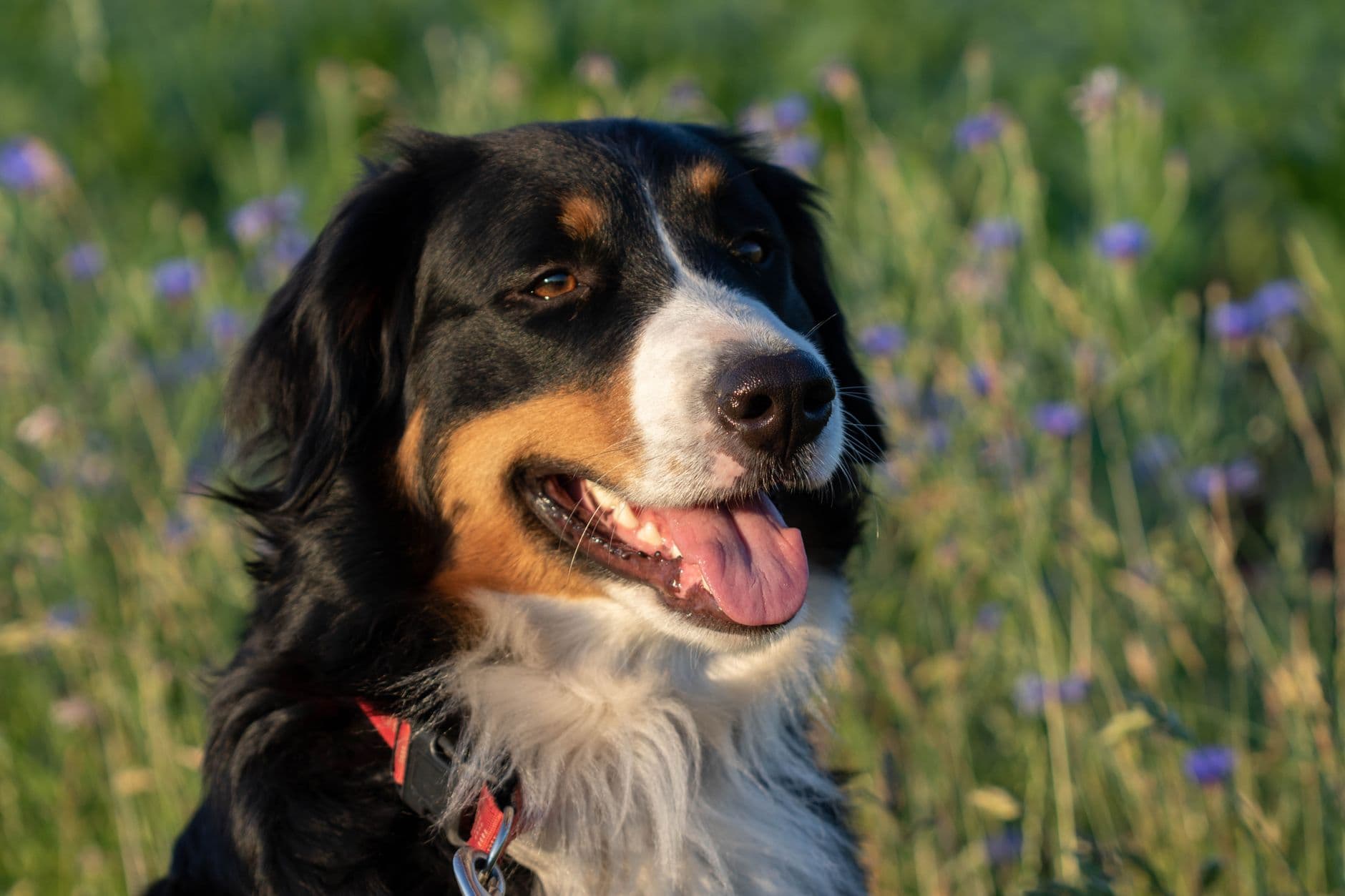
Bernese Mountain Dog Care Guide
The Tri-Color Swiss Farm Dog The Bernese Mountain Dog is one of four Swiss mountain dog breeds (Sennenhunde), originating in the canton of Bern in the Swiss Alps. For centuries, Berners served as work
Reading Time
📖 11 min read
Guide Type
🐾 Breed-Specific
Last Updated
📅 Sep 9, 2026
In This Guide
Overview
The Tri-Color Swiss Farm Dog
The Bernese Mountain Dog is one of four Swiss mountain dog breeds (Sennenhunde), originating in the canton of Bern in the Swiss Alps. For centuries, Berners served as working farm dogs: drafting carts loaded with cheese and milk to market, driving cattle to and from pasture, and providing companionship to farm families across the Bernese Oberland region. A Berner pulling a cart of dairy products through a Swiss village is not a romantic fiction but a documented historical practice.
The breed nearly disappeared by the early 20th century as modernization reduced the need for draft animals. A handful of dedicated breed enthusiasts in Bern preserved and re-established the population. The first Bernese Mountain Dog was registered in Switzerland in 1907. They arrived in the United States in 1926 and gained AKC recognition in 1937.
Today, the Bernese Mountain Dog is beloved as a family companion, therapy dog, and occasional cart-pulling enthusiast. Their gentle temperament, striking appearance, and affectionate nature make them deeply appealing. The heartbreak, and every prospective owner must understand this going in, is the lifespan.
The Lifespan Crisis
The Bernese Mountain Dog has one of the shortest lifespans of any purebred dog: 6 to 8 years on average. Some live to 10. Many do not reach 7. The reason is cancer. It is not hyperbole to say that cancer is the defining health crisis of the breed. Approximately 50 to 60 percent of Bernese Mountain Dogs die from cancer, compared to an estimated 27 percent of dogs across all breeds.
The most devastating form is histiocytic sarcoma, also called malignant histiocytosis. This cancer, virtually unknown in most dog breeds, affects an estimated 25 percent of Bernese Mountain Dogs. It is aggressive, spreads rapidly through the organs, and carries a very poor prognosis. The median survival time from diagnosis is typically 2 to 4 months even with treatment.
Prospective owners must sit with this information honestly. A Berner purchased at 8 weeks may be gone before its 7th birthday. Families with young children especially should consider whether that compressed timeline aligns with their emotional readiness.
The (Slow White) Period
Bernese Mountain Dog puppies and young adults mature emotionally and mentally much later than smaller breeds. The first year produces a bouncy, clumsy, exuberant puppy with very little impulse control. The second year is often called the (slow white) by experienced Berner owners, a period of adolescent testing and continued immaturity. True adult temperament and trainability do not fully settle until 2 to 3 years of age.
This extended puppyhood is endearing and frustrating in equal measure. It requires consistent training and patience, especially given that these dogs reach full physical size (80 to 115 pounds) long before they reach full mental maturity.
Climate and Environment
Berners are emphatically not suited for warm climates. Their dense double coat is built for Swiss alpine conditions. In temperatures above 75 degrees Fahrenheit, they overheat quickly. Outdoor time in summer should be limited to early morning and late evening. Air conditioning is not optional in warm regions; it is a welfare requirement. Breed clubs in warm-climate US states actively advise against placing Berners in families without central air conditioning.
Daily Care
Daily Life with a Bernese Mountain Dog
Berners are calm indoors and steady in temperament, which makes them excellent family dogs as long as their exercise and grooming needs are met. They are not hyperactive or destructive when properly exercised. They are, however, shedding machines that require consistent grooming investment.
A typical day for a Berner should include a moderate morning walk or off-leash play session (30 to 45 minutes), and a shorter evening session. They enjoy outdoor activities in cool weather: hiking, pulling carts, playing in snow. In summer, exercise must be scheduled around heat.
Managing the Coat Year-Round
The Bernese double coat sheds moderately year-round and heavily twice yearly during seasonal shedding cycles. Establish a brushing routine from puppyhood. Three sessions per week is the minimum to keep shedding manageable and prevent mat formation in the longer feathering around the ears, collar, legs, and tail.
A deshedding brush or undercoat rake removes loose undercoat before it ends up on furniture and clothing. During shedding seasons, daily brushing is more realistic than three times weekly. Many Berner owners invest in a high-quality vacuum and lint rollers and consider both essential household tools.
Training and Socialization
Berners are people-oriented and eager to please, which makes them trainable but not as sharp as working breeds. They respond best to gentle, positive methods. Harsh corrections can shut them down or damage the human-dog relationship. Begin training at 8 weeks and continue through the full two-to-three-year maturation period.
Socialization is important because Berners can be reserved with strangers if not properly exposed during the critical socialization window. Well-socialized Berners are gentle and friendly with everyone; under-socialized ones can be shy and reactive, which at 100 pounds is a management challenge.
Nutrition
Feeding a Large Breed Dog Correctly
The Bernese Mountain Dog is a large breed (not technically giant) but borders on giant in some lines, with males reaching 115 pounds. Puppy nutrition follows the same large-breed principles: controlled calcium and phosphorus ratios to prevent overly rapid bone growth, which stresses developing joints.
Choose a large-breed puppy formula and resist the impulse to (bulk up) a growing Berner with extra food or supplements. Excess calcium in puppies is more dangerous than too little because the body cannot excrete the excess. This leads to skeletal developmental problems.
Adult Feeding
Adult Berners (70 to 115 pounds depending on sex and build) typically eat 4 to 6 cups of quality dry kibble daily, split across two meals. Feed based on actual body condition, not package guidelines, which are often higher than what a relatively calm indoor dog needs.
Bloat (GDV) risk is present in Berners, though not as severe as in Weimaraners or Saint Bernards. The same protocols apply: two or more smaller meals, no exercise for 60 minutes before and after eating, and awareness of the warning signs. Some veterinarians recommend prophylactic gastropexy during spay or neuter for Berners.
Joint-Supporting Nutrition
Given the breed's predisposition to hip and elbow dysplasia, some veterinarians recommend omega-3 fatty acid supplementation (fish oil) for its anti-inflammatory properties. Glucosamine and chondroitin supplements are commonly used in older Berners showing signs of joint stiffness, though the evidence base is moderate. Discuss supplementation with your veterinarian rather than self-prescribing.
Exercise
Moderate Needs, Smart Management
Berners are not high-energy dogs by large breed standards. Adults are satisfied with 30 to 60 minutes of moderate exercise daily. They enjoy hiking, carting, and off-leash play in cool weather. In warm weather, all exercise should be scheduled around temperature management.
This is not a breed that needs to run for hours or engage in high-intensity activities. They tire more in heat and are prone to joint issues that can be aggravated by excessive impact exercise, particularly as they age.
Draft Work and Carting
Carting is a genuinely appropriate activity for Berners that connects to their historical purpose. Many Berner clubs host carting tests and workshops. A well-conditioned adult Berner can pull several hundred pounds in a properly fitted cart. Beyond the physical benefit, carting provides mental stimulation and a sense of purpose that many Berners seem to genuinely enjoy. The American Kennel Club offers Berner Carting titles.
Puppy Exercise Restrictions
Joint health starts in puppyhood. Avoid stairs, jumping on and off furniture, and sustained running until 18 months. The extended growth phase of large breeds means growth plates close later than in smaller dogs. Free play in a safe yard is lower risk than forced exercise. Use the 5-minutes-per-month-of-age guideline for structured walks.
Senior Dog Considerations
Given the Berner's short lifespan, (senior) status arrives earlier than with smaller breeds. A 6-year-old Berner is physiologically older than a 6-year-old Labrador. Reduce exercise intensity as dogs age, watch for signs of joint pain or exercise intolerance, and maintain quality of life with appropriate low-impact activity.
Grooming
Brushing as a Weekly Ritual
The Bernese coat is one of the most beautiful in dogdom and one of the most labor-intensive to maintain. The thick double coat, with its silky outer layer and dense undercoat, requires brushing at minimum 3 times per week and daily during seasonal shedding. Mats form readily in the longer feathering around the collar, ears, elbows, and hindquarters.
Tools needed: a slicker brush for the outer coat, an undercoat rake or deshedding tool for the dense undercoat, and a metal greyhound comb for finishing and mat detection. Work systematically through sections to avoid missing areas.
Bathing
Berners need a full bath every 6 to 8 weeks. The dense coat requires thorough rinsing to remove all shampoo residue, and thorough drying afterward to prevent hotspots and skin infection. A forced-air dryer speeds the process dramatically and also removes loose undercoat. Professional grooming twice yearly for a full bath-and-blow-out is worthwhile investment.
Ears, Nails, and Wrinkles
Ear checks weekly for redness, odor, or discharge. Berners do not have extreme ear conformation, but regular inspection prevents infections from developing undetected.
Nail trimming every 3 to 4 weeks. Heavy dogs put more load on improperly maintained nails, affecting gait and joint alignment.
Dental hygiene should include brushing 3 to 5 times per week. Professional dental cleaning under anesthesia every 2 to 3 years maintains oral health. Dental disease in a dog already facing significant health risks is a preventable burden worth eliminating.
Health
Cancer: The Central Health Reality
No breed-specific health guide for the Bernese Mountain Dog can begin anywhere but here. Cancer kills approximately 50 to 60 percent of Berners, a rate more than double that of the general dog population. The breed is the subject of ongoing research by universities and veterinary institutions, including the Berner-Garde Foundation, which maintains a genetic database to track health outcomes across generations.
Histiocytic Sarcoma
This is the cancer most associated with the breed. Histiocytic sarcoma affects approximately 25 percent of Berners, compared to less than 1 percent of the general canine population. It originates from histiocytes (immune system cells) and can manifest as masses in the spleen, liver, lungs, bone marrow, lymph nodes, and brain. It is aggressive, spreads quickly, and carries a very poor prognosis. Average survival after diagnosis without treatment is weeks. With chemotherapy, median survival is a few months. There is no reliable early detection test.
Berner owners should be aware of warning signs: sudden weight loss, lethargy, loss of appetite, abdominal swelling, and unexplained lameness. Because the disease progresses so quickly, veterinary evaluation at the first sign of abnormality is important.
Hip and Elbow Dysplasia
Prevalent in the breed. Both parents should have OFA or PennHIP scores on record. Symptoms include lameness, difficulty rising, a reluctance to climb stairs, and exercise intolerance beginning between 6 months and 2 years.
Bloat and GDV
Present as a risk in the breed. Deep-chested dogs of any size are at elevated risk. Review bloat prevention protocols under the nutrition section.
The Heartbreaking Math
A Berner owner who pays $3,000 to $4,000 for a puppy and invests 5 years of love and care may face a cancer diagnosis at age 5 or 6, followed by treatment costs of $3,000 to $15,000 with a poor prognosis. Pet insurance taken out before any diagnosis is the most protective financial decision a Berner owner can make. Comprehensive coverage for a Berner puppy typically costs $80 to $150 per month.
Costs
Acquisition
Reputable Berner breeders, who health-test for hips, elbows, cardiac conditions, and who participate in the Berner-Garde health registry, typically charge $2,500 to $4,500 for a puppy. This price reflects the health-testing investment and the relatively small litter sizes. Avoid breeders charging significantly less who cannot produce health certifications.
Berner rescue adoption is typically $300 to $600 and provides adults whose temperament is known. Given the breed's cancer prevalence, adopting an adult can mean a shorter remaining lifespan than anticipated, which should be discussed openly with the rescue.
Monthly Costs
- Food: $100 to $160 per month for quality kibble (males especially eat more due to size)
- Grooming tools and supplies: $20 to $40 per month amortized
- Professional grooming (twice yearly): $80 to $130 per session
- Heartworm/flea/tick prevention: $40 to $70 per month
Veterinary Costs
Annual wellness care: $500 to $800. Joint supplements and medications as the dog ages: $50 to $150 per month. Cancer treatment, if pursued: $3,000 to $15,000 or more depending on the treatment approach.
Pet insurance is not optional for this breed. A $100 to $150 monthly premium for a comprehensive policy is the most financially rational decision a Berner owner can make.
Annual Estimate
Typical year: $4,500 to $8,000. A year with a significant health event: $10,000 to $25,000. Financial preparation and insurance coverage should be secured before the puppy comes home.
Sources
This guide draws on the following published references. Each opens in a new tab so you can check it against what you have read here.
American Kennel Club
Bernese Mountain Dog — breed standard and profile(opens in a new tab)ASPCA
General Dog Care(opens in a new tab)Merck Veterinary Manual
Routine Health Care of Dogs(opens in a new tab)
Affiliate disclosure: We may earn a commission from qualifying purchases. This doesn't affect our recommendations.
Recommended Products
Get personalized pet care tips
Join our newsletter for breed-specific advice, care guides, and expert tips delivered weekly.
No spam, ever. Unsubscribe anytime.