
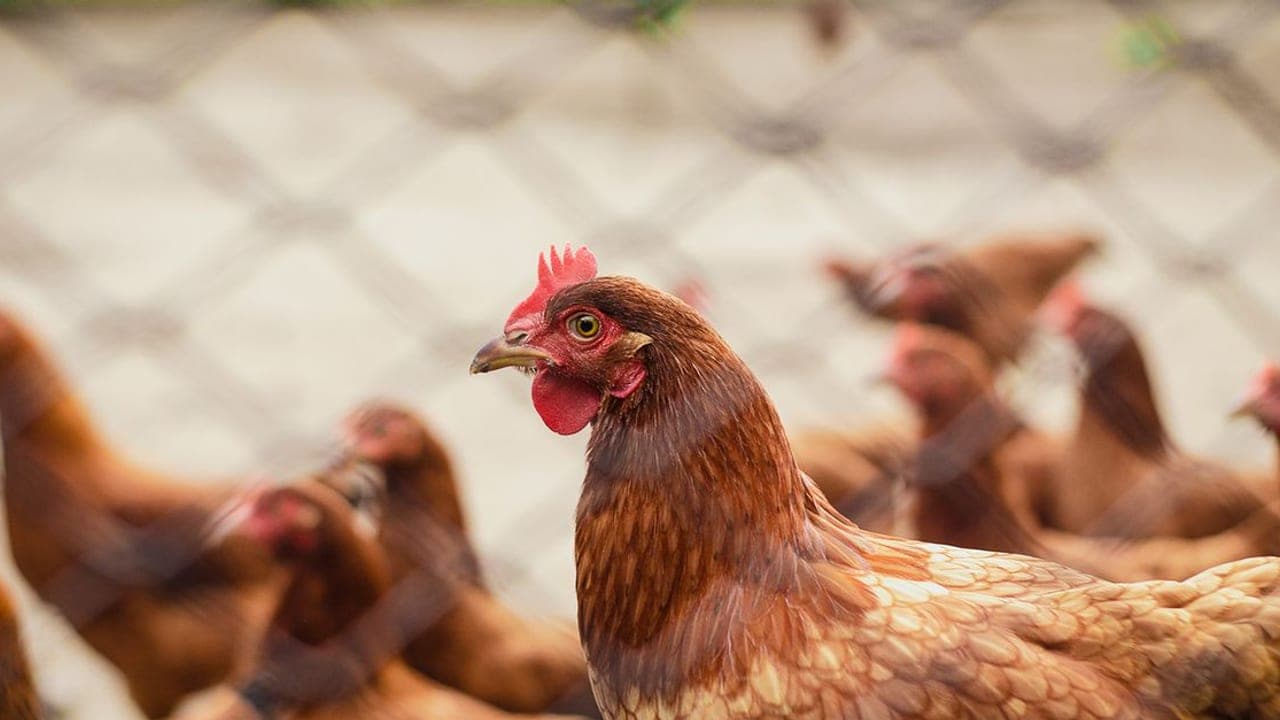
Backyard Chicken Care Guide: Setup, Breeds, Health and Running Costs
Trauma, including injuries inflicted by predators, is the most common problem affecting backyard poultry, according to the Merck Veterinary Manual [4]. Chickens are also prey animals that tend to hide
Reading Time
📖 13 min read
Guide Type
📋 General
Last Updated
📅 Nov 17, 2026
Breed
🐶 All Pets
In This Guide
Overview
Trauma, including injuries inflicted by predators, is the most common problem affecting backyard poultry, according to the Merck Veterinary Manual [4]. Chickens are also prey animals that tend to hide illness, so early signs can be subtle [4]. Those two facts set the priorities for keeping hens: a house and run that hold at night, enough room inside them, a feed matched to each bird's age, and a keeper who looks closely at every bird every day.
The RSPCA describes chickens as social creatures [7]. It recommends keeping at least three hens that get on well together, not one or two [7]. Plan space, perches and nest boxes for that number from the start, and size up if you expect to add birds later.
This guide covers chickens as a species: housing, feeding from chick to laying hen, parasites, molt, health, hygiene and routine. It does not compare breeds. For individual breeds, see the chicken breed hub and the pages for the Brahma, Leghorn, Orpington, Rhode Island Red, Silkie and Sussex. For other animals, browse the care guide library.
Daily Care
| When | Task | Why | | --- | --- | --- | | Every morning | Open the house, refill feed, refresh water and clean a dirty waterer | Birds stop eating when water runs short [3] | | Every morning | Watch every bird come out and move | Early illness signs are subtle [4] | | Each visit | Collect eggs, then follow the hygiene steps below | See hygiene below | | Every evening | Count the birds in once they roost, then lock the house | Foxes hunt at night [7] | | Every two weeks | Vent check for mites | See external parasites in the health section | | Regularly, more often in summer | Roost check after dark; clean the coop | See external parasites in the health section | | Winter | Check that water has not frozen; keep the house dry and well insulated | See water in the nutrition section; cold-weather note below | | Before adding birds | Quarantine newcomers before they join the flock | See biosecurity below |
Cold weather. Merck notes that chickens huddle and fluff their feathers in extreme cold and that a well-insulated coop keeps them warm [3].
Starting with chicks. The national poultry extension guidance on brooding sets the starting temperature at 90 to 95°F, measured 2 inches above the floor at the edge of the heat source, and lowers it by 5°F a week until supplemental heat is no longer needed [10]. Watch the chicks rather than only the thermometer: chicks crowding under the heat are cold, and chicks keeping as far from it as possible are too hot [10]. Keep heat on until they are well feathered, and in winter keep it on through the first six weeks [10]. Chicks need continuous access to clean water [10].
Hygiene. The CDC warns that backyard poultry can carry Salmonella even when they look healthy and clean [5]. Its advice:
- Wash your hands for 20 seconds after touching birds, their supplies or eggs [5].
- Keep birds and their supplies outside the house, and keep the shoes you wear in the coop outside too [5].
Biosecurity. UConn Extension calls biosecurity one of the most critical parts of poultry management. It advises keeping domestic poultry away from wild birds, securing feed and water sources, and quarantining new birds for at least two weeks before integrating them into an existing flock [6].
Nutrition
Chicks and growing pullets. Merck puts the feed intake of a day-old chick at about 30 to 60 g a day. Diets for growing birds before lay, under about 16 to 18 weeks, typically contain 0.8 to 1.2% calcium [3]. Merck is explicit that nonlaying, growing birds should not be fed high-calcium layer diets, because these can cause irreversible kidney damage [3]. Pullets therefore stay on a feed formulated for growing chickens until they reach laying age.
Laying hens. Oregon State University Extension describes layer feeds as about 16% protein with extra calcium, around 3 to 4% [2]. Start layer feed at about 18 to 20 weeks of age or when the first egg is laid, whichever comes first [2]. In a flock of mixed ages, the layer ration and the growing birds' kidneys are in conflict, so the youngest birds' needs decide what goes in the shared feeder [3].
Oyster shell and grit. These do different jobs. Oyster shell supplies extra calcium [2]. Oregon State advises offering it free-choice in a separate feeder and using eggshell quality as the guide [2]. Oregon State also advises providing an insoluble grit so the birds can grind and digest the grains properly [2]. Keep the two in separate containers so each bird can take what it needs.
Treats. Oregon State's limit is to feed only as much scratch as the chickens can eat in about 20 minutes [2]. Merck ties a scratch-heavy diet to fatty liver [4]. Leave kitchen scraps out. In the UK, the RSPCA notes that feeding kitchen scraps to chickens is illegal because of disease risk [7]. Elsewhere, check local rules.
Water. Merck states that poultry need 1.5 to 3.5 parts of water for every part of feed, and that birds will not eat when water is inadequate, which can lead to serious health problems [3]. A waterer that has frozen solid supplies no water, so on freezing days check it more than once and treat a frozen waterer as an empty one.
Exercise
Space. Virginia Cooperative Extension's housing guidance gives about 3 to 4 square feet per laying hen inside the house and about 10 square feet per hen in the run [1]. For the RSPCA minimum of three hens [7], that means roughly 9 to 12 square feet of floor indoors and about 30 square feet of run.
Perches and nests. Virginia Tech calls for 8 to 10 inches of perch per bird, so every hen can roost at once, and at least one nest for every 4 to 5 hens [1]. The RSPCA recommends perches about 3 to 5 cm wide with rounded edges [7].
Fencing. Merck recommends fencing that extends at least 12 inches (30 cm) into the ground and is as high as possible or electrified at the top and bottom [3]. Surface-only fencing leaves the base open to anything that digs [3].
Grooming
Dust bathing. The RSPCA recommends a substrate such as wood shavings so birds can dustbathe, which it notes is particularly important when it is wet outside [7]. Keep at least one patch of dry, loose material under cover. A run that turns to mud in wet weather takes the option away, so a roofed corner is worth building in from the start.
Vent checks. The vent area is where several problems show first: northern fowl mites cluster there [9], and Merck lists soiled feathers around the vent as an early sign of illness [4]. Use the checks described under external parasites in the health section; treatment is covered in the FAQ below.
Molt. Merck states that all hens should molt at least once a year. Birds kept under natural light stop laying as daylight shortens and go through a molt that typically lasts 3 to 4 months, sometimes longer [8]. The RSPCA lists feather loss or damaged feathers as a sign of lice [7], so feather loss at any other time of year is a reason to run the vent and roost checks above.
Health
The conditions below are grouped by type and are not ranked.
- Predator and other trauma. Merck names trauma the most common problem in backyard poultry, a category that covers predator attacks as well as injuries such as entrapment and pecking [4]. Merck notes that most adult poultry are resilient and can recover from severe injuries if the wound has not penetrated the body cavity and there is no secondary bacterial infection, and that if a bird has been pecked severely on the skin and separate housing is not available, ideally the bird should be examined by a veterinarian to make sure the wounds are not infected [4]. Prevention is structural, and the fencing and lock-up details are under exercise and daily care.
- Overconditioning and fatty liver. Merck reports that overconditioning in backyard poultry is much more common than underconditioning. It attributes overconditioning to a combination of fatty feed and decreased exercise, and says birds fed mainly scratch, treats and table scraps are predisposed to fatty liver [4]. Because most backyard birds already have outdoor access, Merck's conclusion is that the diet is what has to be controlled [4], which is why the treat limit in the nutrition section matters.
- Egg binding. An egg-bound hen cannot pass an egg, and the condition can be life-threatening. Merck notes it is common both in layer pullets brought into production too early and in obese hens, and says a backyard hen suspected of egg binding should be examined by a veterinarian as soon as possible [4].
- Cloacal prolapse. Merck describes prolapse of the cloaca as most common in layer-type hens. The vent prolapses briefly during each normal laying, and a prolapse can persist when the tissue retracts slowly because of obesity or poor development [4]. For a mild case in a backyard hen, Merck describes isolating her from other birds and keeping the vent clean until the cloaca retracts. For prevention it names avoiding obesity, avoiding overcrowding, and a light cycle that does not bring a hen into lay early [4].
- External parasites (mites and lice). University of Kentucky entomology guidance describes northern fowl mites as dark red to black and most numerous around the vent, where feathers turn black with dried blood and mite excrement. It advises checking the vent area of part of the flock every two weeks [9]. Chicken mites behave differently. They spend the day in cracks, crevices and manure in the coop and are on the birds mainly at night, so they are most likely to be found by checking birds after dark [9]. The RSPCA notes that red mites and lice are more common in summer and that regular coop cleaning reduces the risk [7].
- Internal parasites (worms). The RSPCA names gapeworms, tapeworms and roundworms, and says chickens need regular worming, particularly when kept on the same outdoor ground for more than a month, because birds reinfect themselves by eating infested droppings [7]. Ask a veterinarian who treats poultry which product suits your flock, and whether there is an egg withdrawal period.
- Avian influenza. UConn Extension lists respiratory distress, swelling of the head and decreased egg production as signs in poultry, and says suspected cases must be reported immediately to local agricultural authorities [6].
Triage. Merck lists the early signs that a bird may be ill: lethargy, a change in food or water intake, dull feathers, abnormal feces, lameness, discharge from the eyes or nostrils, and soiled feathers around the vent or nostrils [4].
- Act now if a hen is straining without passing an egg. Merck advises a veterinary examination as soon as possible for suspected egg binding [4]. If birds show respiratory distress or a swollen head, report suspected avian influenza to agricultural authorities straight away [6].
- Separate and watch closely if a bird shows any sign on Merck's list, such as eating or drinking less, lameness, or abnormal droppings [4], or sits hunched [7]. Because chickens hide illness [4], treat any one of these signs as a reason to look again the same day rather than waiting for a second sign. Contact a veterinarian who treats poultry if it does not clear.
- Monitor at home if a hen stops laying as the days shorten but is eating, drinking and moving normally. Merck describes backyard flocks under natural light stopping laying when daylight decreases [8]. If any sign from the list appears alongside the pause, move up a level.
This is general information, not a diagnosis. Decisions about treatment belong with a veterinarian who treats poultry.
Costs
Chicks or laying-age birds. This is the first spending decision. Starting with chicks adds a brooder, a heat source kept on until the birds are well feathered [10], and a grower feed to cover the weeks before layer feed can start at about 18 to 20 weeks [2]. Starting with older birds skips the brooder, but it needs a separate space to hold newcomers through the quarantine period described under biosecurity [6].
One-off and recurring outlays. One-off: the house and run, fencing buried to depth [3], and separate containers for oyster shell and grit [2]. Recurring: feed for each life stage, oyster shell, grit, a substrate such as wood shavings for the coop and dust bath [7], and worming products [7].
Frequently Asked Questions
Can I feed layer pellets to my whole flock if some birds are still growing?
No. Merck says nonlaying, growing birds should not be fed high-calcium layer diets because they can cause irreversible kidney damage, and that feed should suit each bird's life stage [3]. Keep young birds on a feed formulated for growing chickens until about 18 to 20 weeks or the first egg, whichever comes first [2]. Give the laying hens their extra calcium as free-choice oyster shell in a separate feeder [2].
Should I put a light in the coop to keep my hens laying through winter?
Virginia Tech recommends having an outlet in the coop for additional light if egg laying rates are lower than you would like, noting that hens need about 14 to 16 hours of light to keep producing eggs at a high rate [1]. Merck adds two caveats: supplemental light increases laying in winter but not the total number of eggs a hen lays, and continuous lighting raises the risk of cannibalism and stress in birds that are not individually caged [8].
I found mites or lice. How do I treat the flock?
University of Kentucky guidance says to treat all birds at the same time, apply the product so it reaches the skin, check for live mites or lice again in 7 to 10 days, and follow the label on age limits and retreatment intervals [9].
My hen will not leave the nest box. Is she sick?
She may be broody. Merck describes a broody hen as one that stops laying so she can sit on eggs, even when no eggs are present, and notes that broody hens can be aggressive, so handle her with care [8]. Without intervention, a hen can stay broody for 3 to 4 weeks [8]. If she is also straining, treat it as possible egg binding and have her examined as soon as possible [4].
Can young children help look after the chickens?
Not if they are younger than 5. The CDC advises that children under 5 should not handle the birds, including chicks and ducklings [5]. The Salmonella risk behind that advice is covered under hygiene in the daily care section.
Sources
This guide draws on the following published references. Each opens in a new tab so you can check it against what you have read here.
Virginia Cooperative Extension (Virginia Tech)
Virginia Cooperative Extension (Virginia Tech) — Small-scale Poultry Housing (APSC-186NP)(opens in a new tab)Oregon State University Extension
Oregon State University Extension — How to Feed Your Laying Hens (PNW 477)(opens in a new tab)Merck Veterinary Manual
Merck Veterinary Manual — Management of Backyard Poultry(opens in a new tab)Merck Veterinary Manual
Merck Veterinary Manual — Common Management-Related Problems in Backyard Poultry(opens in a new tab)US Centers for Disease Control and Prevention
US Centers for Disease Control and Prevention — CDC announces Salmonella outbreak in 13 states linked to backyard poultry (2026)(opens in a new tab)UConn Extension
UConn Extension — Backyard Poultry: A Quick Look at Raising Healthy Birds(opens in a new tab)RSPCA (UK)
RSPCA (UK) — Keeping chickens and hens as pets(opens in a new tab)Merck Veterinary Manual
Merck Veterinary Manual — Laying and Reproduction in Backyard Poultry(opens in a new tab)University of Kentucky Entomology (ENTFACT
University of Kentucky Entomology (ENTFACT-516) — External Mite and Insect Parasites of Backyard Chickens(opens in a new tab)Poultry Extension (Cooperative Extension, University of Kentucky author)
Poultry Extension (Cooperative Extension, University of Kentucky author) — Brooding Poultry Hatchlings(opens in a new tab)
Get personalized pet care tips
Join our newsletter for breed-specific advice, care guides, and expert tips delivered weekly.
No spam, ever. Unsubscribe anytime.