
German Wirehaired Pointer Care Guide
The German Wirehaired Pointer at a glance Bred in late-19th-century Germany as an all-purpose hunting dog, the German Wirehaired Pointer, or Deutsch Drahthaar, was developed to point game, track wound
Reading Time
📖 9 min read
Guide Type
🐾 Breed-Specific
Last Updated
📅 Sep 10, 2026
In This Guide
Overview
The German Wirehaired Pointer at a glance
Bred in late-19th-century Germany as an all-purpose hunting dog, the German Wirehaired Pointer, or Deutsch Drahthaar, was developed to point game, track wounded animals, and retrieve from land and water in the same working day. That "do everything" brief still defines the dog. The American Kennel Club describes the breed as a versatile, sturdy gundog that thrives on outdoor activity, and it is that versatility, rather than any single specialty, that owners are signing up for.
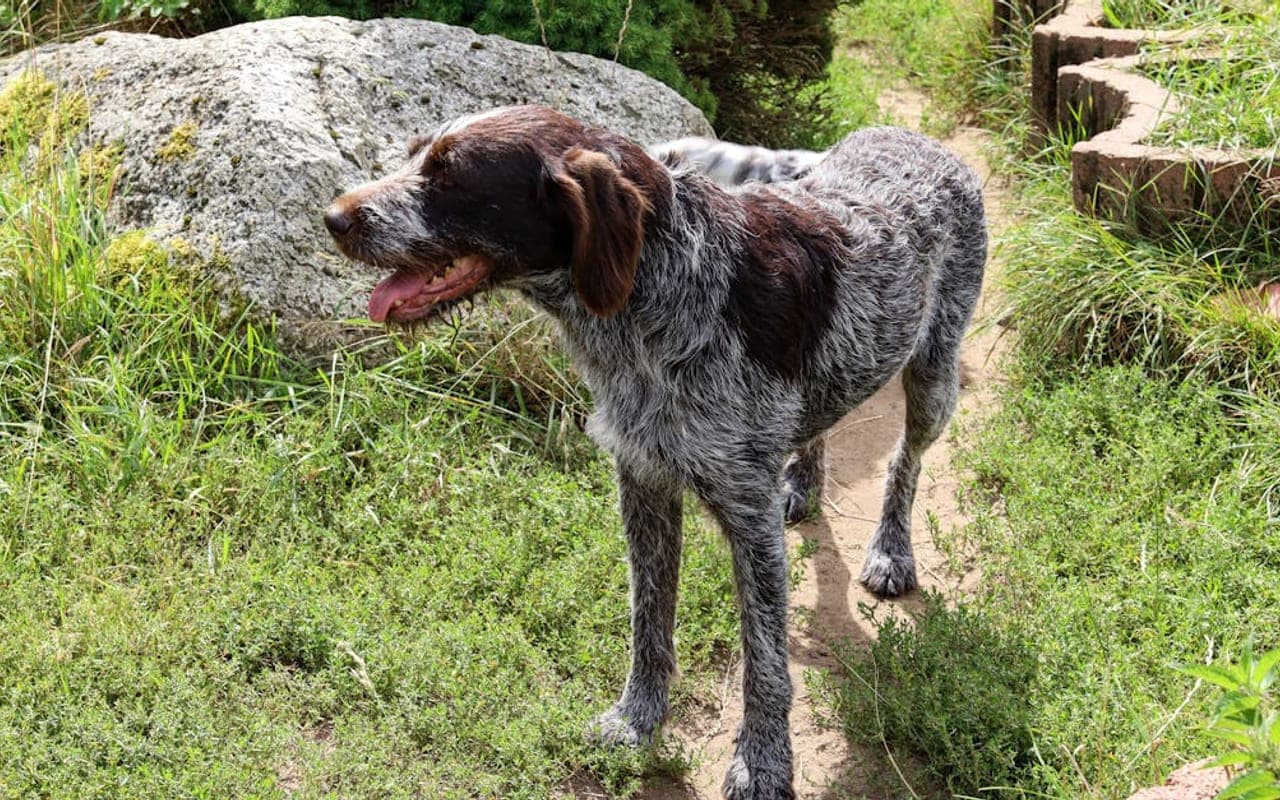
The trait you notice first is the coat, and it is functional rather than decorative. The German Wirehaired Pointer wears a harsh, wiry, weather-resistant outer jacket over a denser undercoat, finished with bristly eyebrows and a full beard on the muzzle. The AKC breed standard describes an outer coat that is straight, hard, wiry, and flat-lying, with the beard and brows there to shield the eyes and face when the dog pushes through thorny cover. The color is typically liver and white, often heavily ticked or roan, which reads as everyday field camouflage. Because the coat has to repel rain, brush, and cold water, its harsh texture is the point, and preserving that texture drives how the breed is groomed.
In build, the German Wirehaired Pointer is larger and more substantial than its close cousins the Pudelpointer and the Small Munsterlander. The AKC standard puts males at 24 to 26 inches at the withers, females at not under 22 inches, with weights generally in the 55 to 70 pound range. This is a powerful, medium-to-large dog with real stamina.
Temperamentally, the breed is intelligent, driven, and deeply loyal, often bonding hardest to one family and reserved with strangers. That devotion comes with a working engine that needs a job, so the German Wirehaired Pointer suits an active, hands-on home far better than a quiet one.
Exercise
Exercise and mental work
The German Wirehaired Pointer is a high-energy working gundog whose exercise needs sit at the demanding end of the scale. The AKC describes a versatile, sturdy gundog that thrives on outdoor activity, and that is the honest baseline: this dog was built to hunt, point, and retrieve across fields and water all day, so a walk around the block will not touch its needs. Plan on vigorous daily activity, because an under-exercised German Wirehaired Pointer does not simply relax.
What sets the breed apart is that it needs a real job, not just miles. Physical exertion alone leaves that intelligent, driven mind unspent, so the best outlets combine body and brain: fieldwork and hunting, retrieving drills, dock diving and other water work that plays to its swimming instincts, tracking, agility, and obedience. These channel the pointing and retrieving drives the breed was bred for, which is why structured activity satisfies a German Wirehaired Pointer far more than aimless miles.
Recall and containment matter more here than for many breeds. This is a hunting dog with a strong prey drive and a nose that will follow game, so reliable recall needs deliberate training, and off-leash freedom belongs in secure areas, because a dog locked onto a scent may not hear you. A securely fenced yard beats trusting voice control alone.
The consequences of skipping all this are specific: a bored, under-worked German Wirehaired Pointer becomes destructive, vocal, and hard to live with, chewing, digging, and inventing its own entertainment. Because the breed bonds closely to its people, it does best exercising with the family. Match the dog to an active household that hunts, hikes, or trains, and the drive that makes it a handful becomes its best quality.
Grooming
Grooming the wire coat
The German Wirehaired Pointer's coat is low-maintenance day to day but has one non-negotiable rule: it should be hand-stripped or plucked, not clipped. Stripping removes the dead outer hairs at the root so new harsh, wiry hair grows in, which is what keeps the jacket weatherproof. PetMD notes that the coat needs hand-stripping, with hairs removed at the root by hand instead of clipped, and warns that without it the characteristic wiry texture is lost. Clipping shears the harsh tips off and leaves a softer, woollier coat that no longer sheds water the way a working Drahthaar's should, so owners either learn to strip the coat a couple of times a year or use a groomer who strips rather than clips.
Between strippings the routine is simple. A weekly brush with a stiff bristle brush or a stripping comb pulls out loose hair and keeps the undercoat from packing down. The beard and eyebrows need their own attention, because those bristly furnishings are designed to catch things: the beard traps mud, burrs, food, and water, so wiping and combing it after meals and fieldwork keeps it from matting or souring.
Bathe sparingly. Frequent shampooing strips the natural oils that help the harsh coat repel water, so most German Wirehaired Pointers only need a bath when genuinely dirty.
Ears deserve special care because the drop ears sit close to the head and trap moisture, and this is a dog bred to work in ponds and marshes. After any swimming or wet fieldwork, dry the ear leather and check inside, and clean the ears regularly with a veterinary-approved cleaner, because trapped water is what lets ear infections take hold. Round out the routine with regular nail trims and tooth brushing, since an active field dog still needs sound feet and a healthy mouth.
Health
Health of the German Wirehaired Pointer
The German Wirehaired Pointer is generally a hardy working breed and comparatively long-lived for its size: the American Kennel Club and PetMD both put the typical lifespan at about 14 to 16 years, while VCA Animal Hospitals gives a more conservative 12 to 14 years. Even so, like any purebred it carries a few inherited risks worth understanding, because knowing what to screen for is how owners protect that long life. The conditions below are risks to be aware of, not a diagnosis of your dog, and any specific concern should go to your own veterinarian.
Joints: hip and elbow dysplasia
Hip dysplasia, a malformation of the hip joint that leads to pain and arthritis, is among the inherited concerns most consistently named for this breed by VCA Animal Hospitals and PetMD, with elbow dysplasia cited alongside it. Because these are heritable, responsible breeders screen breeding stock: the Orthopedic Foundation for Animals (OFA) provides the hip and elbow evaluations the breed's screening recommendations call for. Keeping a growing puppy lean helps too, because excess weight burdens a joint already predisposed to disease.
Hormonal and eye conditions
Hypothyroidism, an underactive thyroid, is repeatedly listed for the German Wirehaired Pointer by VCA Animal Hospitals and PetMD. PetMD notes it can cause weight gain, lethargy, and chronic skin and ear infections, and it is manageable with lifelong medication once a vet confirms it through bloodwork. On the eyes, VCA Animal Hospitals lists cataracts among the breed's inherited issues; entropion, an inward-rolling eyelid that irritates the cornea, is also reported in the breed by resources including the German Wirehaired Pointer Club of America. An ophthalmologist evaluation is part of the breed's recommended screening.
Ears, skin, and a bleeding disorder
Ear infections deserve their own mention because this is a water dog with drop ears. PetMD recommends regular cleaning with a veterinary-approved cleaner to stave off infection, and the risk rises after swimming and wet fieldwork when moisture is trapped against the ear. Skin problems can also appear, sometimes secondary to hypothyroidism and sometimes as atopic (allergic) skin disease reported in the breed; persistent itching or hair loss is a reason to see a vet. The breed is also among those screened for von Willebrand disease, an inherited clotting disorder PetMD describes for the German Wirehaired Pointer that matters most around surgery or injury.
Bloat awareness for a deep-chested dog
As a deep-chested, athletic sporting dog, the German Wirehaired Pointer has the body type veterinary sources associate with a higher risk of bloat, or gastric dilatation-volvulus (GDV), a sudden twisting of the stomach. No screening test exists, so awareness is the tool: a distended belly, unproductive retching, and restlessness are an emergency needing immediate veterinary care.
Practical care that supports a long life
Most of what keeps this breed sound is unglamorous. Buy from a breeder who screens hips, elbows, thyroid, eyes, and heart, because inherited disease is easier to avoid than to treat. Feed to keep the dog lean, stay current on vaccinations and parasite prevention, and keep up routine ear checks. Treat any sudden or severe change as a reason to call your veterinarian.
Frequently Asked Questions
How long do German Wirehaired Pointers live?
Most sources put it at about 14 to 16 years, according to the American Kennel Club and PetMD, which is long-lived for a dog this size; VCA Animal Hospitals gives a slightly shorter 12 to 14 years. Screening breeding dogs and keeping yours lean supports the upper end of that range.
What are the most common health problems in the breed?
The inherited concerns named most often by VCA Animal Hospitals and PetMD are hip and elbow dysplasia, hypothyroidism, and eye conditions such as cataracts and entropion, plus a risk of ear infections. These are possibilities to screen for, not certainties, so ask your vet about your own dog.
Why do German Wirehaired Pointers get ear infections?
The breed has drop ears that sit close to the head and trap moisture, and it is a water-working dog, so swimming and wet fieldwork leave the ears damp. PetMD recommends regular cleaning with a veterinary-approved cleaner, and drying the ears after water helps, because trapped moisture is what lets infection take hold. See a vet for odor or head-shaking.
Is the German Wirehaired Pointer at risk of bloat?
Its deep chest places it in the body type veterinary sources link to a higher risk of bloat (gastric dilatation-volvulus). There is no screening test, so learn the warning signs: a swollen belly, unproductive retching, and restlessness need immediate veterinary care, because GDV can turn fatal fast.
Sources
This guide draws on the following published references. Each opens in a new tab so you can check it against what you have read here.
German Wirehaired Pointer Club of America (GWPCA)
Health Information & Articles - German Wirehaired Pointer Club of America(opens in a new tab)American Kennel Club (AKC)
German Wirehaired Pointer Dog Breed Information(opens in a new tab)PetMD
German Wirehaired Pointer Dog Breed Health and Care(opens in a new tab)VCA Animal Hospitals
German Wirehaired Pointer(opens in a new tab)
Affiliate disclosure: We may earn a commission from qualifying purchases. This doesn't affect our recommendations.
Recommended Products
German Wirehaired Pointer Care Guide Book
Breed-focused reading and owner references for German Wirehaired Pointer care, training, grooming, and health planning.
German Wirehaired Pointer Food and Supplies
Helpful supplies for german wirehaired pointer dog supplies routines at home.
German Wirehaired Pointer Grooming Tools
Helpful supplies for german wirehaired pointer grooming tools routines at home.
Get personalized pet care tips
Join our newsletter for breed-specific advice, care guides, and expert tips delivered weekly.
No spam, ever. Unsubscribe anytime.