Miniature American Shepherd Care Guide
The breed's parent club, the Miniature American Shepherd Club of the USA (MASCUSA), says breeders set out to keep the dog's small size along with its "active character and intelligence", and that the
Reading Time
📖 11 min read
Guide Type
🐾 Breed-Specific
Last Updated
📅 Nov 17, 2026
In This Guide
Overview
The breed's parent club, the Miniature American Shepherd Club of the USA (MASCUSA), says breeders set out to keep the dog's small size along with its "active character and intelligence", and that the breed has been used for herding smaller stock such as sheep and goats [10]. The club's standard calls it "primarily a working dog of strong herding and guardian instincts", and also "an exceptional companion" that is versatile and easily trained [9]. The official standard sets height at 14 to 18 inches at the withers for males and 13 to 17 inches for females [3].
The part that is harder than the size suggests is the work a puppy needs in its first months. Vetstreet warns that this breed can become shy or nervous if it is not exposed to many different people and situations early in life [13].
MASCUSA publishes a list of required and recommended health tests [1] and a separate list of optional tests for diseases currently seen in this breed [2]. One of the required tests is for neuroaxonal dystrophy, a neurological disease recorded in this breed [6].
For the breed's background, see the Miniature American Shepherd breed page. For other breeds, browse the care guide library.
Daily Care
Vetstreet's main training point for this breed is to start early. It says to start training the day the puppy comes home, and warns that waiting until six months leaves you with a more headstrong dog [13]. With positive-reinforcement methods, it says, the dog can learn just about anything you can teach, and it advises against speaking to or treating it harshly [13].
The second task is people. The standard describes a dog that is reserved with strangers without being shy, and protective of its family [9]. Vetstreet says the breed's herding instincts make it a watchdog protective of family and property, and expects it to be reserved toward strangers but not usually shy [13]. For socialisation, Vetstreet advises getting the puppy into a puppy kindergarten class by 10 to 12 weeks if possible, noting that many classes require certain vaccines, such as kennel cough, to be up to date [13]. Ask your vet which vaccines the class you choose will need.
At home, Vetstreet says the breed is usually gentle with children and polite to other dogs and cats, especially when raised with them [13].
Nutrition
No breed-specific portion guidance is published by the parent club, the standard or Vetstreet.
Hyperuricosuria (HUU) is on the club's recommended DNA panel [1]. OMIA describes it as a recessively inherited condition caused by a variant in the SLC2A9 gene, in which high levels of uric acid in the urine predispose a dog to urate stones in the ureter, bladder and urethra, although not every affected dog develops stones [12]. If your dog's HUU result is affected, ask your vet whether its diet needs to change.
OMIA lists the signs owners may see when stones form: passing urine more often, blood in the urine, cloudy urine or small stones passed in it, and, if the urethra is blocked, a dog straining to urinate without passing any [12]. Some affected dogs show no signs at all [12].
Exercise
MASCUSA's standard describes a highly versatile, energetic dog whose agility, strength and stamina allow it to work over a variety of terrain, and a "resilient and persistent worker" that adjusts its arousal to the task at hand [9].
Vetstreet's guidance is that this dog needs mental work as well as physical exercise. It says the breed is best suited to an active person or family who can provide the exercise, training and "mental gymnastics" it needs to stay out of trouble, and that it likes to have a job [13].
On living space, Vetstreet says the dog is small enough to live in quarters that might not suit a full-sized herding dog, but that being small does not mean it needs no exercise [13]. No breed-specific daily exercise figure in minutes is published by the parent club, the standard or Vetstreet.
Grooming
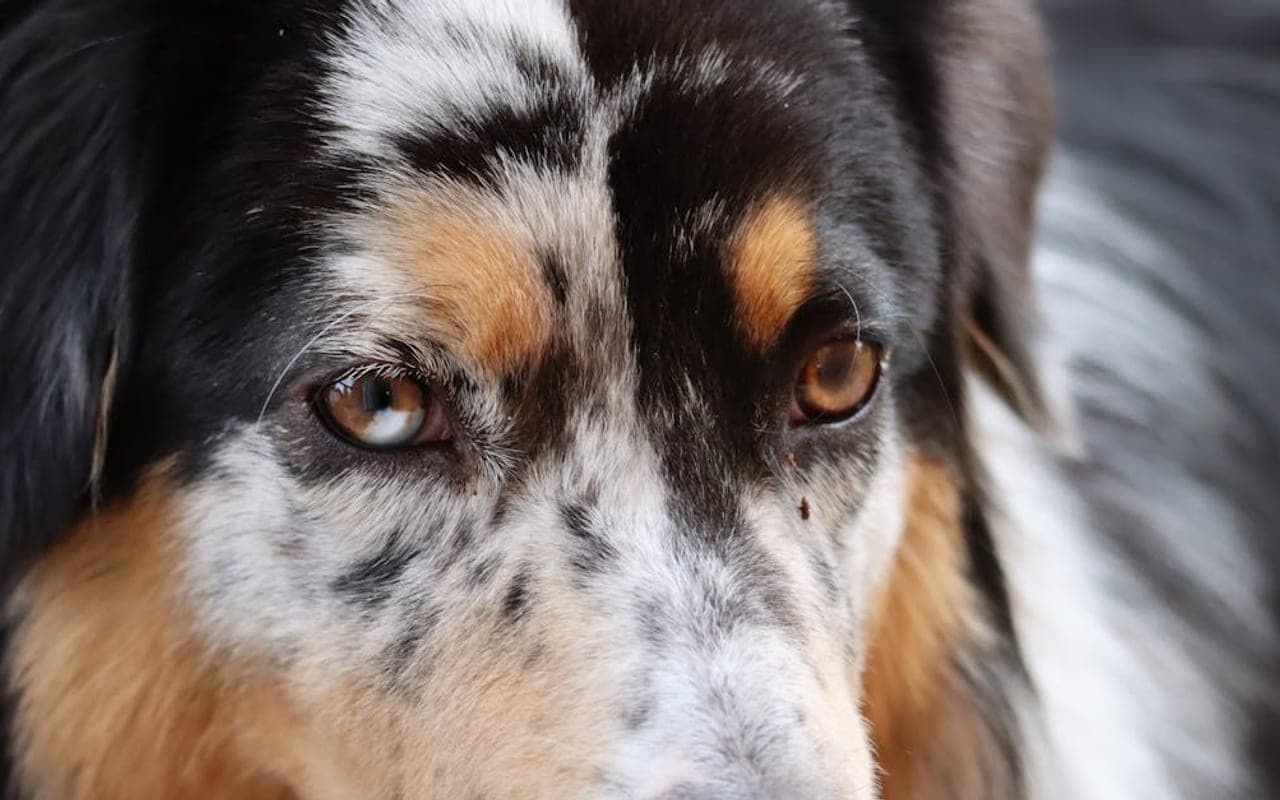
MASCUSA's standard describes a weather-resistant double coat of medium length and medium texture, straight to wavy [9]. The hair is short and smooth on the head and the front of the legs, while the backs of the forelegs and the breeches are moderately feathered, with a moderate mane and frill [9].
The club says the undercoat varies in quantity with the climate [9].
For the usual week, Vetstreet advises brushing once or twice a week in the direction the hair grows, back and down [13]. Take most care with the hair on the backs of the legs and the rear end, where it says tangles and mats often form [13].
The routine changes twice a year. Vetstreet says the dog loses some hair all year and sheds heavily in spring and autumn, and advises brushing daily during those weeks to keep the hair under control [13].
A bath can be given only as needed or as often as weekly, with a mild dog shampoo, and Vetstreet says mats and tangles should be combed out before the bath [13].
Vetstreet says the breed mostly does not need trimming, though you may choose to neaten the ears, feet, leg feathering and tail [13]. The breed standard allows trimming in much the same places for the show ring [9].
Trim the nails every three to four weeks or as needed; Vetstreet's test is that nails clicking on the floor are too long [13]. It also advises brushing the teeth often, and starting grooming as soon as the puppy comes home [13].
Health
No population survey we could find puts a percentage on how often each condition occurs in Miniature American Shepherds, so no prevalence figures are given here.
What to ask the breeder for
MASCUSA's health statement asks buyers to get documentation that both parents have been tested [1]. The club sorts tests into tiers [2].
Required. MASCUSA says these tests are necessary for the long-term health of the breed [2]. They are also the tests required for the OFA CHIC, AKC Breeder of Merit and Bred With Heart programs [1]:
- Hip dysplasia: an OFA radiographic hip evaluation, a PennHIP evaluation or an FCI evaluation [1].
- An annual ACVO eye examination [1].
- Progressive retinal atrophy (PRA-prcd): a DNA test from an approved laboratory [1].
- Multiple drug sensitivity (MDR1): a DNA test from an approved laboratory [1].
- HSF4 hereditary cataracts: a DNA test from an approved laboratory [1].
- Neuroaxonal dystrophy (NAD): a DNA test from an approved laboratory [1].
Recommended. The health statement lists these as "optional but recommended" [1]. On its breed health page MASCUSA says it strongly advises breeders to complete them [2]:
- Elbow dysplasia: OFA radiographic elbow evaluation [1].
- Patellar luxation: OFA evaluation [1].
- Dentition: OFA evaluation [1].
- Collie eye anomaly (CEA): DNA test [1].
- Degenerative myelopathy (DM): DNA test [1].
- Chondrodystrophy with or without chondrodysplasia (CDDY/CDPA): DNA test [1].
- Hyperuricosuria (HUU): DNA test [1].
- Multifocal retinopathy 1 (CMR1): DNA test [1].
Optional. MASCUSA describes these as tests specific to the breed that identify diseases currently seen in it [2]. The list covers cone degeneration (CD), craniomandibular osteopathy (CMO), exercise-induced collapse (EIC), neuronal ceroid lipofuscinosis (NCL6 and NCL8), junctional epidermolysis bullosa, a cardiac auscultation by a veterinarian or cardiologist, and a DNA test for non-HSF4 cataracts [2]. It also includes the M locus (PMEL) merle coat-colour test. The club notes that merle is not a disease but is important to know for safe breeding practices [2].
A breeder who has done only the required tests has met the club's floor. Ask which of the recommended and optional tests were also done, and ask to see the results, including both parents' NAD results and EIC if it was tested, rather than a verbal summary. If you do not get a copy of your own puppy's MDR1 result, consider having the DNA test done, because the result changes which medications are safe for the dog [11]. Keep these documents with your dog's records and bring them to the first visit with any new veterinarian or emergency clinic.
Neuroaxonal dystrophy (NAD)
MASCUSA's breed health page lists it as "Neuroaxonal Dystrophy – Miniature American Shepherd Type" [2]. A 2024 study in Movement Disorders described it as a newly recognised, slowly progressive neurodegenerative syndrome in Miniature American Shepherds [7]. Purdue University's Animal Disease Diagnostic Laboratory lists the breeds affected as Miniature American Shepherds, Miniature Australian Shepherds and Toy Australian Shepherds [4].
- Onset. Purdue says onset is typically in young adult dogs, 2 to 4 years of age [4]. The 2024 study also found affected dogs were typically young adults [7].
- First signs. Purdue says signs begin very mildly, with a wide rear stance and an intermittent abnormal gait [4]. The study described pelvic limb weakness and ataxia [7]. OMIA records that gait abnormalities were always more obvious at a walk than at faster gaits [6].
- Later signs. Purdue lists head tremors, mental dullness, vision issues and urinary and fecal incontinence. It says the front limbs later become affected too, often with a high-stepping gait [4].
- Course. Purdue says the signs progress and worsen slowly over time [4]. It does not describe a treatment, and it notes that euthanasia may become necessary if the dog cannot walk on its own [4].
- Genetics. The cause is a single base-pair deletion in the RNF170 gene, inherited in an autosomal recessive pattern [7].
What a test result means for a pet owner, according to Purdue [5]:
- Clear (N/N): cannot produce affected puppies.
- Carrier (D/N): based on current data, not at risk of developing NAD.
- Affected (D/D): based on current data, all such dogs develop signs within the first few years of life.
Purdue does not recommend excluding carriers from breeding. It recommends avoiding pairings that could produce affected puppies, and says no affected puppies are produced as long as one parent is clear [5]. If your young adult dog starts standing wide behind or walking oddly at a walk, tell your vet the dog's NAD result.
MDR1 (multiple drug sensitivity)
The parent club requires an MDR1 DNA test of breeding dogs [1]. Purdue University's Canine Welfare Science program explains why the result matters to a pet owner: when a dog has one or two copies of the MDR1 mutation, some medications are not properly broken down [11]. The drugs it lists include some sedatives such as butorphanol and acepromazine, ivermectin at high doses, loperamide (Imodium), antiemetics and chemotherapy medications [11]. It says affected dogs can show weakness, tremors, seizures or blindness, and tells owners to let their veterinarian know if the dog has the mutation [11]. Purdue names Australian Shepherds and Miniature Aussies among the herding breeds concerned [11].
HSF4 hereditary cataract
The HSF4 cataract DNA test is on the required list [1]. The only breed-specific data we found is a 2025 Italian study. It analysed only a small subset of Miniature American Shepherds [8]. That sample is far too small to say how common the variant is in the breed. It is not a reason to skip the test. The same study concluded that genetic testing matters in these populations [8].
This is general information, not a diagnosis. Always consult your veterinarian for medical decisions about your dog.
Costs
The recurring commitments for this breed are time rather than money: the daily brushing through each seasonal shed set out under grooming, and the early training and puppy class set out under daily care. The one-off item to plan for is your own dog's MDR1 DNA test if the breeder did not supply a result, which Purdue advises when a dog's status is unknown [11].
Frequently Asked Questions
What health tests should a Miniature American Shepherd breeder have done?
MASCUSA requires a hip evaluation (OFA, PennHIP or FCI), an annual ACVO eye exam, and DNA tests for PRA-prcd, multiple drug sensitivity (MDR1), HSF4 hereditary cataracts and neuroaxonal dystrophy. It also lists eight recommended tests, including elbows, patellas, CEA, DM and CMR1.
What is neuroaxonal dystrophy in Miniature American Shepherds?
It is an inherited, slowly progressive neurological disease caused by a deletion in the RNF170 gene. Signs usually start in young adults, at 2 to 4 years. They begin with a wide rear stance and an intermittent abnormal gait. It is inherited as an autosomal recessive trait, and a DNA test is available.
My dog is an NAD carrier. Will it get sick?
Purdue's lab says that, based on current data, a carrier is not at risk of developing NAD. Only dogs with two copies of the variant develop the disease.
How big does a Miniature American Shepherd get?
Our breed record lists 33 to 45.7 cm and 9.1 to 18.1 kg. The breed standard asks for 14 to 18 inches at the withers in males and 13 to 17 inches in females.
Can I trim my Miniature American Shepherd's coat?
The breed standard allows trimming on the ears, feet, backs of the hocks, pasterns and tail. Otherwise the coat is kept natural. The undercoat varies in quantity with the climate.
Sources
This guide draws on the following published references. Each opens in a new tab so you can check it against what you have read here.
American Kennel Club
American Kennel Club — Official Standard of the Miniature American Shepherd(opens in a new tab)Miniature American Shepherd Club of the USA (MASCUSA), AKC parent club
Miniature American Shepherd Club of the USA (MASCUSA), AKC parent club — MASCUSA's AKC Parent Club Health Statement, board approved revisions 5/6/2026(opens in a new tab)Purdue University College of Veterinary Medicine, Animal Disease Diagnostic Laboratory
Purdue University College of Veterinary Medicine, Animal Disease Diagnostic Laboratory — Neuroaxonal Dystrophy Information(opens in a new tab)Purdue University College of Veterinary Medicine, Animal Disease Diagnostic Laboratory
Purdue University College of Veterinary Medicine, Animal Disease Diagnostic Laboratory — Neuroaxonal Dystrophy Result Interpretation(opens in a new tab)Online Mendelian Inheritance in Animals (OMIA), University of Sydney
Online Mendelian Inheritance in Animals (OMIA), University of Sydney — OMIA:002876-9615 Neuroaxonal dystrophy, RNF170-related in dog(opens in a new tab)Movement Disorders (Wiley), 2024; 39:2049
Movement Disorders (Wiley), 2024; 39:2049-2057 (PMID 39177409) — Canine RNF170 Single Base Deletion in a Naturally Occurring Model for Human Neuroaxonal Dystrophy(opens in a new tab)Animals (MDPI), 2025 (PMID 40564330)
Animals (MDPI), 2025 (PMID 40564330) — Genotypic and Allelic Frequencies of Hereditary Cataract in the Italian Population of Australian Shepherd and Miniature American Shepherd Dogs(opens in a new tab)Miniature American Shepherd Club of the USA (MASCUSA)
Miniature American Shepherd Club of the USA (MASCUSA) — Miniature American Shepherd Breed Standard(opens in a new tab)Miniature American Shepherd Club of the USA (MASCUSA)
Miniature American Shepherd Club of the USA (MASCUSA) — Breed History(opens in a new tab)Purdue University College of Veterinary Medicine, Canine Welfare Science
Purdue University College of Veterinary Medicine, Canine Welfare Science — Multidrug Resistance Mutation (MDR1) in Dogs(opens in a new tab)Online Mendelian Inheritance in Animals (OMIA), University of Sydney
Online Mendelian Inheritance in Animals (OMIA), University of Sydney — OMIA:001033-9615 Urolithiasis in dog(opens in a new tab)Vetstreet
Vetstreet — Miniature American Shepherd (breed profile)(opens in a new tab)Miniature American Shepherd Club of the USA (MASCUSA)
Miniature American Shepherd Club of the USA (MASCUSA) — Breed Health(opens in a new tab)
Affiliate disclosure: We may earn a commission from qualifying purchases. This doesn't affect our recommendations.
Recommended Products
Miniature American Shepherd Care Guide Book
Breed-focused reading and owner references for Miniature American Shepherd care, training, grooming, and health planning.
Miniature American Shepherd Food and Supplies
Helpful supplies for miniature american shepherd dog supplies routines at home.
Miniature American Shepherd Grooming Tools
Helpful supplies for miniature american shepherd grooming tools routines at home.
Get personalized pet care tips
Join our newsletter for breed-specific advice, care guides, and expert tips delivered weekly.
No spam, ever. Unsubscribe anytime.