
Great Dane Care Guide
Great Dane Overview: The Apollo of Dogs The Great Dane is the definition of a contradiction. It is the tallest of the commonly kept companion breeds, standing 32 to 36 inches at the shoulder — males r
In This Guide
Overview
Great Dane Overview: The Apollo of Dogs
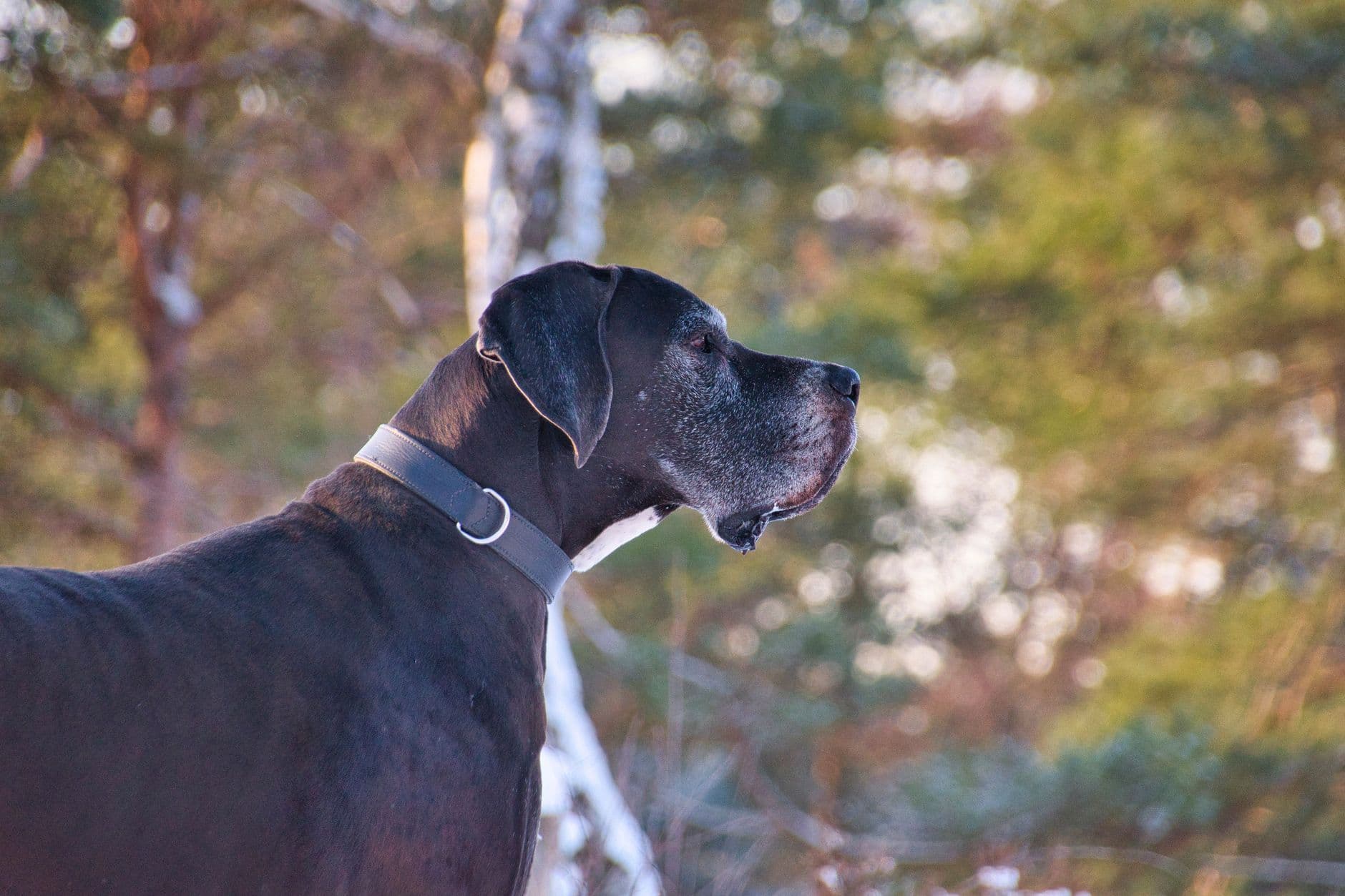
The Great Dane is the definition of a contradiction. It is the tallest of the commonly kept companion breeds, standing 32 to 36 inches at the shoulder — males run heavier than females, and the Royal Kennel Club sets minimums of 54 kg for dogs and 46 kg for bitches — yet it is universally described by owners and breed experts as a gentle giant: calm, affectionate, and surprisingly unaware of its own size. The breed has held the Guinness World Record for tallest living dog on multiple occasions; the most celebrated record holder was Zeus, a Great Dane from Michigan who measured 44 inches at the shoulder and 7 feet 4 inches when standing on his hind legs.
Despite the name, Great Danes are German in origin — known in Germany as Deutsche Dogge, or German Mastiff. They were developed in the 16th century as boar hunting dogs, bred to chase and hold wild boar — an animal dangerous enough to injure a dog of lesser size and confidence. By the 17th century, German nobility had adopted the breed as a status symbol and court companion, selectively breeding for the elegant, regal proportions visible today.
The Apollo of Dogs moniker persists because the Great Dane is genuinely beautiful in a way that photographs struggle to convey. Standing next to a Great Dane in person — particularly a harlequin or merle with their high-contrast markings — is an experience. They move with more grace than their size should allow.
But the Great Dane comes with a reality that no prospective owner should discover after the fact: its lifespan. Great Danes live 7 to 10 years on average. Many do not reach age 8. This is not an outlier or an exaggeration; short life is the rule in giant breeds, not the exception. The physiological cost of growing to this size is measured in years. Giant breed owners make a conscious choice to love a dog they know will leave too soon, and this emotional reality shapes every Great Dane relationship.
The breed's most dangerous health condition is bloat — technically gastric dilatation-volvulus (GDV). This occurs when the stomach fills with gas and then rotates on its axis, trapping gas inside and cutting off blood flow. GDV is life-threatening within hours, and the Great Dane heads the Merck Veterinary Manual's list of breeds at risk of it. Understanding its triggers, symptoms, and required response time is mandatory knowledge for every Great Dane owner.
Financially, the Great Dane is one of the most expensive dogs to own at scale. Food alone can cost $100 to $200 per month. Medications are dosed by weight — a Dane may require 4 to 5 times the dose of a medium-sized dog for the same condition. XL crates, orthopedic beds, and harnesses capable of supporting a 150-pound dog all carry premium pricing. Veterinary procedures — from routine dentals to orthopedic surgery — cost more when the patient weighs 150 pounds.
None of this should discourage a genuinely prepared owner. Great Danes repay every investment with extraordinary companionship, a calm temperament that belies their size, and a warmth toward their family that makes them beloved by virtually everyone who spends time with them. They are one of the few breeds that are consistently rated highly for temperament with children, strangers, and other animals. The gentle giant is not a marketing phrase — it is a behavioral reality.
Daily Care
Daily Care for Great Danes
Great Danes are calmer than their size suggests. They are not working breed dogs that require hours of vigorous daily exercise. A well-exercised Great Dane is a dog that has had two moderate exercise sessions and then happily occupied a couch for the remainder of the day.
Exercise (60-90 minutes total daily): Two walks of 30 to 45 minutes at a brisk pace, with some off-leash sniffing and exploration time, satisfies most adult Great Danes. Avoid intense running or jumping until 18 to 24 months — the growth plates of giant breed puppies close later than in smaller breeds, which is why hard impact is worth avoiding until they do.
Post-Meal Rest: After every meal, enforce a rest period of at least 60 to 90 minutes before any exercise. Do not allow running, jumping, or rough play in this window. Vigorous movement with a full stomach is a known bloat trigger.
Sleeping and Resting Space: Great Danes need XL orthopedic beds. A dog this heavy develops pressure sores and calluses on a hard floor, and a supportive bed is simply more comfortable for elderly joints. Budget $150 to $400 for a quality orthopedic bed — it is a medical investment, not a luxury.
Car Transport: A standard crate does not fit in most vehicles. Great Dane owners typically use a cargo area with a barrier, a custom-fitted vehicle crate, or a seat belt harness for a large dog. Plan transportation logistics before bringing your Dane home.
Indoor Living: Despite their size, Great Danes adapt to apartment living if adequately exercised. They do not bark excessively, are not destructive when exercised, and are calm indoors. That said, they take up a significant amount of space and move through rooms with the low-level clumsiness of a large animal that misjudges its own dimensions.
Nutrition
Nutrition for Great Danes
Feeding a Great Dane correctly is among the most consequential decisions an owner makes. The breed is uniquely sensitive to both nutritional excess and deficiency during its rapid growth phase, and feeding errors in the first 18 months can cause skeletal problems that persist for life.
Puppy Feeding — The Most Critical Phase: Great Dane puppies must be fed a large-breed or giant-breed puppy formula formulated for the growth of large-size dogs — the 1.8 percent dry-matter calcium figure often quoted is a regulatory ceiling, not a target to buy towards. Merck is direct about why this matters: excess calcium is more problematic for growing large- and giant-breed dogs, and above 3 percent dry matter it causes more severe signs of osteochondrosis and reduced skeletal remodeling than lower-calcium diets do. Do NOT supplement a puppy eating a complete puppy food with additional calcium, bones, or calcium-containing supplements. Over-supplementation causes more harm than deficiency.
Adult Feeding: A Great Dane's calorie needs track its actual weight, which varies a great deal between a bitch near the Royal Kennel Club's 46 kg minimum and a large male — so weigh the dog rather than feeding to a breed-wide number, and adjust to body condition. Feed a diet with 22 to 28 percent protein and 12 to 16 percent fat. Giant breed formulas often have additional joint support (glucosamine, chondroitin) built in.
Meal Frequency: Two to three smaller meals a day suits a dog this size, though the bloat rationale usually attached to that advice has weakened — a Dog Aging Project cohort found dogs eating one meal a day were not significantly more likely to have a GDV event, and said so against an earlier study that had found the opposite. The elevated feeder is the clearer call: the Merck Veterinary Manual lists avoiding elevated feed bowls among its measures for at-risk breeds. Restrict vigorous activity for 60 to 90 minutes around all meal times.
Water: Great Danes drink large volumes of water. Ensure constant access to fresh water, especially in warm weather or after exercise.
Exercise
Exercise Requirements for Great Danes
Great Danes are moderate-energy dogs by working breed standards. Their size gives the impression of an animal that must need vast exercise, but in practice they are more couch-dweller than marathon runner.
Adult Exercise Needs: 60 to 90 minutes of moderate exercise per day, distributed across two sessions. Long, leisurely walks are appropriate. Sustained running at speed is not necessary and is hard on joints. Off-leash play in a fenced area, hiking on soft terrain, and swimming are all excellent low-impact options.
Puppy Exercise — Hard Limits: Great Dane puppies should not run on hard surfaces (concrete, pavement) until 18 to 24 months. Their growth plates close later than in smaller breeds, and the working assumption is that repeated hard impact before closure is best avoided. Treat it as a firm precaution rather than a proven threshold. Puppy exercise should consist of leash walks on grass, swimming, and gentle play on soft surfaces.
Stairs and Jumping: Minimize stair climbing and jumping on/off furniture during the first 18 months. Baby gates to restrict stair access are a worthwhile investment for Dane puppies.
Heat Sensitivity: Despite their size, Great Danes tolerate heat poorly. Exercise in early morning or evening during summer months. Avoid exercise entirely in temperatures above 85 degrees Fahrenheit.
Leash Handling: A 150-pound dog that decides to lunge is not correctable by most people's physical strength alone. Leash training and loose-leash walking from puppyhood, when the dog is still manageable, is essential. A front-clip harness provides mechanical leverage without putting pressure on the neck.
Swimming: Excellent low-impact exercise for Great Danes, particularly seniors with arthritis. Not all Danes are natural swimmers — introduce water carefully and always use a dog life vest.
Grooming
Grooming a Great Dane
The Great Dane's grooming needs are among the lowest of any large breed. Their short, dense, single coat requires minimal professional maintenance.
Brushing: Weekly brushing with a rubber curry brush or a boar-bristle brush removes loose hairs and distributes skin oils. Great Danes shed moderately year-round without the dramatic seasonal shedding events of double-coated breeds. Regular brushing keeps the coat glossy and reduces household shedding.
Bathing: Bathe every 6 to 8 weeks or when needed. The practical challenge of bathing a 150-pound dog should not be underestimated — a walk-in shower or a professional groomer with a large-dog tub is the most realistic solution for most owners. Start bathing in puppy hood so the dog is cooperative and non-resistant by the time it is too large to physically manage.
Ears: Drop ears are associated with more ear trouble than upright ones, though the airflow explanation is repeated more often than it is demonstrated. Check ears weekly for redness, odor, or discharge. Clean with a veterinarian-approved ear solution monthly.
Nails: Trim every 3 to 4 weeks. Long nails change how a dog stands and walks, and there is a great deal of dog behind each foot here.
Skin Checks: During grooming, inspect skin folds (if present around the muzzle or neck), pressure points (elbows, hocks), and any areas where moisture accumulates. Pressure sores over bony prominences are common in giant breeds that spend significant time on hard surfaces.
Teeth: Brush two to three times weekly. The sheer size of a Dane's mouth does not make dental disease less likely — it makes the consequences of untreated disease more severe given the systemic inflammation dental disease drives.
Health
Great Dane Health: The Giant Breed Realities
Great Danes face health challenges that arise directly from their extraordinary size. Managing these proactively extends both lifespan and quality of life.
Bloat / Gastric Dilatation-Volvulus (GDV): The condition every Great Dane owner plans for; the breed heads Merck's at-risk list. The stomach fills with gas and twists, trapping the gas and cutting off the blood supply to the stomach and spleen. Symptoms include unproductive retching, distended abdomen, restlessness, excessive drooling, and rapid deterioration. GDV is a surgical emergency measured in hours, not overnight — every hour of delay costs the stomach wall. Know the location of your nearest emergency veterinary hospital. Prophylactic gastropexy (a surgical procedure that tacks the stomach to the body wall, preventing it from rotating) is commonly offered for giant breeds and can be performed at the time of spay/neuter. As the Merck Veterinary Manual puts it, a gastropexy has not been shown to prevent bloat itself, but it should prevent the life-threatening volvulus — the twist, not the gas.
Dilated Cardiomyopathy (DCM): Great Danes, like Dobermans, are significantly overrepresented in DCM statistics. Annual cardiac screening from age 3 is recommended.
Hip Dysplasia and Osteoarthritis: Dysplasia is a developmental and heritable problem rather than something a dog's weight creates, though size and condition affect how much trouble it causes. Screening of breeding stock through OFA or the BVA/KC scheme is what reduces incidence. In affected dogs, management includes weight control, joint supplements, and NSAIDs under veterinary supervision. Severe cases may require surgery.
Wobbler Syndrome: Ohio State's veterinary college puts the condition in 4.2% of Great Danes and 5.5% of Dobermans, and Danes present younger — a mean age of 3 against the Doberman's 6. Progressive compression of the spinal cord in the neck causes the characteristic wobbly gait, and often neck pain: a dog walking with its head held low is usually telling you it hurts.
Osteosarcoma: Giant breeds carry a disproportionate share of bone cancer. A VetCompass study put the Great Dane at roughly ten times the odds of a crossbred dog, and dogs over 40 kg at about 45 times the odds of dogs under 10 kg. The median age at diagnosis in that data was 8.5 years — a figure for all breeds pooled, not for this one, and one that lands near the end of a Dane's natural life.
Recommended Screenings: OFA hip and elbow evaluations, annual cardiac echo from age 3, ophthalmologic exam, thyroid panel.
Costs
Cost of Owning a Great Dane
Great Danes are among the most expensive dogs to own on an ongoing basis. The cost is driven by size: food, medications, equipment, and veterinary procedures all scale with body weight.
Acquisition Cost: Reputable health-tested breeders charge $1,500 to $3,000. Rescues are available through Great Dane rescue networks.
Food: A large adult Dane eating around 3,000 kcal daily costs $100 to $200 per month in quality food. Giant-breed formulas are often more expensive than standard adult formulas.
Routine Veterinary Care: $600 to $1,200 annually. Medications dosed by weight cost proportionally more — a monthly flea/tick preventative for a 160-pound dog costs 4 to 5 times the dose for a 35-pound dog.
Prophylactic Gastropexy: A one-time surgical cost of $400 to $1,000 performed at the time of spay/neuter. It is the twist rather than the bloating that it prevents, which is the part that kills. If GDV does occur and emergency surgery is required without prior gastropexy, costs range from $3,000 to $8,000.
Cardiac Screening: Annual echocardiogram from age 3, costing $200 to $500 per year.
Orthopedic Beds: $200 to $400 per bed, with replacement needed every 1 to 3 years.
Joint Care: Glucosamine/chondroitin supplementation costs $30 to $60 per month. Prescription NSAIDs for arthritis (common in older Danes) run $50 to $100 per month.
Pet Insurance: Monthly premiums of $100 to $200 given the bloat, cardiac, and orthopedic risk profile. Read GDV and orthopedic exclusion clauses carefully.
Total Annual Cost Estimate: $4,000 to $9,000 for a healthy adult Great Dane. Seniors with cardiac or orthopedic conditions can cost $8,000 to $15,000 annually.
Frequently Asked Questions
Is a raised feeding bowl safer for my Great Dane, or does it make bloat more likely?
Raised bowls are sold as a comfort upgrade for tall dogs, but the Merck Veterinary Manual lists avoiding elevated feed bowls among the measures it recommends for breeds at risk of gastric dilatation-volvulus, and names the Great Dane first on that at-risk list. No good evidence shows a raised bowl protects a Dane's neck or joints. Feed from floor level unless your own veterinarian has given you a specific medical reason to raise it.
Does splitting my Great Dane's food into two meals actually lower the bloat risk?
It is the standard advice, but the evidence behind it has weakened. Analysing the Dog Aging Project cohort in the Journal of the American Veterinary Medical Association, researchers found that dogs eating one meal a day were not significantly more likely to have a GDV event, and said this differed from an earlier study. Two meals still suit a giant dog's comfort, so treat them as sensible habit rather than proven protection.
My young Great Dane sways in the back end when he walks. Could that be wobbler syndrome?
It deserves a prompt neurology work-up. Ohio State University's College of Veterinary Medicine reports that 4.2 percent of Great Danes have wobblers, and that affected Danes are typically young, with a mean age of three years, where Dobermans average six. Ohio State adds that a dog walking with its head down is usually signalling pain. Texas A&M's veterinary teaching hospital lists neck pain, scuffing nails, stumbling and incoordination as signs, and diagnoses the condition with MRI or CT imaging.
Can I feed my Great Dane puppy an ordinary puppy food if I simply give him less of it?
Portion size does not fix concentration. The Merck Veterinary Manual states that excess intake of calcium is more problematic for growing large- and giant-breed dogs, and that supplementation above 3 percent calcium on a dry-matter basis causes more severe signs of osteochondrosis and decreased skeletal remodelling in rapidly growing large breeds. Choose a food formulated for large or giant-breed growth, and add no calcium, bone meal or mineral supplements to it.
My seven-year-old Great Dane has started limping on one front leg. How worried should I be?
Worried enough to book an appointment this week. In a VetCompass case-control study published in Canine Medicine and Genetics, Great Danes carried roughly ten times the odds of osteosarcoma of crossbred dogs, and dogs over 40 kg far higher odds than dogs under 10 kg. Median age across all cases in that study, every breed pooled, was 8.5 years. Persistent single-limb lameness in a Dane warrants imaging, not watchful waiting.
Sources
This guide draws on the following published references. Each opens in a new tab so you can check it against what you have read here.
American Kennel Club
Great Dane — breed standard and profile(opens in a new tab)The Royal Kennel Club
Great Dane Breed Standard(opens in a new tab)ASPCA
General Dog Care(opens in a new tab)VCA Animal Hospitals
Bloat: Gastric Dilatation and Volvulus in Dogs(opens in a new tab)Merck Veterinary Manual
Gastric Dilation and Volvulus in Small Animals(opens in a new tab)Merck Veterinary Manual
Nutritional Requirements and Related Diseases of Small Animals(opens in a new tab)Ohio State University College of Veterinary Medicine
Wobbler Syndrome(opens in a new tab)Texas A&M College of Veterinary Medicine and Biomedical Sciences
Wobbler Syndrome - Veterinary Medical Teaching Hospital(opens in a new tab)Canine Medicine and Genetics (BMC / Springer Nature)
Dog breeds and body conformations with predisposition to osteosarcoma in the UK: a case-control study(opens in a new tab)American Veterinary Medical Association
Gastric dilatation-volvulus is associated with Poodle breeds, increased body size, and male sex, but not primary diet type or anxiety in the Dog Aging Project cohort(opens in a new tab)Genes (MDPI)
Identification of Genetic Susceptibility Factors Associated with Canine Gastric Dilatation-Volvulus(opens in a new tab)Merck Veterinary Manual
Routine Health Care of Dogs(opens in a new tab)
Affiliate disclosure: We may earn a commission from qualifying purchases. This doesn't affect our recommendations.
Recommended Products
Get personalized pet care tips
Join our newsletter for breed-specific advice, care guides, and expert tips delivered weekly.
No spam, ever. Unsubscribe anytime.