
Norwegian Forest Cat Care Guide
The Cat of Norse Mythology The Norwegian Forest Cat, known in its homeland as the Skogkatt (forest cat), carries a mythology as grand as its coat. Ancient Norse legends tell of the Skogkatt as the fai
Reading Time
📖 14 min read
Guide Type
🐾 Breed-Specific
Last Updated
📅 Sep 9, 2026
In This Guide
Overview
The Cat of Norse Mythology
The Norwegian Forest Cat, known in its homeland as the Skogkatt (forest cat), carries a mythology as grand as its coat. Ancient Norse legends tell of the Skogkatt as the fairy tale forest cat - a creature of such impressive size and climbing ability that not even the god Thor could lift one from the ground. More romantically, the goddess Freya's chariot was said to be pulled by two large Norwegian Forest Cats, cementing this breed's place in the imagination of a seafaring, mountain-dwelling people who valued strength, resilience, and self-sufficiency.
Whether these legends describe actual Skogkatt ancestors or reflect the impression these cats made on the Norse people, the breed is genuinely ancient. Norwegian Forest Cats appear in historical accounts going back at least 1,000 years, and their coat structure suggests centuries of natural selection in one of Europe's harshest climates.
Built for Scandinavian Winters
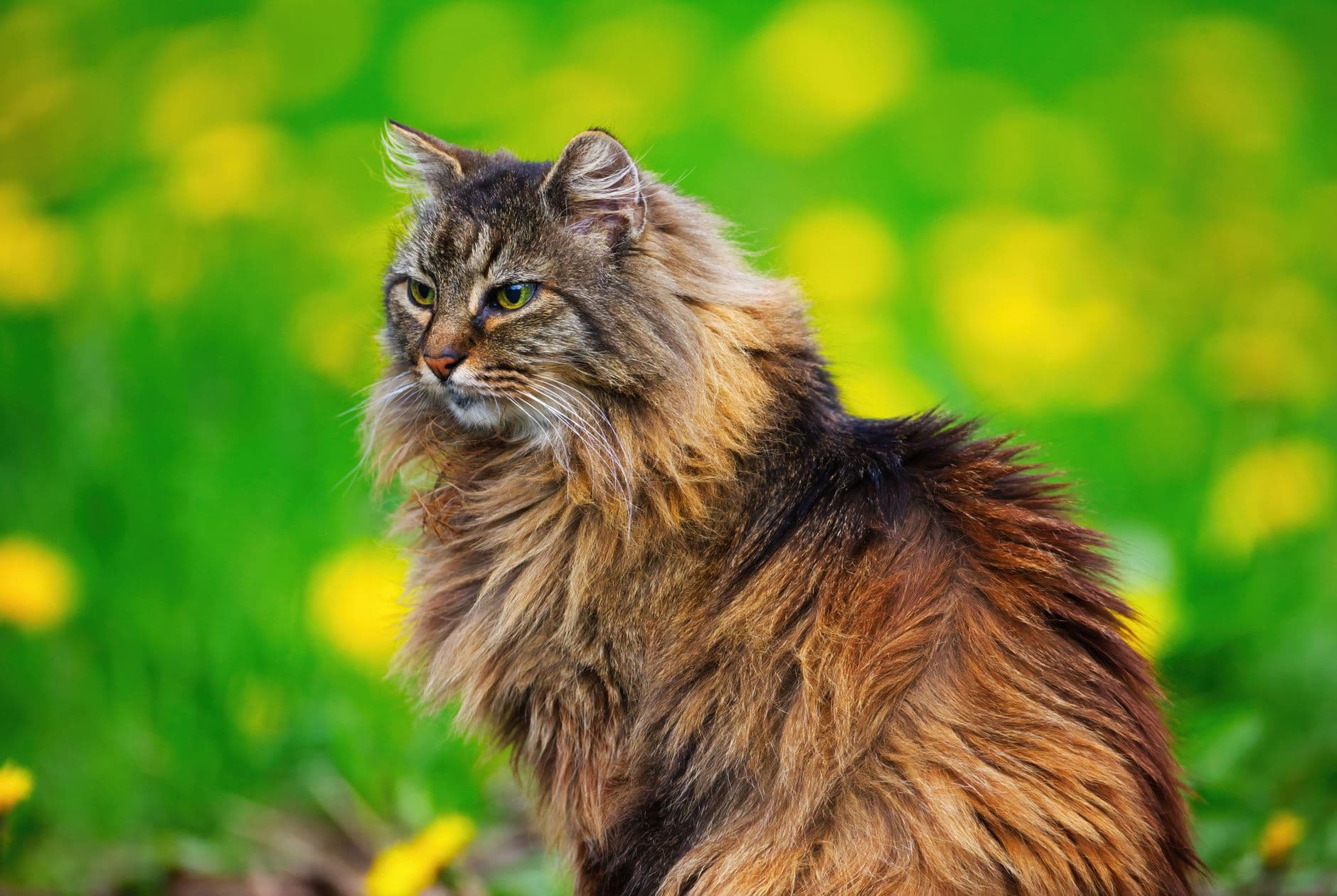
The Norwegian Forest Cat's defining physical feature is its double-layered, water-resistant coat - and this is not merely a cosmetic characteristic. The coat evolved as functional survival equipment. The dense, woolly undercoat provides thermal insulation against sub-zero temperatures, while the long, glossy guard hairs shed water and snow before it can penetrate to the skin. Tufted ears and heavily furnished toes are characteristic features described in the breed standard, which assigns them no stated function.
This coat requires specific management throughout the year, particularly during the dramatic seasonal shed in spring, when Norwegian Forest Cats "blow their coat" in a way that surprises first-time owners. Understanding this seasonal cycle is essential to managing the breed successfully.
The Climbing Obsession
Norwegian Forest Cats evolved in an environment that included rocky fjord cliffs and dense forest canopy. Unlike most domestic cats that climb for vantage and safety, Norskies climb because their muscular, sturdy bodies were built for it. The CFA standard describes hind legs longer than the front, making the rump higher than the shoulders. In a home environment, this translates to an obsession with the highest reachable point in any room.
This is not a breed you can redirect to a small cat condo. Norwegian Forest Cats need floor-to-ceiling infrastructure - tall, sturdy trees, wall shelving at various heights, and ideally outdoor enclosure access where climbing trees or structures are available.
Slow to Mature, Long to Live
One of the Norwegian Forest Cat's notable characteristics is its extended maturation period. Unlike most domestic cats that reach adult size by 12-18 months, Norskies do not achieve their full size and coat development until 4-5 years of age. This slow development means that a 2-year-old Norwegian Forest Cat is still, in many respects, a teenager. Plan your care and behavioral expectations accordingly.
With proper care, Norwegian Forest Cats typically live 12-16 years. Their size - males commonly reach 13-22 pounds, females 9-12 pounds - places them among the largest domestic cat breeds. Compare to other cat breeds for size context.
Norwegian Forest Cat vs. Maine Coon
Because both breeds are large, semi-longhaired, and tufted, Norwegian Forest Cats are frequently confused with Maine Coons. Key distinctions: the NFC has a straight profile when viewed from the side (flat forehead to straight nose), while the Maine Coon has a slight concave curve. The NFC's eyes are more almond-shaped and positioned at an angle; the Maine Coon's eyes are rounder. The NFC coat is more uniformly double-layered; the Maine Coon coat has a more variable texture. Both breeds are wonderful but have distinct genetic histories and health profiles.
Daily Care
Living With a Norskie
Norwegian Forest Cats are adaptable, calm household companions who integrate well into families with children, dogs, and other cats. Despite their impressive size and athleticism, they are not high-strung or demanding in the way of Abyssinians or Bengals. They enjoy company without requiring constant interaction, and many Norskie owners describe their cats as "pleasantly independent but reliably present".
Activity and Play
A common misconception is that Norwegian Forest Cats are low-energy due to their large, sturdy build and calm indoor demeanor. In fact, they are athletic cats who need daily active play. The difference is that they tend to play in bursts rather than in continuous high-speed circuits. Two 15-20 minute interactive play sessions daily - targeting the predatory sequence with wand toys or laser pointers - meets the breed's activity needs without overwhelming quieter households.
Provide robust climbing infrastructure. A Norskie resting on a cat tree is exercising its balance muscles, managing its environment, and meeting its psychological need for elevation. Remove these opportunities and behavioral problems follow.
Coat Shedding Management
For most of the year, the Norwegian Forest Cat's coat is manageable with twice-weekly brushing. The exception is the spring coat blow, when the dense winter undercoat releases over several weeks. During this period, daily brushing is mandatory - and even with daily attention, you will find fur on every surface. A rubber deshedding brush made for long-haired cats dramatically reduces the volume of loose fur that transfers to furniture and clothing during this period.
Litter Box and Indoor Environment
Due to their large size, Norwegian Forest Cats need correspondingly large litter boxes - standard-sized boxes are cramped and contribute to litter box avoidance. Use jumbo or extra-large boxes and keep them fastidiously clean. A covered box may not accommodate a full-grown male Norskie comfortably.
Nutrition
Feeding a Large, Athletic Breed
Norwegian Forest Cats are large cats with correspondingly larger caloric needs than average-sized domestic breeds. However, the breed also carries a tendency toward weight gain, particularly in neutered males, making portion control as important as food quality.
Protein Requirements
As obligate carnivores, Norwegian Forest Cats thrive on high-protein, moderate-fat, low-carbohydrate diets. Look for foods where named animal proteins (chicken, turkey, beef, fish) appear in the first two ingredients. Avoid foods where corn, wheat, soy, or rice appear before protein sources in the ingredient list. Taurine is an essential nutrient for cats and any complete food meeting AAFCO profiles supplies it. Note that dietary taurine deficiency is linked to dilated cardiomyopathy, which is a different disease from the hypertrophic cardiomyopathy discussed below — feeding a complete diet is not a hedge against HCM.
Wet vs. Dry Feeding
Given the Norwegian Forest Cat's large size and the kidney stress that can accompany chronic dehydration, a wet food-primary diet is recommended. Feed high-quality wet food as the primary protein source, with dry food offered in measured amounts if desired for dental support or owner convenience. Avoid free-feeding dry food, which contributes to obesity in this breed.
Portion Guidelines and Weight Management
Adult male Norskies can reach 22 pounds at healthy weight. This makes body condition scoring more useful than scale weight - you should be able to feel the ribs without pressing, see a visible waist from above, and observe an abdominal tuck from the side. Consult your veterinarian for breed-appropriate weight targets and adjust portions quarterly as your cat ages and activity levels change.
Kitten Nutrition
Because Norwegian Forest Cats mature slowly, feed kitten-formula food (higher in calories and protein) until 18-24 months, rather than the standard 12-month transition used for average-sized breeds. The extended growth period requires extended nutritional support.
Exercise
Exercise Needs of a Mountain Cat
The Norwegian Forest Cat's exercise requirements are moderate but non-negotiable. This is not a breed designed for apartment life without compensatory enrichment. Their climbing imperative is the primary exercise driver - Norwegian Forest Cats naturally exercise themselves through vertical movement if the environment supports it.
Vertical Infrastructure as Exercise Equipment
Invest in the tallest, most structurally sound cat tree you can install. For a 15-20 pound cat, stability matters - cheap cat trees wobble and are avoided by large breeds. A solid floor-to-ceiling cat tree with multiple platforms, sisal scratching posts, and a high perch near a window is the single most effective exercise investment for a Norwegian Forest Cat. Wall-mounted cat shelving systems that create a climbing circuit are equally effective and space-efficient.
Interactive Play
Wand toys with feathers or mylar attachments trigger the NFC's hunting drive effectively. Unlike more frenetic breeds, Norwegian Forest Cats often engage in measured, deliberate play - they stalk carefully before pouncing. Respect this style rather than trying to force higher-energy engagement. A satisfied Norskie after a good play session will often seek out a high perch for a long nap - this alternation of activity and deep rest is normal and healthy.
Outdoor Access Options
If safe outdoor access is available, Norwegian Forest Cats benefit enormously from supervised outdoor time or enclosed catio access. Tree climbing, real terrain navigation, and natural scent stimulation provide exercise and enrichment that no indoor setup can fully replicate. A well-designed outdoor enclosure attached to the home is the ideal compromise between safety and environmental richness.
Exercise Across the Lifespan
Because Norskies mature slowly, maintain kitten-level play engagement through the first 4-5 years. After full maturity, exercise needs stabilize. Monitor for weight gain in cats over 7, and reduce portions rather than assuming the cat "self-regulates".
Grooming
Managing the Double Coat
The Norwegian Forest Cat's coat is beautiful but demands a real grooming commitment. Unlike single-coated breeds where occasional brushing suffices, the NFC's dense double layer requires consistent management to prevent mats and reduce shedding impact on your home.
Routine Grooming Schedule
During the non-shedding months (roughly late summer through mid-winter), twice-weekly brushing with a long-toothed metal comb and a slicker brush removes loose undercoat and prevents mat formation. Pay particular attention to areas where friction promotes matting: behind the ears, under the armpits, at the collar line, and in the pants (the long fur on the hind legs and belly). A mat splitter or dematting comb is useful for catching developing tangles before they require professional intervention.
The Spring Coat Blow
In spring, Norwegian Forest Cats shed the full winter undercoat over 4-6 weeks. This is the most demanding period in the NFC grooming calendar. Daily brushing during this period is not excessive - it is necessary. A rubber deshedding brush or an undercoat deshedding tool removes loose undercoat at volume. Some owners choose a professional grooming bath and blowout at the start of the coat blow, which dramatically reduces the shed volume and duration.
Bathing
The NFC's water-resistant guard coat requires a degreasing shampoo to penetrate effectively. Diluted clarifying or degreasing pet shampoo, applied with thorough massage to reach the undercoat, followed by a complete rinse and thorough drying, maintains coat health and reduces the greasy look that can develop in cats that are never bathed. Professional grooming every 6-12 months is reasonable for most owners.
Ears, Nails, and Teeth
Check and clean ears weekly. Trim nails every 2-3 weeks. Brush teeth daily or at minimum three times weekly with cat-specific enzymatic toothpaste. Professional dental cleanings every 2-3 years are recommended.
Health
Hypertrophic Cardiomyopathy
Hypertrophic cardiomyopathy (HCM) is the most significant health concern in Norwegian Forest Cats. HCM involves the thickening of the heart muscle wall, which reduces the heart's ability to pump blood effectively. In severe cases, it leads to congestive heart failure, aortic thromboembolism, and sudden death. The disease can be present in young cats and may not produce obvious symptoms until it is advanced.
Reputable Norwegian Forest Cat breeders screen breeding cats annually via echocardiogram. Ask for documentation of recent cardiac screening on both parents and their lines. No DNA test currently exists for NFC-specific HCM mutations, making physical cardiac screening the only available tool. Annual echocardiograms for your own cat, beginning at age 2-3, allow early detection and management.
Glycogen Storage Disease Type IV
Glycogen storage disease Type IV (GSD IV) is a lethal metabolic disorder in which a defective enzyme prevents the normal processing of glycogen. Affected kittens typically die before or shortly after birth, or develop progressive neuromuscular disease and die within a few months. GSD IV is autosomal recessive and DNA testable. Responsible breeders DNA test all breeding cats and will never pair two carriers. Request GSD IV test results (both parents must be clear or carrier-to-clear pairing with kittens tested) before purchasing.
Hip Dysplasia
Hip dysplasia does occur in cats and Norwegian Forest Cats are among the pedigree breeds screened for it, but the claim that they are affected more than most breeds is not supported by the screening data available — in a Czech pedigree-cat study the breed accounted for a small minority of affected cats, with Maine Coons dominating. The large body size and musculature of the breed places greater demand on hip joint integrity. Symptoms include reduced jumping ability, reluctance to climb, and rear-leg lameness. Weight management is the most important preventive measure. Severe cases may require surgical intervention.
Preventive Care Recommendations
Annual wellness exams until age 7, then biannual. Cardiac screening beginning at age 2-3. Weight monitoring quarterly. Dental cleanings every 2-3 years. Keep all vaccinations and parasite prevention current year-round.
Costs
Purchasing an NFC
Norwegian Forest Cats from health-tested breeding programs cost $1,000-$2,000 in most markets. Imported lines from Scandinavian breeders or show-quality cats may exceed $2,500. Rescue and rehome fees through breed-specific rescues run $100-$300. Always verify that cardiac screening and GSD IV DNA testing have been performed on breeding cats.
Initial Setup Investment
The Norwegian Forest Cat's size and environmental needs mean initial setup costs run higher than average. A quality, tall cat tree rated for large breeds costs $200-$500. Standard cat trees under 50 lbs weight rating are inadequate and potentially unsafe. Budget $100-$200 for an initial toy and enrichment kit. Spay or neuter if not already done: $200-$500. First-year veterinary care including vaccinations and initial wellness exam: $300-$500. A baseline echocardiogram, recommended by age 2-3, adds $300-$500.
Annual Ongoing Costs
High-quality diet for a large Norwegian Forest Cat runs $80-$150 per month, or $960-$1,800 annually. Annual wellness care runs $200-$350. Flea and parasite prevention: $100-$200. Professional grooming, particularly during the spring coat blow, adds $100-$300 annually. Annual cardiac screening echocardiograms: $300-$500.
Financial Planning for Health Conditions
HCM management, if your cat is diagnosed, includes ongoing echocardiogram monitoring, medications chosen by a cardiologist, and specialist cardiology fees that can reach $2,000-$5,000 annually in active management phases. Pet insurance with hereditary condition coverage, purchased when your cat is young and before any diagnosis, is strongly recommended. Monthly premiums of $40-$80 represent significant value protection for a breed with documented cardiac risk.
Frequently Asked Questions
What does a Norwegian Forest Cat breeder's GSD IV certificate actually tell me?
Glycogen storage disease type IV traces to a complex rearrangement of the GBE1 gene, and the Langford Vets laboratory at the University of Bristol runs a PCR test that sorts each cat into Affected, Carrier or Normal. Because it is recessive, a kitten is only affected when both parents pass a copy on. Ask to see the named result line for each parent, not a breeder's summary sentence.
Is there a second inherited condition I should be asking about?
Yes. Langford Vets lists pyruvate kinase deficiency for this breed alongside the storage disease. The missing red-cell enzyme can produce a haemolytic anaemia that is often mild, only intermittently detectable, or not evident until the cat is older, so a bright-looking adult proves nothing either way. Get the parents' result in writing, and take lethargy or loss of appetite to your vet rather than waiting it out.
Is the water-resistant coat real, or is that just Viking folklore?
The registry standard backs it, but for one layer only: it describes a double coat of dense undercoat covered by long, glossy, smooth water-resistant guard hairs. The outer layer sheds water; the wool beneath it does not. So after a bath or a soaking, work the towel and dryer right down to the skin, because a dry-feeling surface can sit over an undercoat that is still holding damp.
Why does my Norskie's coat change so drastically between seasons?
The breed standard notes the coat may be fuller in winter than in summer because the dense undercoat reaches its full development in winter, so the spring loss is that layer leaving rather than a skin problem. Cornell's feline health centre flags long-haired cats as being at significantly greater risk of hairballs, so comb daily while it drops and treat repeated unproductive retching as a vet visit.
My kitten is past a year old and still looks lanky. Is something wrong?
No. The Cat Fanciers' Association standard calls this a slow maturing breed attaining full growth at approximately five years of age, so an eighteen-month-old is nowhere near finished. Use those years to keep him lean: veterinary guidance links excess weight to feline osteoarthritis, and hip dysplasia is one of the conditions that feeds it, including in Norwegian Forest Cats screened by radiograph.
Sources
This guide draws on the following published references. Each opens in a new tab so you can check it against what you have read here.
The Cat Fanciers' Association (CFA)
Norwegian Forest Cat Show Standard (revised 2026)(opens in a new tab)Cat Fanciers' Association
Norwegian Forest Cat — breed standard and profile(opens in a new tab)ASPCA
General Cat Care(opens in a new tab)Cornell Feline Health Center, Cornell University College of Veterinary Medicine
A Hairy Dilemma (hairballs and grooming in long-haired cats)(opens in a new tab)VCA Animal Hospitals
Arthritis in Cats(opens in a new tab)Animals (MDPI), via PubMed Central
The Prevalence of Feline Hip Dysplasia, Patellar Luxation and Lumbosacral Transitional Vertebrae in Pedigree Cats in the Czech Republic(opens in a new tab)Merck Veterinary Manual
Routine Health Care of Cats(opens in a new tab)Langford Vets Diagnostic Laboratories, University of Bristol
Glycogen Storage Disease (GSD IV) — Cat Genetic Testing(opens in a new tab)Langford Vets Diagnostic Laboratories, University of Bristol
Pyruvate Kinase Deficiency — Cat Genetic Testing(opens in a new tab)Langford Vets Diagnostic Laboratories, University of Bristol
Cat Genetic Diseases and Breeds (test-to-breed map)(opens in a new tab)
Affiliate disclosure: We may earn a commission from qualifying purchases. This doesn't affect our recommendations.
Recommended Products
Get personalized pet care tips
Join our newsletter for breed-specific advice, care guides, and expert tips delivered weekly.
No spam, ever. Unsubscribe anytime.