
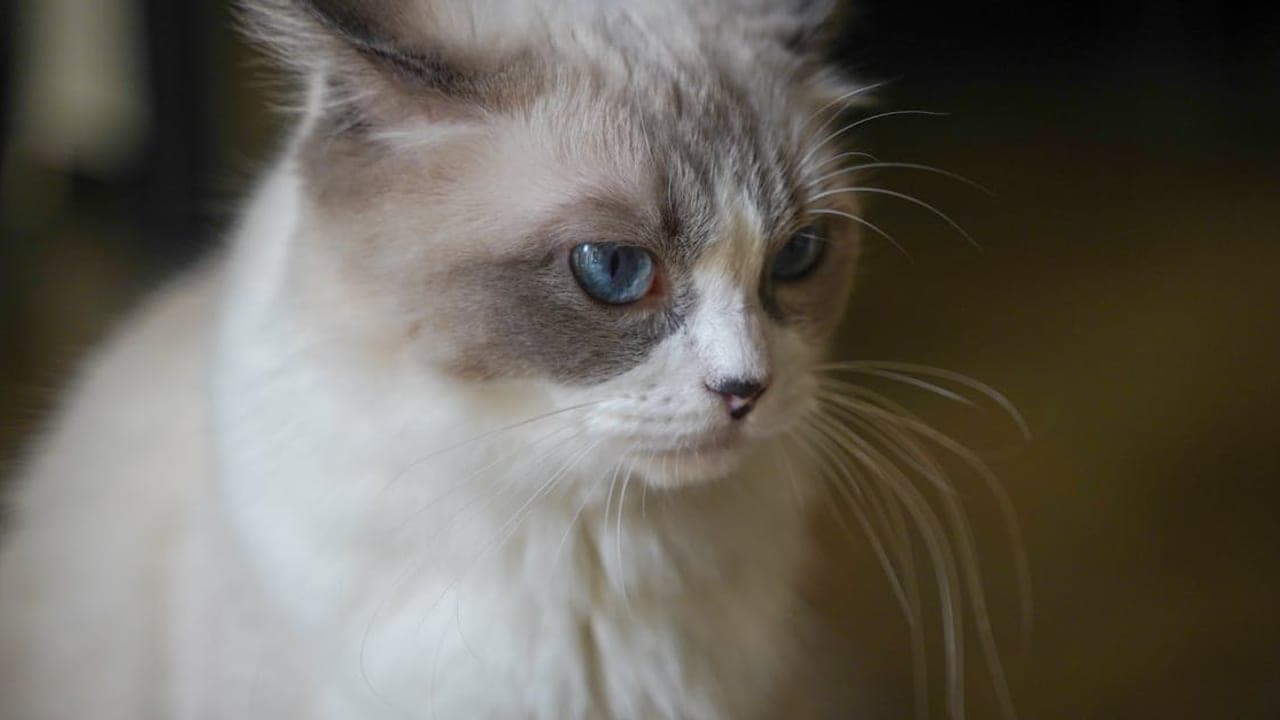
Ragdoll Cat Care Guide: The Gentle Giant
Ragdolls are the gentle giants of the cat world — males reach 15-20 lbs, females 10-15 lbs, and most don't hit full size until age 3-4. They're called "puppy cats" for a reason: they follow you room t
In This Guide
Overview
Ragdolls are the gentle giants of the cat world — males reach 15-20 lbs, females 10-15 lbs, and most don't hit full size until age 3-4. They're called "puppy cats" for a reason: they follow you room to room, greet you at the door, and many genuinely tolerate being carried like a baby. The name comes from the way they go limp when picked up.
This guide covers what actually matters day-to-day with a Ragdoll: the indoor-only requirement (non-negotiable, not preference), the semi-long coat that needs more brushing than people expect, the breed-specific heart screening you should budget for, and the real annual cost of $1,000-$1,800 once you're past the kitten year. If you want a low-drama, people-oriented cat and you can commit to indoor living plus echocardiogram screening every 1-2 years until age 5, a Ragdoll is a strong fit. If you want an independent cat that mostly does its own thing, look elsewhere.
Daily Care
Ragdolls are needy in a way most cats aren't. Plan on 60-90 minutes of human interaction per day — not all at once, but they expect you to be available. They follow you to the bathroom. They sit on your laptop. If you work 12-hour days and live alone, this is the wrong breed.
The indoor-only rule (non-negotiable): Ragdolls have almost no survival instinct. They don't fight back, they approach strangers, and their docile nature plus visible value ($800-$2,500 retail) makes them a theft target. Outdoor Ragdolls die young — hit by cars, taken, or attacked by other animals. This isn't overprotective owner talk; it's the breed reality.
- Morning: 10-15 minutes of wand-toy play before you leave
- Evening: Another 15-20 minutes of interactive play, ideally before dinner
- Throughout day: Cat trees, window perches, and puzzle feeders for self-entertainment
- Bedtime: Most Ragdolls will sleep on or next to you — accept this
Litter box: Scoop daily. Ragdolls are fastidious and will protest (peeing outside the box) within 48 hours of a dirty tray. One box per cat plus one extra is the standard rule.
Decision rule: If you're gone more than 9 hours a day on weekdays, get two Ragdolls or pair one with another cat. A solo Ragdoll left alone develops separation anxiety — overgrooming, food refusal, or destructive behavior. Two Ragdolls cost roughly 1.7x the food and litter, not 2x.
Nutrition
Ragdolls are slow growers (full size at 3-4 years) and prone to obesity once they hit adulthood. Both facts shape how you feed them.
Kitten (0-12 months): Free-feed high-quality kitten food. They're building a large frame and need the calories. Wet food at least once a day starting at 8 weeks — this builds the wet-food habit you'll want later.
Adolescent (1-3 years): Transition to two scheduled meals per day. Stay on kitten or all-life-stages formula until age 2, then switch to adult. Ragdolls reach skeletal size around year 2 but keep filling out muscle through year 4.
Adult (3-10 years): 250-350 calories/day for females, 300-400 for males, split into two meals. Stop free-feeding the moment they hit adult weight. Ragdolls don't self-regulate — left to graze, most will gain 2-3 lbs/year.
Senior (10+): Reduce calories 10-15% if activity drops. Switch to a senior formula with joint support (glucosamine, omega-3) and easier-to-digest protein.
Wet vs dry — the real answer: Mix both. Ragdolls are prone to FLUTD (lower urinary tract disease) and bladder stones. Wet food (70-80% water content) flushes the urinary tract better than dry alone. Aim for at least one wet meal per day, ideally two for cats with any FLUTD history.
Water: Most cats drink less than they should. A pet water fountain ($30-$50) increases water intake measurably — moving water triggers the drinking instinct. Worth every dollar for a breed prone to bladder issues.
Decision rule: Weigh your Ragdoll monthly. A male over 22 lbs or female over 17 lbs is overweight, not "big-boned." Cut portions 10% and recheck in 4 weeks before adjusting again.
Exercise
Ragdolls are low-energy by cat standards — but "low-energy" doesn't mean "no energy." They need 20-30 minutes of structured play daily, split into two sessions, or they get bored and gain weight.
- Wand toys: Top choice. Most Ragdolls love feather wands and will play 10-15 minutes per session. Da Bird and Cat Dancer are reliable picks ($8-$15).
- Fetch: Many Ragdolls retrieve naturally. Crumpled paper balls or small soft toys work. Yes, they bring it back.
- Puzzle feeders: Slow-feed bowls and treat puzzles add mental work to mealtimes. Especially useful for indoor-only cats with no environmental stimulation.
- Cat trees: Counter-intuitively, Ragdolls prefer ground-level or low-height structures. They're heavy and not strong jumpers. Skip the 6-foot tower; a sturdy 3-foot tree with multiple platforms works better.
What doesn't work: Laser pointers as the only exercise. They trigger frustration without resolution (no prey to catch). Use lasers as a warm-up, then end with a wand toy they can actually "catch."
Mental stimulation: Indoor-only life is enrichment-poor by default. Rotate toys weekly so they feel new. Window perches with bird-feeder views outside are free entertainment that runs all day. Cat TV (YouTube bird videos) works for some cats.
Prey-drive note: Ragdolls have weaker prey drive than most breeds. They typically won't catch mice. If you have a rodent issue, get a different cat or call pest control — don't expect a Ragdoll to do the job.
Decision rule: If your Ragdoll is sleeping more than 16 hours a day and gaining weight, increase play sessions to three short ones (10 minutes each) before increasing food restriction.
Grooming
Ragdolls have a semi-long, silky coat with minimal undercoat — easier than a Persian, harder than a shorthair. The good news: they mat less than people fear. The bad news: they shed year-round, with two heavy seasonal blowouts.
- Routine weeks: 2-3 times per week with a steel comb (wide-tooth) followed by a slicker brush. 5-10 minutes per session.
- Spring and fall (heavy shed): Daily brushing for 3-4 weeks. Skip a week and you'll have visible mats.
- Behind the ears
- Armpits and inner thighs
- Belly (especially in unaltered males)
- Around the collar if they wear one
- Base of the tail ("britches")
If you find a mat under 1 cm, work it out with fingers and a comb. Anything bigger or close to skin: don't cut it yourself (high risk of cutting skin — vet cost $200+ to repair). A groomer can shave it for $20-$40.
Bathing: Every 6-8 weeks is plenty. Ragdoll coats don't get oily fast. Use a cat-specific shampoo (human or dog shampoo strips coat oils). Most Ragdolls tolerate baths better than other breeds — start them young.
Ears: Check weekly. Wipe with a vet-approved ear cleaner if you see brown wax. Excessive scratching, head shaking, or odor = vet visit (likely ear mites or yeast).
Nails: Trim every 2-3 weeks. Indoor-only cats don't wear nails down naturally. Clear nails make it easier to see the quick (the pink vein) — clip just past it.
Dental: Brush 2-3 times per week with a cat toothbrush and enzymatic cat toothpaste (never human toothpaste — fluoride is toxic to cats). Dental disease is the most common health issue in cats over age 3 and a professional cleaning runs $400-$800 under anesthesia. Brushing prevents this.
Decision rule: If brushing takes more than 15 minutes or your cat is fighting you, switch to a deshedding tool or shorter daily sessions. Forcing a 30-minute session creates a cat that hates grooming for life.
Health
Ragdolls are generally healthy with a 12-17 year lifespan, but they have a few breed-specific risks every owner should know — and screen for.
Hypertrophic cardiomyopathy (HCM) — the big one. HCM is the leading cause of heart disease in cats and Ragdolls have higher genetic incidence than the average breed. Two known mutations (HCM1 and HCM3) are tested for in reputable breeding lines. Ask any breeder for proof of HCM-negative parents.
For your individual cat: a baseline echocardiogram from a board-certified veterinary cardiologist between ages 1-2, then every 1-2 years until age 5, then as your cardiologist recommends. Cost per scan: $300-$500. Yes, this is a recurring expense most Ragdoll owners don't budget for. Yes, it's worth it — HCM caught early is manageable for years; HCM caught after symptoms (lethargy, labored breathing, sudden hind-leg paralysis) is often fatal within months.
Polycystic kidney disease (PKD). Inherited cyst formation in the kidneys. Genetic test exists; reputable breeders screen. Adult-onset symptoms: increased thirst, weight loss, vomiting. If you got your Ragdoll from a non-tested line, ask your vet to run a kidney panel by age 5.
Feline lower urinary tract disease (FLUTD) and bladder stones. Ragdolls are predisposed. Watch for: straining in the litter box, blood in urine, peeing outside the box, vocalizing while urinating. A male cat straining unsuccessfully is a true emergency (urinary blockage — fatal within 24-48 hours untreated, $1,500-$3,000 to resolve at an ER vet). Prevention: high water intake (fountain), wet food, weight management.
Feline infectious peritonitis (FIP). Some Ragdoll lines show higher susceptibility. Most cats exposed to feline coronavirus never develop FIP, but Ragdolls have slightly elevated risk. There's no preventive vaccine that works reliably. The good news: GS-441524 (a recently available antiviral) now treats FIP successfully in many cases — it didn't exist a few years ago. If your young Ragdoll shows persistent fever, weight loss, or fluid in the abdomen, ask specifically about FIP.
- Kitten: vaccines at 8, 12, 16 weeks; spay/neuter at 4-6 months
- Adult (1-7): annual wellness exam + dental check
- Senior (8+): twice-yearly exams with bloodwork (early kidney/thyroid detection)
Decision rule: If your Ragdoll shows any of these, vet within 24 hours: not eating for 24+ hours, hiding when normally social, labored breathing, straining to urinate without producing urine. "Wait and see" with cats often means waiting until it's too late — they hide illness until they can't.
Costs
- Reputable breeder (HCM/PKD-tested parents, registered): $1,500-$2,500
- Pet-quality from breeder: $800-$1,500
- Rescue or breed-specific Ragdoll rescue: $50-$150
First-year costs (kitten): $1,800-$2,800 including initial vet (vaccines + spay/neuter $300-$600), supplies (carrier, trees, litter setup $200-$400), food/litter ($600-$900), and a baseline vet wellness check.
- Food (premium wet + dry mix): $400-$700
- Litter: $150-$300
- Routine vet + dental: $200-$400
- Pet insurance (recommended for HCM-prone breed): $300-$500
- Toys, replacement scratchers, enrichment: $30-$50/month = $360-$600
- Total typical year: $1,000-$1,800
Hidden cost most owners miss: HCM screening. Echocardiogram every 1-2 years from a cardiologist runs $300-$500 per scan. Over a 15-year lifespan that's $1,500-$3,500 in screening alone. Budget for it from day one.
Lifetime cost: Roughly $18,000-$30,000 over 12-17 years, before any major medical event. A single FLUTD blockage or HCM treatment can add $2,000-$5,000 in a year — pet insurance ($25-$45/month) is worth running the numbers on for this breed.
Sources
This guide draws on the following published references. Each opens in a new tab so you can check it against what you have read here.
Cat Fanciers' Association
Ragdoll — breed standard and profile(opens in a new tab)ASPCA
Cat Grooming Tips(opens in a new tab)Merck Veterinary Manual
Proper Nutrition for Cats(opens in a new tab)Cornell Feline Health Center
Feeding Your Cat(opens in a new tab)Merck Veterinary Manual
Routine Health Care of Cats(opens in a new tab)
Affiliate disclosure: We may earn a commission from qualifying purchases. This doesn't affect our recommendations.
Recommended Products
Get personalized pet care tips
Join our newsletter for breed-specific advice, care guides, and expert tips delivered weekly.
No spam, ever. Unsubscribe anytime.