
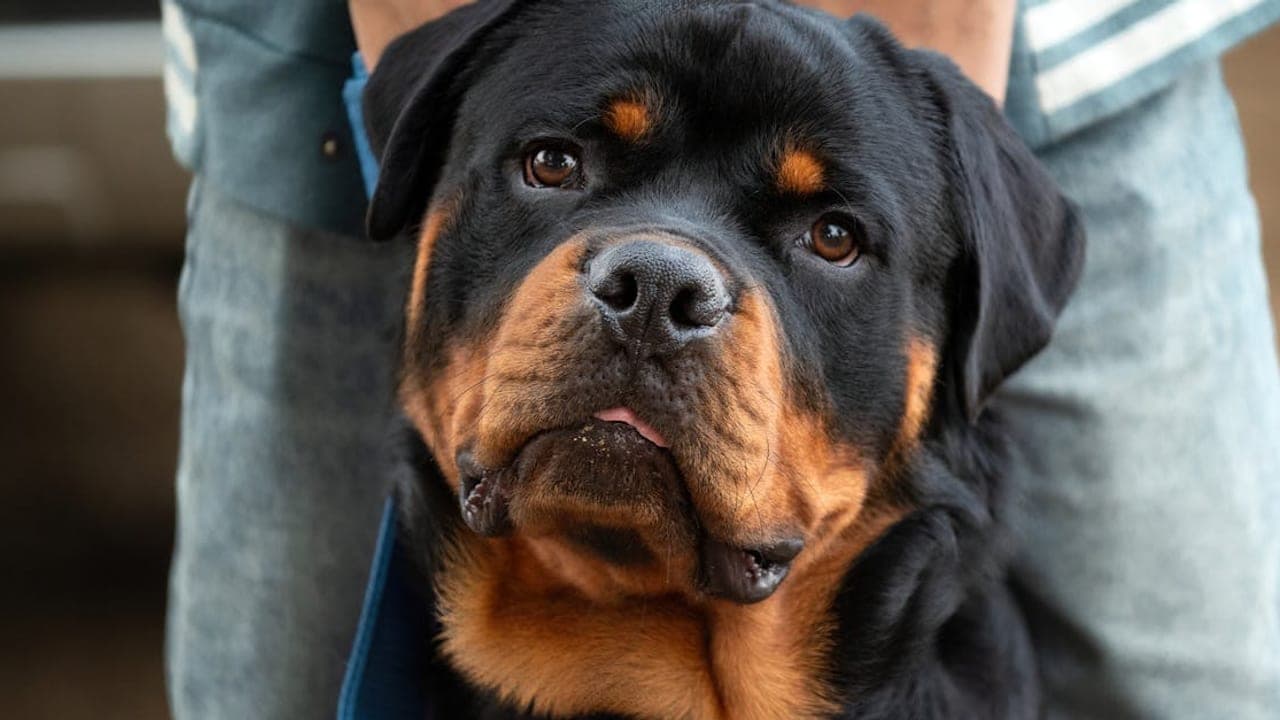
Rottweiler Care Guide: The Loyal Guardian
Rottweilers are working dogs first, family pets second — the AKC standard sets height at 24 to 27 inches for dogs and 22 to 25 for bitches and gives no weight at all, so judge condition by the dog rat
In This Guide
Overview
Rottweilers are working dogs first, family pets second — the AKC standard sets height at 24 to 27 inches for dogs and 22 to 25 for bitches and gives no weight at all, so judge condition by the dog rather than by a number — descended from German cattle drovers that walked herds and guarded the butcher's wagon. They are owner-bonded to a degree most breeds aren't and stay glued to their person. They are also powerful and naturally protective. That combination is an asset in the right home and a problem in the wrong one.
This guide is honest about what owning a Rottweiler actually requires: an early socialisation window that closes fast, structured handling for life, an experienced handler (not a first-dog breed for most people), OFA hip and elbow screening on the parents before you buy, and a budget that absorbs $1,800-$3,000/year in normal expenses plus a real possibility of $5,000-$15,000 in end-of-life cancer treatment. Lifespan is 8-10 years, with osteosarcoma as the leading cause of death. If you can commit to all of that, a Rottweiler is one of the most loyal dogs you will ever own. If any piece is shaky, pick a different breed.
Daily Care
Rottweilers are not low-maintenance dogs. They need daily structured engagement, clear leadership, and a handler who has trained dogs before. Skipping any of that doesn't produce a "bad" Rottweiler — it produces a poorly-handled dog who happens to weigh 100 lbs.
The 8-16 week socialization window — non-negotiable. This is the most important 8 weeks of a Rottweiler's life. Between 8 and 16 weeks, the puppy's brain is wired for what is normal vs what is a threat. The American Veterinary Society of Animal Behavior calls the first three months the primary and most important socialisation period, and says incomplete socialisation increases the risk of fear, avoidance and aggression later. Increases the risk — not seals the outcome. Get it right and you have given the dog the best start available. Target: 100+ positive exposures by 16 weeks — different people (men, women, children, beards, hats, uniforms), surfaces, sounds, vet visits, car rides, controlled dog-to-dog meetings. Later work still helps, but it never comes as cheaply as it does now.
Structured leadership, daily. Rottweilers want a job. Without one they invent their own — usually guarding the couch or front door. Daily structure that works: 5-10 minute morning obedience refresher, one structured walk on a loose leash, an evening training session with new or harder skills. Use positive reinforcement and clear rules — Rottweilers shut down or push back against dominance methods (alpha rolling, scruff shakes, prong corrections in untrained hands). If you have not raised a working breed before, hire a professional trainer in the first 6 months: group puppy class, then private sessions with a trainer experienced with guard breeds.
Mental engagement. A bored Rottweiler is a destructive Rottweiler. Daily: a puzzle feeder for breakfast, scent work or a nose-game, structured chew time with a stuffable rubber toy or a suitable chew. Mental work tires them faster than another walk.
Secure fencing. Rottweilers can scale a 4-foot fence and many will dig under. Minimum 6-foot solid fence (visual barriers reduce reactivity), buried at the bottom or with an L-footer. Electric fences are not adequate for a dog with a protective streak, and they do nothing to keep other people and animals out.
Decision rule: If you work 50+ hours a week, travel often, or live in an apartment without serious daily exercise infrastructure, this is the wrong breed. A large, powerful dog left under-stimulated for months is a much harder dog to live with, and professional behaviour help is neither quick nor cheap.
Nutrition
Rottweilers grow fast and grow large. How you feed in the first 18 months shapes their joints and their lifespan.
Puppy (8 weeks - 18 months) — large-breed formula is critical. Standard puppy food carries more calcium than a giant-breed puppy should get, and excess calcium is specifically more problematic for growing large- and giant-breed dogs — above 3 percent dry matter it produces more severe signs of osteochondrosis and reduced skeletal remodeling. Developmental joint disease that shows up at two or three and follows the dog for life is the thing you are feeding to avoid. Use a large-breed puppy formula (calcium 1.0-1.5%, calcium-to-phosphorus ratio 1.1:1 to 1.4:1) until 18 months. The AAFCO statement should specifically mention "large breed" or "growth of large size dogs (70 lbs or more as an adult)." Do not free-feed. Three measured meals daily until 6 months, then two.
Adult (18 months - 7 years). 1,700-2,300 calories/day depending on size and activity. Females on the lower end, working/athletic males higher. Two meals daily, never one big meal — Rottweilers are deep-chested and at risk for bloat (GDV). Rest for 60-90 minutes after eating before vigorous activity. Use a slow-feeder bowl if your dog inhales food.
Body condition is the lifespan dial. The study behind the lean-dogs-live-longer claim followed 48 Labrador Retrievers in fed pairs, one of each pair on 25 percent less food from eight weeks old; the restricted dogs had a significantly longer median lifespan. It is a strong result about food restriction in one breed rather than a Rottweiler figure, but the direction is not in doubt. You should feel ribs without pressing hard, see a waist from above, see a tuck-up from the side. If you can't, cut portions 10% and recheck in 4 weeks. The biggest mistake new owners make is overfeeding — "he's a big dog" turns into a 130-lb dog who should be 105 lbs, and the joints pay for it for the rest of his life.
Senior (7+). Reduce calories 10-15% as activity drops. Switch to a senior large-breed formula and add joint support — glucosamine, chondroitin and marine omega-3 — at doses your vet sets for the dog's weight. Start supplements at age 5, not after the limp appears.
Decision rule: Weigh your Rottweiler monthly through year 2, then quarterly. Neither registry standard gives a weight for the breed, so a scale reading alone settles nothing; the chart on the bag is a starting point — your dog's body condition is the prescription.
Exercise
Rottweilers were bred to walk for miles behind cattle. They need real daily exercise, but the type and intensity matter as much as duration — especially in the first 18 months.
Adult target: 60-90 minutes per day, moderate to vigorous, ideally split across two sessions. A morning walk plus an evening play or training session works. A Rottweiler who gets 30 minutes a day will gain weight and develop behavior problems within months.
- Long brisk walks (45-60 min) — bread and butter. A loose-leash structured walk is itself a job.
- Hiking — they handle 5-10 mile hikes on moderate terrain once mature; varied surfaces are good for joints.
- Pulling work — carting, weight-pull (light), drafting. Rottweilers were originally cart pullers and the breed thrives on it. Local IWPA or breed clubs help with proper harness fitting and progressive loading.
- Swimming — excellent low-impact exercise, especially for seniors or dogs with joint issues. Most Rottweilers are competent but not natural swimmers — start in shallow water with a life jacket.
- Obedience, tracking, herding trials — outlets that combine physical and mental work. A trained Rottweiler with a sport is a calm Rottweiler at home.
Avoid until 18-24 months — growth-plate protection. Growth plates in large breeds don't fully close until 18-24 months. Until then, no repetitive jumping (agility, dock diving), no distance running on pavement, no stair-climbing as exercise. Free play, swimming, and walks on grass or dirt are fine. Hard, repetitive work on a growing skeleton is worth avoiding on its own terms, though dysplasia itself is developmental and heritable rather than something exercise creates.
Decision rule: If your Rottweiler is destructive, vocal, or restless in the evening, the day's exercise was insufficient. Add 15-20 minutes the next day before adjusting anything else.
Grooming
Rottweilers have a short, dense double coat that is easier than most working breeds — but "easier" isn't "low-maintenance." Twice a year they blow their undercoat and your house becomes a fur snowstorm.
- Routine weeks: Once or twice per week with a rubber curry brush or hound glove, 5-10 minutes. Removes dead hair and lets you feel for lumps or skin issues.
- Spring and fall (heavy shed, 3-4 weeks each): Daily brushing with an undercoat rake or de-shedding tool. Skip a week and you'll vacuum daily for a month.
Bathing: Every 6-8 weeks. Over-bathing strips coat oils and causes skin irritation. Use a dog-specific shampoo and rinse thoroughly.
Nails — every 2-3 weeks. Rottweilers don't wear nails down on grass or carpet. Long nails change how a dog stands and walks. If you hear clicking on hard floors, they're too long. A rotary grinder is gentler than clippers — keep styptic powder on hand for the inevitable miss.
Ears — weekly check. The AKC standard describes pendant, triangular ears carried close to the head, and drop ears generally see more trouble than upright ones. Look for redness, dark wax, or odor. Wipe with a vet-approved ear cleaner and a cotton ball, never a cotton bud past the visible canal. Infections that keep coming back are worth investigating properly rather than treating one at a time.
Teeth — 2-3 times per week. Periodontal disease is extremely common in adult dogs, and a professional cleaning under anesthesia runs $600-$1,500. Brushing at home is the prevention. Use a dog-safe enzymatic toothpaste — never human toothpaste (xylitol and fluoride are toxic).
Decision rule: If shedding is overwhelming during a seasonal blow-out, a single $80-$120 professional de-shedding session (warm bath + high-velocity dryer + thorough undercoat removal) gets you 2-3 weeks of relief. Worth it twice a year if you can't keep up at home.
Health
Rottweilers are a high-medical-risk breed. Lifespan is 8-10 years and the leading causes of death are cancer and cardiac disease. Buying from a screened pedigree, keeping the dog lean, and staying current on preventive vet care are the difference between losing your dog at 6 vs 11.
Hip and elbow dysplasia — OFA screening of parents is mandatory. Dysplasia is common enough in the breed that screening is the whole game. The fix is not after-the-fact treatment ($3,000-$7,000 per joint for total hip replacement); the fix is buying from a breeder who screens. Demand to see OFA hip and elbow certifications on both parents — "Good" or "Excellent" hips, "Normal" elbows. PennHIP is an acceptable alternative. A breeder who can't produce certifications, or hand-waves with "the parents seem fine," is not a breeder you should buy from. Screened parents lower the odds substantially; they do not guarantee a sound dog, and no breeder can promise one.
Osteosarcoma (bone cancer) — a real risk, but check the number you are quoted. The Rottweiler appears on every list of predisposed breeds, though no source we could open ranks it first. The widely repeated "one in four" figure comes from a cohort study in which bone sarcoma was diagnosed in 12.6% of dogs overall; the one-in-four lifetime risk applied to the dogs gonadectomised before one year of age, not to the breed at large. Expect it typically at age 7-9 in a long bone, front leg most common. First sign is usually sudden lameness that doesn't resolve with rest, or a visible swelling on a leg. Standard treatment is amputation plus chemotherapy ($6,000-$12,000). The AKC Canine Health Foundation puts survival of about a year within reach for half of treated dogs — a median that half will not reach, not an average everyone gets. Without treatment, prognosis is 1-3 months from diagnosis. Any unexplained lameness in a Rottweiler over age 6 warrants an X-ray, not a "wait and see."
Subaortic stenosis (SAS) — congenital heart defect. A narrowing of the aorta where it leaves the heart. Severe cases cause exercise intolerance, fainting, and sudden death. Reputable breeders have parents cardiac-screened by a board-certified veterinary cardiologist (OFA cardiac certification). For your puppy, a cardiac auscultation by a cardiologist between 6 and 12 months is the screen that decides whether to look further — a mild murmur may not be audible before then, and the diagnosis itself rests on Doppler echocardiography rather than on listening. SAS is progressive, and severity increases as the dog matures, which is why the evaluation is not done at eight weeks. Cost: $200-$400 for the auscultation; $400-$700 if an echocardiogram is needed.
Bloat / gastric dilatation-volvulus (GDV) — true emergency. The stomach fills with gas and twists, cutting off blood supply. Symptoms: distended abdomen, retching without producing vomit, restlessness, drooling, collapse. Untreated GDV is fatal in 1-2 hours. Emergency surgery runs $3,000-$8,000 with ~80% survival if treated immediately. Prevention: two smaller meals daily, slow-feeder bowl, no vigorous exercise 60-90 minutes around eating. Ask your vet about prophylactic gastropexy at spay/neuter — a 30-minute add-on ($300-$600) that tacks the stomach to the body wall and prevents the twist. For high-risk breeds like Rottweilers, one of the highest-impact preventive surgeries available.
Other: Cruciate tears (weight management prevents), hypothyroidism (annual thyroid panel from age 5), entropion ($400-$1,200 to correct), lymphoma (second-most-common cancer).
Vet schedule: Puppy vaccines at 8/12/16 weeks plus first cardiac auscultation. Adults: annual exam, dental, heart auscultation. Seniors (7+): twice-yearly exams with full bloodwork; X-ray any unexplained lameness.
Decision rule: Pet insurance for a Rottweiler is not optional the way it is for a low-risk breed. Premiums run $80-$130/month ($960-$1,560/year), but a single osteosarcoma case hits $10,000+ and a GDV $5,000+. For most owners, insurance pays for itself by age 7.
Costs
- Reputable breeder (OFA hip/elbow/cardiac screened parents, written health guarantee, registered): $1,500-$3,500
- Backyard breeder (no screening, "papers"): $500-$1,200 — avoid; the savings disappear in joint surgery by year 3
- Rescue (breed-specific or shelter): $200-$600
First-year costs (puppy): $2,500-$4,500 including vaccines + spay/neuter ($400-$800), cardiac screening ($200-$400), supplies (crate, beds, leash, training equipment $300-$500), professional puppy training ($300-$800), large-breed puppy food ($600-$900), and gastropexy add-on at spay/neuter if elected ($300-$600).
- Food (premium large-breed adult): $700-$1,100
- Pet insurance (recommended for this breed): $960-$1,560 ($80-$130/month)
- Routine vet + dental + flea/tick/heartworm prevention: $500-$900
- Treats, toys, replacement chews and beds (Rottweilers destroy soft beds): $200-$400
- Total typical year: $1,800-$3,000 — assuming nothing major happens.
The cost most owners don't budget for: end-of-life cancer treatment. Osteosarcoma diagnosis at age 7-9 with amputation + chemotherapy: $6,000-$12,000 for 10-12 additional months. Lymphoma chemotherapy: $5,000-$10,000. GDV emergency surgery: $3,000-$8,000. A single major medical event in years 6-10 can hit $5,000-$15,000. Pet insurance covers most of this if bought before symptoms started; without it, this comes out of pocket or forces the worst decision a dog owner can face.
Lifetime cost: Roughly $25,000-$45,000 over 8-10 years, $35,000-$60,000 once a major medical event is included. If you sign up for this breed, sign up for the cost reality, not just the puppy price.
Frequently Asked Questions
Are Rottweilers the breed most likely to get bone cancer?
No single breed holds that title. The AKC Canine Health Foundation reports roughly 10,000 new canine bone-cancer diagnoses each year, mostly in large and giant breeds, with a median age at diagnosis of about eight years. VCA Animal Hospitals lists Rottweilers alongside Great Danes, Irish Wolfhounds, Scottish Deerhounds, Greyhounds and Boxers as predisposed breeds. Rottweilers belong on that list, but neither source ranks them highest, so be wary of that claim.
My seven-year-old Rottweiler has limped for three weeks and rest has not helped. What should the vet do?
Ask for radiographs of the limb rather than another course of rest. VCA Animal Hospitals notes that distinct swelling and lameness are early signs of osteosarcoma, and that on X-rays the tumor appears lytic, or moth-eaten, where normal bone has been lost. Timing matters: VCA reports about 90 to 95 percent of dogs already have micrometastasis at diagnosis, so chest imaging and staging usually follow the same visit.
Is a Rottweiler's guarding behavior fixed by breed, or can I shape it?
Neither breed standard describes a dangerous dog. The American Kennel Club standard calls the Rottweiler calm, confident and courageous, with an inherent desire to protect home and family; The Royal Kennel Club asks for good natured, not nervous, aggressive or vicious. How that instinct is expressed depends on handling. The American Veterinary Society of Animal Behavior warns incomplete socialization in a puppy's first three months raises later risk of fear, avoidance and aggression.
At what age is a Rottweiler heart screening for subaortic stenosis actually meaningful?
Not before the dog is close to mature. Writing in Canine Medicine and Genetics, Ontiveros and Stern describe subaortic stenosis as progressive and, in Rottweilers, autosomal recessive, with severity increasing toward maturity, and say dogs should be at least nine to twelve months old when evaluated by a board-certified cardiologist using Doppler echocardiography. No DNA test substitutes: the one identified variant, in the PICALM gene, did not explain every affected dog.
The breeder handed me hip and elbow numbers for both parents. How do I check them myself?
Look them up rather than taking the paperwork on trust. The Orthopedic Foundation for Animals publishes normal results in a public database that anyone can search, so you can confirm each parent yourself before you pay a deposit. Check hips and elbows separately rather than assuming one covers both. Preliminary evaluations exist for young dogs and final ones are issued once a dog is mature, so check which you were handed.
Sources
This guide draws on the following published references. Each opens in a new tab so you can check it against what you have read here.
American Kennel Club
Rottweiler — breed standard and profile(opens in a new tab)American Kennel Club
Official Standard of the Rottweiler(opens in a new tab)The Royal Kennel Club
Rottweiler Breed Standard(opens in a new tab)ASPCA
General Dog Care(opens in a new tab)American Veterinary Society of Animal Behavior
AVSAB Position Statement on Puppy Socialization(opens in a new tab)ASPCA
Dog Nutrition Tips(opens in a new tab)ASPCA
Dog Grooming Tips(opens in a new tab)Canine Medicine and Genetics (BMC)
Genetics of canine subvalvular aortic stenosis (SAS)(opens in a new tab)VCA Animal Hospitals
Aortic Stenosis in Dogs(opens in a new tab)AKC Canine Health Foundation
Bone Cancer in Dogs(opens in a new tab)Orthopedic Foundation for Animals
Hip Dysplasia(opens in a new tab)VCA Animal Hospitals
Osteosarcoma in Dogs(opens in a new tab)Merck Veterinary Manual
Routine Health Care of Dogs(opens in a new tab)
Affiliate disclosure: We may earn a commission from qualifying purchases. This doesn't affect our recommendations.
Recommended Products
Get personalized pet care tips
Join our newsletter for breed-specific advice, care guides, and expert tips delivered weekly.
No spam, ever. Unsubscribe anytime.