
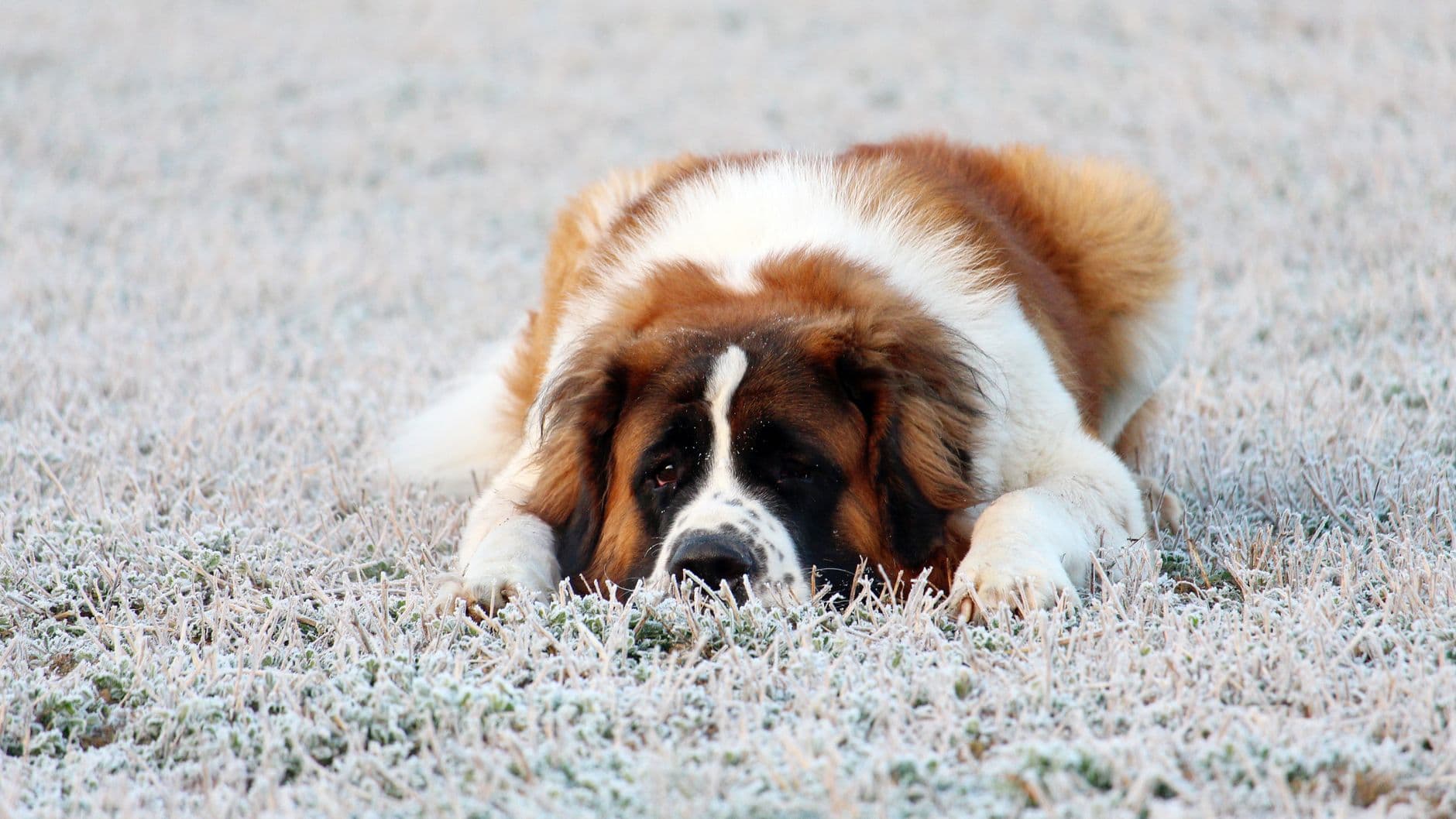
Saint Bernard Care Guide
The Gentle Giant of the Swiss Alps The Saint Bernard is one of the most recognizable dogs in the world, and one of the most misunderstood. These massive, affectionate dogs carry centuries of history o
In This Guide
Overview
The Gentle Giant of the Swiss Alps
The Saint Bernard is one of the most recognizable dogs in the world, and one of the most misunderstood. These massive, affectionate dogs carry centuries of history on their broad shoulders, tracing their origins to the Great St. Bernard Hospice in the Swiss Alps, where monks began breeding them in the 17th century specifically to locate and rescue travelers buried by avalanches on the treacherous mountain pass between Switzerland and Italy.
The famous image of a Saint Bernard carrying a small barrel of brandy around its neck is pure mythology, originating from an 1820 painting by Edwin Landseer. The brandy barrel appears to be a Victorian invention rather than hospice practice. The dogs provided warmth and companionship to rescued travelers, but the brandy barrel was artistic embellishment that stuck in the public imagination for two centuries.
What to Realistically Expect
Owning a Saint Bernard is a profound commitment. Males typically weigh between 140 and 180 pounds, and females range from 120 to 140 pounds. They stand 26 to 30 inches at the shoulder. This is not a breed you can manage with half-measures. Everything about their care is scaled up, from food costs to veterinary bills to the industrial-strength towels you will need for drool management.
And drool is not a minor footnote. Saint Bernards drool copiously and constantly, especially after eating, drinking, and exercising. Many Saint Bernard households keep bib towels near every water station. New owners who visit a home with a Saint Bernard for the first time are often surprised by the volume. If you are a fastidious housekeeper, this is information you need before committing.
The Beethoven Effect
The 1992 film Beethoven introduced millions of families to the Saint Bernard, and the breed experienced a significant surge in popularity afterward. The problem with movie-driven breed booms is that demand outpaces responsible breeding. The years following Beethoven saw an influx of poorly-bred Saint Bernards with exaggerated features, poor temperaments, and compounded health problems. Choosing a reputable breeder who health-tests for hip dysplasia, elbow dysplasia, and cardiac conditions is not optional for this breed.
Temperament and Family Life
Despite their imposing size, Saint Bernards are famously gentle and patient. They are particularly tolerant of children, though their sheer mass makes supervision around small children essential. A Saint Bernard who means to do nothing wrong can knock a toddler over by wagging enthusiastically. They are not territorial dogs, not excessive barkers, and not suitable as guard dogs in any meaningful sense beyond the visual deterrent of their size.
They bond deeply with their families and prefer to be in the same room rather than outdoors alone. They are quiet dogs for their size and settle well indoors as long as their exercise needs are met.
Climate and Environment
The Saint Bernard was developed for alpine winters. Heat is their enemy. Anything above 75 degrees Fahrenheit becomes uncomfortable, and above 85 degrees can be dangerous. Owners in warm climates must provide air conditioning, limit outdoor activity to early morning and evening hours during summer, and watch for signs of heat exhaustion: excessive panting, drooling more than usual, glazed eyes, and lethargy. This breed is not suited for year-round outdoor living in warm regions.
Lifespan Realities
The Saint Bernard's average lifespan is 8 to 10 years, and many do not reach the upper end of that range. Cancer is a leading cause of death, and osteosarcoma is markedly more common in giant breeds than in small ones. Dilated cardiomyopathy is also a documented concern in the breed. Knowing this before bringing a Saint Bernard home allows families to make informed decisions about preventive care, pet insurance, and end-of-life planning.
Daily Care
Building a Daily Routine
Saint Bernards thrive on consistency. A predictable daily schedule reduces anxiety and helps manage their large bodies more effectively. Morning and evening are the ideal exercise windows, both to avoid midday heat and to capitalize on their natural rhythms.
Because they drool heavily around mealtimes, feeding stations benefit from being easy to clean. Elevated feeders are often recommended by breeders for giant breeds, though the evidence on whether elevation reduces bloat risk is mixed. What is clear is that Saint Bernards should not exercise for at least one hour before and one hour after meals, because gastric dilatation-volvulus is a life-threatening emergency in large dogs — though note both breed standards describe this breed's chest as not reaching below the elbows, so do not assume a Saint Bernard is exempt or especially at risk on chest depth alone.
Drool Management as a Daily Practice
This deserves its own section because it catches many new owners off guard. Keep absorbent cloths at the front door, by the water bowl, and anywhere your dog rests. After every meal and drink, a quick wipe prevents the drool trails from reaching furniture and floors. Some owners trim the lip folds slightly to reduce pooling, though this is cosmetic and not medically necessary. Lip fold dermatitis can develop if moisture accumulates in the folds without regular cleaning.
Space and Living Arrangements
A Saint Bernard can technically live in an apartment if exercised adequately, but a home with a yard is more practical. They need room to sprawl, and their resting spaces should be on orthopedic surfaces to protect their joints. Cheap foam beds compress too quickly under 150 pounds. Invest in a heavy-duty orthopedic mat from the start.
Baby gates and crates need to be sized appropriately. Standard large-breed products are often undersized for Saint Bernards. XXL crates (typically 54 inches) are the minimum for adults.
Socialization and Training Windows
Saint Bernard puppies are irresistibly adorable and very manageable at 12 to 16 weeks. They are not manageable at 140 pounds if not socialized and trained during that early window. The critical socialization period (8 to 16 weeks) should include exposure to children, other animals, different surfaces, traffic sounds, and handling of paws, ears, and mouth. A Saint Bernard that becomes fearful or reactive at full size is a serious management challenge.
Nutrition
Feeding a Giant Breed Correctly
Nutrition for a Saint Bernard is not a scaled-up version of feeding a Labrador. Giant breeds have specific calcium-to-phosphorus ratio requirements during growth phases, and overfeeding a Saint Bernard puppy can cause developmental bone disease. Rapid growth in puppies stresses skeletal development, contributing to the hip and elbow dysplasia the breed is already prone to genetically.
Choose a large or giant breed puppy formula with controlled calcium levels (around 1.2 to 1.5 percent on a dry matter basis). Avoid foods labelled simply "puppy" that do not specify a giant-breed formulation. This matters most between 3 and 18 months.
Adult Feeding Guidelines
Feed to body condition rather than to a fixed volume, and ask your vet what daily amount suits your dog — the right figure varies with the food's energy density and the individual dog. Some owners feed three smaller meals, which may reduce bloat risk from large single servings, though this is not definitively proven. The exact amount depends on the individual dog's metabolism, activity level, and the caloric density of the food.
Food costs are a real consideration. Budget $150 to $200 per month for quality kibble for a Saint Bernard. Lower-quality foods that use corn and soy as primary ingredients may stretch the budget but can contribute to loose stools, weight fluctuation, and poor coat condition.
Bloat and Feeding Protocols
Gastric dilatation-volvulus (bloat/GDV) is one of the most dangerous conditions Saint Bernards face, and feeding management plays a role in risk reduction. Recommended practices include:
- No exercise 60 minutes before or after meals
- Feeding multiple smaller meals rather than one large meal
- Avoiding food and water immediately after strenuous activity
- Monitoring for early signs: unsuccessful retching, distended abdomen, restlessness, excessive drooling
Some breeders and veterinarians recommend prophylactic gastropexy (surgical tacking of the stomach) during the spay/neuter surgery, which is intended to stop the stomach rotating, though it does not prevent gas building up in the first place. This is worth discussing with your veterinarian.
Weight Management
Obesity compounds every health issue Saint Bernards already face: joint stress, cardiac load, exercise intolerance, heat sensitivity. You should be able to feel the ribs without pressing hard, and see a slight waist tuck behind the ribcage. If ribs are buried under fat, the dog is overweight. Treats should account for no more than 10 percent of daily calories.
Exercise
How Much Exercise Does a Saint Bernard Need?
Saint Bernards are working dogs descended from mountain rescue lines, which means they have more endurance capacity than their couch-potato reputation suggests. Adults benefit from 30 to 45 minutes of moderate exercise twice daily. They are not sprinters and should not be pushed into high-intensity exercise, but they are not content being fully sedentary either.
Walks, gentle hikes, and swimming are ideal. Swimming is particularly beneficial because it builds cardiovascular fitness and muscle tone without stressing the joints, which matters for a breed prone to dysplasia.
Puppy Exercise Restrictions
This is critical for giant breed owners to understand. Saint Bernard puppies should not be pushed through excessive exercise during their growth phase (roughly 2 to 18 months). The growth plates in giant breeds close later than in smaller dogs, and repetitive high-impact activity before closure can cause permanent damage.
You will see a "five minutes per month of age" rule quoted widely; it is a rule of thumb rather than a research finding, so treat it as a rough ceiling and let the puppy set the pace. A 4-month-old puppy should get no more than 20 minutes of structured walking per session. Free play in a yard, where the puppy self-regulates, is lower risk than forced long walks.
Avoid stairs, jumping on and off furniture, and any activity that jars the joints during puppyhood. Ramps are worth the investment for vehicles and furniture.
Heat Management During Exercise
Never exercise a Saint Bernard in temperatures above 70 to 75 degrees Fahrenheit if it can be avoided. Early morning exercise before 8 AM and evening exercise after 7 PM during summer months is the safest approach. Always bring water. Watch for heavy panting, slowing of pace, stumbling, or seeking shade, which are early indicators of heat stress.
In winter, Saint Bernards are in their element. Snow, cold air, and brisk temperatures invigorate them. This is when they show their heritage most clearly.
Grooming
Coat Types and Grooming Needs
Saint Bernards come in two coat varieties: rough (long-coated) and smooth (short-coated). Both shed heavily, particularly during spring and fall seasonal blows. The rough coat requires more frequent grooming to prevent mats, especially in the feathering around the ears, legs, and underbelly. The smooth coat is easier to maintain but produces arguably as much shedding volume.
Brush a rough-coated Saint Bernard at least three times per week with a slicker brush and a metal comb. During shedding seasons, daily brushing prevents the undercoat from matting against the skin. The smooth coat can be managed with weekly brushing using a rubber curry brush or hound mitt.
Bathing a Saint Bernard
Bathing a 150-pound dog is a logistical event. Most owners use a walk-in shower or outdoor hose setup in warm weather. Aim for a full bath every 6 to 8 weeks, or more frequently if the dog has been in mud or has a skin condition.
Full drying is important. Saint Bernards have a dense double coat that can harbor moisture close to the skin, leading to hotspots and bacterial skin infections if left damp. A high-velocity dryer (the kind used by professional groomers) dramatically reduces drying time and also blows out loose undercoat. Most owners find professional grooming for baths worthwhile at least twice a year.
Nails, Ears, and Teeth
Nail trimming should happen every 3 to 4 weeks. Overgrown nails alter the dog's gait and add unnecessary stress to joints that are already under load from their body weight. For a dog prone to hip and elbow dysplasia, this is not cosmetic maintenance.
Ears should be checked weekly and cleaned as needed. Saint Bernards do not have the extreme ear conformation that Cocker Spaniels do, but their ears still benefit from regular inspection for redness, odor, or discharge.
Dental care should be daily brushing with a dog-specific toothpaste. Dental disease is worth staying ahead of in any dog; if anything the heaviest periodontal burden is documented in small breeds rather than giant ones, so do not treat size as protection either way.
Health
The Health Realities of a Giant Breed
Saint Bernards are a breed that prospective owners must research honestly. The combination of giant size, a compressed lifespan of 8 to 10 years, and significant breed-specific disease risks means that veterinary costs and emotional challenges are part of the ownership experience.
Bloat and GDV
Gastric dilatation-volvulus is the single most acute emergency risk for Saint Bernards. The stomach fills with gas and then rotates, cutting off blood supply. Without emergency surgery within hours, it is fatal. Every Saint Bernard owner should know the signs: unproductive retching, a visibly distended abdomen, restlessness, hypersalivation, and rapid deterioration. Know the location of your nearest 24-hour emergency veterinary clinic before you ever need it.
Hip and Elbow Dysplasia
Malformation of the hip and elbow joints is prevalent in the breed. Responsible breeders health-test breeding stock through the Orthopedic Foundation for Animals (OFA) and will provide scores. Ask for documentation. Puppies from untested parents carry significantly higher risk. Symptoms typically appear between 6 months and 2 years: lameness, reluctance to exercise, difficulty rising, bunny-hopping gait.
Cardiac Conditions
Dilated cardiomyopathy (DCM) is documented in the breed. The heart muscle weakens and enlarges, reducing pumping efficiency. Annual cardiac auscultation by a veterinarian and periodic echocardiography for dogs over 5 years is recommended. Taurine supplementation has been discussed in the context of DCM in large breeds, but dietary decisions should be made with a veterinarian.
Osteosarcoma
Osteosarcoma risk rises sharply with a dog's size and height. Saint Bernards are at elevated risk. It typically presents as lameness in a limb that worsens over days to weeks, often accompanied by a visible or palpable swelling. It is aggressive and painful. Treatment options include amputation plus chemotherapy, which can extend life by 10 to 12 months, or palliative care. This is a disease many Saint Bernard owners will face, and knowing about it in advance allows for earlier detection and more humane outcomes.
Costs
True Cost of Owning a Saint Bernard
The initial purchase price from a reputable breeder typically ranges from $1,500 to $3,500. Rescue adoption fees are lower at $200 to $500, but adults from rescue may come with unknown health histories.
Monthly Food Costs
Plan for $150 to $200 per month for a quality large-breed kibble. Premium raw or fresh-food diets for a dog this size can run $400 to $600 per month. This is a hard minimum that should be budgeted before adoption, not discovered afterward.
Veterinary Costs
Routine annual care (wellness exam, vaccines, heartworm/flea/tick prevention) runs $400 to $700 per year for a giant breed, as many medications are dosed by weight and giant breed costs are higher than average.
Pet insurance is strongly recommended. A single GDV emergency surgery costs $3,000 to $7,000. Hip replacement surgery, if needed, is $3,500 to $7,000 per hip. Osteosarcoma treatment runs $10,000 to $20,000 for aggressive intervention. A monthly premium of $80 to $150 for a comprehensive policy is dramatically less than a single emergency bill.
Supplies and Equipment
- Orthopedic XXL dog bed: $150 to $300
- Heavy-duty XXL crate: $200 to $350
- Grooming tools (slicker brush, metal comb, high-velocity dryer): $100 to $400
- Drool towels (ongoing): $30 to $50 per year
- Enzymatic cleaner (ongoing): $20 to $40 per year
Estimated Annual Total
A healthy Saint Bernard in a typical year costs $4,000 to $7,000 including food, routine vet care, supplies, and preventatives. Years with significant health events can reach $10,000 to $25,000. Financial preparation is not optional for this breed.
Frequently Asked Questions
Is a rough-coated Saint Bernard different from a smooth-coated one, or just fluffier?
They are one breed, not two. The American Kennel Club standard says the longhaired type completely resembles the shorthaired type apart from the coat, which should be medium length, plain to slightly wavy, never rolled or curly and not shaggy, with only slight feathering on the forelegs. The Royal Kennel Club calls the smooth coat close and hound-like. Judge a puppy against that written description rather than a fluffy photograph.
My Saint Bernard's lower eyelids sag and the inner corners look red. Is that just the breed?
Sagging is not the same as breed-typical. The American Kennel Club standard accepts that the lower lids may not close completely, yet calls lids that are too deeply pendant, or a very red thick haw, objectionable. The Royal Kennel Club says the lids should be reasonably tight and excessive haw is unacceptable. VCA names Saint Bernards among breeds prone to ectropion, where exposed tissue dries and inflames. Book an eye exam.
Why does my Saint Bernard drool so heavily, and when does drooling mean something is wrong?
Usually it is a spill problem rather than an output problem. The Merck Veterinary Manual separates genuine oversalivation from drooling in dogs producing a normal quantity of saliva, and lists heavy, pendulous lower lips among the conformational causes. Both breed standards warn against lower flews that are deeply pendant. So a sudden jump in drooling, pawing at the mouth or reluctance to swallow is not the lips, and needs the mouth examined.
My vet listened to my Saint Bernard's heart and said it sounded normal. Is that a heart screen?
Not on its own. Cornell's Riney Canine Health Center notes that dogs in the early stages of dilated cardiomyopathy may show no obvious signs, which makes the disease harder to detect until it progresses into heart failure, and lists echocardiography, ECG and twenty-four-hour Holter monitoring among the tools used to find it. Ask what imaging your dog has actually had, rather than treating a quiet listen as an all-clear.
What health test paperwork should a Saint Bernard breeder be able to hand me?
Ask for eyes as well as joints. The Royal Kennel Club's recommended pre-breeding screens for the breed are the BVA/KC Hip Dysplasia Scheme, the BVA/KC Elbow Dysplasia Scheme and the BVA/KC/ISDS Eye Scheme; in the United States the Orthopedic Foundation for Animals runs equivalent hip and elbow evaluations. Saint Bernards also sit in Breed Watch Category 3, where eyelid position is flagged. No eye result means a named screen was skipped.
Sources
This guide draws on the following published references. Each opens in a new tab so you can check it against what you have read here.
American Kennel Club
Saint Bernard — breed standard and profile(opens in a new tab)American Kennel Club
Official Standard of the Saint Bernard(opens in a new tab)The Royal Kennel Club
St. Bernard Breed Standard(opens in a new tab)The Royal Kennel Club
St. Bernard - Category 3, Breed Watch(opens in a new tab)The Royal Kennel Club
St. Bernard, Breeds A to Z(opens in a new tab)ASPCA
General Dog Care(opens in a new tab)Cornell University College of Veterinary Medicine (Riney Canine Health Center)
Dilated Cardiomyopathy(opens in a new tab)VCA Animal Hospitals
Ectropion in Dogs(opens in a new tab)Merck Veterinary Manual
Salivary Disorders in Small Animals(opens in a new tab)VCA Animal Hospitals
Entropion in Dogs(opens in a new tab)Merck Veterinary Manual
Disorders of the Eyelids in Dogs(opens in a new tab)Merck Veterinary Manual
Routine Health Care of Dogs(opens in a new tab)
Affiliate disclosure: We may earn a commission from qualifying purchases. This doesn't affect our recommendations.
Recommended Products
Get personalized pet care tips
Join our newsletter for breed-specific advice, care guides, and expert tips delivered weekly.
No spam, ever. Unsubscribe anytime.