
Shih Tzu Care Guide
Shih Tzu Overview The Shih Tzu is one of the oldest and most distinctly purposeful dog breeds in existence. Unlike hunting dogs, herding dogs, or working dogs bred for utility, the Shih Tzu was develo
In This Guide
Overview
Shih Tzu Overview
The Shih Tzu is one of the oldest and most distinctly purposeful dog breeds in existence. Unlike hunting dogs, herding dogs, or working dogs bred for utility, the Shih Tzu was developed for a single, explicit function: to be a companion to Chinese royalty. For centuries, these dogs were exclusively the property of the Chinese imperial court, bred in the Forbidden City, given as diplomatic gifts, and so valued that they were not made available to the outside world until the early 20th century. The name "Shih Tzu" translates from Mandarin as "Lion Dog", a reference to the breed's resemblance to traditional Chinese lion sculptures — the flowing mane, the regal bearing, the characteristic round, luxuriant face.
The breed reached Europe through a very narrow gate. The American Kennel Club records that modern Shih Tzus descend from just thirteen dogs imported into England and Scandinavia between 1928 and 1952, plus one black-and-white Pekingese introduced into the breed in England in 1952 — an outcross that remains contested among fanciers. What arrived was already a finished companion animal. Today's Shih Tzu is remarkably true to that original design: affectionate without being clingy, playful without being hyperactive, confident without being aggressive, and adaptable to nearly any living situation from rural homes to urban apartments.
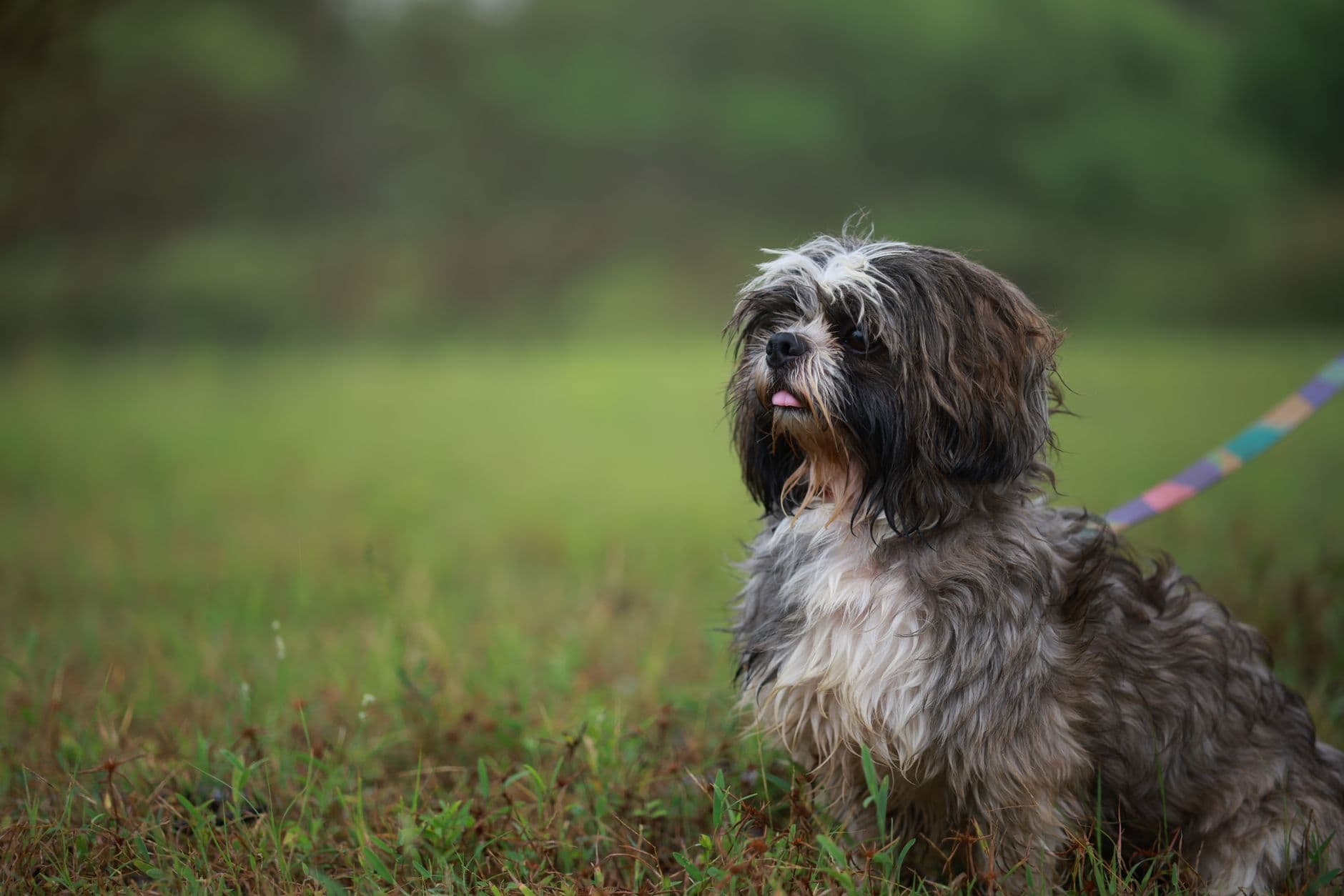
Physically, the Shih Tzu weighs 9-16 pounds and stands 9 to 10.5 inches at the shoulder by the AKC's figures; the Royal Kennel Club caps height at 10.5 inches too. The defining physical feature is the "chrysanthemum face" — the long hair on the face that grows in all directions from a central point on the nose, creating a flower-like appearance. The eyes are large, round, and dark, contributing to an expression of warmth and curiosity that has made this breed beloved for centuries. The double coat is long, dense, and silky — it is one of the most dramatic dog coats in existence, and also one of the most demanding to maintain.
Because of their brachycephalic (flat-faced) anatomy, Shih Tzus share some of the respiratory vulnerabilities of other flat-faced breeds, though generally to a less severe degree than English Bulldogs or Pugs. Audible breathing, baseline snoring and reduced heat tolerance are common. The anatomy behind brachycephalic obstructive airway syndrome is more than a short muzzle — narrowed nostrils, an elongated soft palate, extra tissue in the nasal passages and laryngeal changes all contribute, in varying combinations. Shih Tzus should not be exercised in hot weather and should never be left in warm enclosed spaces.
The Shih Tzu's personality is genuinely charming. They are sociable with strangers, generally good with children and other pets, and adapt readily to multi-pet households. They are not particularly loud — they bark when alerted, but are not compulsive barkers. They have an independent streak but are not the stubborn-to-the-point-of-frustration type that many other small breeds display. They enjoy training in short, positive sessions and respond well to food and play-based rewards.
From a health standpoint, the Shih Tzu carries several breed-specific vulnerabilities beyond brachycephaly: the large, prominent eyes are susceptible to corneal injury and dry eye (keratoconjunctivitis sicca); intervertebral disc disease (IVDD) is a concern given their long body relative to their legs; and dental disease is common without proactive care. Each of these requires owner awareness and preventive management.
The Shih Tzu's adaptability is one of its greatest practical virtues. They do not require large outdoor spaces, are comfortable in apartments, tolerate variations in owner activity level, and travel well. For older owners, busy urban households, or anyone who wants a genuinely devoted companion without the demands of a high-energy working breed, the Shih Tzu is an outstanding match. The coat maintenance commitment is real and should not be underestimated — but for owners who embrace it, the Shih Tzu's appearance and personality make it deeply rewarding. Learn more at /dogs/shih-tzu.
Daily Care
Daily Care for Shih Tzus
The Shih Tzu's daily care routine is dominated by two priorities: coat maintenance and eye care. Both are non-negotiable for a comfortable, healthy dog.
Morning
Start with a quick visual check of the eyes. Shih Tzu eyes accumulate discharge overnight — dried "sleep" around the inner corners is normal and should be gently removed with a damp cloth before it builds up and causes irritation. Check for any redness, cloudiness, excessive tearing, or squinting that might indicate corneal injury or dry eye. The eyes sit forward and are easily injured, so this check is worth the thirty seconds.
If the coat is kept long, a morning brushing session prevents overnight tangle development from becoming daytime mats. Pay attention to the mustache and beard area (where food collects), behind the ears, the armpits, and the base of the tail.
A morning walk of 15-20 minutes suits most Shih Tzus well. Given their brachycephalic anatomy, monitor breathing during exercise and keep exertion moderate.
Feeding
Feed twice daily on a consistent schedule. Clean the face and beard area with a damp cloth after meals — food trapped in the facial hair stains it and can irritate the skin around the mouth.
Coat Care (Daily for Long Coats)
The Shih Tzu's full coat requires daily brushing to remain mat-free. Many pet owners opt for a "puppy cut" or "teddy bear cut" — a shorter all-over trim maintained every 6-8 weeks by a groomer — which reduces brushing to every two or three days while retaining the Shih Tzu's characteristic appearance.
Evening
A second short walk or indoor play session. Shih Tzus enjoy interactive play with their family — brief fetch games, gentle tug, or puzzle feeders. They are content to settle beside their owners in the evening and are not demanding of intense physical activity.
What to Check Daily
- Eyes for discharge, redness, or squinting
- Face folds (if present) for moisture or irritation
- Coat for mat development, particularly in high-friction zones
- Mouth area for food residue in the beard
- Any signs of labored breathing beyond the breed's baseline snoring
Nutrition
Shih Tzu Nutrition Guide
Shih Tzus have moderate energy requirements and a tendency toward weight gain if overfed. Proper nutrition also plays a significant role in coat quality — the Shih Tzu's signature silky coat requires nutritional support to maintain its best appearance.
Caloric Needs
Most adult Shih Tzus (9-16 lbs) require approximately 350-550 calories per day, varying by size, age, and activity level. Use body condition scoring to calibrate: ribs should be palpable with gentle pressure, and a visible waist should be apparent from above. An overweight Shih Tzu places additional stress on its already compromised airway and is more vulnerable to IVDD.
Feeding Schedule
- Puppies (under 6 months): 3-4 small meals per day
- Puppies (6-12 months): 3 meals per day
- Adults: 2 meals per day
Food Selection
A high-quality small-breed formula with a named animal protein as the first ingredient is appropriate for most Shih Tzus. Small-breed formulas provide higher caloric density and a smaller kibble that is easier for a small dog to pick up and chew.
Shih Tzus are prone to food sensitivities, and dietary triggers can manifest as skin issues (itching, redness), chronic ear infections, or gastrointestinal upset. If these signs are present, a veterinary consultation and possible food elimination trial are warranted.
Coat Nutrition
The Shih Tzu's double coat benefits greatly from omega-3 fatty acid supplementation. Fish oil (appropriate dose for weight, per vet guidance) improves coat sheen, reduces dry skin, and decreases shedding of the undercoat. This is one of the most cost-effective grooming supplements available.
Dental Health Through Diet
Dental disease is common in Shih Tzus. Dental-specific kibbles that require chewing can help reduce tartar formation. Avoid exclusively soft food diets unless medically necessary — though brushing, not kibble shape, is what the evidence supports for controlling tartar.
Foods to Avoid
Grapes, raisins, chocolate, onions, garlic, xylitol, macadamia nuts, alcohol, and cooked bones. Avoid very hard treats (antlers, hard nylon chews) that risk cracking the Shih Tzu's teeth.
Age-Specific Notes
- Puppies need growth-formula food or small-breed puppy formula through 12 months
- Seniors (10+ years): reduce calories slightly, prioritize joint support (glucosamine/chondroitin), consider senior-formula food
Exercise
Shih Tzu Exercise Needs
The Shih Tzu has modest exercise requirements that make them excellent apartment dogs and companions for less active owners. However, "modest" does not mean "none" — regular exercise maintains healthy weight, joint function, and mental wellbeing.
Daily Exercise Requirements
Most adult Shih Tzus do well with 20-30 minutes of walking per day, divided into two sessions. This can be supplemented with indoor play. They are playful dogs that enjoy short fetch games, gentle tug, and puzzle enrichment.
Heat Sensitivity
This is the most critical exercise constraint for Shih Tzus. Flat-faced dogs pant less efficiently and overheat sooner. Exercise above 75°F should be limited to the minimum necessary, and skipped altogether above 80°F. In summer, restrict walks to early morning (before 9 AM) and evening (after 8 PM). Watch for heavy panting, drooling, slowing pace, or lying down during a walk — all are signs to immediately cease exercise and move to a cool environment.
Suitable Exercise Types
- Leash walks at a comfortable pace
- Gentle off-leash yard time
- Indoor fetch with soft toys
- Puzzle feeders and nose-work games
- Short trick training sessions (5-10 minutes)
- Supervised gentle play with appropriately sized dogs
Exercise to Avoid
- Running or sustained aerobic activity
- Dog parks with large, high-energy dogs (injury risk and overexertion)
- Swimming without supervision (Shih Tzus can swim but fatigue quickly and their long coat becomes waterlogged)
- Outdoor exercise in temperatures above 80°F (and only the minimum necessary above 75°F)
IVDD Considerations
Shih Tzus are at elevated risk for intervertebral disc disease (IVDD). Avoid activities that involve repeated jumping on and off furniture — use pet stairs or ramps instead. This simple modification significantly reduces disc injury risk over a lifetime.
Test your small breed knowledge with our dog breed quiz or visit /care-guides for related companion dog care.
Grooming
Shih Tzu Grooming Guide
Grooming is the most time-intensive aspect of Shih Tzu ownership. The double coat — a flowing outer layer and a soft, dense undercoat — is one of the breed's most distinctive features and one of its greatest maintenance demands.
The Two Coat Management Strategies
Most Shih Tzu owners choose between two approaches:
- Full coat: Maintain the traditional long, flowing coat. Requires daily brushing of 15-20 minutes and professional grooming every 6-8 weeks. Beautiful and true to the breed's heritage, but a significant time commitment.
- Puppy or teddy bear cut: Keep the coat clipped to 1-2 inches all over. Requires brushing every 2-3 days and professional grooming every 6-8 weeks. Far more practical for active households and equally adorable.
Brushing (Daily for Long Coat, Every Other Day for Short Trim)
Use a pin brush for the outer coat and a slicker brush to work through the undercoat. Always start at the ends and work toward the skin to avoid breaking hair. Mist lightly with a conditioning spray before brushing to prevent static and breakage. Section the coat for thoroughness — work through one section at a time. The areas most prone to matting are behind the ears, the armpits, the groin, and anywhere a collar or harness contacts the coat.
Bathing (Every 3-4 Weeks)
Use a high-quality dog shampoo and conditioner designed for silky coats. Rinse thoroughly — residue causes itching and coat dullness. Blow-dry on a low heat setting until completely dry; a damp Shih Tzu coat mats quickly and can develop skin issues.
Face and Eye Care (Daily)
Clean the eye area daily with a soft damp cloth. Trim the hair around and above the eyes carefully with blunt-tipped scissors — or ask your groomer to — so that hair is not constantly contacting the cornea. Many Shih Tzus benefit from the "top knot" style that pins the forehead hair away from the eyes.
Ear Cleaning (Weekly)
Drop ears trap moisture and debris. Check weekly for odor, discharge, or redness. Clean with a veterinarian-approved ear solution and cotton ball.
Nail Trimming (Every 3-4 Weeks)
Small, frequent trims are preferable to infrequent large ones. Overgrown nails alter gait and can curl into the paw pad.
Dental Care (Daily)
Brush teeth daily, or at minimum every other day, with dog-safe enzymatic toothpaste. Professional cleanings roughly every twelve months are typical.
Health
Shih Tzu Health Guide
Shih Tzus are generally hardy dogs with a lifespan the AKC puts at 10 to 18 years, but they carry several breed-specific health vulnerabilities that owners should be actively monitoring and managing.
Brachycephalic Issues
Shih Tzus commonly have audible breathing, snoring and reduced heat tolerance, though how much of the airway is affected varies a great deal between individuals. The degree of brachycephalic obstruction varies — some Shih Tzus breathe nearly normally, while others have significant BOAS requiring surgical evaluation. Stenotic nares (narrow nostrils) are the most common structural issue. If your Shih Tzu seems to struggle to breathe during minimal exertion or has significant exercise intolerance, a veterinary respiratory assessment is warranted.
Eye Conditions
The eyes are the breed's real vulnerability, and the numbers are stark: a VetCompass study of 104,233 dogs found corneal ulceration in 3.45% of Shih Tzus, about ten times the odds of a crossbred dog. Note that the Royal Kennel Club standard asks for eyes placed well apart but not prominent — prominence is a fault, not a breed feature. The most common eye issues include:
- Corneal ulcers: scratches on the eye surface from contact with hair, debris, or other dogs' claws. Signs include squinting, tearing, and redness. These require urgent veterinary treatment.
- Dry eye (KCS): the tear glands fail to produce adequate lubrication, causing chronic irritation and damage. Managed with cyclosporine eye drops or artificial tears.
- Distichiasis: extra eyelashes growing from abnormal positions, rubbing on the cornea.
- Cataracts: more common in older Shih Tzus.
Any eye change — redness, cloudiness, discharge, squinting, pawing at the eye — warrants prompt veterinary evaluation. Eye conditions can progress rapidly in this breed.
Intervertebral Disc Disease (IVDD)
IVDD occurs when the cushioning discs between vertebrae bulge or rupture, pressing on the spinal cord. Signs range from neck or back pain, reluctance to move, and a hunched posture, to paralysis in severe cases. Use ramps and stairs to minimize jumping. Maintain a healthy weight. Prompt veterinary evaluation at the first sign of back pain or gait abnormality is critical.
Dental Disease
Dental disease is common in the breed and worth planning around. Crowding is the usual explanation offered, though the Royal Kennel Club's standard actually describes the mouth as wide — so treat the risk as established and the mechanism as unsettled. Professional cleanings roughly every twelve months, alongside daily brushing, are what prevention looks like in practice.
Hypothyroidism
Underactive thyroid gland causes weight gain, lethargy, coat changes, and cold intolerance. Manageable with daily medication once diagnosed.
Veterinary Schedule
- Puppies: core vaccines every 3-4 weeks until 16 weeks
- Adults: annual wellness exam with eye evaluation
- Adults 7+: biannual exams; discuss baseline thyroid screening
- Eye checks: any concerning change warrants prompt (within 24-48 hours) veterinary evaluation
Costs
Shih Tzu Cost Guide
Shih Tzus represent a moderate acquisition cost with ongoing grooming expenses that are among the highest of any small breed. Budget the grooming line carefully — it is the defining recurring cost of Shih Tzu ownership.
Acquisition Cost
- Reputable breeder: $1,200-$3,000 (show lines and health-tested breeding on the higher end)
- Rescue adoption: $150-$500 — Shih Tzu rescues are available in most regions and are an excellent option for adult dogs
One-Time Setup Costs
- Spay/neuter: $200-$500
- Initial vet exam and vaccines: $200-$400
- Quality grooming tools (pin brush, slicker, metal comb, conditioning spray): $60-$120
- Crate, bed, bowls, leash, harness: $150-$300
- Pet stairs/ramp (IVDD prevention): $40-$100
- Total setup: $650 - $1,420
Monthly Operating Costs
- Premium small-breed food: $35-$55/month
- Professional grooming ($70-$120 every 6-8 weeks, amortized): $40-$80/month
- Dental chews and supplements: $15-$30/month
- Flea/tick/heartworm prevention: $15-$30/month
- Eye care supplies (wipes, conditioning spray): $10-$20/month
- Monthly total: $115 - $215
Annual Veterinary Costs
- Annual wellness exam: $200-$400
- Professional dental cleaning: $300-$800 (often annual)
- Core vaccines: $100-$200
- Annual vet total: $600 - $1,400
Potential Major Medical Expenses
- BOAS surgery (if needed): $1,500-$3,500
- IVDD treatment (medication to surgery): $500-$8,000 depending on severity
- Eye surgery (corneal ulcer repair, eyelid correction): $500-$2,000
- KCS (dry eye) lifelong medication: $30-$80/month
Total Annual Budget Range
- Healthy adult Shih Tzu: $2,500-$4,500
- Year with significant medical or dental event: $4,000-$8,000+
For other companion breed cost comparisons, visit /care-guides.
Frequently Asked Questions
How much more likely is a Shih Tzu to get a corneal ulcer than an ordinary dog?
In a VetCompass study of 104,233 dogs in England, published in Canine Genetics and Epidemiology, the Shih Tzu had 10.04 times the odds of corneal ulcerative disease, and 3.45 percent of the breed was affected against 0.80 percent of dogs overall. That is an association with brachycephalic conformation, not a proven cause. VCA Animal Hospitals note the commonest trigger is trauma and that an ulcer is very painful, so squinting warrants a same-day call.
My Shih Tzu's Schirmer tear test came back normal, so dry eye is ruled out. Is it?
Not necessarily. In a 28-dog study in Acta Veterinaria Scandinavica, Shih Tzus whose tear volumes sat inside the normal range for the species still had poor precorneal tear film quality, with a median break-up time of four seconds. Every dog examined had trichiasis of the caruncle and medial lower eyelid entropion, and most blinks were incomplete. Ask your vet about tear film break-up time, not only the volume test.
Should the groomer pluck the hair out of my Shih Tzu's ear canals?
Ask your vet before anyone does. The Merck Veterinary Manual says trimming or plucking hair near the ear canal improves airflow and decreases humidity in some cases, but tells owners to consult a vet before removing hair, and warns that powders used after plucking can form irritating masses. It also notes that pinna and canal shape make some dogs likelier to develop otitis externa. A healthy, odour-free ear needs no routine plucking.
My Shih Tzu's bottom teeth sit in front of the top ones. Is that a defect?
No, it is close to what the breed asks for. The Royal Kennel Club breed standard for the Shih Tzu, last updated April 2025, describes the mouth as wide, slightly undershot or level, with level lips. A bite matching that description is not itself a disease. What does deserve a named check at the annual exam is separate from jaw shape: retained puppy teeth, crowded or rotated teeth, and gum inflammation.
My Shih Tzu snores. Is that just the breed, or can it actually be measured?
It can be measured. The Royal Kennel Club and University of Cambridge Respiratory Function Grading Scheme lists the Shih Tzu among the breeds it assesses, so this is not a bulldog and pug only scheme. A dog at grade 1 is clinically unaffected but does have some respiratory noise, while grades 2 and 3 mean moderate or severe signs of BOAS. Assessment starts at twelve months.
Sources
This guide draws on the following published references. Each opens in a new tab so you can check it against what you have read here.
The Royal Kennel Club
Shih Tzu Breed Standard(opens in a new tab)American Kennel Club
Shih Tzu — breed standard and profile(opens in a new tab)VCA Animal Hospitals
Corneal Ulcers in Dogs(opens in a new tab)The Royal Kennel Club
Respiratory Function Grading Scheme(opens in a new tab)ASPCA
General Dog Care(opens in a new tab)BioMed Central
Shih-Tzu dogs show alterations in ocular surface homeostasis despite adequate aqueous tear production(opens in a new tab)Merck & Co., Inc.
Ear Infections and Otitis Externa in Dogs(opens in a new tab)BioMed Central
Corneal ulcerative disease in dogs under primary veterinary care in England: epidemiology and clinical management(opens in a new tab)Merck Veterinary Manual
Routine Health Care of Dogs(opens in a new tab)
Affiliate disclosure: We may earn a commission from qualifying purchases. This doesn't affect our recommendations.
Recommended Products
Get personalized pet care tips
Join our newsletter for breed-specific advice, care guides, and expert tips delivered weekly.
No spam, ever. Unsubscribe anytime.