
Brahma Chicken
Written by Diosh Lequiron
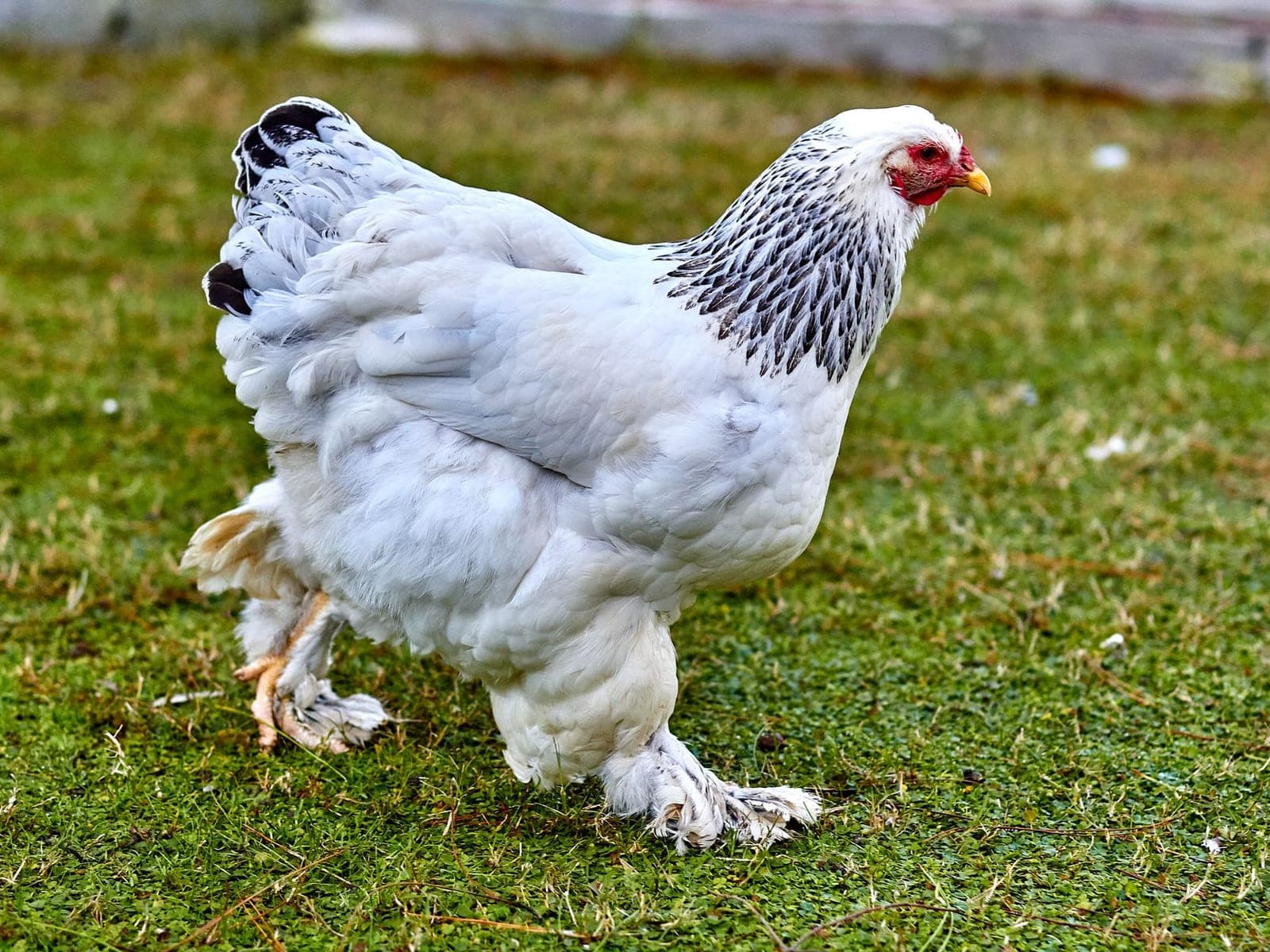
- Origin
- Developed in the United States from large Asian fowl
- Species
- Gallus gallus domesticus
- Breed group
- American heavy feather-legged breed
- Primary purpose
- eggs and meat
- Typical weight
- 4.5–5.4 kg
- Egg size
- medium to large
- Egg color
- brown
- Climate tradeoff
- cold reputation; heat requires deliberate management
Temperament
- calm
- docile
- not flighty
Overview
The Brahma is a very large, feather-legged dual-purpose chicken with a calm, docile reputation and an important place in nineteenth- and early twentieth-century meat production. Its scale is the central care fact. Adult weights cited by The Livestock Conservancy are about 10 pounds for females and 12 pounds for males, so housing designed around light layers may create narrow doors, weak perches, cramped nests, or difficult jumps. The breed is often easier to contain than a light, flighty chicken, but size does not reduce the need for predator security. A Brahma can fit an owner who wants a substantial, generally steady bird and can provide generous space, sturdy low-access infrastructure, dry footing, and a climate plan. It is less suitable where extreme heat is common and shade, airflow, and reliable water cannot be maintained. Feathered shanks and toes add a wet-ground tradeoff: mud and compacted debris require observation. Calm temperament is not permission for children to lift a heavy bird without close adult supervision.
Caring for the Brahma Chicken
Start with dimensions and climate. Use stable, broad, relatively low perches; roomy openings and nest access; dry litter; non-slip routes; and enough floor area that a heavy bird does not have to push through the flock. Feathered feet stay healthier when drainage is good and mud is controlled. Provide shade, strong ventilation, and multiple clean water points during warm weather because the breed is not an ideal choice for hot southern conditions. Feed a complete ration appropriate to life stage and purpose and monitor body condition rather than assuming that the largest bird needs unrestricted extras. Give safe ground-level opportunities to walk and forage. Avoid repeatedly forcing a heavy adult to jump from high structures. The breed's calm behavior and limited flight can simplify routine handling and containment, but daily checks must still catch heat stress, lameness, foot problems, and any bird losing feeder access.
History and origin
The Brahma was developed in the United States from very large fowl imported from Asia through maritime trade, with historical accounts also pointing to a smaller contribution from Chittigong-type birds. Early birds circulated under multiple names until Brahma became established in the 1850s. Along with the Cochin, the breed helped fuel the nineteenth-century poultry enthusiasm known as Hen Fever. Brahmas were leading meat birds from the mid-1800s into the early 1900s before faster commercial types displaced them. Their history explains the large frame, but modern owners should not apply historical market claims as present-day processing promises.
Brahma Chicken care in detail
Housing and environment
Choose dry, well-drained ground and a ventilated predator-resistant coop with broad low perches, roomy access points, stable ramps, shade, and multiple water stations. Avoid persistent mud around drinkers and entrances. In warm climates, an owner needs a realistic heat plan before acquisition; in cold climates, keep feathered feet dry and water available rather than assuming cold reputation makes winter care automatic.
Daily routine
Check water several times in hot weather, confirm shade and airflow, inspect feed, collect eggs, and observe gait, breathing, posture, appetite, and social access. Look at feathered feet whenever ground is wet; remove environmental causes of mud rather than waiting for compacted debris. Use a dusk head count and secure night housing. Weekly, test perch stability, inspect low joints and ramp surfaces, refresh litter, examine feet and skin, and look for predator or rodent entry. A heavy bird that remains down, avoids walking, or breathes abnormally needs prompt evaluation rather than an assumption that it is merely slow.
Feeding and nutrition
Provide a nutritionally complete ration matched to age, laying status, and purpose, with continuous clean water. Large size does not justify free-choice scratch or table scraps that dilute the balanced diet. Monitor actual body condition and mobility beneath the plumage and confirm that every bird can reach the feeder without competition. Store feed dry and protected from pests. Do not feed high-calcium layer ration as the sole diet of immature birds; mixed-age management should be discussed with a poultry veterinarian, nutritionist, or extension specialist.
Health
Breed-aware observation focuses on heat load, legs, mobility, and feathered feet, while disease prevention remains flock-wide. Separate a sick bird and seek qualified care for breathing difficulty, neurologic signs, facial swelling, severe lameness, collapse, multiple affected birds, or sudden deaths. Quarantine additions, limit visitors, keep dedicated footwear, clean equipment, and reduce contact with wild birds. Keep feed and water protected from droppings and rodents. Wash hands after handling birds and coop materials because healthy-looking poultry may carry Salmonella.
Space and activity
Offer level, secure room for walking, scratching, dust bathing, and foraging. Use low stable platforms and broad ramps instead of requiring repeated high jumps. Place resources far enough apart to encourage movement but not so far that an older or mobility-limited bird cannot reach them. Shade must be available throughout the occupied area in hot weather.
Grooming and dust bathing
Supply a dry dust bath and maintain dry litter. Inspect shank and toe feathering for mud, breakage, skin irritation, or debris, especially after rain. Do not pull hardened material without assessing the skin beneath it, and do not apply pesticides or medications without identifying the problem and obtaining qualified advice.
Handling and training
Teach coop return and crate entry with a consistent cue and feed reward. Handle from a supported position so the bird's body and legs are not left hanging. Children should not lift a heavy Brahma without direct adult control. Training makes routine care easier but does not replace ramps, secure doors, or safe transport equipment.
Breeding
Select for sound legs, healthy feet, appropriate body structure, calm manageable behavior, and the standard characteristics of the chosen Brahma variety. Very large parents and offspring require adequate brooder, feeder, and growing space. Keep pedigree and hatch records, avoid breeding unresolved structural problems, and plan responsibly for males.
Frequently asked questions
- Do Brahmas need a larger coop?
- They need infrastructure sized for a very large adult bird: wider access, stable low perches, sufficient floor room, and nests or laying areas that do not force a tight turn or high jump. Head count alone is not a sizing method; test whether birds can move, rest, and access resources without crowding.
- Are Brahmas suitable for hot climates?
- The Livestock Conservancy specifically notes that Brahmas are not ideal for southern climates and need ample shade and water because they do not tolerate heat well. Local humidity, housing, airflow, and emergency capacity matter. Do not choose the breed where reliable heat mitigation cannot be provided.
- What is different about caring for feathered feet?
- Dry footing and routine inspection become more important. Mud and debris can remain hidden in toe and shank feathers, so correct drainage and wet litter promptly. Swelling, wounds, persistent lameness, or damaged skin require qualified assessment rather than a cosmetic wash or an unverified treatment.
Sources
Breed standards, conservation status and husbandry guidance on this page are drawn from the following published sources.
Choosing between breeds? Compare the famous farm breeds or read the chicken keeping guide.