
Rhode Island Red Chicken
Written by Diosh Lequiron
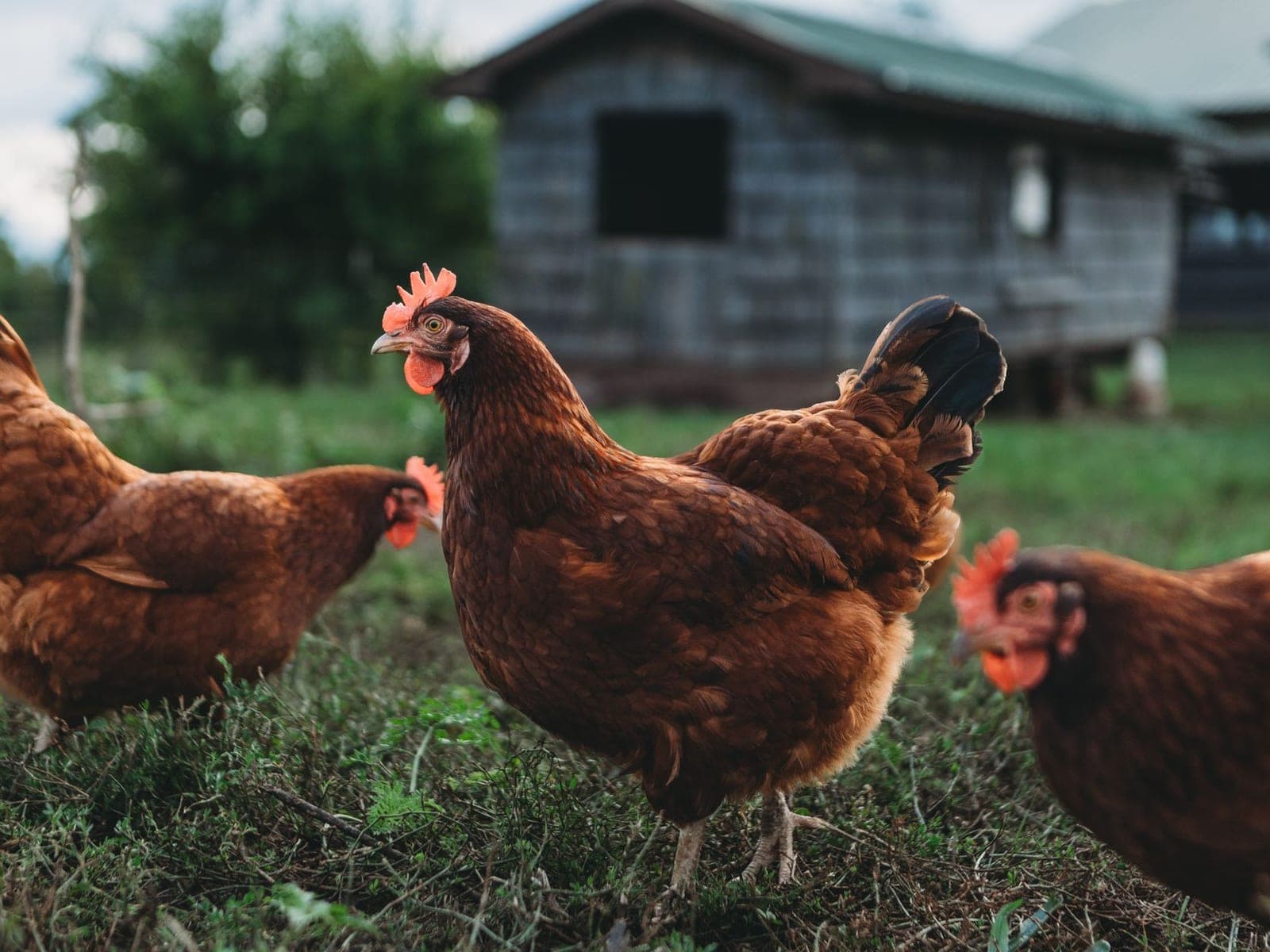
- Origin
- Rhode Island and Massachusetts, United States
- Species
- Gallus gallus domesticus
- Breed group
- American dual-purpose breed
- Primary purpose
- eggs and meat
- Typical weight
- 2.7–3.6 kg
- Egg size
- large
- Egg color
- brown
- Strain note
- Heritage and heavily production-selected lines can differ.
Temperament
- generally calm hens
- some roosters may be aggressive
- range-oriented
Overview
The Rhode Island Red is a well-known American dual-purpose breed developed for useful egg and table qualities rather than a single specialized job. Its reputation for brown eggs, hardiness, and farm utility explains its popularity, but the name covers meaningful strain differences. Heritage or old-type birds tend to be larger, darker, and more inclined to brood than lines selected heavily for industrial egg output. A buyer should therefore ask what the breeder selects for, how the adult flock behaves, and whether the offered birds are standard-bred Rhode Island Reds or production hybrids sold under a familiar color label. For a household flock, the breed can offer a practical middle ground: more substantial than an egg-specialist Leghorn, yet still recognized for laying ability. Most hens are described as peaceful, while some roosters can be aggressive. That distinction matters where children, visitors, or multiple males are present. The breed label never guarantees temperament; handling, space, flock structure, breeding line, and the individual bird all affect behavior.
Caring for the Rhode Island Red Chicken
Rhode Island Reds need the same non-negotiable foundation as other laying chickens: clean water, a balanced life-stage ration, a dry ventilated coop, predator protection, clean nest areas, and daily observation. Their medium-to-large body and dual-purpose build justify adequate feeder, perch, doorway, and floor access rather than dimensions copied from a lightweight breed. Provide more than one feed or water station when flock dynamics leave a lower-ranking bird waiting at the edge. Secure outdoor access supports normal scratching and foraging but must be balanced against predators and wild-bird contact. Behavior is the breed-specific management checkpoint. Observe roosters and assertive hens around people and flock mates, and do not normalize chasing, repeated attacks, or resource guarding as simply part of the breed. Use barriers, separate housing, or rehoming decisions when safety requires them. For heritage breeding, preserve records and choose stock that reflects the intended line rather than selecting only for color or maximum egg count.
History and origin
The Rhode Island Red was developed in Rhode Island and Massachusetts during the 1880s and 1890s from several ancestral stocks, with selection aimed at a bird that could lay well and still serve as a table fowl. The single-combed variety entered the American Poultry Association Standard of Perfection in 1904, followed by the rose-combed variety in 1905. Later selection for industrial egg efficiency changed some lines toward smaller bodies, lighter color, and less broodiness. That history is why modern buyers should separate the heritage breed from red-feathered commercial layers and should not assume that every bird marketed with the name has the same body type or production pattern.
Rhode Island Red Chicken care in detail
Housing and environment
Use a dry, ventilated, weather-protected coop on well-drained ground with secure doors, predator-resistant openings, nest boxes, and appropriately sized roosts. Outdoor areas need shade and protection from digging, climbing, and aerial predators according to local risk. Provide enough width at doors and resources for a substantial bird to move without crowding. Check local poultry and rooster rules before acquisition.
Daily routine
Check water flow and cleanliness, confirm the ration is available to every bird, collect eggs, remove wet litter, and watch how individuals move through the flock. A practical inspection includes eyes, breathing, posture, gait, feather condition, appetite, droppings, and whether a bird is being blocked from a resource. Lock birds into a predator-resistant shelter at night and count them. Each week, inspect latches, wire, roof edges, drainage, perches, nest boxes, and places where rodents could reach feed. Record unusual behavior or production changes so a pattern is not dismissed as a single off day.
Feeding and nutrition
Feed a complete commercial ration formulated for the correct age and production status, with fresh water continuously available. Do not use the Rhode Island Red's foraging ability as a reason to dilute the balanced ration with large amounts of scratch, scraps, or pasture alone. Store feed cool and dry and discard moldy, wet, pest-contaminated, or expired material. A larger dual-purpose bird may consume differently from a lightweight layer, but body condition and manufacturer guidance are more useful than a universal scoop size. Mixed ages require a plan that keeps immature birds from depending on adult layer feed.
Health
Learn the normal look and rhythm of the flock, then act on departures rather than waiting for a breed-specific symptom list. Isolate a sick bird and seek a veterinarian or animal-health authority for breathing trouble, neurologic signs, facial swelling, severe lethargy, sudden egg decline across the flock, or unexplained deaths. Limit visitors, quarantine new or returning birds, clean shared tools, and prevent contact with wild birds and contaminated surface water. Healthy-looking birds can carry Salmonella, so keep coop footwear and equipment outside living areas, supervise children, and wash hands after contact with birds, eggs, or their environment.
Space and activity
Offer secure space for walking, scratching, dust bathing, and foraging. Use perches, litter, suspended greens in moderation, and visual barriers to distribute activity. A dual-purpose bird still needs movement; confinement should not mean an empty floor with one feeder. Monitor heavy or older birds for easy access to roosts and exits.
Grooming and dust bathing
Provide dry litter and a dust-bathing area so birds can maintain feathers naturally. Inspect feet, vent feathers, skin, and plumage during routine handling. Do not use cosmetic bathing as a substitute for fixing wet housing or parasite exposure. Persistent bald areas, irritated skin, abnormal scales, or dirty feathers with illness signs require cause-finding and qualified guidance.
Handling and training
A consistent call and small ration-based reward can teach birds to enter the coop or approach a keeper. Practice transport-crate entry before it is needed. Do not use hand feeding or familiarity as proof that a rooster is safe around children; maintain adult supervision and a physical management plan for any assertive bird.
Breeding
Decide whether the aim is heritage conservation, exhibition, utility, or household replacement stock before pairing birds. Select for health, sound legs and body, appropriate temperament, and the characteristics of the chosen line. Keep parentage and hatch records. Do not breed a dangerous rooster merely because his color is desirable, and do not market production hybrids as standard-bred Rhode Island Reds.
Frequently asked questions
- Is every red production hen a Rhode Island Red?
- No. Commercial red layers and hybrids may resemble the breed without being standard-bred Rhode Island Reds. Ask the seller for parent-stock information, selection goals, mature weights, and whether the birds come from a documented heritage or exhibition line. Color alone is not a reliable pedigree.
- Are Rhode Island Red roosters aggressive?
- Some roosters may be aggressive, while individual behavior varies. Evaluate the actual bird, breeder line, housing, flock structure, and handling history. Repeated attacks on people or flock mates are a safety and welfare problem requiring physical management; they should not be excused as a harmless breed trait.
- Are Rhode Island Reds only egg chickens?
- No. The breed was developed as a dual-purpose farm bird, although modern strains can emphasize different goals. A heritage line and a high-output commercial line may differ in size, broodiness, color, and production. Choose the breeder and strain according to the purpose of the flock.
Sources
Breed standards, conservation status and husbandry guidance on this page are drawn from the following published sources.
Choosing between breeds? Compare the famous farm breeds or read the chicken keeping guide.