
Silkie Chicken
Written by Diosh Lequiron
- Origin
- Asia (exact origin disputed; China is one common attribution)
- Species
- Gallus gallus domesticus
- Breed group
- Asian ornamental and exhibition breed
- Primary purpose
- ornamental and exhibition
- Comb
- walnut
- Skin
- dermally hyperpigmented
- Plumage
- silky or hookless
- Jurisdiction note
- The Poultry Club of Great Britain lists large and bantam Silkie sizes; verify the applicable standard before storing weight.
Temperament
- not standardized in this draft
- assess the individual and breeder line
Overview
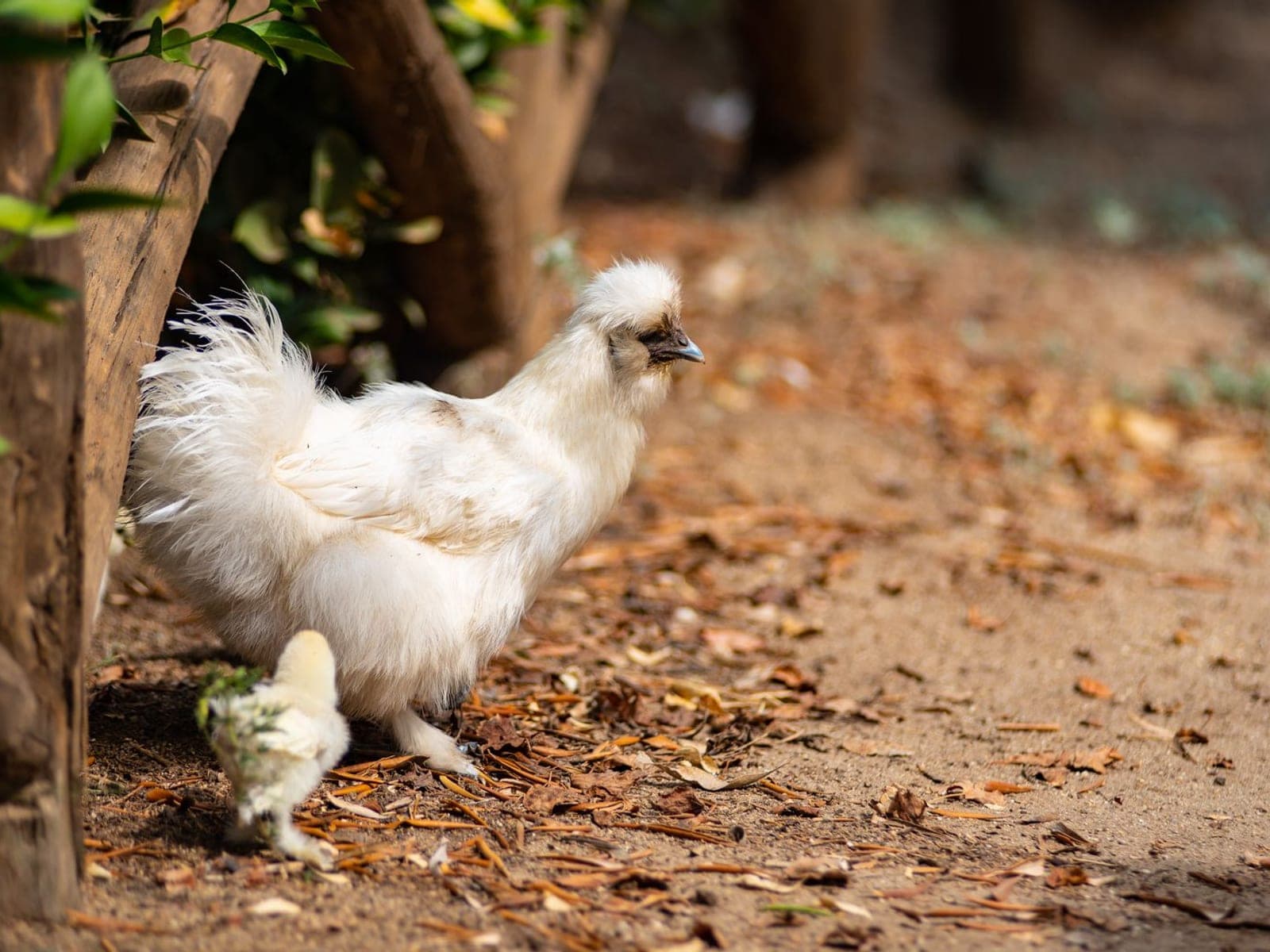
The Silkie is an Asian chicken breed whose exact origin is disputed and often attributed to China. It is distinguished by a cluster of traits rarely combined in other breeds: soft hookless plumage, dark skin, a walnut comb, feathered shanks, and polydactyly in standard descriptions. Its namesake feather structure lacks the normal interlocking web that gives ordinary contour feathers a smooth surface. That makes the bird visually distinctive and supports a precautionary approach to wet conditions rather than an assumption that the plumage sheds weather like ordinary contour feathers. This draft treats the Silkie as an ornamental and exhibition breed without converting breed reputation into a guaranteed temperament, maternal pattern, or egg count. The Poultry Club of Great Britain lists both large and bantam Silkie ring sizes, but that organization-specific classification should not be turned into a universal weight. Confirm the applicable standard and breeder line before storing a mature-weight claim or entering a show. A permanently wet run, difficult high-access layout, or flock where another bird blocks resources requires management changes regardless of breed.
Caring for the Silkie Chicken
Keep the environment dry, accessible, and socially safe. Use a covered, well-drained run and dry ventilated coop; position waterers to limit spills; provide low stable perches or platforms; and check crests, feet, and body plumage after rain. Ordinary chicken housing advice still applies—predator protection, clean nests, balanced feed, clean water, quarantine, and biosecurity. Because the cited genetics review establishes a different feather structure but does not test weather performance, this draft presents extra moisture attention as a precaution rather than a proven breed-wide tolerance rule. Observe flock access carefully when Silkies live with larger or faster birds. Provide multiple low feeders and water points and watch actual eating rather than assuming peaceful coexistence. If crest feathers are dirty or visibly obstruct the bird's view, inspect the bird and environment and seek qualified guidance when welfare or show-standard questions arise. A soaked, chilled, injured, or abnormally quiet bird needs prompt protection and professional guidance where illness or injury is suspected.
History and origin
A peer-reviewed genetics review describes the Silkie as a breed thought to have originated in China and notes medieval accounts of chickens with silk-like feathers. The Poultry Club of Great Britain records competing historical attributions to India, China, and Japan, so this draft does not present an exact origin as settled. Old descriptions also cannot document every feature of the modern standardized breed. Modern genetics has clarified several distinctive traits. Silky feathering is associated with reduced normal feather-web formation, while separate genomic work has examined dermal hyperpigmentation, feathered legs, comb form, and polydactyly. This is a useful reminder that 'Silkie' describes a recognized combination of traits and breeding history, not merely soft feathers on an otherwise unrelated cross.
Silkie Chicken care in detail
Housing and environment
Use a covered, dry, well-drained run and a ventilated predator-resistant coop with low stable perches, low-access nests, spill-controlled water stations, and dry dust bathing. Protect feed and water from wild birds. In mixed flocks, create more than one resource zone and ensure the Silkie can see and reach each one. Verify local rules and the relevant breed standard before acquisition or exhibition.
Daily routine
Check water and feed at a height the birds can use, collect eggs, remove wet litter, and inspect whether crest and body feathers are dry and clear of debris. Watch each Silkie reach food and move away from flock mates; a quiet bird can be excluded without obvious fighting. Count and secure birds at dusk. After rain, examine feet, shanks, crest, and underside rather than judging dryness from the outer silhouette. Weekly, inspect skin beneath the plumage, foot feathering, low perches, drainage, roof coverage, latches, wire, and evidence of rodents or predators.
Feeding and nutrition
Use a complete ration formulated for the correct age and production status, with fresh clean water always available. Do not substitute scratch grain, vegetables, or free-range finds for balanced feed. Multiple low feeding stations can help when larger birds share the flock. Keep feed dry and protected from pests. Because country standards and flock purposes differ, do not apply an exhibition, maintenance, or layer feeding plan without considering age and actual production. A poultry veterinarian, nutritionist, or extension specialist should guide unusual mixed-age or breeding-flock needs.
Health
The unusual feathers and skin are breed traits, not evidence that illness will look different in every case. Establish normal appetite, activity, breathing, posture, droppings, and social behavior. Isolate and seek qualified help for breathing difficulty, neurologic signs, facial swelling, severe lameness, eye problems, multiple sick birds, or sudden deaths. Use quarantine, dedicated footwear, clean tools, rodent control, and barriers against wild birds. Wash hands after handling birds, eggs, litter, or equipment; healthy-looking backyard poultry can transmit Salmonella to people.
Space and activity
Provide secure, dry ground-level room for walking, scratching, dust bathing, and foraging. Low platforms and broad ramps reduce the need for flight. Add covered enrichment and visual barriers, but keep pathways clear enough that crest feathers and soft plumage do not brush constantly against wet or dirty surfaces.
Grooming and dust bathing
Dryness is the first grooming tool. Provide dry litter and a sheltered dust bath, inspect crest and foot feathers, and separate caked debris gently only when the skin can be seen and protected. Do not routinely shampoo, dye, trim, or medicate plumage. If feathers obstruct vision, skin is inflamed, or debris cannot be safely removed, seek experienced breed or veterinary guidance and put welfare before show presentation.
Handling and training
Use calm repetition and a small feed reward to teach coop return, stationing at a low platform, and crate entry. Approach within the bird's visible field and avoid sudden overhead grabbing. Training can support checks of feet and crest, but it does not make unsupervised child handling or an unsafe mixed flock acceptable.
Breeding
Use the applicable national breed standard and select for health, sound structure, clear vision, functional movement, and the intended recognized variety. Distinct traits have separate genetic foundations, so one fluffy feature does not establish a pure Silkie. Keep parentage and hatch records, avoid breeding birds with unresolved welfare problems, and plan for both sexes and for chicks that do not meet exhibition goals.
Frequently asked questions
- Can Silkie feathers handle rain like ordinary chicken feathers?
- Silky feathers lack the normal interlocking web of typical contour feathers, so owners should not assume equivalent weather shedding. Use covered, well-drained space and inspect birds after rain. A soaked bird needs a dry protected environment, and abnormal chilling or illness signs require qualified help.
- Are all Silkies bantams?
- Do not assume one universal classification. The Poultry Club of Great Britain lists both large and bantam Silkie ring sizes. Other organizations may use a different framework, so identify the applicable standard and breeder line before storing or publishing a mature-weight claim, purchasing housing, or entering a show.
- Can Silkies live with larger chicken breeds?
- They can in some flocks, but compatibility is not automatic. Size and behavior differences can affect access to feed, water, and roosts. Provide multiple low resources, watch actual eating and roosting, and separate birds if exclusion or injury continues.
Sources
Breed standards, conservation status and husbandry guidance on this page are drawn from the following published sources.
Choosing between breeds? Compare the famous farm breeds or read the chicken keeping guide.