
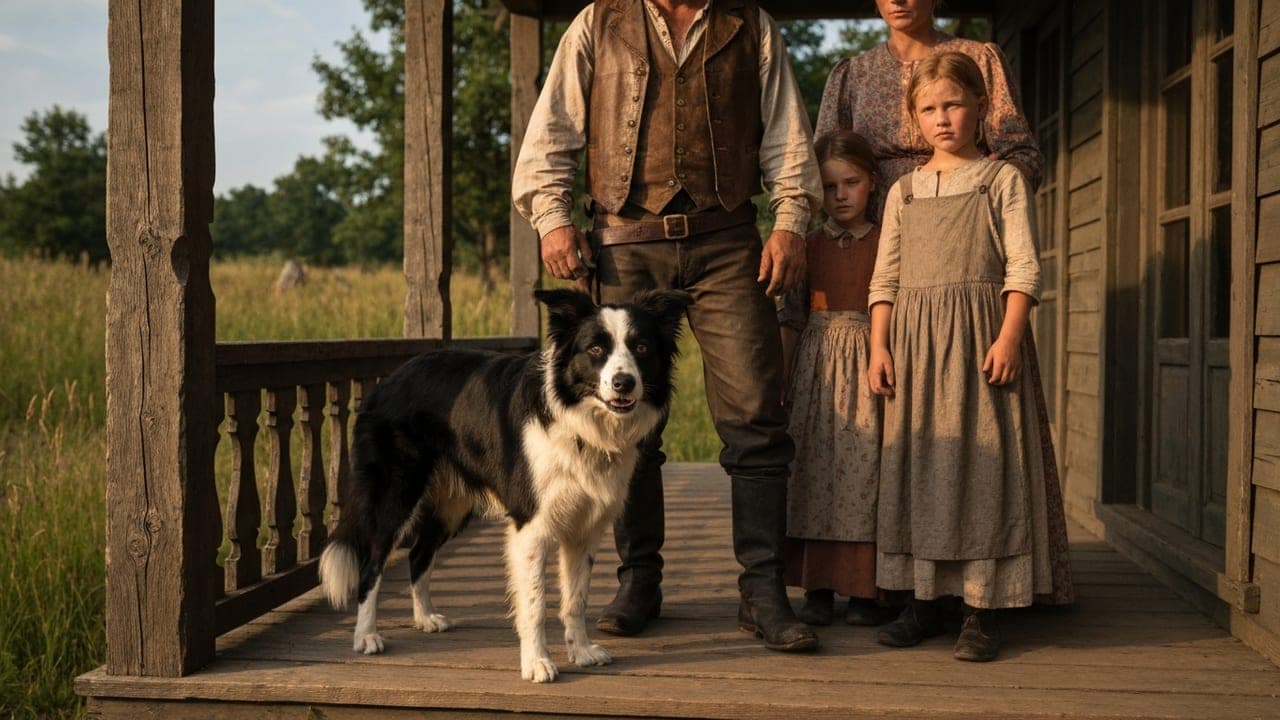
The First Dogs: Before European Contact
The dogs that crossed the Bering land bridge with the first Americans arrived approximately 10,000-15,000 years ago, accompanying the humans who would become Native American peoples. These were distinct animals — genetically separate from the dog lineages that would later arrive with European colonists — and they played roles in Indigenous cultures that varied dramatically by tribe and region. Some peoples bred dogs for hauling, using them to pull travois before the introduction of horses. Others kept them as food sources during lean seasons. Many valued them as companions and hunters. Some nations had sophisticated breeding practices for specific working traits.
The diversity of pre-contact Indigenous dogs is documented in zooarchaeological records. Skeletal analysis of dog remains from sites across North America reveals a variety of body sizes and conformations, suggesting deliberate selective breeding occurring independently of European dog culture. The Chihuahua, whose pre-Columbian ancestors appear in Aztec art and were found as remains at sites in what is now Mexico, is often cited as a breed with genuine pre-contact American origins, though the precise ancestry remains debated among geneticists.
When European colonists arrived — first in the Caribbean, then along the North American coasts — their attitude toward Native American dogs ranged from indifference to active hostility. Colonial accounts document the deliberate killing of Indigenous dogs as a tactic of cultural disruption. Some historians argue this was systematic: eliminating dogs weakened communities by removing working animals and severing cultural practices tied to dog keeping. By the 18th century, the original pre-contact dog population was substantially replaced by European breeds and their crossbred descendants. The Carolina Dog — also called the American Dingo or dixie dingo — a lean, wedge-headed, semi-feral dog found in the rural southeastern United States, is widely believed to be a descendant of those pre-contact animals, having survived in isolated populations through centuries of replacement. Genetic studies published between 2013 and 2018 have supported this hypothesis, though the picture remains complex.
George Washington: America's First Dog Breeder
George Washington's relationship with dogs is one of the more remarkable and underappreciated aspects of his biography. Washington was a serious, systematic dog breeder who kept meticulous records of his hounds at Mount Vernon and treated his breeding program with the same organizational attention he brought to farming and military logistics.
The pivotal event in Washington's breeding program occurred in 1785, when the Marquis de Lafayette — the French general who had been crucial to American success in the Revolutionary War — sent Washington a gift of seven French Foxhounds: large, heavily built dogs with exceptional scenting ability and voices that Washington described in his diaries as magnificent. Washington crossed Lafayette's French dogs with his existing Virginia Hounds, and the result was the foundation stock of what became the American Foxhound — a breed formally recognized by the American Kennel Club and officially designated the state dog of Virginia. Washington named his hounds — historical records preserve names including Vulcan, Sweetlips, Scentwell, and Tipler — and tracked their hunting performance with the same numerical precision he applied to crop yields.
Seaman and the Lewis and Clark Expedition
When Meriwether Lewis set out from Pittsburgh in the summer of 1803 to join William Clark and begin the Corps of Discovery Expedition, he made one notable purchase: a Newfoundland dog for which he paid $20 — a significant sum equivalent to roughly $500 today. Lewis named him Seaman.
Seaman traveled the entire expedition — approximately 8,000 miles over two years and four months, from Pittsburgh to the Pacific coast of what is now Oregon and back. Lewis's journals reference Seaman repeatedly: catching squirrels and geese for the group's food supply, confronting a charging buffalo that ran through camp at night, being stolen by members of a Nez Perce-affiliated group and recovered when Lewis threatened military response. Lewis wrote that Seaman's loss would have given him more pain than the loss of almost any other object in the expedition's possession. After the expedition ended in 1806, Seaman disappears from the historical record, but he had already become something of a celebrity — his name appeared in journals and accounts of the expedition's return.
Civil War Dogs and the Mascot Tradition
The American Civil War produced an extensive culture of regimental mascots, and dogs featured prominently on both sides. Sallie, a Staffordshire Bull Terrier owned by the 11th Pennsylvania Volunteer Infantry, served at Gettysburg, and a bronze monument of her appears at the base of the regiment's memorial on the battlefield — one of the few monuments depicting an animal in the Gettysburg battlefield collection. Jack, a Bull Terrier, served with a Pennsylvania regiment, was captured by Confederate forces, and was subsequently exchanged as a prisoner of war under the same protocols applied to human soldiers — a fact that tells something about how seriously regimental dogs were taken.
The AKC (American Kennel Club) was founded in 1884, formalizing breed standards and registration for an increasingly dog-obsessed American public. The first dog registered in the AKC stud book was an English Setter named Adonis, registered in 1878 under the predecessor Westminster Kennel Club records.
Theodore Roosevelt's Chaotic White House Menagerie
Theodore Roosevelt's White House years (1901-1909) were distinguished by a household that included, at various times, a badger named Josiah, a snake named Emily Spinach, a one-legged rooster, a hyena, a barn owl, a pony named Algonquin that was once smuggled into the White House elevator to cheer up a sick child, and multiple dogs. The dogs included a Bull Terrier named Pete who became a diplomatic incident by biting the pants of the French Ambassador Jules Jusserand during a White House reception — an event that the ambassador reportedly found funny but that required considerable smoothing over. Pete was eventually sent away from the White House after his behavior became diplomatically inconvenient.
Checkers, Lassie, and the Cultural Dog
The post-World War II decades produced the cultural elevation of dogs to a role in American public life that had no historical precedent. Lassie — introduced in Eric Knight's 1940 short story, expanded to a 1943 novel, then a long-running MGM film series and a television program that ran from 1954 to 1973 — embodied a vision of canine loyalty, intelligence, and heroism that shaped the expectations of an entire generation of American dog owners. Lassie was a Rough Collie, and breed registrations for Rough Collies increased dramatically during the television series' peak years.
The political potency of dogs in American public life crystallized in September 1952, when Richard Nixon — then a Senator and the Republican vice presidential candidate — addressed allegations that he had improperly accepted political gifts. Nixon mentioned, almost in passing, that one gift he had received was a Cocker Spaniel puppy that his daughter Tricia had named Checkers. "Regardless of what they say," Nixon said, "we're going to keep it." The Checkers Speech, as it became known, generated an enormous public response — telegrams and letters supporting Nixon flooded the Republican National Committee — and Nixon remained on the ticket. The episode demonstrated that a dog's name, invoked correctly, could function as a piece of political inoculation.
Rin Tin Tin and the Hollywood Dog
Before Lassie defined the family dog, Rin Tin Tin defined the heroic dog. Found as a puppy in an abandoned German war dog kennel in France by an American corporal named Lee Duncan in 1918, Rin Tin Tin was brought to the United States, trained for film, and became one of Warner Bros.' most bankable stars of the 1920s. At his peak, Rin Tin Tin received 10,000 fan letters per week and earned $1,000 per week — more than most human actors. His films are credited with saving Warner Bros. from bankruptcy in the early 1920s. He was a German Shepherd, and the breed's American popularity is inseparable from his cultural impact.
Dogs Today: 90 Million Animals, 90 Million Households
The American Pet Products Association's 2023-2024 survey estimated that approximately 66% of US households own at least one pet, and dogs remain the most commonly kept — with approximately 90 million dogs in American homes. The political dimension of dog ownership continues: when Barack Obama promised during his 2008 campaign that his daughters would get a dog if he won the presidency, the resulting selection of a Portuguese Water Dog produced a reported 200% increase in AKC registrations for the breed over the following two years, demonstrating that presidential visibility can reshape entire breed markets.
For a deeper look at specific breeds and their histories, explore our dog breed pages or take the dog breed quiz. The history of dogs in America is the history of Americans — what we valued, who we were willing to fight for, and who we kept close.
Frequently Asked Questions
Did Native Americans have dogs before European contact?
Yes. Dogs arrived in the Americas with the first human populations approximately 10,000-15,000 years ago, crossing the Bering land bridge. These pre-contact dogs were genetically distinct from European breeds and played varied roles across Indigenous cultures — as working animals, hunters, food sources, and companions. European colonists systematically displaced or eliminated many of these dogs. The Carolina Dog (American Dingo) is believed by many geneticists to be a descendant of pre-contact populations.
What did George Washington contribute to dog breeding?
Washington is credited as a founding figure in the development of the American Foxhound. In 1785, Lafayette sent him seven French Foxhounds; Washington crossed these with his existing Virginia Hounds to create foundation stock for the breed. He kept meticulous breeding records at Mount Vernon and named his hounds individually.
What was the Checkers Speech?
In September 1952, vice presidential candidate Richard Nixon addressed allegations of improper gift-taking by mentioning — among other things — a Cocker Spaniel puppy named Checkers that his daughter had received and that his family would keep regardless of political pressure. The speech generated enormous public sympathy and is considered one of the most effective uses of a pet as a political asset in American history.
How did Barack Obama's dog choice affect AKC registrations?
When the Obama family selected a Portuguese Water Dog — named Bo — following the 2008 election, AKC registrations for the breed reportedly increased approximately 200% over the following two years, demonstrating the degree to which presidential dog choices influence American breeding trends.
Author & Reviewer
Related Reading
Continue the History
Understand Your Companion
Find Your Match
Ready to find your perfect companion?
Take the Breed Quiz →