
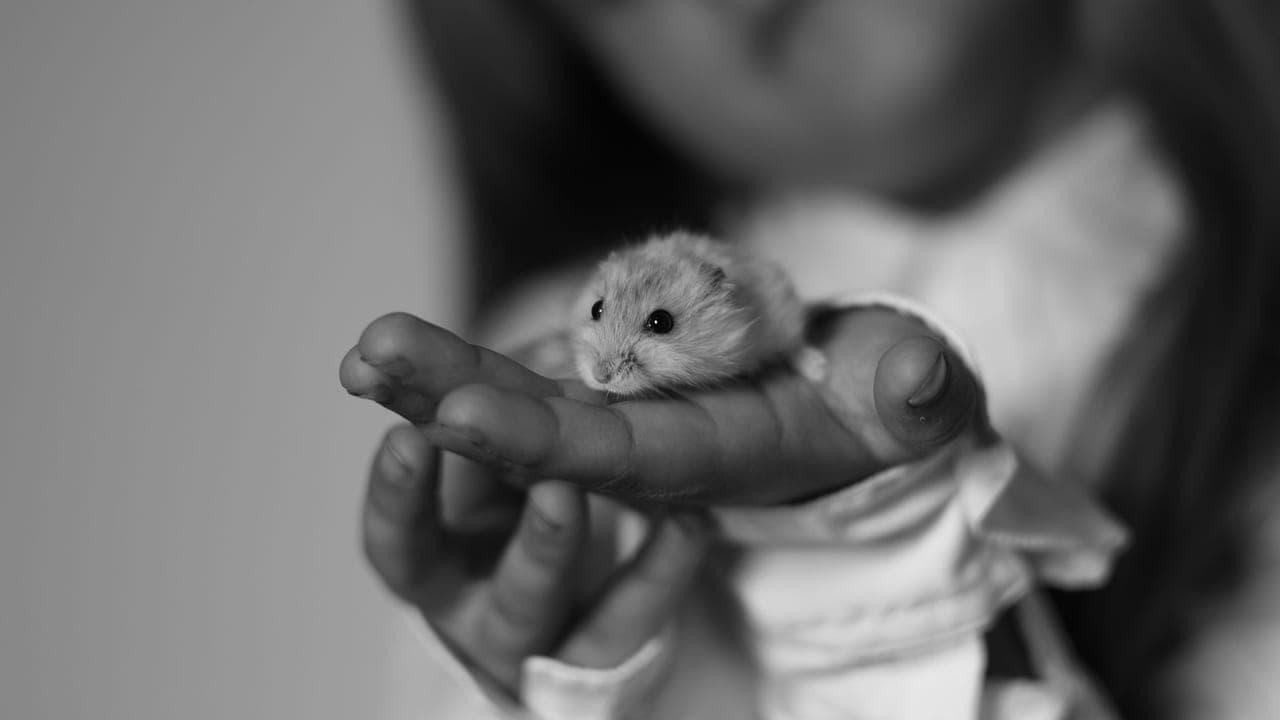
A Skull in London, 1839
The golden hamster's formal scientific introduction to Western knowledge was unremarkable. In 1839, George Robert Waterhouse — a British zoologist and curator at the Natural History Museum — received a specimen skull from Syria and described it in the Proceedings of the Zoological Society of London. He named the species Mesocricetus auratus (golden hamster) and noted its distinctive cheek pouches. Then, for nearly a century, the animal largely disappeared from scientific attention. No live specimens reached Europe. No systematic study was attempted. Waterhouse's description sat in the literature, referenced occasionally, but the golden hamster remained essentially a skull and a name.
This changed in 1930 through a sequence of events that reads like a founding myth.
The Aleppo Expedition and the Twelve Founders
In April 1930, Israel Aharoni — a zoologist at the Hebrew University of Jerusalem and an expert in Syrian wildlife — was conducting fieldwork near Aleppo when a local farmer led him to a burrow in a wheat field. Inside was a female golden hamster with eleven pups. Aharoni had been searching for live specimens for years and recognized immediately that this was extraordinary. He excavated the burrow and took the entire family.
The journey back to Jerusalem was difficult. The mother, stressed by captivity, killed several pups. Others escaped. By the time Aharoni reached his laboratory, he had fewer than ten animals. The precise number that survived to reproduce is debated in the literature — some accounts say four, others say five — but the genetic evidence is unambiguous: virtually every golden hamster alive today, whether in a laboratory or a child's bedroom in Ohio, descends from this single capture event.
This represents one of the most extreme genetic bottlenecks of any commonly kept animal. The population-level consequences include reduced genetic diversity, elevated susceptibility to certain diseases, and the fact that all golden hamsters share essentially identical immune system profiles — a property that made them invaluable for immunological research.
From Laboratory to Pet Store
Aharoni's hamsters were not intended as pets. They were research subjects. The Hebrew University colony thrived, and animals were shared with other research institutions. In 1938, James Maurer at the Wellcome Bureau of Scientific Research in London received a colony of descendants from the original Aleppo capture. The same year, a colony was established in the United States through the Public Health Service.
The properties that made hamsters ideal laboratory animals were almost comically practical. Their cheek pouches — large, expandable skin sacs extending from mouth to shoulder — created a naturally immunologically privileged site: tissue transplanted into a hamster's cheek pouch would not be rejected, making them useful for cancer research and transplantation studies. Their four-week gestation period, shorter than virtually any other commonly used research mammal, meant experimental generations could be produced quickly. Litter sizes of four to eight pups meant colonies expanded fast.
Pet stores began offering hamsters in the 1940s, initially as a byproduct of the laboratory supply industry. The animals were small, clean, easy to house, cheap to feed, and bred rapidly — properties that made them attractive to the postwar American consumer culture building suburban homes with children who wanted pets but could not keep a dog or cat in a small apartment. By the 1950s, the golden hamster had become the quintessential classroom pet: self-contained, manageable, educational, and short-lived enough that its death was survivable for a child.
The Syrian Hamster's Wild Decline
The irony of the golden hamster's domestic abundance is its wild scarcity. In Syria's Aleppo region, where Aharoni found his founding colony, habitat destruction from agricultural expansion, the use of pesticides, and deliberate population control measures have reduced wild golden hamster populations dramatically. The International Union for Conservation of Nature (IUCN) classifies the golden hamster as Vulnerable on its Red List — a strange designation for an animal whose domesticated descendants number in the millions.
The Syrian Civil War, which began in 2011, has added further pressure. Much of the agricultural land around Aleppo where wild hamsters historically ranged has been disrupted, and population surveys have become impossible to conduct. Some conservation biologists have proposed that captive hamster colonies could theoretically serve as a genetic resource for eventual wild population support — an idea complicated by the extreme genetic uniformity of the captive population.
Roborovski, Dwarf, and Chinese: The Other Hamsters
When people say "hamster," they most often mean the Syrian or golden hamster — the species whose entire captive lineage traces to Aleppo, 1930. But the pet trade also includes several species with different origins and different temperaments.
The Roborovski dwarf hamster (Phodopus roborovskii), native to the steppes of Central Asia and first described by the Russian explorer Vsevolod Roborovski in 1894, entered the Western pet trade in the 1990s. At 4-5 cm long and weighing approximately 20 grams, it is the smallest commonly kept hamster and the fastest — a fact that makes it excellent to observe and nearly impossible to handle. The Campbell's dwarf hamster (Phodopus campbelli) and the Siberian or Winter White dwarf hamster (Phodopus sungorus) are similar in size and more handleable. The Chinese hamster (Cricetulus griseus) is taxonomically distinct — longer and thinner-bodied than the Phodopus species — and known primarily as a laboratory model for diabetes research.
The Nocturnal Problem and the Welfare Debate
The golden hamster's natural activity cycle creates a structural problem with its role as a children's pet. In the wild, Syrian hamsters are crepuscular to nocturnal — active at dawn, dusk, and through the night. A hamster that spends all day asleep in a cage may be perfectly healthy but looks inert and boring during daylight hours, which is when children want to interact with it. The temptation to force interaction during the day frequently stresses the animal.
Modern hamster welfare standards have also confronted the cage size problem. The German minimum standard for hamster housing requires 4,000 square centimeters (approximately 620 square inches) of floor space — enough for burrowing, foraging, and exercise that mimics natural behavior. The standard cages sold in most American and British pet stores provide approximately 360 square centimeters (56 square inches), a cage size that German courts have ruled constitutes animal cruelty. The European scientific consensus that hamsters require significantly more space than traditional "hamster cage" products offer has not yet broadly translated into regulatory standards outside Germany.
For guidance on small pet care, explore our care guides. The hamster's story — from obscure skull in a London museum to the animal in more classroom terrariums than any other — is ultimately a story about the accidental pets: animals we didn't breed for companionship but discovered, through convenience and circumstance, fit surprisingly well into human space.
Frequently Asked Questions
Are all golden hamsters related to each other?
Virtually yes. Genetic evidence confirms that the overwhelming majority of golden hamsters in captivity worldwide — both laboratory and pet populations — descend from a single female and her litter found near Aleppo, Syria, by Israel Aharoni in 1930. This represents one of the most extreme genetic bottlenecks of any commonly kept animal.
When did hamsters become pets?
Hamsters were introduced to the United States for laboratory research purposes in 1938. Pet stores began offering them in the 1940s as a byproduct of the laboratory supply industry. By the 1950s, they were established as common American children's pets and classroom animals.
Are wild hamsters endangered?
The golden or Syrian hamster is classified as Vulnerable by the IUCN Red List. Wild populations in Syria's Aleppo region — the only known wild habitat — have declined significantly due to agricultural expansion, pesticide use, and habitat disruption. The Syrian Civil War has made population surveys impossible since 2011.
How much space does a hamster actually need?
German animal welfare law requires a minimum of 4,000 square centimeters (about 620 square inches) of floor space — roughly the size of a small coffee table. Most standard hamster cages sold in American and British pet stores provide approximately 360 square centimeters, a size German courts have found constitutes animal cruelty.
Author & Reviewer
Related Reading
Continue the History
Understand Your Companion
Find Your Match
Ready to find your perfect companion?
Take the Breed Quiz →