
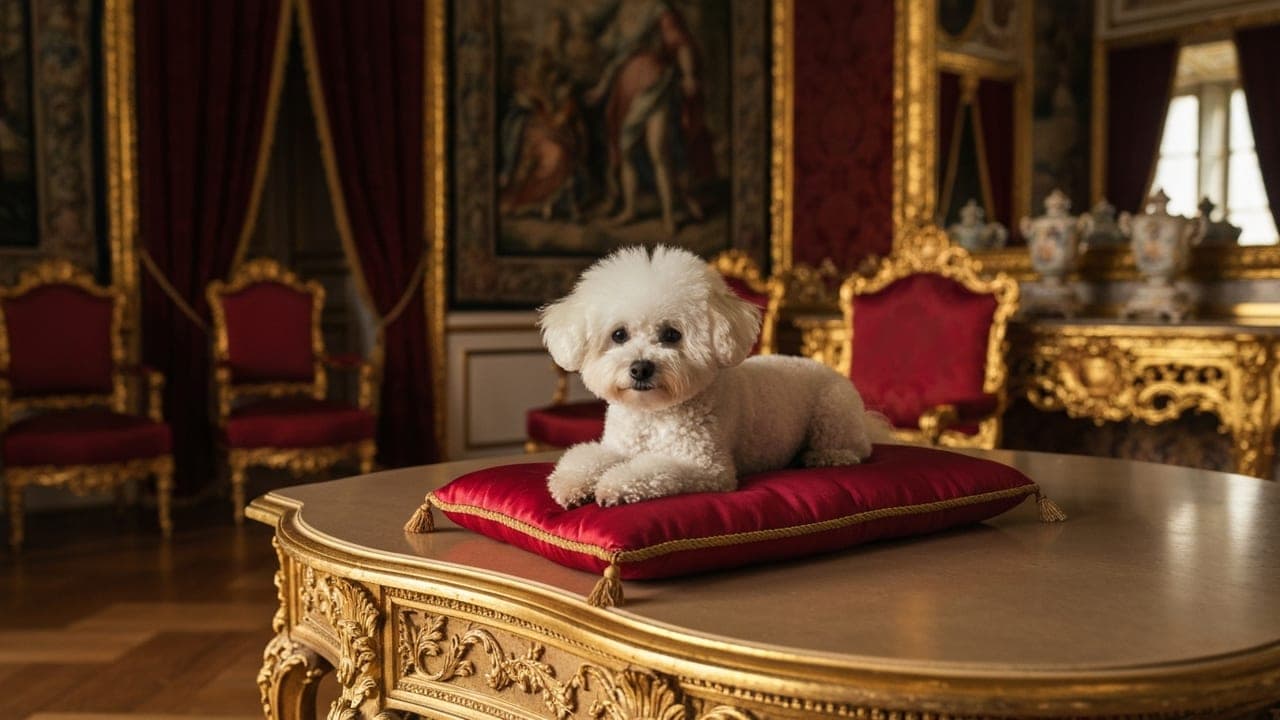
Lapdogs in European Courts
In the winter of 1514, Raphael painted a young woman holding a small white dog against her chest in a posture of easy familiarity. The woman is richly dressed; the dog is perfectly groomed; neither seems particularly interested in anything beyond their mutual comfort. The painting captures something that dozens of Renaissance portraits would return to again and again: the lapdog as natural accessory to female aristocratic identity, as inevitable in its presence as jewelry or fine fabric.
The lapdog's conquest of European court culture was neither accidental nor purely sentimental. Small companion dogs served practical functions in medieval and Renaissance palaces that modern observers rarely appreciate. They projected social status with precision. They communicated allegiance through gifting and exchange. They provided comfort in circumstances that were physically harsh and emotionally isolating. And they gave artists a subject that allowed portraiture to communicate personality, warmth, and humanity in ways that formal pose alone could not.
The Practical Reality: Stone, Cold, and Small Dogs
Before romanticizing the lapdog's role in European courts, consider the physical context. Medieval and Renaissance palaces were stone structures heated only by fireplaces in individual rooms. Drafts were constant. Floors were cold. Even in summer, the thick walls of a castle retained a chill that settled into bones and joints. For aristocratic women who spent hours at banquets, audiences, and formal ceremonies in elaborate but not particularly insulating clothing, a small warm animal in the lap served a function that any electric blanket user today can appreciate.
Physicians of the 14th through 17th centuries — working from Galenic humoral theory — sometimes recommended small dogs specifically for this purpose. The warmth of a dog resting against the abdomen was believed to treat digestive ailments. A dog carried against the chest could ease respiratory complaints. These were not superstitions in any simple sense; they reflected a serious medical tradition that observed the genuine comfort small warm animals could provide, even if the theoretical explanation was wrong.
This practical overlap between fashion and medicine gave lapdog ownership a respectability that pure vanity might not have sustained against Puritan and moralistic critics.
The Breeds That Conquered Courts
Several specific breeds rose to prominence in European courts, each with a distinct geographic origin and social trajectory.
The Maltese — small, white, and silky-coated — appears in ancient Mediterranean sources and was established as a court companion by the Renaissance. Its association with noble and royal women was so complete that some 16th-century texts refer to it as (the ladies' dog). Aristotle had described a dog matching the Maltese's description in the 4th century BCE; by 1500 CE, the breed occupied beds in palaces across Europe.
The Bichon Frise arrived in European courts through Spanish sailors who encountered the breed (possibly of North African origin) in the Canary Islands. Francis I of France and Henry III of France both kept Bichons with notable devotion. Henry III was sufficiently attached to his Bichons that he reportedly carried them in a basket hanging from his neck — an affectation that even sympathetic contemporaries found excessive. A quality Bichon Frise in the 16th century commanded a price that exceeded the cost of a trained warhorse in some markets.
The Papillon — named for the butterfly-shaped ears that distinguish it — was a favorite in the courts of France, Spain, and the Habsburg territories. Louis XIV kept them; so did Marie Antoinette, whose Papillon reportedly waited at the palace gates during her imprisonment. The dog's small size and spectacular ear feathering made it a natural subject for the detailed portrait painting that court life demanded.
The Pug arrived in Europe via a very specific commercial route: Dutch East India Company traders brought the breed from China in the late 16th century. The Dutch Royal House of Orange adopted the Pug enthusiastically after a Pug allegedly saved the life of William the Silent by barking at approaching Spanish soldiers. The story may be apocryphal, but it established the Pug's status in the House of Orange, and from there the breed spread to every court in Europe. By the 17th century, owning a Pug was a fashionable statement of Dutch commercial prosperity and continental connectedness.
The Portrait Tradition
The systematic appearance of lapdogs in aristocratic portraiture is one of the most consistent visual themes in European art from 1400 to 1800. Titian included small dogs in portraits of Italian noblewomen in the 1530s. Van Dyck painted Charles I's children with their King Charles Spaniels in compositions where the dogs occupy prominent, carefully considered positions. Velazquez showed the Infanta Margarita's household at ease with a large Mastiff but also included smaller companion dogs in the royal family's domestic interiors.
These dogs were not decorative afterthoughts. Commissioning an artist to paint your dog was a deliberate statement. It said: I have leisure. I have sentiment. I value loyalty and companionship. I am sophisticated enough to extend affection to an animal. All of these were desirable signals for an aristocratic woman to project in a court environment where personal reputation and social positioning required constant management.
The dogs also served a compositional purpose. In a genre — female portraiture — where sitters were often required to maintain formal, static poses, a small animal introduced a note of naturalness and movement. A woman looking down at a dog in her lap, or allowing a dog to rest its paws on her shoulder, appeared more human and approachable than a sitter staring directly out of the frame. The dog humanized the portrait.
Moral Critics and Their Complaints
Not everyone was charmed. Puritan and Reformation writers attacked lapdog culture with the intensity of people who have identified a genuine social symptom. Their complaints clustered around several themes: the waste of resources on animals that served no productive purpose; the displacement of human affection toward creatures that could not reciprocate genuine devotion; the vanity of maintaining well-groomed animals in a world of human suffering; and — most persistently — the suspicion that women who lavished attention on dogs were failing to direct that attention toward husbands, households, and children.
This last criticism reveals something about the lapdog's most psychologically interesting function. For aristocratic women in arrangements where marriage was primarily a political and economic transaction rather than an affective one, and where bearing children carried substantial mortality risk, the lapdog offered uncomplicated emotional attachment. The dog's loyalty was reliable in a way that court relationships rarely were. Its need for care gave structure and purpose to days that formal protocol otherwise rendered largely passive.
The critics understood this dynamic even if they condemned it. The lapdog was a substitute — for affection, for purpose, for the domestic life that formal court existence systematically denied.
Economics and the Lapdog Trade
The market for quality lapdogs in Renaissance and early modern Europe was substantial and specialized. Breeding operations maintained by royal households supplied animals to allied courts as diplomatic gifts. Private breeders sold to nobles who could not obtain animals through court channels. The prices recorded in surviving accounts are startling: a well-bred Bichon Frise or Maltese could command sums comparable to skilled craftsmen's annual wages.
Dog theft was correspondingly common and correspondingly serious as a crime. Stealing a noble's lapdog was not a minor property offense — it was an attack on status, on sentiment, and on a carefully maintained asset. Court records across Europe include cases of lapdog theft that were prosecuted with a vigor disproportionate to the animal's monetary value, reflecting the symbolic weight these animals carried.
Survival Through Revolution
The French Revolution posed an existential threat to everything associated with aristocratic culture — including its dogs. Animals associated with the nobility faced the same hostility as their owners: some accounts describe Pugs and Bichons being mocked in revolutionary pamphlets as symbols of aristocratic excess.
Yet the lapdog breeds survived. Some were hidden by their owners. Others were adopted by new republican bourgeoisie who had admired the animals without the political associations. The breeds small enough to conceal, to transport, to maintain without elaborate infrastructure — the same qualities that had made them court favorites — made them resilient in revolution.
By the 19th century, under Napoleon and then the restored Bourbon monarchy, small companion dogs were again fixtures in fashionable Parisian households. The political context had changed entirely. The animals themselves had not.
Frequently Asked Questions
Why were lapdogs so expensive in Renaissance Europe?
Quality lapdogs like Bichon Frises and Malteses were expensive because of the specialized breeding required to maintain their small size and distinctive coats, the scarcity of quality animals, and the demand driven by aristocratic fashion. A well-bred Bichon could cost more than a trained horse in 16th-century France.
Did medieval physicians really prescribe lapdogs for health?
Yes — within the Galenic humoral medical tradition, small warm dogs resting against the abdomen or chest were genuinely recommended for digestive and respiratory complaints. The theoretical basis was wrong by modern standards, but the practice reflected observed comfort benefits and gave lapdog ownership a medical rationale beyond pure vanity.
How did the Pug reach European courts?
Dutch East India Company traders brought Pugs from China to the Netherlands in the late 16th century. The House of Orange adopted them enthusiastically, and the breed spread through diplomatic and social networks to courts across Europe. By 1700, the Pug was one of the most fashionable companion dogs on the continent.
Did lapdogs really serve as hand-warmers at banquets?
Contemporary accounts describe this practice directly. Stone palace dining halls were cold even in summer, and small warm dogs resting on women's laps during long formal dinners provided genuine thermal comfort. The function was practical enough to be mentioned in household management texts alongside purely sentimental descriptions of the animals.
Author & Reviewer
Related Reading
Continue the History
Understand Your Companion
Find Your Match
Ready to find your perfect companion?
Take the Breed Quiz →