
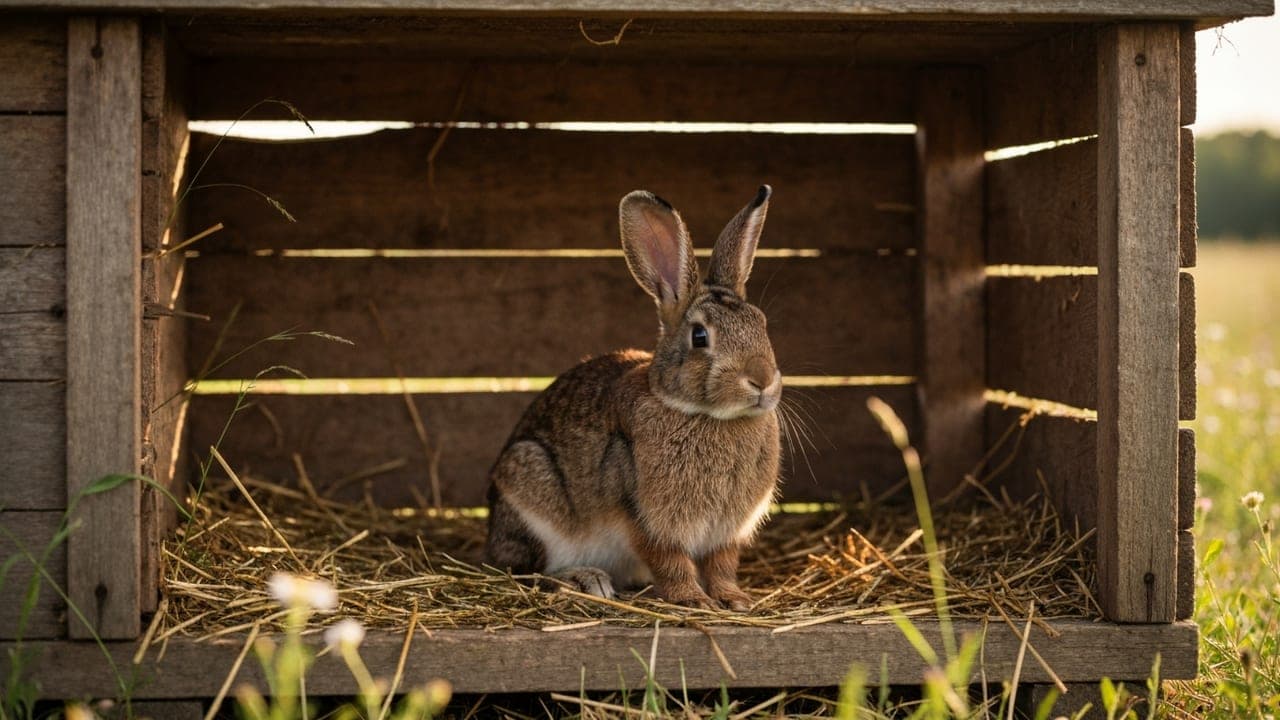
The Only Domesticated Rabbit Species
Before examining how rabbits became pets, it is worth establishing a fact that surprises most people: only one of the world's approximately sixty wild rabbit and hare species has ever been domesticated. The domestic rabbit (Oryctolagus cuniculus) is descended exclusively from the European rabbit native to the Iberian Peninsula (modern Spain and Portugal) and parts of North Africa. The jackrabbits of North America, the cottontails of suburban gardens, the snowshoe hares of boreal forests — none of these have ever been domesticated despite centuries of human contact.
This is a remarkable statement about the biology of domestication. Domestication requires not just proximity to humans but a specific package of behavioral traits: low flight distance (willingness to remain calm near humans), social structure compatible with human management, reproductive behavior that functions under captivity, and sufficient behavioral flexibility to adapt to confinement. The European rabbit has all of these. Its cousins do not.
Dr. Greger Larson of Oxford's Palaeogenomics and Bio-Archaeology Research Network, who has published extensively on animal domestication genetics, has noted that the rabbit represents a relatively recent and unusually well-documented domestication event. Unlike dogs (domesticated perhaps 15,000 years ago from wolves, leaving a complex genetic record) or cats (domesticated gradually from African wildcats over thousands of years with minimal genetic change), rabbits were domesticated within recorded historical time, and the written records from French monasteries provide a reasonably precise timeline that archaeogenetic data has largely confirmed.
Roman Leporaria: The Pre-Domestication Phase
The story of rabbit domestication is conventionally dated to 600 CE and French Benedictine monasteries, but it has a significant prequel in the Roman world. Romans maintained leporaria — enclosed parks for keeping and breeding hares and rabbits — as food reserves on large estates. These were not domestication efforts; they were managed wild animal enclosures, analogous to medieval deer parks.
Roman writer Marcus Terentius Varro described leporaria in his Rerum Rusticarum (37 BCE) as a fashionable addition to wealthy country estates, noting that rabbits (which he distinguished from hares) were kept separately because they bred more prolifically and were more manageable in enclosures. Pliny the Elder, writing in the first century CE, recorded that the Iberian Peninsula produced the best rabbits — evidence that Romans recognized the European rabbit's distinct qualities even before domestication.
What Roman leporaria did not produce was behavioral selection. The rabbits in these enclosures were managed for population size and meat yield, not for tameness. A rabbit that was tolerant of human presence was no more likely to be selected for breeding than a skittish one — both ended up eaten. Without selective pressure for tameness, the wild behavioral repertoire remained intact. This is why, despite centuries of Roman rabbit keeping, true domestication awaited the monasteries.
The Papal Letter That Started Rabbit Domestication
In approximately 600 CE, Pope Gregory I (Gregory the Great) ruled in a letter to a bishop that rabbit fetuses and newborn rabbits — called laurices — could be eaten during Lent and other fast days because they were aquatic enough in character to qualify as fish. This ruling, which would strike modern nutritionists as creative theology, had momentous consequences for rabbit evolution.
Benedictine monasteries across France, which observed strict Lenten fasting, immediately began maintaining rabbit colonies to provide the laurices that were now permissible during fasting periods. But keeping rabbits for laurices required managing pregnant females — and managing pregnant females required handling, confinement, and sustained human contact in a way that Roman leporaria had not.
The monks' practical necessity became unintentional selective pressure. Rabbits that tolerated handling survived and reproduced; rabbits that panicked and injured themselves or their handlers were selected against — not through any intention to breed tame rabbits, but through the simple logic of which animals were easier to manage. Within generations, the monastery populations began to diverge behaviorally from wild-type European rabbits.
Genetic analysis published in 2014 by researchers at Uppsala University, led by Dr. Miguel Carneiro, confirmed this monastery-origin story. The team compared the genomes of domestic rabbits to wild European rabbits and found that domestication had not involved large-effect mutations in a few genes (as occurred in dog domestication), but rather hundreds of small-effect changes across many genes, particularly in genes related to brain development, fear responses, and exploratory behavior. The domestic rabbit is, at the neural level, a less fearful version of the wild rabbit — and this change accumulated gradually, consistent with the monastery timeline.
Medieval France: From Food to Fashion
Once domestication had produced a population of rabbits that tolerated human proximity, selective breeding for other traits became possible. Medieval French monasteries, which had continued custody of domestic rabbit breeding across several centuries, began selecting for color varieties by approximately the twelfth century CE.
The wild European rabbit is uniformly agouti — the salt-and-pepper brown pattern that provides camouflage in Mediterranean scrubland. Color mutations (black, white, spotted) occur spontaneously but are quickly selected against in wild populations because they reduce camouflage effectiveness. In the monastery environment, predation pressure was absent, and monks who found the color variations interesting began deliberately preserving them.
By the fourteenth century, French monastic records document at least five distinct color varieties being maintained as separate lines. By the sixteenth century, selective breeding had produced rabbits noticeably larger than wild-type — the ancestors of the giant breeds that today include the Flemish Giant, which can reach 10 kilograms, and the Continental Giant, which can reach 16 kilograms.
The shift from monastery food animal to secular fancy animal occurred gradually across the sixteenth and seventeenth centuries. As printing made breeding information portable and as trade networks expanded, rabbit breeding spread from monasteries to noble households and eventually to ordinary farmers who found that the tame, color-varied domesticated rabbits were more commercially interesting than wild-type animals.
The Victorian Rabbit Fancy: Shows, Standards, and Breed Explosion
The Victorian period was transformative for domestic animal keeping in general — it was when "fancy" (a term derived from "fantasy," meaning the enthusiast's imaginative investment in a hobby) became the dominant framework for thinking about breed animals. Dog shows, cat shows, and poultry shows all developed formal standards and exhibition infrastructure in Victorian Britain, and rabbits followed the same trajectory.
The first documented rabbit show in Britain took place at the Birmingham Show in 1840, predating the first Crufts dog show by nearly fifty years. By 1880, the British Rabbit Council's predecessor organizations had established formal breed standards for over twenty rabbit varieties. The Lop-eared rabbit — produced by selective breeding for the drooping ear mutation that creates the distinctive floppy-ear appearance — became the first internationally famous fancy rabbit breed, drawing crowds at agricultural exhibitions across Britain and Europe.
The genetics of lop ears reveal a consistent pattern in fancy breed development: a single gene mutation (in this case affecting cartilage development in the ear canal) is identified and amplified through selective breeding. The Holland Lop, the English Lop, the French Lop, and the American Fuzzy Lop all share the same underlying mutation but differ in body type, coat, and size because they have been bred alongside different genetic backgrounds. The English Lop, with ears that can span 70 centimeters from tip to tip, represents the extreme amplification of the mutation — ears so large they become a welfare concern because the rabbit cannot carry them properly.
Victorian rabbit fancy also produced the Angora rabbit, bred for its extraordinarily long fiber coat, and the Rex rabbit, whose distinctive velvety coat (caused by a mutation shortening the guard hairs to the length of the soft undercoat) was discovered in a French rabbit warren in 1919 and quickly developed into multiple Rex varieties. By the early twentieth century, rabbit breeding had produced dozens of varieties across three size categories (dwarf, medium, giant), multiple coat types (normal, Rex, Angora, Satin), and virtually every coat color and pattern found in domestic mammals.
The 20th Century Shift: From Production to Companion
Rabbits entered the twentieth century primarily as production animals — raised for meat and fur in industrial-scale operations, with pet keeping a minority application mainly for children. World War II intensified rabbit farming across Europe and North America as a supplemental protein source. The rabbit's image as a companion animal was complicated by its simultaneous image as food.
The shift toward companion status accelerated in the postwar period through several converging factors. Urbanization reduced meat production from domestic animals; the availability of cheap commercial pet food removed economic justifications for keeping small animals for food; and changing cultural attitudes toward killing animals that had been given names and socialized with children made the food-to-table pathway psychologically difficult for families.
By the 1970s, pet rabbits were increasingly kept indoors in the United States and United Kingdom, a practice that the rabbit industry and many veterinarians actively discouraged — the conventional wisdom was that rabbits were delicate outdoor animals unsuited to indoor environments. This conventional wisdom was wrong, and its disproof became the founding premise of the most influential organization in the history of rabbit welfare.
The House Rabbit Society and the Modern Pet Rabbit
In 1988, Marinell Harriman and Bob Harriman founded the House Rabbit Society in Alameda, California, after successfully keeping a domestic rabbit named Herman indoors and discovering that the experience was mutually enriching in ways that outdoor rabbit keeping could not produce. The House Rabbit Society's founding principle was radical for its time: that domestic rabbits, properly socialized and given appropriate living conditions, were companion animals fully comparable to cats and dogs in their capacity for bonding, play, and communication.
The Society published the House Rabbit Handbook (first edition 1985, revised through multiple editions), which provided practical husbandry information for indoor rabbit keeping, including litterbox training (rabbits can be reliably litterbox trained, a fact that surprised most non-rabbit owners), appropriate diet (hay-primary, with fresh vegetables; the commercial pellet-and-iceberg-lettuce diet that prevailed in the 1980s was nutritionally catastrophic), appropriate space (rabbits confined to small cages develop abnormal behaviors; they need multiple hours of free-roaming time daily), and appropriate enrichment.
The House Rabbit Society's message was amplified by the internet, and by the early 2000s, indoor rabbit keeping had become mainstream in North America, Britain, and across northern Europe. The British Rabbit Council estimated that rabbits became the United Kingdom's third most popular pet animal — behind only dogs and cats — by 2010, with an estimated 1.7 million pet rabbits in British households.
American Veterinary Medical Association survey data from 2018 placed rabbits as the third most popular small pet in the United States (behind fish and birds but ahead of hamsters, guinea pigs, and reptiles), with approximately 3.2 million pet rabbits in American households. The distance from a French monastery's Lenten food supply to a Brooklyn apartment's resident lop-eared rabbit covers 1,400 years and represents one of the most recent and most complete transitions from prey animal to companion in the history of domestication.
Explore more animal domestication history at Pet Domestication Timeline and Ancient Dogs: First Companions. If you're considering a rabbit companion, visit our care guides for complete rabbit husbandry information.
Frequently Asked Questions
Are all domestic rabbits descended from European rabbits?
Yes. Oryctolagus cuniculus, the European rabbit native to the Iberian Peninsula, is the only rabbit species that has ever been domesticated. All domestic breeds — from the Flemish Giant to the Netherland Dwarf to the Rex — are descended from this single wild species. The cottontails, jackrabbits, and hares found elsewhere in the world have never been successfully domesticated despite centuries of human contact.
When were rabbits first kept as pets rather than food?
The transition from food animal to companion began gradually in the sixteenth and seventeenth centuries as selective breeding produced color varieties that Europeans found attractive independent of any food value. The Victorian rabbit fancy formalized companion rabbit keeping in the nineteenth century, but the shift to indoor companion animals comparable to cats and dogs is largely a post-1988 development, driven by the House Rabbit Society's advocacy and internet-distributed husbandry information.
Why do lop-eared rabbits have floppy ears?
Lop ears are produced by a single gene mutation affecting cartilage development in the ear canal. The wild European rabbit has upright, mobile ears optimized for directional hearing — essential for a prey animal detecting predators. The lop mutation reduces cartilage density, causing the ear to droop. This mutation was first selectively preserved by fancy breeders in Victorian Britain and has since been bred into multiple distinct lop variety families. In extreme forms (such as the English Lop), the ears can become so large that they create welfare concerns.
How intelligent are domestic rabbits?
More intelligent than most people assume. Rabbits can be litterbox trained reliably, can learn their names and come when called, can be trained to simple obstacle courses and tricks using positive reinforcement, and demonstrate problem-solving abilities in studies using multi-step food access tasks. Research by Dr. Britta Osthaus at Canterbury Christ Church University has shown rabbit cognitive performance comparable to cats in several spatial reasoning tasks — a finding that surprised researchers accustomed to dismissing rabbits as simple prey animals.
Author & Reviewer
Related Reading
Continue the History
Understand Your Companion
Find Your Match
Ready to find your perfect companion?
Take the Breed Quiz →