
The Cat Who Waited: Mochi's Six-Month Journey to Find a Home
Story Subject
Mochi
Type
Cat
Read Time
7 min
Shared By
Dev
Editor
Mr Pet Lover Admin
In This Guide
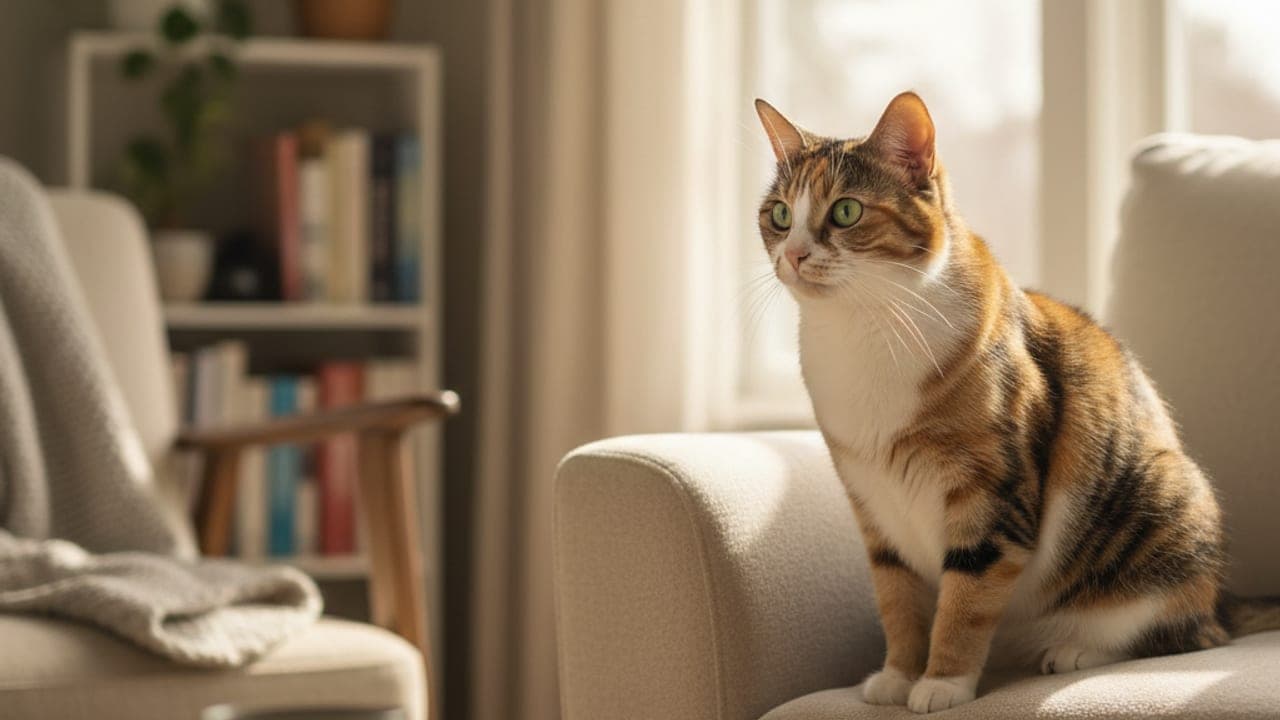
The volunteers at Harmony Animal Shelter loved Mochi. She was a two-year-old black domestic shorthair with bright green eyes and the loudest purr in the building. She rubbed against every hand that reached through her kennel bars. She played with every toy. She got along with other cats, tolerated dogs, and charmed every visitor.
Nobody adopted her.
The Black Cat Problem
"It's a real thing," said shelter director Lisa Nguyen. "Black cats are consistently the last to be adopted and the first to be euthanized in kill shelters. Some people are superstitious. Others just scroll past the black cats online because they don't photograph as well."
Mochi's kennel card read: "Sweet, social, loves everyone." She'd been surrendered when her previous owner moved overseas. She was healthy, spayed, vaccinated, and ready to go. Her adoption fee was $75.
Month one passed. Then two. Then three.
The Social Media Push
The shelter staff started a campaign. They photographed Mochi with props — wearing tiny glasses, sitting on a stack of books, posed next to a coffee mug. "Mochi reads your favorite books and judges you gently," one caption read.
The posts got likes. They got shares. They got comments that said "someone adopt this angel!" But no applications.
"Social media engagement doesn't equal adoption," Lisa noted. "People love the cute post. They share it. But going to the shelter, filling out the application, and committing? That's a different thing."
Month Six
By month six, Mochi had become the longest-term resident. The staff worried about shelter fatigue — cats who spend too long in kennel environments can become stressed, withdrawn, or develop behavioral issues.
But Mochi stayed Mochi. She greeted every visitor. She purred for every volunteer. She played with her favorite crinkle ball as if it were day one.
"I think she knew," said volunteer Sarah Kim, who spent extra time with Mochi during shifts. "She just kept being herself, like she was waiting for the right person."
The Match
On a Tuesday afternoon — an unremarkable day — a woman named Dev walked in. She wasn't looking for a black cat. She wasn't looking for any particular cat. She'd recently moved to the area after a divorce and her apartment felt "too quiet."
"The volunteer brought out three cats," Dev said. "Mochi climbed into my lap immediately and started purring. The other two were sweet, but Mochi looked at me like she'd been expecting me."
Dev filled out the paperwork that day. She came back the next morning with a carrier.
Home
The first week, Mochi explored every room, claimed the sunny spot on the bed, and developed an immediate opinion about Dev's cooking (she watches from the counter, judging). Within a month, she and Dev had established a routine: morning coffee with Mochi on the lap, evening TV with Mochi on the feet.
"I didn't realize how much I needed her until she was here," Dev said. "She filled a space I didn't know was empty."
The shelter posted a photo of Mochi in her new home — curled on a cream-colored blanket, green eyes half-closed. The caption: "183 days. Worth the wait."
It was their most-liked post ever.
Black cats face unfair adoption challenges but make wonderful companions. If you're considering adoption, explore our cat breed guides and visit your local shelter — your Mochi might be waiting.
Why black cats like Mochi wait longest for a home
Mochi's 183 days weren't bad luck. Shelter-medicine literature consistently finds that the least-adopted animals — most famously seniors — are also the ones with the longest length of stay, the pattern our guide to adopting an adult or senior pet walks through. Black cats sit in that same overlooked-longer group, and the causes are mostly about visibility, not superstition.
Two things work against a cat like Mochi. Black coats are hard to photograph: features, expression and those green eyes flatten against dark fur in a phone snapshot or a dim kennel, so adopters scrolling listings glide past without registering a face — exactly what the shelter director describes above. And black is one of the most common cat colours in any shelter, so more black cats compete for the same attention. Superstition gets the blame, but black cats are adopted in large numbers too; the real disadvantage shows up as a longer wait, not a refusal. The fix is the one Harmony tried — better photos and patience until the right person walks in.
How to help a long-stay shelter cat decompress at home
A cat who has spent months in a kennel doesn't arrive home relaxed — she arrives flooded. The most useful thing an adopter can do is shrink her world at first: one quiet room, a hiding spot to retreat into, food, water and a litter box within a few steps, and no pressure to perform. Hiding places aren't a setback; for cats they're a self-soothing tool, which is why our indoor cat care guide lists enclosed beds, boxes and tunnels among the enrichment essentials.
From there, routine does the healing. Cats are creatures of habit, and a predictable rhythm — set feeding times, a short wand-toy play session before meals, calm evenings — tells a long-stay cat the chaos is over. This is where adopting an adult pays off: as the adult-and-senior adoption guide puts it, an older cat is "already who it is," with a temperament you saw in the kennel. Mochi greeted every visitor for six months, then slid straight into morning-coffee-on-the-lap because that steadiness was already hers.
What Mochi's 183 days say about the cats still waiting
The photo that finally worked wasn't a better filter or a cleverer caption — it was Mochi curled on a cream blanket in Dev's apartment, captioned "worth the wait." What kept her adoptable through six months in a kennel was the same steadiness Dev met on that Tuesday: a cat who just kept being herself. That's the quiet truth under the black-cat debate. The cats waiting longest usually aren't damaged or difficult; they're overlooked — often the black one at the back of a listing that didn't photograph well. If you're deciding, meet the personality in person, look twice at the long-timers, and browse our cat guides before you go.
Questions About Mochi
Common questions answered to help you better understand this story
The most cited reason isn't superstition — it's visibility. Black fur photographs poorly, so a cat's face, expression and eyes disappear in the phone snapshots and online listings adopters scroll through, and they get passed over. Black is also among the most common shelter coat colours, so more black cats compete for the same attention. The result is usually a longer wait, not an outright rejection.
They tend to wait longer, but "harder" oversimplifies it. Because black cats are so numerous, plenty are adopted every day; the disadvantage is length of stay, not a refusal. Better photos and in-person meetings close most of the gap — many adopters who "weren't looking for a black cat," like Mochi's, choose one the moment they meet its personality.
Start small. Give her one quiet room with a hiding spot, litter, food and water close together, and let her emerge on her own schedule. Then build a predictable routine — set feeding times, a short daily play session, calm evenings. Our indoor cat care guide covers the hiding spots and play-then-feed rhythm that lower a new cat's stress fastest.
For many homes, yes. An adult cat's temperament, size and energy are visible in the kennel rather than a coin-flip, and adults are often already litter-trained and past the destructive kitten stage. Our adult-and-senior adoption guide calls that predictability the single most undersold advantage in pet adoption.
It varies enormously. Many are adopted within days or weeks, but healthy, appealing cats can still wait months when they land in an overlooked group — seniors, black cats, or animals simply passed over repeatedly. Mochi was friendly, young and healthy and still waited 183 days.
Didn't find your answer?
Get in touch →More Stories
Get more stories like this
Weekly heartwarming pet stories and care tips, straight to your inbox.
No spam, ever. Unsubscribe anytime.