
Max's Second Act: A Three-Legged Dog Who Runs Marathons
Story Subject
Max
Type
Dog
Read Time
7 min
Shared By
James Park
Editor
Mr Pet Lover Admin
In This Guide
When the oncologist told James Park that Max's front right leg needed to be amputated, James felt the ground shift under him. Max was a four-year-old Australian Shepherd — a dog bred for herding sheep across rough terrain. A dog who ran beside James during every morning jog. A dog who lived to move.
"I kept thinking, what kind of life can a three-legged dog have?" James recalled. "I was already grieving the dog I thought I knew."
The Surgery
The osteosarcoma was caught early enough that amputation — removing the leg entirely — gave Max the best chance at a cancer-free life. The surgery took three hours. James sat in the parking lot the entire time.
When the vet brought Max out, still groggy from anesthesia, James braced himself. But Max looked at him, wagged his tail, and tried to stand up.
"He didn't know anything was different," James said. "I was the one who needed to adjust."
The Recovery
The first two weeks were hard. Max stumbled. He knocked into furniture. He looked confused when his body didn't do what his brain expected. James had to stop himself from carrying Max everywhere — the vet insisted that learning to balance was critical.
By week three, Max was walking steadily. By week six, he was trotting. By month three, he was running.
"Dogs don't feel sorry for themselves," the vet told James. "They adapt. It's the owners who struggle."
The First Run
Three months post-surgery, James leashed Max for their first jog together. He planned to go slow — maybe half a mile, just to see how Max handled it.
Max sprinted.
"I was actually trying to keep up with him," James laughed. "He was pulling me forward like nothing had changed."
They ran a mile that day. Then two. Then five. Within six months of surgery, Max was running 10K distances beside James, his three legs carrying him with a gallop that other runners couldn't help but stop and watch.
The Marathon
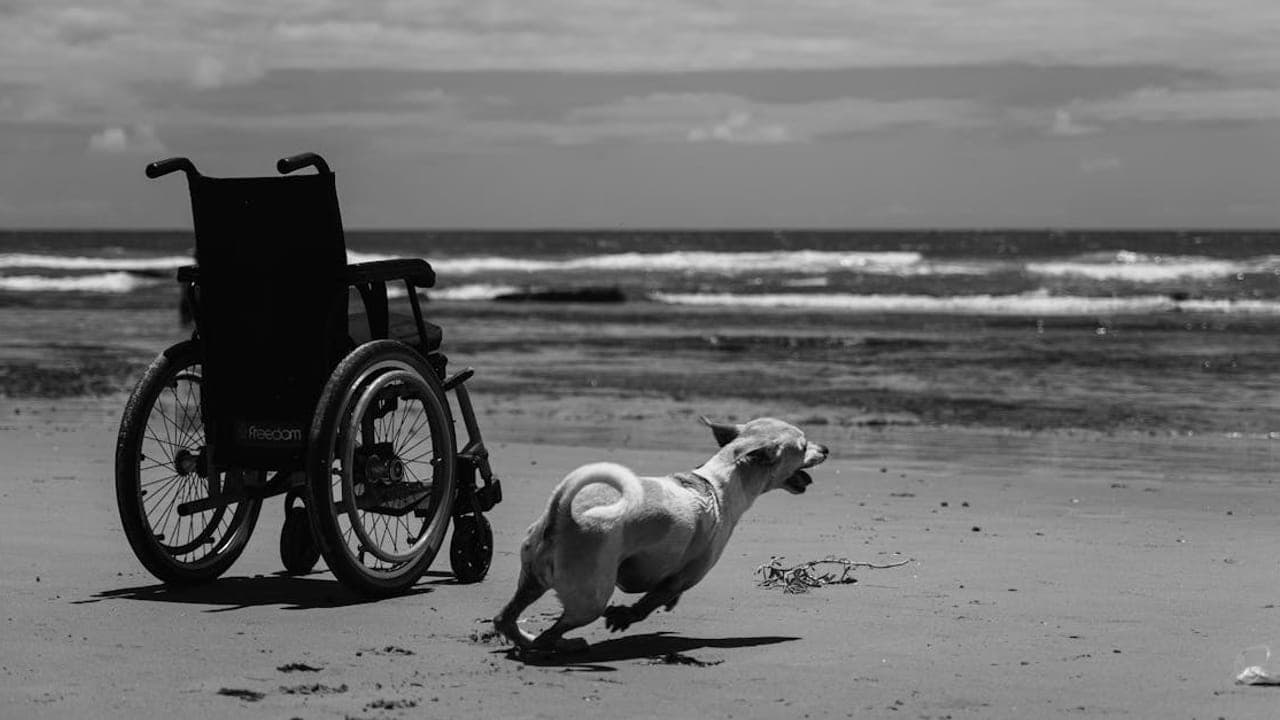
A year after surgery, James signed up for a local 5K with Max. They crossed the finish line together, with Max pulling ahead in the final stretch. A photographer captured the moment — Max mid-stride, tongue out, ears back, pure joy.
The photo went viral. "Three-legged dog finishes 5K." Comments poured in from other amputee dog owners: "This is what I needed to see."
James and Max have now completed over a dozen races, including half-marathon distances. They've become ambassadors for canine cancer awareness and amputee pet adoption.
The Message
"People see Max and they see limitation," James said. "Max sees himself and sees... nothing different. He doesn't know he's supposed to be less capable. He just runs."
Max is now seven — three years cancer-free. His morning runs are a little shorter. His naps are a little longer. But the joy in his face when James picks up the leash hasn't changed at all.
"He taught me that losing something doesn't mean losing everything," James said. "It means finding a different way to do the things you love."
Australian Shepherds and other active breeds adapt remarkably well to three-legged life. Learn more about active breed care in our breed guides.
Can a three-legged dog really run?
Max's comeback looks like a miracle, but it follows a pattern vets see constantly — the one his own vet named for James: dogs adapt to amputation far faster than their owners do. A dog isn't grieving a leg; it relearns balance and movement, and most tripods (the affectionate name for three-legged dogs) return to walking, running, swimming and playing within a few months.
Breed made Max's recovery easier than most. Our Australian Shepherd profile rates the breed's exercise needs as very high — a working herder built to run over rough ground, with a "near-religious need for a job." That drive doesn't disappear with a leg, and for Max the outlet became the morning run he already loved.
One honest caveat: front-leg amputees like Max have the harder job. Dogs carry roughly 60% of their weight over the front end, so losing a front limb demands more rebalancing than losing a rear one. A front-amputee Aussie running 10Ks reflects conditioning, a lean body and a breed built to move — not proof that every tripod will, or should.
Protecting the three legs Max has left
The real work of tripod ownership is protecting the limbs that remain. With one fewer leg to share the load, every remaining joint carries more force per step, raising the long-term risk of arthritis and strain — so a few things matter more than for a four-legged dog.
- Keep the dog lean. This is the highest-value thing an owner controls. Our Australian Shepherd care guide already presses it for four-legged Aussies — keep a visible waist and ribs you can feel under light pressure, because "excess weight accelerates hip and elbow wear on a working frame." On three legs that math is even less forgiving: every extra pound now sits on fewer joints.
- Guard the joints. Watch the remaining limbs for early arthritis — stiffness after rest, a shortened stride, reluctance on stairs — and raise it with your vet early. Our guide to senior-dog arthritis and joint care covers what actually slows joint disease: lean weight, controlled low-impact exercise, and vet-guided pain management, all of which apply to a tripod at any age.
- Build activity back gradually. Max's ramp — half a mile, then a mile, then 10K over months — is the right shape to copy. A three-legged dog works harder for the same distance and overheats faster, so favor shorter, frequent sessions with real rest days and low-impact movement like swimming over repetitive jumping and hard stairs.
Not every tripod becomes a distance runner, and that's fine. The goal is a dog that moves comfortably for its own body — which, for a herding breed like the Aussie, still means the real daily exercise laid out in our dog breed guides.
What Max's three legs taught James
The lesson James keeps coming back to isn't that every three-legged dog runs marathons — plenty won't, and Max's front-leg amputation is the harder kind. It's narrower and truer: the missing leg was never the limit. What decides a tripod's life is the work around it — keeping the dog lean so the remaining joints last, building activity back gradually, and reading the dog in front of you instead of the one you're grieving. Max is a herder who still needs to move, and James's job was never to protect him from that. It was to protect the three legs doing the running.
Questions About Max
Common questions answered to help you better understand this story
Faster than most owners expect. Dogs don't process amputation as loss the way people do — they relearn balance and a new gait, usually walking within days of healing and moving confidently within weeks. Rear-leg amputees typically adapt fastest; front-leg amputees carry more weight up front and take a little longer. Letting the dog practise balancing, rather than carrying it everywhere, builds the strength it needs.
Three priorities: keep the dog lean so fewer joints carry less load; protect the remaining limbs with low-impact exercise and vet monitoring for early arthritis; and adapt the home with rugs for traction and ramps to avoid jumping. Regular vet checks catch strain early. Otherwise a tripod lives a normal, full dog's life.
Yes. Most tripods return to trotting and running within a few months of surgery, and active breeds do especially well. Build distance gradually — a three-legged dog works harder and tires faster, so short, frequent sessions beat raw mileage. Front-leg amputees find running more demanding than rear-leg amputees because dogs carry most of their weight up front, so lean body weight is essential.
Losing a leg does not shorten a dog's lifespan by itself — a tripod can live a normal life expectancy. What matters is why the leg was removed. When amputation follows a cancer like osteosarcoma, longevity depends on controlling that cancer (often amputation plus chemotherapy), not the missing limb. After trauma or a non-cancer cause, the outlook matches any healthy dog of that breed and age.
Enough to stay fit and fulfilled, built up slowly. Start with short, gentle sessions once your vet clears healing, then increase gradually while watching for limping, fatigue or next-day soreness. Favor low-impact activity like swimming and steady walks over repetitive jumping and hard stairs. High-drive breeds still need daily exercise; what changes is intensity and impact, not activity itself.
Didn't find your answer?
Get in touch →More Stories
Get more stories like this
Weekly heartwarming pet stories and care tips, straight to your inbox.
No spam, ever. Unsubscribe anytime.